
Einaudi Center for International Studies
The Struggle for Oversight in Local Government: Mayors vs. Councils in the Heart of Taiwan’s Democracy
October 7, 2026
12:00 pm
Rockefeller Hall, 374 (Asian Studies Lounge)
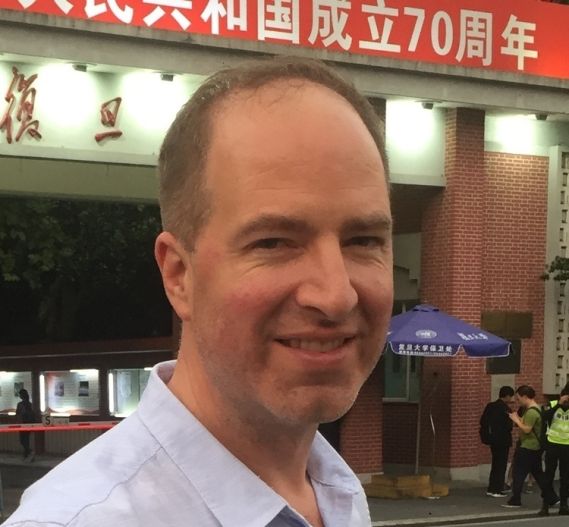
Speaker: Ben Read, Professor of Politics, UC Santa Cruz
Title: The Struggle for Oversight in Local Government: Mayors vs. Councils in the Heart of Taiwan’s Democracy
Abstract: Having held its eighth straight round of direct elections for the presidency in 2024, Taiwan is widely praised as a model case of democratization. Beneath the central level, though, politics are prone to abuses like those found in many countries, including the amassing of unfettered power by local bosses. This talk draws on a fieldwork-based project that carefully examines the relatively little-studied topic of horizontal accountability in Taiwan’s cities and counties. As in most democracies, local councils there have the duty of checking and balancing the executive. Yet in practice, mayors and magistrates often develop many means of thwarting such scrutiny. The ability or inability of councils to fulfill these responsibilities provides a window on the overall health of democracy. We examine councils’ struggles with formidable and controversial executives such as Ko Wen-je of Taipei (柯文哲, 2014–2022), Fu Kun-chi and Hsu Chen-wei of Hualien (傅崐萁、徐榛蔚, 2009–present), and others. The framework developed for this study reveals new aspects of Taiwan’s politics and also promises to help make sense of problems that are widespread in local governments in the United States, Latin America, and elsewhere.
Speaker's Bio: Ben Read ‘93 is a professor of politics at the University of California, Santa Cruz. His research has focused on local politics in mainland China and Taiwan, and he also writes about issues in field research and comparison. His books include Roots of the State: Neighborhood Organization and Social Networks in Beijing and Taipei (2012), and Field Research in Political Science: Practices and Principles (2015). He co-edits the Cambridge Elements series in Politics and Society in East Asia. As an undergraduate he majored in Asian Studies, minored in International Relations, and wrote for the Cornell Daily Sun. His personal website is https://benread.net.
About East Asia Program
As Cornell’s hub for research, teaching, and engagement with East Asia, the East Asia Program (EAP) serves as a forum for the interdisciplinary study of historical and contemporary East Asia. The program draws its membership of over 45 core faculty and numerous affiliated faculty, graduate, and undergraduate students from eight of Cornell’s 12 schools and colleges.
Additional Information
Program
Einaudi Center for International Studies
East Asia Program
Johannes Haushofer
Faculty Fellow, Laidlaw Leadership and Research Program
Additional Information
The Ante-Colonial: A Grassroots Discourse of Korean Diasporic Trans-indigenous Relationality
October 23, 2026
4:30 pm
Rockefeller Hall, 374 (Asian Studies Lounge)
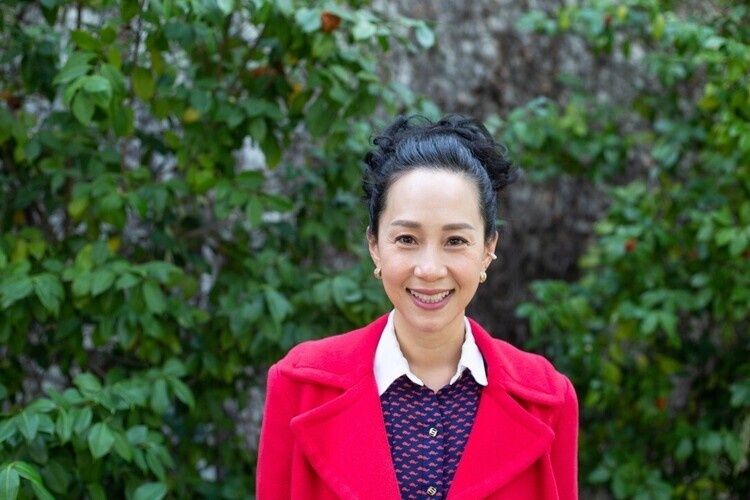
Speaker: Sandra So Hee Chi Kim, Assistant Professor of Asian and Asian American Studies, Stony Brook University
Title: The Ante-Colonial: A Grassroots Discourse of Korean Diasporic Trans-indigenous Relationality
Abstract: This presentation explores a Korean diasporic social media discourse that reimagines indigeneity as a relational framework for anti-imperial critique, transnational solidarity, and decolonial worldmaking. Through close readings of posts by Korean American community organizations, collectives, cultural workers, and movement practitioners, it traces how grassroots creators situate U.S. militarism on the Korean peninsula within interconnected histories of settler colonialism, global capitalism, and indigenous dispossession. Kim develops the concept of the ante-colonial, a trans-indigenous analytic oriented toward precolonial epistemologies and anticolonial futures that denaturalizes the nation-state, foregrounds indigenous relationality, and enables a planetary critique of empire rooted in care, kinship, collective liberation, and decolonial possibility.
Speaker's bio: Sandra So Hee Chi Kim is an Assistant Professor of Asian and Asian American Studies at Stony Brook University. A transnational cultural studies scholar of Asian American studies, critical Korean studies, and the study of modern empire, her work appears and is forthcoming in Positions: Asia Critique, Korean Studies, Verge: Studies in Global Asias, and Diaspora: A Journal of Transnational Studies, among other journals. Dr. Kim is also the founder and chair of the grassroots community organization, Asian American Justice + Innovation Lab.
Additional Information
Program
Einaudi Center for International Studies
East Asia Program
China’s Courts Side with Workers Displaced by AI, but Job Anxiety Persists
Eli Friedman, EAP
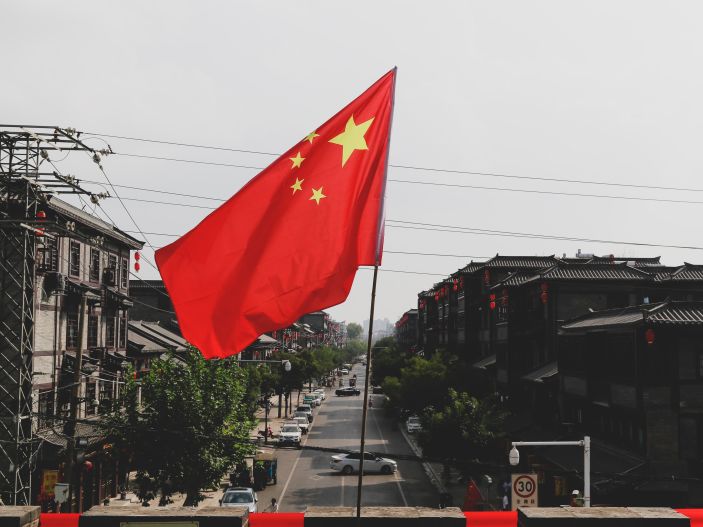
Eli Friedman, a professor of global labor and work at Cornell University, comments on the vulnerability of Chinese workers facing displacement by AI.
Additional Information
Mapping Lima: The Poetics of Urban Space in the 20th and 21st Century
October 6, 2026
12:20 pm
Uris Hall, G08
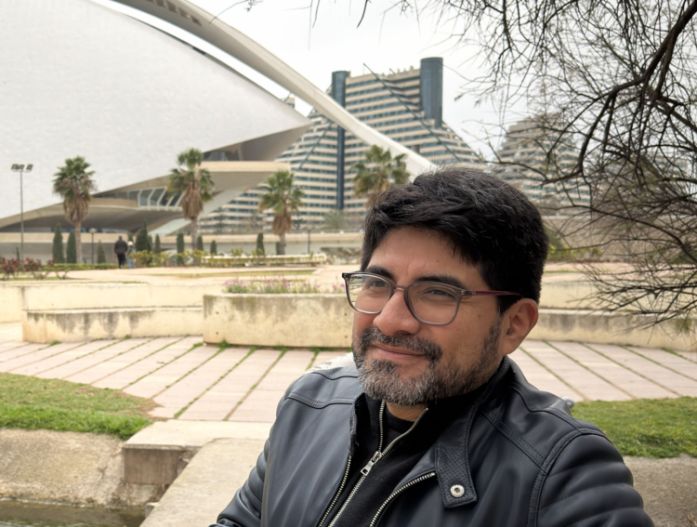
This presentation examines poetic representations of the city of Lima over the last fifty years, with a particular focus on the city’s transformation under Peru’s neoliberal project since the 1990s. Beginning in the 1970s, Peruvian poetry embraced the city and explored the possibilities of colloquial language to represent the experiences and aspirations of a rapidly expanding urban population. During the economic and political crises of the 1980s and 1990s, these representations became increasingly marked by violence, instability, and social fragmentation. In the neoliberal era, Lima emerges as a city shaped by market logic and its contradictions. Drawing on Walter Benjamin’s concept of the flâneur, this presentation argues that contemporary poetry reimagines Lima as a space where political critique and poetic resistance converge.
Carlos Villacorta Gonzáles is a writer and Professor of Latin American Literature at the University of Maine. His research focuses on contemporary Peruvian and Latin American poetry, urban representations in literature, and cultural studies. His publications include Poéticas de la ciudad: Lima en la poesía peruana (2018) and the anthology Lima escrita: Arquitectura poética de la ciudad, 1970–2020 (2021). He also co-edited Vivir la violencia en el Perú del nuevo milenio (2023). He is editor in chief of the digital magazine Polis Poesía (https://www.polispoesia.com/)
Additional Information
Program
Einaudi Center for International Studies
Latin American and Caribbean Studies
Hard Hands, Weaker States. Bukelismo in Latin America’s Unlikely Democracies
November 3, 2026
12:20 pm
Uris Hall G-08
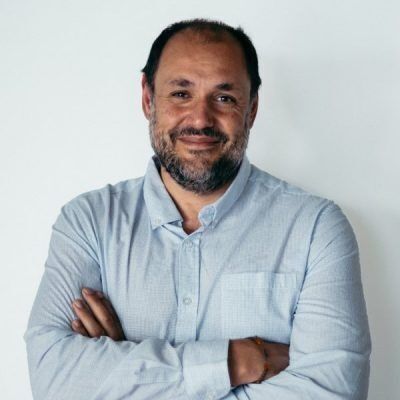
Why is Bukele-style punitivism gaining traction in Latin America’s least likely democracies? This talk examines Chile and Uruguay, two countries long treated as regional exceptions because of their stable party systems, stronger states, and comparatively low levels of violence. Both now face a post-pandemic transformation of organized crime, but they processed the shock differently: Chile’s decomposed party system turned insecurity into punitive competition, while Uruguay’s more legitimate parties initially channeled it through deliberation and cross-partisan coordination. Yet both cases are converging toward the same demand for authoritarian shortcuts. I argue that this convergence reflects state erosion from below: the declining centrality of the state and formal economy in organizing citizens’ life chances, reinforced by party-society detachment, expanding informal and illegal markets, and the time compression of democratic governance. Bukelismo is less a leader-driven export than the political name for a structural demand democracies increasingly struggle to contain, manage, and fulfill.
Juan Pablo Luna is the Inaugural Diamond Brown Chair in Democratic Studies at McGill. While mainly focused on comparative Latin American politics, his research analyzes how socio-structural conditions such as social inequality and state capacity shape democratic institutions and development trajectories. In recent years, he has researched how organized crime dynamics is contributing to reshape politics, states, and markets in Latin America.
Additional Information
Program
Einaudi Center for International Studies
Latin American and Caribbean Studies
CCCC: Poems from Visitors to Japan in 858: A Foray into the World of Merchants and Monks beyond Tang High Society
October 16, 2026
3:30 pm
Rockefeller Hall, 374 (Asian Studies Lounge)
Speaker: Greg Sattler, New York University
Title: Poems from Visitors to Japan in 858: A Foray into the World of Merchants and Monks beyond Tang High Society
Abstract: In 858, a group of travelers from throughout East Asia journeyed on a merchant ship from China to Japan. After having traveled together in China and across the high seas for several months, the group gathered in a lodge to bid farewell to the man responsible for bringing them together. At the emotional banquet, poems were composed on behalf of the monk Enchin 円珍 (814–891), who later became head of the Tiantai/Tendai 天台 school of Buddhism in Japan. Enchin’s high status and importance in the history of Japanese Buddhism allowed for the preservation of eighteen of these poems in a document titled Tōjin sōbetsushi narabini sekitoku 唐人送別詩幷尺牘. The poems, mostly written by merchants from southern China, provide some distinctive insights into Tang society through their engagement with the themes of Buddhism, friendship, scenic beauty, and even politics. They also constitute some of the earliest extant writings by merchants in East Asia. In examining these compositions, we will see that although many follow contemporary Chinese trends and conventions, they also offer rare glimpses into the mediocre and imperfect Tang works that are otherwise lost to posterity. This colloquium will welcome a range of perspectives on the poems, focusing not only on how they align with the poetry of the period, but also on the ways in which they might be perceived as subpar, flawed, or below the high standards set by the tiny fraction of esteemed Tang poems preserved in the present day. Of equal importance will be consideration of what these poems can tell us about their writers, local Chinese society, religious exchange, and, broadly speaking, the world in which they were produced.
About Cornell Classical Chinese Colloquium
The group meets monthly during the semester to explore a variety of classical Chinese texts and styles. Other premodern texts linked to classical Chinese in Japanese, Korean, and Vietnamese have also been explored. Presentations include works from the earliest times to the 20th century. Workshop sessions are led by local, national, and international scholars. Participants with any level of classical Chinese experience are welcome to attend.
o At each session, a presenter guides the group in a reading of a classical Chinese text. Attendees discuss historical, literary, linguistic, and other aspects of the text, working together to resolve difficulties in comprehension and translation.
o No preparation is required; all texts will be distributed at the meeting.
o Refreshments will be served.
Additional Information
Program
Einaudi Center for International Studies
East Asia Program
CCCC: Letters from Dali: Yunnan and the Twilight of the Mongol Empire
September 4, 2026
3:30 pm
Rockefeller Hall, 374 (Asian Studies Lounge)
Speaker: Sean Cronan, Assistant Professor of History, University of Virginia
Abstract: In 1382, armies of the Ming Dynasty (1368–1644/62) completed their conquest of Yunnan, the last stronghold of the Mongol-Yuan Empire (1260–1368/88) south of the Eurasian Steppe. Over the previous century, Chinggisid princes and Yuan administrators had governed Yunnan together with the former ruling strata of the Dali Kingdom (937–1253), a hybrid Sinitic state in Southeast Asia that had surrendered to the Mongols in 1253. Local collaboration had formed a key tenet of Mongol imperial strategy in Yunnan: re-cast as “native officials” (tuguan), the Dali ruling strata continued to govern local society as before, staffing imperial administration and styling themselves as loyal servants of the Yuan. This colloquium will examine a series of letters exchanged between the Ming general Fu Youde 傅友德 (1327–1394) and the final patriarch of the Dali imperial house, Duan Shi 段世 (fl. late 14th c.), as Ming soldiers prepared to besiege Dali city. Preserved only in the personal collection of the late Ming scholar Wang Shizhen 王世貞 (1526–1590), these letters provide a rare glimpse into how the Dali elite understood their place within the East Asian interstate order during the twilight of the Mongol-Yuan Empire.
About Cornell Classical Chinese Colloquium
The group meets monthly during the semester to explore a variety of classical Chinese texts and styles. Other premodern texts linked to classical Chinese in Japanese, Korean, and Vietnamese have also been explored. Presentations include works from the earliest times to the 20th century. Workshop sessions are led by local, national, and international scholars. Participants with any level of classical Chinese experience are welcome to attend.
o At each session, a presenter guides the group in a reading of a classical Chinese text. Attendees discuss historical, literary, linguistic, and other aspects of the text, working together to resolve difficulties in comprehension and translation.
o No preparation is required; all texts will be distributed at the meeting.
o Refreshments will be served.
Additional Information
Program
Einaudi Center for International Studies
East Asia Program
CCCC: Names can Kill: Enslavement through Semiotic Stigma in a Neo-Confucian Korea, ca. 1400-1900
September 25, 2026
3:30 pm
Rockefeller Hall, 374 (Asian Studies Lounge)
Speaker: Jaeyoon Song, Professor of History, McMaster University
Title: Names can Kill: Enslavement through Semiotic Stigma in a Neo-Confucian Korea, ca. 1400-1900
Abstract: In this colloquium, we will examine several important documents on premodern Korean slavery. By reading through these documents, we will examine slave-naming practices in Chosŏn Korea (1392–1897), where an estimated 30~40% of the total population lived in bondage. By analyzing two representative documents, a 1570 will distributing sixty-one slaves among five heirs and a 1702 household register listing 116 slaves, we will encounter many enslaved individuals who were customarily assigned contemptuous birth names invoking animals, excrement, poverty, bodily defects, and sexual organs. In contrast to many slave societies which marked slave bodies through tattooing, branding, and collars, Chosŏn society developed a systematic psychological method of dehumanization through derogatory naming practices. Jaeyoon Song argues that the unusual longevity of Chosŏn slavery without a single recorded case of large-scale slave uprising was in part due to an elaborate method of semiotic stigma and onomastic segregation that fostered servility among the enslaved and confined them to the condition often described as “social death.”
To join virtually: https://cornell.zoom.us/j/98303880869?pwd=GBtRLg84FLvvikbCU8hcGEkMsI0e1…
About Cornell Classical Chinese Colloquium
The group meets monthly during the semester to explore a variety of classical Chinese texts and styles. Other premodern texts linked to classical Chinese in Japanese, Korean, and Vietnamese have also been explored. Presentations include works from the earliest times to the 20th century. Workshop sessions are led by local, national, and international scholars. Participants with any level of classical Chinese experience are welcome to attend.
o At each session, a presenter guides the group in a reading of a classical Chinese text. Attendees discuss historical, literary, linguistic, and other aspects of the text, working together to resolve difficulties in comprehension and translation.
o No preparation is required; all texts will be distributed at the meeting.
o Refreshments will be served.
Additional Information
Program
Einaudi Center for International Studies
East Asia Program
Islam in the Indian Ocean Empire of the Raj
October 19, 2026
12:15 pm
Uris Hall, G08
Talk by Rishad Choudhury (History, Oberlin College)
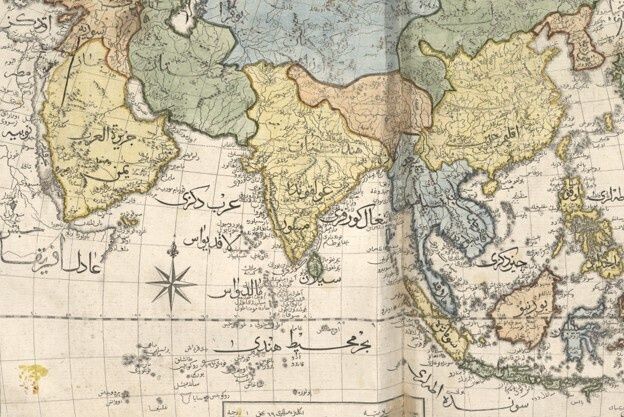
This talk surveys Islam’s emergence as an “imperial religion” in the Indian Ocean empire of the British Raj. Scholarship on colonial Islam has largely told a story of resistance: European empire as a provocation, and Pan-Islam as the insurgent reaction. By contrast, this talk shows how the Raj’s formal and informal empire in Asia and Africa, together with its material surrogate of free market capitalism, created skeins of connectivity and unity among transcolonial Muslims. Colonial Sharia, first codified in Bengal and then exported around the ocean’s rim, juridically bound and defined Muslim identity from South Asia to the Straits Settlements, the Swahili Coast, and Arabia. Meanwhile, the growth of colonial-era market relations drew far-flung coreligionists into shared, if unequal, circuits of exchange, triggering mass labor migrations in and among Muslim societies, propelling steamship journeys to Mecca, and weaving liens of debt and obligation throughout the Islamic world. The talk argues that the Raj’s oceanic empire crucially shaped modern Muslim projects of worldmaking until the First World War, whether by enabling connections of sociability among Cairine religious reformers and Bombay merchant-financiers, or by inciting discourses of economic self-sufficiency among Indian and Turkish Pan-Islamists. However, the racialized orders of colonial governance, coupled with the immanent inequities of capitalism, ultimately also foreclosed the constitutional and anticolonial possibilities that many Muslims across the Indian Ocean strove to imagine.
Rishad Choudhury is a historian of modern South Asia and the Indian Ocean, from ca. 1750 to decolonization. His work centers on how power is exercised in and on Muslim societies, and how political genealogies are shaped by regional and global histories of empire and colonialism. Choudhury’s first book, Hajj across Empires: Pilgrimage and Political Culture after the Mughals, 1739-1857 (Cambridge, 2024), examined how South Asian Muslims navigated the revolutionary age between Mughal imperial decline and British colonial consolidation by forging transregional ties through pilgrimage to Arabia and the Ottoman world. For a preview of the book’s themes, you can read a short piece I wrote for the Cambridge University Press blog. Rishad was formerly an Academy Scholar at the Harvard Academy for International and Area Studies, a Kluge Fellow at the Library of Congress, and a Member of the School of Historical Studies at the Institute for Advanced Study. Rishad is now working on two new books. The first, Mughal Enlightenment: The Command of Subjects in Colonial Thought, reconsiders how Persian – a classical lingua franca of India and the Indian Ocean – transformed under colonial rule. It reveals how Mughal munshis (scribal workers) engaged with European sources and actors to coproduce novel vernacular epistemologies of science, art, narratology, medicine, ethnography, and political economy. The second is a history of the Nawabs of Dacca, a merchant clan turned landed dynasty that used a colonial peerage to reinvent themselves as neo-Mughal nobles loyal to the Victorian Raj. The book reconstructs the family’s pivotal role in broader currents of Muslim communal mobilization in modern South Asia.
Additional Information
Program
Einaudi Center for International Studies
South Asia Program
Southwest Asia and North Africa Program