
Einaudi Center for International Studies
One in a Million
November 10, 2026
6:00 pm
Willard Straight Theatre
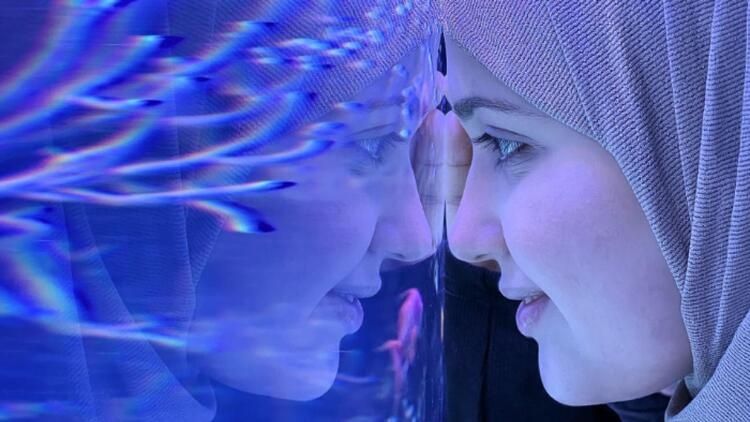
Filmed over ten years, One in a Million follows Israa from childhood to adulthood on an extraordinary journey from war-torn Syria to Germany — and back again. We first meet her at age 11 as she and her family prepare to cross the Aegean Sea, risking everything in search of safety and a better life in Europe.
What unfolds is a deeply personal chronicle of war, exile, and heartbreak, as Israa grows up navigating adolescence, identity, and belonging far from the home she was forced to leave. As she settles into life in Germany, new freedoms collide with the stabilizing pull of Syrian traditions, testing family bonds and reshaping her sense of self.
Co-directed by Itab Azzam and Jack MacInnes, the film bears witness to the remarkable trust between filmmakers and family, following Israa and her loved ones across borders, cultures, and shifting circumstances. An intimate and nuanced coming-of-age story, One in a Million illuminates the complexities of the refugee experience while asking a universal question: what does it truly mean to call a place home?
Free admission! Sponsored by the Migrations Program and Southwest Asia and North Africa Program at the Mario Einaudi Center for International Studies.
Additional Information
Program
Einaudi Center for International Studies
Migrations Program
Southwest Asia and North Africa Program
unseen
October 28, 2026
6:00 pm
Willard Straight Theatre
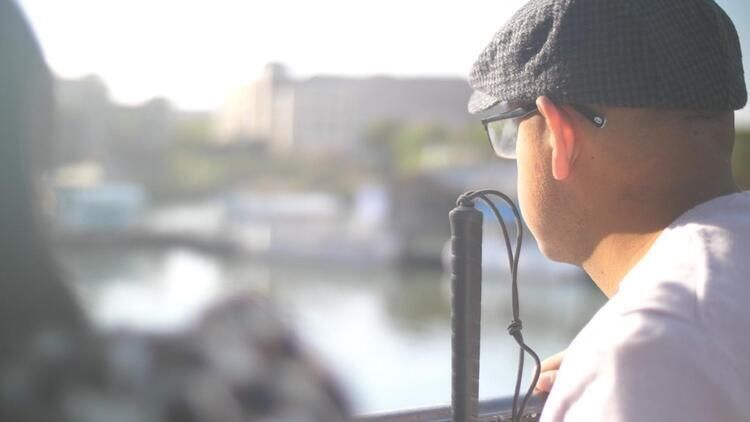
Most people dream of a better future. Pedro, an aspiring social worker, is no different. But as a blind, undocumented immigrant, Pedro faces political restrictions to obtain his college degree, secure a job in his field, and support his family. As he finally graduates, uncertainty looms over Pedro. What starts as a journey to provide mental health care for his community ultimately transforms into Pedro’s path towards his own healing.
Directed by queer, undocumented filmmaker, writer, and community organizer Set Hernandez, Unseen is a visually innovative, audio-centric documentary that reimagines the accessibility of cinema, while exploring the intersections of immigration, disability, and mental health. The film is also groundbreaking as one of the first media projects ever to be led by an intersectional team of queer, undocumented immigrant and disabled/blind artists
Filmmaker Set Hernandez will join for a post-screening conversation with Ezra Brown, Clinical Teaching Fellow at the Immigration Law & Advocacy Clinic.
Free admission! Sponsored by Cornell Law School Immigration Law & Advocacy Clinic.
Additional Information
Program
Einaudi Center for International Studies
Migrations Program
Cinema Pe Cinema: The Theatres. The Movies. And Us
September 30, 2026
6:00 pm
Willard Straight Theatre
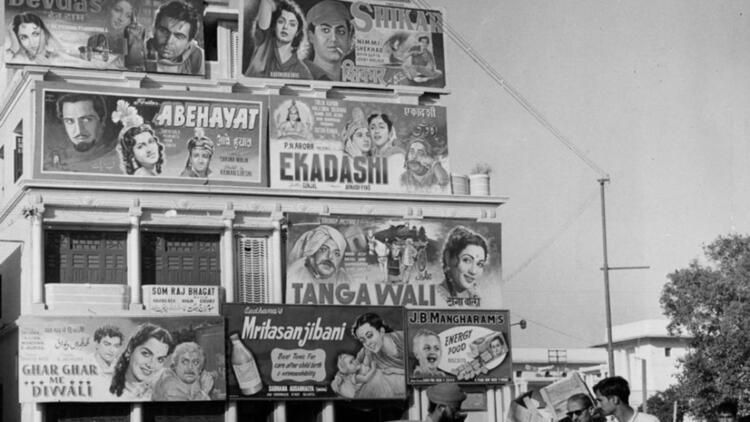
For some, India’s single screen cinemas are a legacy to be celebrated and preserved. For others, they remain a place to see movies. Still others remember that it was within those crumbling edifices that they first discovered the magic of the movies, and made deep, lasting connections.
Cinema Pe Cinema, a remarkable documentary by Vani Subramanian and Cornell professor emeritus Mary Norman Woods, meanders through theatres in small towns and big cities across India, creating a memoryscape of women and men whose lives have been touched by single screen cinemas. As subjects reminisce about the cinema-going experience and its connections to their lives, the film becomes an act of resistance against forgetting, helping to keep alive both memories of these iconic theatres and the films they showed through traces of their audio, visual, and physical ephemera. With more and more single screen cinema theatres shuttering across India, Cinema Pe Cinema testifies to the importance of the single screen theatre-going experiences during in polarized times and the age of multiplex cinemas.
Filmmaker Vani Subramanian and producer Mary N. Woods, Professor Emerita in the College of Art, Architecture, and Planning, will join for a post-screening conversation.
Free admission! Sponsored by the South Asia Program and the Migrations Program at the Mario Einaudi Center for International Studies, cosponsored by the Department of Performing & Media Arts.
Additional Information
Program
Einaudi Center for International Studies
South Asia Program
Migrations Program
The Patron’s Dilemma: Recklessness and Restraint Under Nuclear Umbrellas
October 15, 2026
12:00 pm
Uris Hall, G08
Despite an ongoing policy debate within the United States about the value of alliances, research suggests that the complex network of security relationships that the United States and other major patrons have established since the end of World War II have important and understudied implications for a wide range of bargaining and cooperation dynamics. To tackle this pressing policy problem, this project delves into the strategic behavior of states in alliances with nuclear security guarantors or patrons. It asks two main questions. First, how do nuclear umbrellas produce risky security outcomes – namely, moral hazard – that can potentially entrap nuclear patrons into military engagement with adversaries? And second, how can alliances be designed to prevent these risky outcomes and yield positive dividends for the international system? To explore these questions, we pursue three lines of inquiry. First, we develop a new theoretical framework that explores the duality of nuclear umbrellas – their benefits and burdens. Second, we employ a series of large-n statistical tests exploring the United States as patron and its relationship with various treaty allies and their adversaries over time. Third, we examine this logic and mechanisms through a series of in-depth case studies, including Taiwan, the United Kingdom, and NATO. The manuscript concludes with valuable insights and recommendations for policymakers focused on grand strategy and the broad network of U.S. alliances.
About the speaker
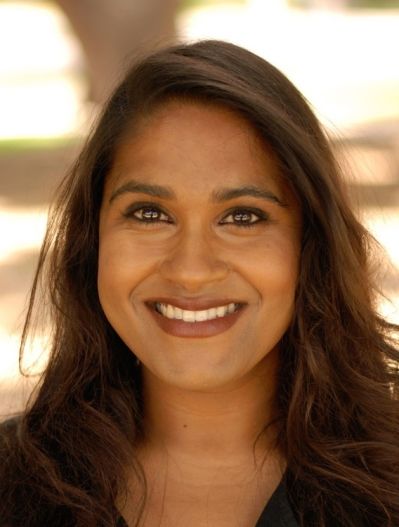
Rupal N. Mehta is Chair of Research and Postdoctoral Fellows Program, and Senior Fellow at the Center for Global Security Research at Lawrence Livermore National Laboratory. She is an Associate Professor (on leave) in the Department of Political Science at the University of Nebraska-Lincoln. Previously, she was a Stanton Nuclear Security Postdoctoral Fellow in the Belfer Center's International Security Program and Project on Managing the Atom at the Kennedy School of Government at Harvard University. Her research interests lie in international security and conflict, with a specialization in nuclear proliferation/counterproliferation, extended deterrence, emerging technologies, and elite decision-making. Her first book, Delaying Doomsday: The Politics of Nuclear Reversal (Oxford University Press, 2020) explores the conditions under which nuclear aspirants stop their pursuit. Her work has appeared in the Journal of Conflict Resolution, International Studies Quarterly, the Journal of Strategic Studies, The Washington Quarterly and her commentary has appeared in the New York Times, Washington Post, National Public Radio (NPR), BBC News, War on the Rocks, International Studies Quarterly, and the Washington Post's Monkey Cage. She received a Ph.D. and M.A. in Political Science from the University of California, San Diego, and B.A. in Political Science from the University of California, Berkeley.
Host
Reppy Institute for Peace and Conflict Studies, part of the Einaudi Center for International Studies
Additional Information
Program
Einaudi Center for International Studies
Reppy Institute for Peace and Conflict Studies
How China’s Brands Are Thriving in the US Despite Rising Geopolitical Tensions

Lourdes Casanova, LACS
Pop Mart’s targeted U.S. strategy reflects a broader shift by Chinese brands to cultivate niche audiences and global identities amid rising U.S.-China tensions, with Cornell’s Lourdes Casanova noting that some firms increasingly distance themselves from their Chinese origins.
Additional Information
Information Session: Fulbright U.S. Student Program
December 14, 2026
4:45 pm
The Fulbright U.S. Student Program supports U.S. citizens to study, conduct research in any field, or teach English in more than 150 countries. The program is open to graduate students, recent graduates, and young professionals. Undergraduate students who wish to begin the program immediately after graduation are encouraged to start the process in their junior year. Recent graduates are welcome to apply through Cornell.
The Fulbright program at Cornell is administered by the Mario Einaudi Center for International studies. Applicants are supported through all stages of the application and are encouraged to start early by contacting fulbright@einaudi.cornell.edu.
Register for the virtual session.
Can’t attend? Contact fulbright@einaudi.cornell.edu.
Additional Information
Program
Einaudi Center for International Studies
Reppy Institute for Peace and Conflict Studies
East Asia Program
Southeast Asia Program
Latin American and Caribbean Studies
Institute for African Development
Institute for European Studies
South Asia Program
Migrations Program
Information Session: Fulbright U.S. Student Program
November 17, 2026
4:45 pm
The Fulbright U.S. Student Program supports U.S. citizens to study, conduct research in any field, or teach English in more than 150 countries. The program is open to graduate students, recent graduates, and young professionals. Undergraduate students who wish to begin the program immediately after graduation are encouraged to start the process in their junior year. Recent graduates are welcome to apply through Cornell.
The Fulbright program at Cornell is administered by the Mario Einaudi Center for International studies. Applicants are supported through all stages of the application and are encouraged to start early by contacting fulbright@einaudi.cornell.edu.
Register for the virtual session.
Can’t attend? Contact fulbright@einaudi.cornell.edu.
Additional Information
Program
Einaudi Center for International Studies
Reppy Institute for Peace and Conflict Studies
East Asia Program
Southeast Asia Program
Latin American and Caribbean Studies
Institute for African Development
Institute for European Studies
South Asia Program
Migrations Program
Information Session: Fulbright U.S. Student Program
October 19, 2026
4:45 pm
The Fulbright U.S. Student Program supports U.S. citizens to study, conduct research in any field, or teach English in more than 150 countries. The program is open to graduate students, recent graduates, and young professionals. Undergraduate students who wish to begin the program immediately after graduation are encouraged to start the process in their junior year. Recent graduates are welcome to apply through Cornell.
The Fulbright program at Cornell is administered by the Mario Einaudi Center for International studies. Applicants are supported through all stages of the application and are encouraged to start early by contacting fulbright@einaudi.cornell.edu.
Register for the virtual session.
Can’t attend? Contact fulbright@einaudi.cornell.edu.
Additional Information
Program
Einaudi Center for International Studies
Reppy Institute for Peace and Conflict Studies
East Asia Program
Southeast Asia Program
Latin American and Caribbean Studies
Institute for African Development
Institute for European Studies
South Asia Program
Migrations Program
Our Stories in Motion: A Migrations Exhibit
October 6, 2026
12:00 am
Cornell University Libraries, Mann Library lobby, Olin Library basement study room, Engineering Library (Carpenter Hall)
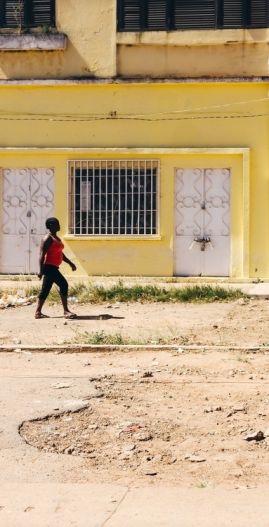
Everyone has a migration story. Most of us have, at some point in our lives, moved from one place to another, whether across borders or just down the street. In a collaborative effort between the Migrations Program and Cornell University Library, installations located at three campus libraries—Olin Library, Mann Library and the Engineering Library in Carpenter Hall—showcase writing, art, and media created by Cornell students and staff to share the ways that migration shapes their lives. Works displayed are winning submissions from the Migrations Program's creative writing and art competition. Also offered: interactive ways to share your own migration story. Drop in at any or all of the displays, explore the stories presented, and share one of your own.
Migration stories can also be shared anonymously directly online here. And for a look at the evolving story map created by our Cornell community, visit here. We hope you join in! For more information or questions, please email mann-public-ed-prog@cornell.edu.
Additional Information
Program
Einaudi Center for International Studies
Migrations Program
The Real Reason Behind Trump’s Yen Intervention

Eswar Prasad, SAP
Eswar Prasad, a Cornell University professor, provides expert commentary on the geopolitical implications of U.S.-Japan currency market interventions.