
Institute for European Studies
Oct. 8: Europe and the Return of History
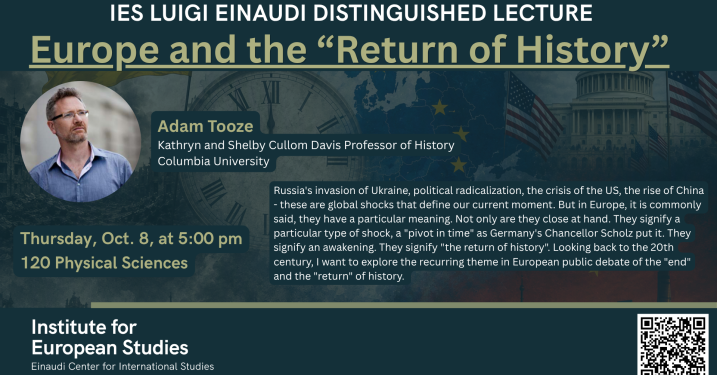
Looking back to the 20th century, Adam Tooze will explore the recurring theme in European public debate of the "end" and "return" of history.
A New Era of Political Mobilization: Who were the Yellow Vests in France?
October 19, 2026
5:00 pm
Uris Hall, G08
When the Yellow Vest movement rushed through the streets of Paris in 2018 most analysts as well as the general public were mystified and not sure how to react. It was an extraordinary movement of hundreds of thousands of people throughout France and it was not clear whether it represented the left or the right or even whether such categories were still relevant.
I followed this movement, joining the protests in the urban streets and then following participants back to the provinces, from its earliest stages and have continued to study it and its aftermath. The Yellow Vests were comprised of “ordinary” citizens who were outraged by government policies to raise the gas tax and whose anger quicky morphed into opposition to the cutbacks in state transportation services, healthcare and education. The Yellow Vests faced the kind of massive opposition from the police that we have seen on the streets of Minneapolis and elsewhere in the United States.
Americans might not use the same language, but the paper discusses some parallels with the community reactions to ICE raids, Trump’s gutting of public institutions, and the skyrocketing cost of essential items and services.
This paper analyzes the ways in which grass roots movements have regrouped in new ways to combat growing incursions in democratic expectations combined with the transformation in class relations and the ever-increasing inequality of the current era.
***
About the Speaker
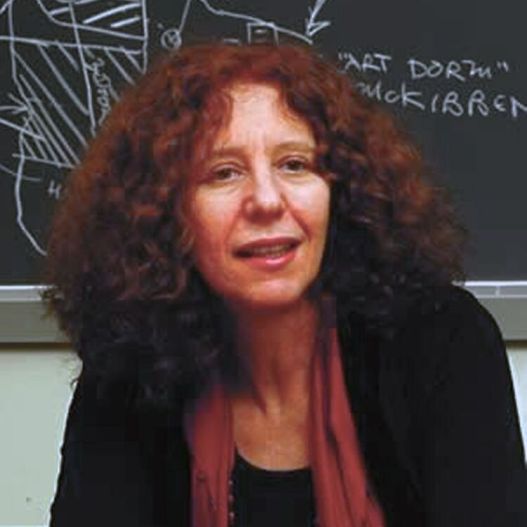
Ida Susser, PHD is Distinguished Professor of Anthropology at the Graduate Center and Hunter College, CUNY. Her recent book The Yellow Vests and the Battle for Democracy: taking to the streets of Paris in the 21st Century (Routledge 2026) focuses on commoning movements and new visions. Her previous books include: Norman Street (Oxford, 2012) a study of working class opposition to cutbacks during the New York City fiscal crisis and the transition of Greenpoint-Williamsburg from a working class neighborhood to a gentrified enclave, and AIDS, Sex and Culture: Global Politics and Survival in Southern Africa (Wiley-Blackwell 2009), a history of the power of social movements to transform health.
About the Event
This event is hosted by the Institute for European Studies (IES), part of the Mario Einaudi Center for International Studies.
Additional Information
Program
Einaudi Center for International Studies
Institute for European Studies
New IES, LACS, SAP Directors
Einaudi Welcomes Program Directors
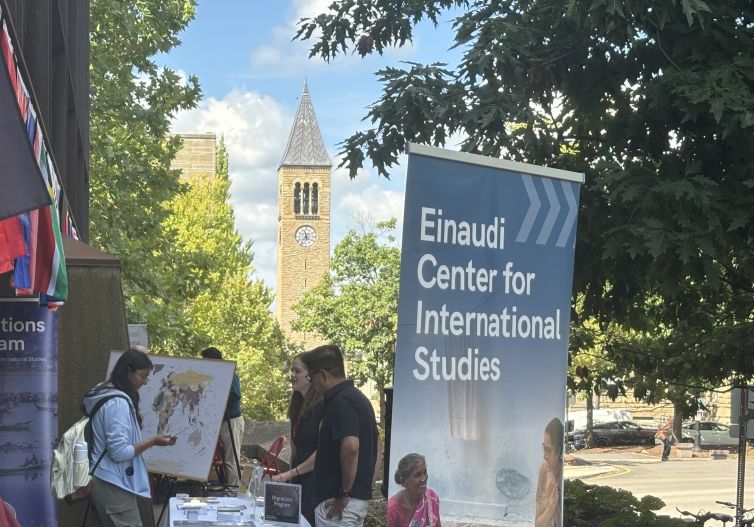
Three program directors join our leadership this fall: Chris Way, Ken Roberts, and Robert Travers.
We're excited to introduce new program directors in the Institute for European Studies, Latin American and Caribbean Studies Program, and South Asia Program. Below, meet the directors and learn about their plans for the year.
IES: Chris Way
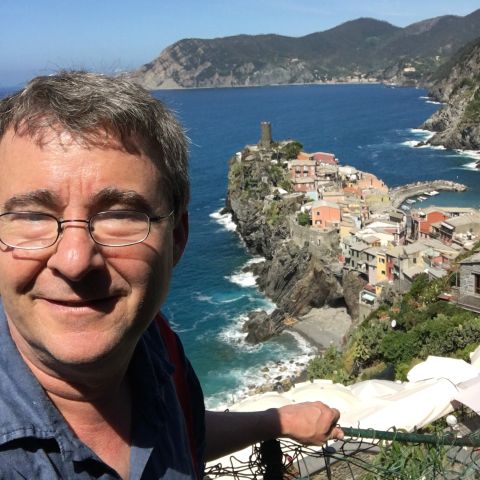
Chris Way is an associate professor of government in the College of Arts and Sciences (A&S). His research focuses on OECD democracies, the proliferation of weapons of mass destruction, and the relationship between economic interdependence and conflict.
“Europe is at the center of many consequential questions in international affairs," Way said, "including the war in Ukraine and the future of European security, changing relations with the United States, migration, and economic transformation. IES brings together scholars across disciplines and approaches, so we are well-positioned to shed light on these and other challenges facing Europe and the world.”
LACS: Ken Roberts
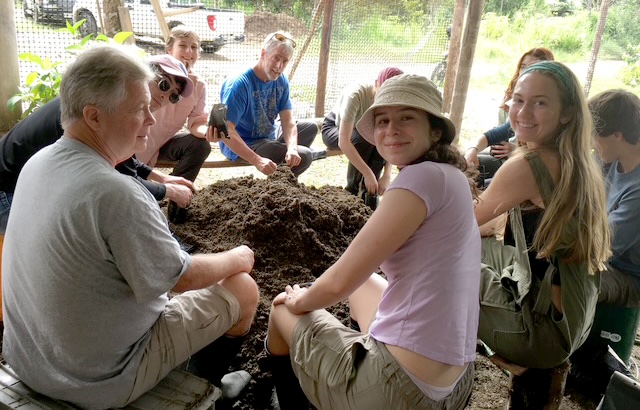
Ken Roberts is the Susan August Rubinstein Professor of Government in A&S. His current research focuses on political parties, populism, and polarization in contemporary Latin American democracies and crises of democracy in the global arena.
"LACS continues to be a meeting ground for undergraduate and graduate students, faculty, and members of the larger community who take a special interest in Latin America," said Roberts. "We've planned a full year of activities, including seminars, cultural events, a research symposium, and support for student internships, research, and study abroad opportunities."
SAP: Robert Travers
Robert Travers is a professor in the Department of History in A&S. His research on the consolidation of the British empire in India focuses on encounters between British and South Asian forms of political life. Travers kicked off the South Asia Program's fall seminars with his August 31 talk, Sex, Lies, and the Company State: An Indo-Persian Counter-History of the Early British Empire in India.
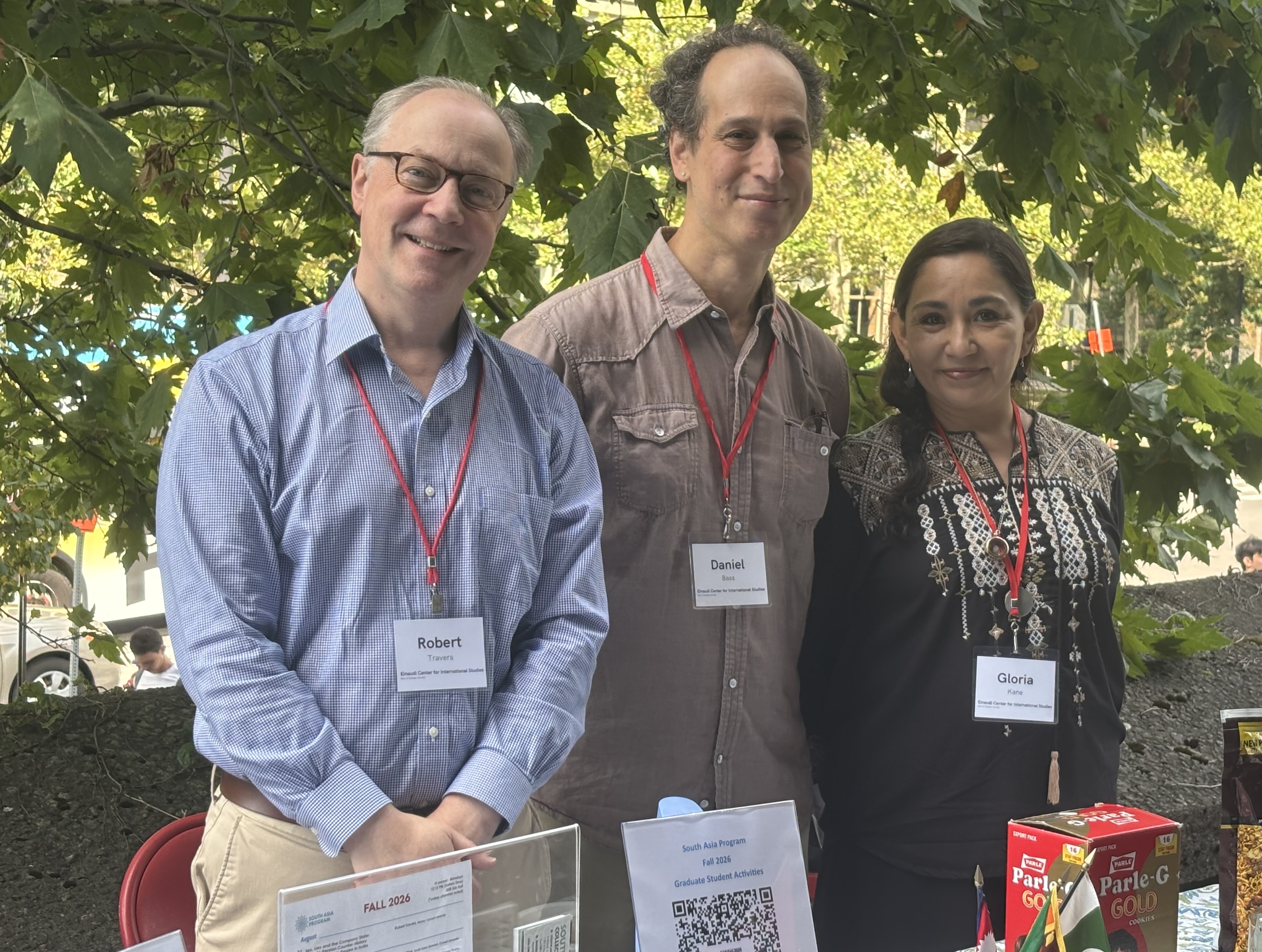
“Our seminar series this fall will showcase new directions in South Asian studies across many disciplines," Travers said. "We are especially excited to welcome back two professors who received their PhDs at Cornell, Anaar Desai-Stephens (CUNY Graduate Center) and Rishad Choudhury (Oberlin).”
Additional Information
Information Session: Fulbright U.S. Student Program
December 14, 2026
4:45 pm
The Fulbright U.S. Student Program supports U.S. citizens to study, conduct research in any field, or teach English in more than 150 countries. The program is open to graduate students, recent graduates, and young professionals. Undergraduate students who wish to begin the program immediately after graduation are encouraged to start the process in their junior year. Recent graduates are welcome to apply through Cornell.
The Fulbright program at Cornell is administered by the Mario Einaudi Center for International studies. Applicants are supported through all stages of the application and are encouraged to start early by contacting fulbright@einaudi.cornell.edu.
Register for the virtual session.
Can’t attend? Contact fulbright@einaudi.cornell.edu.
Additional Information
Program
Einaudi Center for International Studies
Reppy Institute for Peace and Conflict Studies
East Asia Program
Southeast Asia Program
Latin American and Caribbean Studies
Institute for African Development
Institute for European Studies
South Asia Program
Migrations Program
Information Session: Fulbright U.S. Student Program
November 17, 2026
4:45 pm
The Fulbright U.S. Student Program supports U.S. citizens to study, conduct research in any field, or teach English in more than 150 countries. The program is open to graduate students, recent graduates, and young professionals. Undergraduate students who wish to begin the program immediately after graduation are encouraged to start the process in their junior year. Recent graduates are welcome to apply through Cornell.
The Fulbright program at Cornell is administered by the Mario Einaudi Center for International studies. Applicants are supported through all stages of the application and are encouraged to start early by contacting fulbright@einaudi.cornell.edu.
Register for the virtual session.
Can’t attend? Contact fulbright@einaudi.cornell.edu.
Additional Information
Program
Einaudi Center for International Studies
Reppy Institute for Peace and Conflict Studies
East Asia Program
Southeast Asia Program
Latin American and Caribbean Studies
Institute for African Development
Institute for European Studies
South Asia Program
Migrations Program
Information Session: Fulbright U.S. Student Program
October 19, 2026
4:45 pm
The Fulbright U.S. Student Program supports U.S. citizens to study, conduct research in any field, or teach English in more than 150 countries. The program is open to graduate students, recent graduates, and young professionals. Undergraduate students who wish to begin the program immediately after graduation are encouraged to start the process in their junior year. Recent graduates are welcome to apply through Cornell.
The Fulbright program at Cornell is administered by the Mario Einaudi Center for International studies. Applicants are supported through all stages of the application and are encouraged to start early by contacting fulbright@einaudi.cornell.edu.
Register for the virtual session.
Can’t attend? Contact fulbright@einaudi.cornell.edu.
Additional Information
Program
Einaudi Center for International Studies
Reppy Institute for Peace and Conflict Studies
East Asia Program
Southeast Asia Program
Latin American and Caribbean Studies
Institute for African Development
Institute for European Studies
South Asia Program
Migrations Program
When Politicians Ignore Economic Expertise

Kaushik Basu, IES/SAP
CRADLE cofounder Kaushik Basu (IES/SAP) analyzes the consequences of political interference in economic policy using high-profile global examples.
Additional Information
Patrick J. Stevens
Curator of the Fiske Icelandic Collection, Cornell University Library
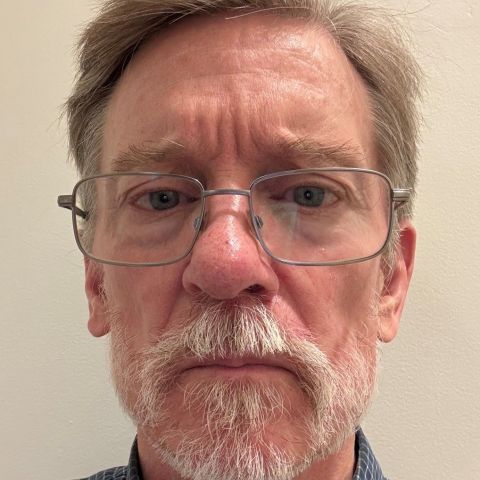
Patrick J. Stevens is curator of the Fiske Icelandic Collection in the Division of Rare and Manuscript Collections, Cornell University Library. He is also bibliographer for Jewish Studies for Cornell University Library.
Additional Information
Information Session: International Research Travel Grants
September 17, 2026
4:30 pm
Do you need to travel internationally for your graduate research or fieldwork?
The Einaudi Center sponsors international travel for individual Cornell graduate students. If you’re traveling between the United States and a host country for activities directly related to your dissertation or thesis research, Einaudi can help you get there. See full details here.
Register here. Can’t attend? Contact travelgrants@einaudi.cornell.edu to learn more.
***
The Mario Einaudi Center for International Studies hosts info sessions for graduate and for undergraduate students to learn more about funding opportunities, international travel, research, and internships. View the full calendar of fall semester sessions.
Additional Information
Program
Einaudi Center for International Studies
Reppy Institute for Peace and Conflict Studies
East Asia Program
Southeast Asia Program
Latin American and Caribbean Studies
Institute for African Development
Institute for European Studies
South Asia Program
Migrations Program
Southwest Asia and North Africa Program
Information Session: Laidlaw Leadership & Research Program
October 20, 2026
5:00 pm
The Laidlaw Leadership and Research Program promotes ethical leadership and international research around the world—starting with the passionate leaders and learners found on campuses like Cornell. Open to first- and second-year students, the two-year Laidlaw program provides generous support to carry out internationally focused research, develop leadership skills, engage with community projects overseas, and become part of a global network of like-minded scholars from twenty universities worldwide.
Register here. Can’t attend? Contact programs@einaudi.cornell.edu to learn more.
***
The Mario Einaudi Center for International Studies hosts info sessions for graduate and for undergraduate students to learn more about funding opportunities, international travel, research, and internships. View the full calendar of fall semester sessions.
Additional Information
Program
Einaudi Center for International Studies
Reppy Institute for Peace and Conflict Studies
East Asia Program
Southeast Asia Program
Latin American and Caribbean Studies
Institute for African Development
Institute for European Studies
South Asia Program
Migrations Program