
Institute for European Studies
Ware Rotary Award for International Graduate Professional Development

Details
International students: Do you plan to travel to a U.S. conference or networking event related to your field of study?
The W. Barlow Ware Rotary Award for International Graduate Student Professional Development provides three awards annually to international graduate and professional students at Cornell. The awards ($650 maximum) support domestic travel and attendance costs for conferences or professional events promoting international graduate students' professional development.
Amount
Up to $650. Award recipients will have funds directly deposited through the Cornell Bursar system. Per U.S. Internal Revenue Service guidelines, 14% of the funds may be withheld for tax purposes.
Eligibility
Graduate students and students enrolled in Cornell’s professional schools are eligible. In addition, you must be:
- An international student with citizenship outside the United States (nonresident on a Cornell-sponsored student visa)
- Actively engaged with the Mario Einaudi Center for International Studies or one of our regional and thematic programs
Requirements
- In your application, you must clearly explain the value of your proposed conference or networking experience—as well as the alignment of your research or professional studies—with one or more of the Seven Rotary Causes:
- Promoting peace
- Fighting disease
- Providing clean water, sanitation, and hygiene
- Saving mothers and children
- Supporting education
- Growing local economies
- Protecting the environment
- Ware Rotary awards support domestic airfare or train/bus, hotel, and other associated costs for attendance at an event directly related to your dissertation, thesis research, or planned professional career.
- The proposed conference, meeting, or event must be held in the United States, with your travel beginning and ending in the U.S.
- You must attend the conference or event described in your application. Awards are not transferable.
- Travel must take place between March 1 and August 15, 2025, and cannot be funded retroactively.
Reporting
Post-event reporting is mandatory for all award recipients. By applying, you agree to complete the following reporting no later than August 29, 2025:
- Provide proof of event attendance, such as a registration email and a copy of the conference program.
- Provide a testimonial stating how your attendance benefited your professional development and promoted one or more of the Seven Rotary Causes.
- Photos of you attending your event are appreciated! Please sign this multimedia release before submitting photos.
Questions?
Additional Information
Funding Type
- Award
Role
- Student
Program
IES Luigi Einaudi Distinguished Lectures
The Costs of Magical Realism: Europe, NATO, and Ukraine Face the Trump Challenge | April 21, 2025
Luigi Einaudi Distinguished Lecture
Nuclear Colonialism and Its Discontents

February 6, 2025
12:00 pm
Nuclear weapons and associated technologies have been primarily developed by and for Global North nations, often using the labor and natural resources of indigenous populations around the world, and often doing violence to those populations and their environments. As a result, many scholars analyze the development of nuclear technologies–including uranium mining, the processing and production of fissile materials, nuclear weapons testing, and use–as a form of colonialism. But as a state-centric framework, colonialism does not always capture practices that transcend national boundaries; radioactivity does not respect borders. This panel will elucidate the uses and limitations of the colonial framework for understanding the social and political implications of nuclear technologies. The panel will discuss how nuclear technologies have been developed in ways that are both locally specific and globally-interconnected, and the implications of this history for social and environmental justice.
Virtual panel discussion with-
Vincent Intondi, PACS Domestic Affiliate Scholar
Myrriah Gomez, Associate Professor at University of New Mexico
Mary Mitchell, Assistant Professor at New Jersey Institute of Technology and Rutgers Newark
Magdalena Stawkowski, Assistant Professor at University of South Carolina
Hirokazu Miyazaki, Former Director of the Einaudi Center, Professor at Northwestern University
Register here.
Host
Reppy Institute for Peace and Conflict Studies
Additional Information
Program
Einaudi Center for International Studies
Reppy Institute for Peace and Conflict Studies
Institute for African Development
Institute for European Studies
East Asia Program
Latin American and Caribbean Studies
Information Session: Einaudi Center Undergraduate Opportunities

March 11, 2025
5:00 pm
Uris Hall, G08
Join us to learn about opportunities for undergraduate students with the Einaudi Center for International Studies! This session will discuss how to successfully apply for programs like Global Internships and Laidlaw Scholars, and how to discover or strengthen global interests, including academic minors, weekly seminars, and language study.
Can't attend? Email programs@einaudi.cornell.edu for more information.
Additional Information
Program
Einaudi Center for International Studies
Reppy Institute for Peace and Conflict Studies
East Asia Program
Southeast Asia Program
Latin American and Caribbean Studies
Institute for European Studies
South Asia Program
Migrations Program
Information Session: IES & PACS Undergrad and Grad Opportunities

February 18, 2025
3:00 pm
Uris Hall, G08
This session will describe opportunties for undergraduate and graduate students in the Institute for European Studies and the Reppy Institute for Peace and Conflict Studies.
IES offers a minor in European Studies, Global Summer Internships, a Graduate Fellows Program, and research funding for both undergraduate and graduate students. PACS offers fellowships, funding, and research travel grants for undergraduate and graduate students.
Register for virtual attendance here. Can't attend? Contact ies@cornell.edu or pacs@cornell.edu.
Additional Information
Program
Einaudi Center for International Studies
Reppy Institute for Peace and Conflict Studies
East Asia Program
Southeast Asia Program
Latin American and Caribbean Studies
Institute for African Development
Institute for European Studies
South Asia Program
Migrations Program
Information Session: Fulbright U.S. Student Program for Undergraduates

March 19, 2025
4:45 pm
The Fulbright U.S. Student Program supports U.S. citizens to study, conduct research in any field, or teach English in more than 150 countries. Students who wish to begin the program immediately after graduation are encouraged to start the process in their junior year. Recent graduates are welcome to apply through Cornell.
The Fulbright program at Cornell is administered by the Einaudi Center for International studies. Applicants are supported through all stages of the application and are encouraged to start early by contacting fulbright@einaudi.cornell.edu.
Register here. Can't attend? Contact fulbright@einaudi.cornell.edu.
Additional Information
Program
Einaudi Center for International Studies
Reppy Institute for Peace and Conflict Studies
East Asia Program
Southeast Asia Program
Latin American and Caribbean Studies
Institute for African Development
Institute for European Studies
South Asia Program
Migrations Program
Information Session: Fulbright Opportunities for Graduate Students

March 5, 2025
4:45 pm
The Fulbright U.S. Student Program provides full funding for graduate and professional students conducting research in any field or teaching in more than 150 countries. Open to U.S. citizens only. The Fulbright-Hays Doctoral Dissertation Research Abroad program supports doctoral students conducting research in modern languages or area studies for six to 12 months.
Open to U.S. citizens and permanent residents of the United States. Travel to Western European countries is not eligible.
Register here. Can’t attend? Contact fulbright@einaudi.cornell.edu.
Additional Information
Program
Einaudi Center for International Studies
Reppy Institute for Peace and Conflict Studies
East Asia Program
Southeast Asia Program
Latin American and Caribbean Studies
Institute for African Development
Institute for European Studies
South Asia Program
Migrations Program
How Le Pen Used Populism to Fuel His Far-Right Agenda

Mabel Berezin, IES
IES director Mabel Berezin joined Here & Now to talk about the legacy of Jean-Marie Le Pen. The segment aired on January 7.
Additional Information
In Georgia Protests, Echoes of Ukraine’s Past Revolutions

Cristina Florea, IES
Cristina Florea, assistant professor of history, says “The government is trying to turn the country back to the Russian sphere of influence against the will of the people, who were moving toward the West, which felt almost inevitable.”
Additional Information
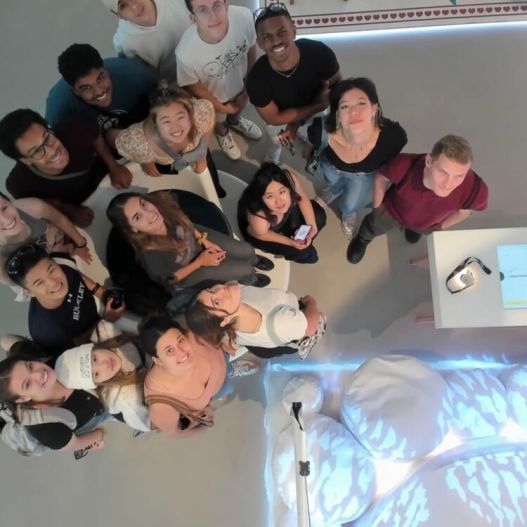
Cornell Summer Public Policy Program in Turin Info Session
February 10, 2025
4:00 pm
Martha Van Rensselaer Hall, 2250 Conference Room
Find out more about our summer public policy program in Turin. Nestled between the Alps and the Mediterranean in the magnificent Piedmont region of northern Italy, the city of Turin provides an inspiring background to explore the causes and consequences of population change, the debates unfolding in Europe around these issues, and the policies intended to address them. Population problems are central to societal change in numerous areas- inequality, immigration and diversity, race relations, family life, health and aging, and social welfare systems. This program explores the causes and consequences of population change, paying particular attention to how population processes interact with the social, economic, and political context in which they play out.
Additional Information
Program
Institute for European Studies