
Institute for European Studies
Contagion, Inevitability, and Teleology: Imperial Disintegration and Nation-State Formation in Global History
April 7, 2025
4:45 pm
Statler 196
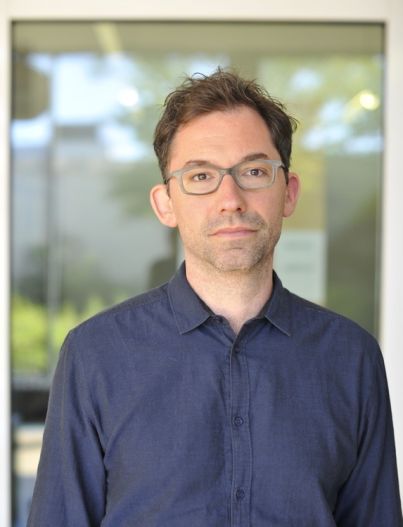
Historians have long been interested in the questions of how and why multinational empires gave way to nation-states. As revisionist scholars of various empires have lamented during the last few decades, post- imperial nationalist historiographies all too frequently construed the transition from empire to nation-state as a natural process governed by universal laws of awakening nationhood. But in light of the nation-state’s recurring seriality, the revisionist emphasis of each case’s inherent capriciousness creates new interpretive problems—in particular as we zoom out to a more global purview. In evaluating key terms in the global historiography about imperial disintegration and nation-state formation, such as contagion, inevitability, and teleology, this talk challenges revisionist accounts and argues that gestures to “contingency” are ill-suited to the purpose of explaining the global spread of the nation-state form during the last 250 years of world history. The talk ultimately points specifically to the centrality of popular sovereignty as a vehicle for the proliferation of nominal nation-states in the modern world.
Michael Goebel is the Einstein Professor of Global History at Freie Universität Berlin and co-director of the university’s Center for French Studies. Since his Ph.D. (University College London, 2006) he has also worked at the European University Institute, Harvard University, and the Geneva Graduate Institute. Following his 2015 book Anti-Imperial Metropolis, which won the Jerry Bentley Prize in World History, he has increasingly grown interested in the emerging field of global urban history. He is currently the Principal Investigator of the SNSF-funded project Patchwork Cities, which explores the history of segregation in port cities in the nineteenth and twentieth centuries.
On Tuesday, April 8, Michael Goebel will be giving another lecture, Black Monserrat: Race, Migration, and Real Estate in Nineteenth-Century Buenos Aires as part of the Latin American and Caribbean Studies Seminar Series.
Co-Sponsored by the Department of Government, Department of History, Institute for Comparative Modernities, and Institute for European Studies.
Additional Information
Program
Einaudi Center for International Studies
Latin American and Caribbean Studies
Institute for European Studies
Suspect Citizenship: Rethinking Belonging and Non-belonging in Plural Societies
March 12, 2025
4:30 pm
Warren, B02
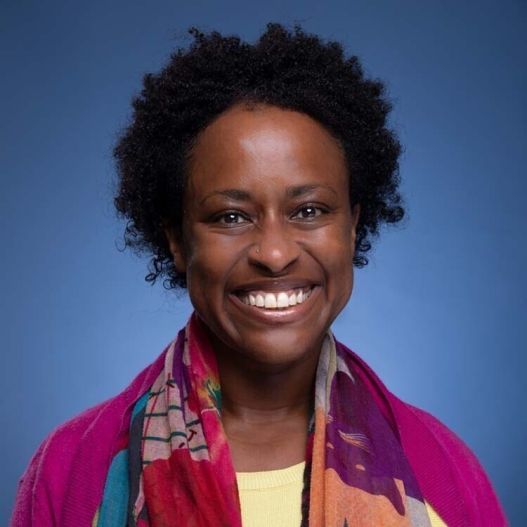
Based on years of ethnographic research on France’s present antiracist movement and mobilization against state violence, I introduce a framework of “suspect citizenship” which demonstrates how ethnoracial minorities are constantly outside of the boundaries of full societal inclusion. I argue that postcolonial plural societies like France position a certain populations as suspect or suspicious, due to their ethnoracial assignment. I examine suspect citizenship at the nexus between active citizenship, belonging/non-belonging, antiracism at a macro level, and activism against state violence. I consider how certain populations are automatically rendered suspicious or suspect by virtue of their ethnoracial assignment on micro and macro levels, and how this construction of citizenship is not just a postcolonial formation. I discuss how we can understand how individuals resist their categorization as suspect through examining mobilization against state violence, as well as how suspect citizenship exists without state recognition of ethnoracial difference. Suspect citizenship is therefore a framework and mode for understanding and making sense of how colonial hierarchies are maintained in postcolonial or neocolonial societies.
Jean Beaman (she/her) is Associate Professor of Sociology in the Ph.D. Program at the Graduate Center of the City University of New York (CUNY), and on leave from the University of California, Santa Barbara. Her research is ethnographic in nature and focuses on race/ethnicity, racism, international migration, and state violence in both France and the United States. She is author of Citizen Outsider: Children of North African Immigrants in France (University of California Press, 2017), as well as numerous articles and book chapters. She is also an Associate Editor of the journal, Identities: Global Studies in Culture and Power and a Corresponding Editor for the journal Metropolitics/Metropolitiques. She was a 2022-2023 fellow at the Center for Advanced Study in Behavioral Sciences at Stanford University, and a Co-PI for the Mellon Foundation Sawyer Seminar grant, “Race, Precarity, and Privilege: Migration in a Global Context” for 2020-2022.
Host
Institute for European Studies
Cosponsors
Sociology
French Studies
Additional Information
Program
Einaudi Center for International Studies
Institute for European Studies
Information Session: Laidlaw Research and Leadership Program

December 4, 2024
5:00 pm
Uris Hall, G08
The Laidlaw Undergraduate Leadership and Research Program promotes ethical leadership and international research around the world—starting with the passionate leaders and learners found on campuses like Cornell. Open to first- and second-year students, the two-year Laidlaw program provides generous support to carry out internationally focused research, develop leadership skills, engage with community projects overseas, and become part of a global network of like-minded scholars from more than a dozen universities. We’ll also share tips for approaching potential faculty research mentors and writing a successful application.
Can’t attend? Contact laidlaw.scholars@cornell.edu.
***
The Mario Einaudi Center for International Studies hosts info sessions for graduate and for undergraduate students to learn more about funding opportunities, international travel, research, and internships. View the full calendar of fall semester sessions.
Additional Information
Program
Einaudi Center for International Studies
Reppy Institute for Peace and Conflict Studies
East Asia Program
Southeast Asia Program
Latin American and Caribbean Studies
Institute for African Development
Institute for European Studies
South Asia Program
Migrations Program
DNA Analysis Upends Long-held Assumptions About Pompeii Victims
Caitlín Barrett, IES
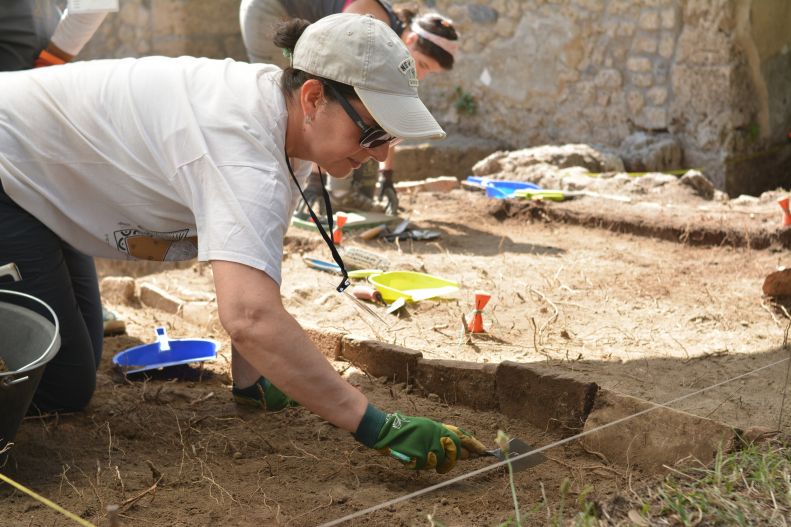
Caitlín Eilís Barrett, an associate professor in the Department of Classics, discusses the tragedy that occurred in Pompeii when Mount Vesuvius erupted in AD 79.
Additional Information
Disputing Disaster — The Great War and Its Lessons for Today’s Global Order

Nicholas Mulder, IES
Nicholas Mulder, assistant professor of history, reviews “Disputing Disaster” by Perry Anderson.
Additional Information
What the Surging Price of Gold Says About a Dangerous World

Nicholas Mulder, IES
Nicholas Mulder, professor of history, discusses the price of gold.
Additional Information
Landscape Architecture Fall 2024 Lecture Series: Ketevan Gurchiani
November 12, 2024
5:00 pm
175 Warren Hall
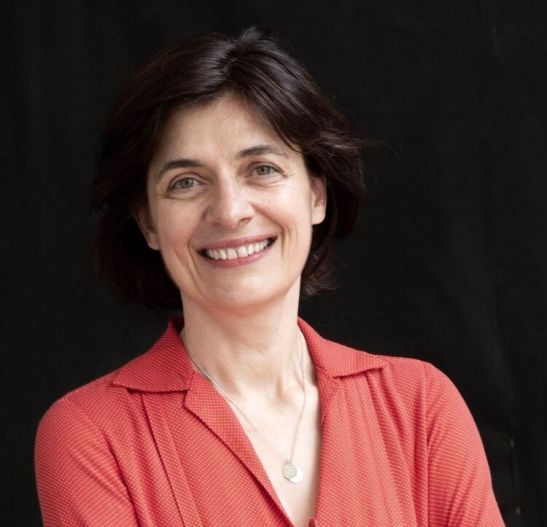
Join us in 175 Warren Hall for a lecture with Ketevan Gurchiani, Professor of Anthropology at Ilia State University in Tbilisi. This lecture is titled "On Hidden Power of Trees: Urban Resistance in Tbilisi." This event is co-sponsored by the Institute for European Studies and Einaudi Center for International Studies, Part of Global Cornell.
Additional Information
Program
Einaudi Center for International Studies
Institute for European Studies
Cornell Summer Public Policy Program in Turin Info Session
November 14, 2024
4:00 pm
Caldwell Hall, 100
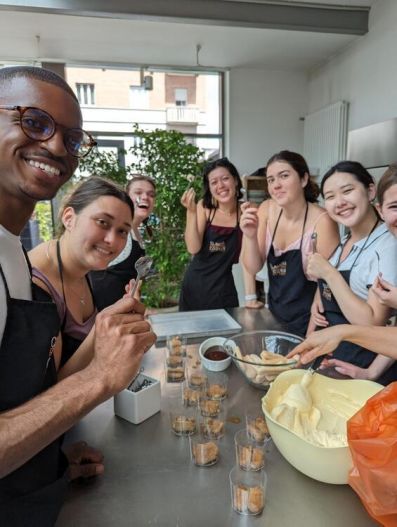
Find out more about our summer public policy program in Turin. Nestled between the Alps and the Mediterranean in the magnificent Piedmont region of northern Italy, the city of Turin provides an inspiring background to explore the causes and consequences of population change, the debates unfolding in Europe around these issues, and the policies intended to address them. Population problems are central to societal change in numerous areas- inequality, immigration and diversity, race relations, family life, health and aging, and social welfare systems. This program explores the causes and consequences of population change, paying particular attention to how population processes interact with the social, economic, and political context in which they play out.
Additional Information
Program
Institute for European Studies
Global Cornell Experience Showcase

November 19, 2024
4:00 pm
Physical Sciences Building, Baker Portico & Atrium
Over 70 undergraduate students will present their international summer experiences in a poster session. Their work includes conducting research, working in Global Internships, and putting leadership into action as Laidlaw scholars.
The poster session will be in the Baker Portico & Atrium of the Physical Sciences Building. Light refreshments will be served.
Applications for Global Internships are open now. Applications for the Laidlaw Scholars Program will open on November 15.
Global Internships give undergraduate students valuable international experience in fields spanning global development, climate and sustainability, international relations, communication, business, governance, and more. They are managed by the Mario Einaudi Center for International Studies and Office of Global Learning, both part of Global Cornell.
The Laidlaw Undergraduate Leadership and Research Scholarship Program provides generous funding to first- and second-year undergraduates over two years as they pursue internationally focused research, engage in leadership training and a leadership-in-action experience, and join a global network of like-minded peers. The program is managed by the Einaudi Center.
Additional Information
Program
Einaudi Center for International Studies
Reppy Institute for Peace and Conflict Studies
East Asia Program
Southeast Asia Program
Latin American and Caribbean Studies
Institute for African Development
Institute for European Studies
South Asia Program
Migrations Program
Information Session: Laidlaw Research and Leadership Program

November 13, 2024
12:00 pm
The Laidlaw Undergraduate Leadership and Research Program promotes ethical leadership and international research around the world—starting with the passionate leaders and learners found on campuses like Cornell. Open to first- and second-year students, the two-year Laidlaw program provides generous support to carry out internationally focused research, develop leadership skills, engage with community projects overseas, and become part of a global network of like-minded scholars from more than a dozen universities. We’ll also share tips for approaching potential faculty research mentors and writing a successful application.
Register for the virtual session.
Can’t attend? Contact laidlaw.scholars@cornell.edu.
***
The Mario Einaudi Center for International Studies hosts info sessions for graduate and for undergraduate students to learn more about funding opportunities, international travel, research, and internships. View the full calendar of fall semester sessions.
Additional Information
Program
Einaudi Center for International Studies
Reppy Institute for Peace and Conflict Studies
East Asia Program
Southeast Asia Program
Latin American and Caribbean Studies
Institute for African Development
Institute for European Studies
South Asia Program
Migrations Program