
Institute for European Studies
East European and Russian Studies Program One-Day Student Field Trip to NYC

IES co-sponsored student field trip led by Raissa Krivitsky!
The East European and Russian Studies Program held a successful one-day field trip to New York City on September 29, 2024. Led by IES faculty associate Raissa Krivitsky, and sponsored by the Institute for European Studies, the Department of Comparative Literature, and the Language Resource Center, the trip included 30 participants and featured a range of activities.
The group visited the Ukrainian Orthodox Cathedral of St. Volodymyr, where they attended part of a service and learned about the Ukrainian diaspora. They enjoyed a lunch of traditional Ukrainian dishes before attending a sold-out theater performance of “The Master and Margarita” by Theater 86.
The trip also included a walk in Central Park and a meal at “Russian Samovar,” a restaurant known for its cultural significance among Soviet exiles. Students had opportunities to hear and practice Russian and Ukrainian during the trip. In feedback comments, they noted that the trip was educational, culturally enriching, and enjoyable!
Additional Information
Program
Experts Look Abroad for Lessons in Super Election Year

"Democracy is on the ballot"
Ten area studies and government experts weigh in on worldwide elections.
Additional Information
Information Session: East Asia Program Funding Opportunities
October 30, 2024
2:00 pm
Uris Hall, G08
The East Asia Program (EAP) offers several categories of fellowships and grants to support student and faculty research and study related to East Asia:
EAP Graduate Area Studies Fellowships East Asian Language Study Grants EAP Research Travel GrantsCan’t attend? Contact eap@cornell.edu.
Additional Information
Program
Einaudi Center for International Studies
Reppy Institute for Peace and Conflict Studies
East Asia Program
Southeast Asia Program
Latin American and Caribbean Studies
Institute for African Development
Institute for European Studies
Spring Break Environmental Justice Program in London Info Session

October 9, 2024
3:30 pm
Learn more about this spring break opportunity in London. This program examines London as a global financial capital, a center of health research and policy, and a site where the consequences of climate change, including extreme heat events, are distributed in radically uneven ways. Beginning as part of the spring semseter course, this program will prepare students for research topics related to issues of environmental justice. Student will travel onsite during spring break to conduct field work at various sites across the city and return to synthesize those experiences as part of their larger research projects.
Additional Information
Program
Institute for European Studies
How To Hide an Empire? Austro-Hungarian Economic Space in Central & Southeastern Europe 1890–1930: Actors, Structures, Embeddedness, and Factors of Resilience

October 18, 2024
12:30 pm
Uris Hall, G08
This project connects the economic history of the late 19th and early 20th century with the recent trend of looking at Austria-Hungary as an imperial/colonial actor in relation to the Balkans and the Ottoman Empire. Unconventionally but productively using the dissolution of the monarchy as its conceptual starting point, which offers insights into the less visible practices and meanings of the empire before 1918, it aims at revealing 1) how Austro-Hungarian imperialism reached Southeast Europe and integrated it into its economic sphere, 2) the place of this economic space between the European and global ones, and 3) how its post-WWI transformation from more direct forms of asset ownership to indirect ones created a laboratory of financialization of capitalism. The continuity of Austro-Hungarian businesses in the face of economic nationalist policies after 1918 highlights the importance of their previous practices of local embedding for the persistence of this space after the political structure that supported business expansion disappeared. This reinterpretation of Austro-Hungarian presence contributes to the understanding of the embedding of economic activity through interactions, how these interactions created structural features for the economy, and how the legal and political changes after 1918 did not change the interactional embeddedness, while the reconfiguration of structures still changed the face of capitalism to a more financialized one.
Gábor Egry is a historian, Doctor of the Hungarian Academy of Sciences, currently István Deák Visiting Professor at Columbia University, and director-general of the Institute of Political History, Budapest. His research interests are nationalism, everyday ethnicity, politics of identity, politics of memory, economic history in modern East Central Europe. He held fellowships at Imre Kertész Kolleg Jena, New Europe College, Bucharest, he was a Fulbright Visiting Research Scholar at Stanford University and Fernand Braudel Fellow at the EUI, Florence. Author of five volumes in Hungarian and several articles. among others in European Review of History, Slavic Review, Hungarian Historical Review, Südost-Forschungen. His last monograph Etnicitás, identitás, politika. Magyar kisebbségek naconalizmus és regionalizmus között Romániában és Csehszlovákiában 1918-1944 [Ethnicity, identity, politics. Hungarian Minorities between nationalism and regionalism in Romania and Czechoslovakia 1918-1944]) received an Honorable Mention from the Felczak-Wereszyczki Prize of the Polish Historical Association, and he received the Mark Pittaway Article Prize of the Hungarian Studies Association in 2018. Between 2018 and 2023 he was the Principal Investigator of the ERC Consolidator project Nepostrans – Negotiating post-imperial transitions: from remobilization to nation-state consolidation. A comparative study of local and regional transitions in post-Habsburg East and Central Europe.
Hosted by the Institute for European Studies and cosponsored by the History department.
Additional Information
Program
Einaudi Center for International Studies
Institute for European Studies
Working Across Wartime Borders

November 13, 2024
1:00 pm
Uris Hall, G08
“Exile,” wrote Edward Said, “is strangely compelling to think about but terrible to experience. It is the unhealable rift forced between a human being and a native place, between the self and its true home.”
Join Oleksandra Shtepenko, an exiled Ukrainian scholar, Cornell virtual scholar under threat, and visiting professor at the Nicolaus Copernicus University (NCU) in Poland, for a roundtable discussion of her first-hand experiences as the war in her homeland continues. Along with her NCU collaborators Anna Skubaczewska-Pniewska and Iwona Rzepnikowska, she will address these and other crucial questions: How can we rebuild lives, both in the flesh and of the mind, when war rips open new, unhealable borders? Can intellectual work be reimagined under these circumstances, together with institutions and communities that challenge existing paradigms?
The roundtable will be moderated by Anindita Banerjee (Comparative Literature), Shtepenko's Cornell host and virtual collaborator.
Respondents will include Cristina Florea (History, Cornell) and Zenon Wasyliw (History, Ithaca College).
About the Speakers
Oleksandra Shtepenko is an Institute of International Education scholar, Cornell Virtual Scholar Under Threat, and visiting professor at the Nicolaus Copernicus University (NCU) in Poland. Iwona Rzepnikowska is an associate professor of literary studies at the Nicolaus Copernicus University (NCU) in Poland.Anna Skubaczewska-Pniewska is an associate professor of literary studies at the Nicolaus Copernicus University (NCU) in Poland.
Hosts and Sponsors
This event is hosted by the Department of Comparative Literature and Global Cornell.
Additional Information
Program
Einaudi Center for International Studies
Institute for European Studies
Flexible Authoritarianism: Cultivating Ambition and Loyalty in Russia
November 4, 2024
4:30 pm
Uris Hall, G08
A Book Talk with Anna Schwenck
Flexible Authoritarianism challenges the notion that authoritarianism's transnational rise constitutes a backlash against economic globalization. Describing a governmental approach that simultaneously incentivizes a can-do spirit and suppresses dissent, the book points out resonances between authoritarian and neoliberal ideologies in today's comeback of strongman rule. Drawing on field observations, in-depth interviews, and analyses of video clips, it conveys the look and feel of flexible authoritarianism in Russia through the eyes of up-and-coming youth. The author analyzes ways in which the insignia of cool start-up capitalism and familiar cultural forms such as the summer camp help stabilize the regime, while also showing how up-and-coming youth both embrace and contest loyalty to the government.
Anna Schwenck’s research lies at the intersection of cultural and political sociology. She is particularly interested in how cultural understandings, be they transnational or locally specific, shape political behaviour. She studied the resonances between authoritarianism and neoliberalism in Russia, pandemic and science skepticism in German-speaking countries, and processes of re-traditionalization in popular music cultures. Her recent work investigates the role of liberation songs and narratives in conventional and contentious politics in South Africa.
Anna is employed at the University of Siegen’s department of social sciences and the Siegen-based collaborative research centre “Transformations of the Popular” (SFB 1472). She is also a visiting researcher at the University of the Western Cape’s Anthropology Department in South Africa.
She earned a PhD in Sociology and an MA in Social Sciences from Humboldt University Berlin, as well as a BA in Cultural Studies from Viadrina European University, Frankfurt (Oder). She was a visiting student/scholar at University College London's School of Slavonic and East European Studies, the Sociology Department at the University of California (Berkeley), and the Russian State University for the Humanities (Moscow).
Additional Information
Program
Einaudi Center for International Studies
Institute for European Studies
Selecting Refugees for Resettlement to Norway and Canada: Vulnerability, Integration and Discretion
October 31, 2024
3:00 pm
Uris Hall, G08
This lecture examines how the concept of vulnerability is “translated” from legal bureaucratic discourses into actual policy and practice in the refugee resettlement context. In particular, we trace how the integration potential of refugees continues to be weighed against their vulnerabilities in the process. While resettlement is a voluntary commitment and not legally binding, states that have signed the 1951 Geneva Convention have agreed to share the responsibility of providing protection and solutions for refugees who cannot return to their country of origin. Through a comparative discussion of refugee resettlement in Canada and Norway, we shed light on some mechanisms through which the humanitarian focus on prioritizing the most vulnerable comes under pressure from competing political considerations and rationales. By examining instances of what we call the political or ‘tactical’ uses of resettlement, we aim not only to highlight its partisan and domestic political dynamics but also to open up questions of who is ultimately left behind and considered ‘too vulnerable’ for resettlement.
Dagmar Soennecken is an Associate Professor in the School of Public Policy & Administration at York University (Toronto, Canada). She is also cross-appointed to the Law & Society Program there. Her research focuses on comparative public policy in the EU and North America. She is particularly interested in questions concerning law and the courts as well as citizenship and migration, including refugees. In 2019, she became the Editor-in-Chief of Refuge: Canada’s Journal on Refugees. Her work has been published in Comparative Migration Studies, Law & Policy, Droit et Société, Politics and Governance among others. She was one of the three Canadian co-investigators on the recently concluded VULNER project team.
Hosted by the Institute for European Studies and cosponsored by the Migrations Program, part of the Mario Einaudi Center for International Studies, and funded by the Mellon Foundation's Just Futures Initiative.
Additional Information
Program
Einaudi Center for International Studies
Institute for European Studies
Migrations Program
Information Session: Global Internships with Universidad San Francisco de Quito

October 28, 2024
1:00 pm
Go global in summer 2025! Global Internships give you valuable international work experience in fields spanning global development, climate and sustainability, international relations, communication, business, governance, and more.
This session will discuss opportunities with the Universidad San Francisco de Quito, a Cornell Global Hubs partner in Ecuador.
Register for this virtual session.
***
The Mario Einaudi Center for International Studies hosts info sessions for graduate and for undergraduate students to learn more about funding opportunities, international travel, research, and internships. View the full calendar of fall semester sessions.
Additional Information
Program
Einaudi Center for International Studies
Reppy Institute for Peace and Conflict Studies
East Asia Program
Southeast Asia Program
Latin American and Caribbean Studies
Institute for African Development
Institute for European Studies
Migrations Program
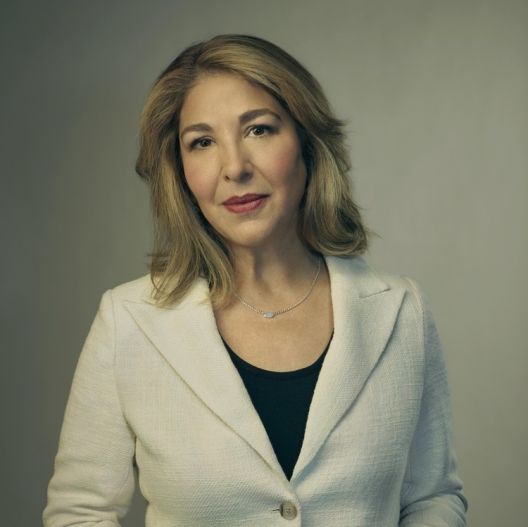
Naomi Klein: Doppelganger Politics
October 23, 2024
5:00 pm
Biotechnology Building, G10
Bartels World Affairs Lecture
The bestselling author of Doppelganger: A Trip into the Mirror World joins us for a personal journey down the conspiracy rabbit hole to explore why our political sphere has become dangerously warped.
When author and social activist Naomi Klein discovered a writer with the same first name but radically different political views was chronically mistaken for her, it seemed too ridiculous to take seriously—until suddenly it wasn’t. As the pandemic took hold, she absorbed a barrage of insults from her doppelganger’s followers.
Klein’s 2023 book Doppelganger follows Other Naomi into a digital underworld of conspiracies, anti-vaxxers, and right-wing paranoia. Klein’s journey reveals mirrored concerns and unlikely connections between well-meaning liberals and the right-wing voices that relish “owning” them.
After a talk sharing her insights, Klein joins distinguished global democracy experts from Cornell to lift the lid on this surreal election moment and examine how our politics have become so twisted and polarized. What can we do to escape our collective vertigo and get back to fighting for what really matters?
***
Panelists
Read election remarks from the panelists in Chronicle coverage of global democracy activities on campus.
Thomas Garrett, Einaudi Center Lund Practitioner in Residence, Distinguished Global Democracy Lecturer (Jeb E. Brooks School of Public Policy)Suzanne Mettler, John L. Senior Professor of American Institutions, Department of Government (College of Arts and Sciences)Kenneth Roberts (moderator), Einaudi Center Democratic Threats and Resilience faculty fellow, Richard J. Schwartz Professor, Department of Government (A&S)
***
This event is sold out.
All free tickets are reserved. If you don’t have a ticket but would like to attend, please arrive 15 minutes early to be put on our wait list.
A reception with refreshments will follow the lecture and panel.
Lecture and Panel: 5:00 | G10 Biotechology BuildingReception: 6:30-7:30 | Biotechnology Building Atrium
***
About Naomi Klein
Naomi Klein is an award-winning journalist and international bestselling author of nine books published in over 35 languages, including No Logo, The Shock Doctrine, and her most recent book Doppelganger: A Trip into the Mirror World (2023). A columnist for The Guardian, her writing has appeared in leading media around the world. She is a tenured professor of climate justice at the University of British Columbia, founding codirector of UBC’s Centre for Climate Justice, and honorary professor of media and climate at Rutgers University.
About the Bartels World Affairs Lecture
The Bartels World Affairs Lecture is a signature event of the Mario Einaudi Center for International Studies. This flagship event brings distinguished international figures to campus each academic year to speak on global topics and meet with Cornell faculty and students, particularly undergraduates. The lecture and related events are made possible by the generosity of Henry E. Bartels ’48 and Nancy Horton Bartels ’48.
Additional Information
Program
Einaudi Center for International Studies
Reppy Institute for Peace and Conflict Studies
East Asia Program
Southeast Asia Program
Latin American and Caribbean Studies
Institute for African Development
Institute for European Studies
South Asia Program
Migrations Program