Institute for European Studies
Laidlaw Scholars Build Global Communities

Undergraduate Research and Leadership
Laidlaw "allowed me to be intensely involved with my professor’s research," says Eli Newell ’24. Meet the scholars and find out how to apply.
Additional Information
Apply for RAD Languages, FLAS

Fellowships Support Students Learning Uncommon Languages
PhD students Frances Cayton and Jarvis Fisher received Einaudi fellowships to study “rare and distinctive” modern languages. Apply now!
Additional Information
Apply by Jan. 10: Undergraduate Global Scholars

Speak Up for Global Free Speech
Make your voice heard as a student leader in Cornell's freedom of expression theme year. We welcome applications from writers, scholars, activists and artists, poets and podcasters, hands-on practitioners, and more.
Additional Information
Cornell Awarded IIE Centennial Medal
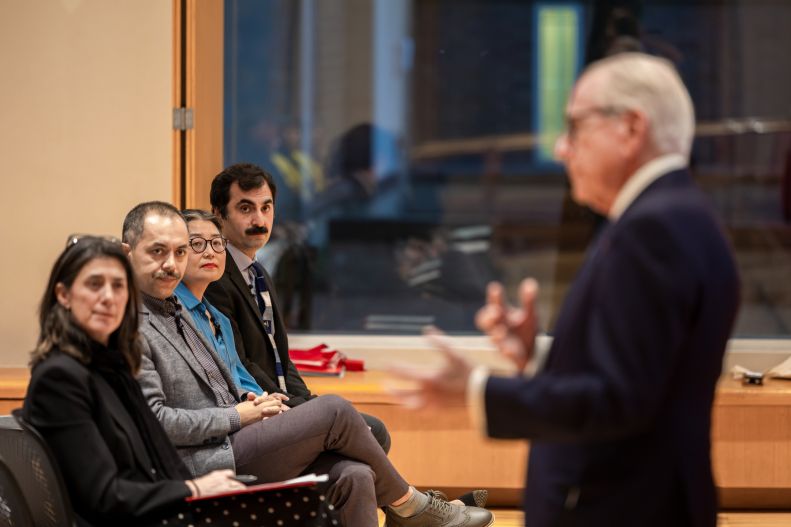
Scholars Under Threat Find Home at Einaudi
IIE CEO Allan Goodman: "In crisis after crisis, this university has opened its doors to scholars and made them feel that they belong."
Additional Information
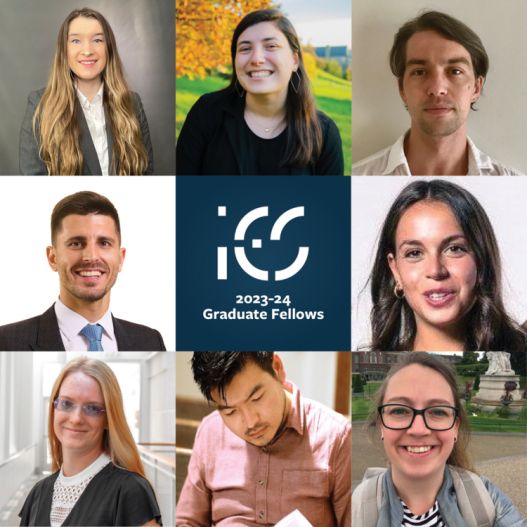
IES Fellows Research Workshop
November 27, 2023
12:00 pm
Uris Hall, G02
This workshop is an interdisciplinary space for IES Graduate Fellows to present their research in progress.
Open to current Cornell graduate students and faculty.
Additional Information
Program
Institute for European Studies
Boren Awards Info Session

November 13, 2023
4:45 pm
276 Caldwell Hall
Learn about the prestigious Boren Scholarships that fund study abroad outside Western Europe, Canada, Australia, or New Zealand. Boren Awards focus on developing linguistic and cultural knowledge among aspiring federal government employees. Boren Awards are funded by the federal government and are open to U.S. citizens who are currently matriculated students. Maximum undergraduate awards are determined by duration of study: up to $25,000 for 25-22 weeks and up to $8,000 for 8-11 weeks (STEM majors only).
Additional Information
Program
Einaudi Center for International Studies
East Asia Program
Southeast Asia Program
Latin American and Caribbean Studies
Institute for African Development
Institute for European Studies
South Asia Program
Authoritarian Near Miss: The Future of the Polish Democracy after the Populist Defeat
November 30, 2023
4:30 pm
Uris Hall, G08
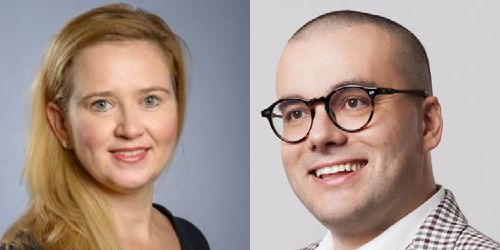
The resounding victory of the Polish opposition on October 15 bewildered many comparative political scientists. The loose coalition of liberals, leftists, and Christian Democrats defied international trends by out-competing the ruling Law and Justice party (“PiS”) in a barely free and grotesquely unfair ballot held eight years after PiS’s 2015 ascent to power. The speakers – prof. Maciej Kisilowski of Central European University in Vienna and prof. Anna Wojciuk of the University of Warsaw – will discuss the significance of the Polish election while resisting the temptation to declare an(other) democratic “end of history.” Instead, they will focus on what can be done to minimize the risk of a future authoritarian recurrence.
They will start by analyzing the possible causes of that unexpected victory. Contrasting the Polish case with other examples of electoral authoritarianism, they will discuss: the role of the US and the EU in preserving democracy in Poland, COVID-related economic and political crises, freedom and pluralism of the media, civil society, and the strategies adopted by democratic opposition.
The second part of the presentation will cover “Umówmy się na Polskę” [“Let’s Agree on Poland”] – a recently published volume edited by Kisilowski and Wojciuk in which a diverse group of 28 Polish intellectuals, representing views from the left to the conservative right, present a comprehensive proposal for a democratic constitutional reform. Acclaimed as “the most important book about Polish politics since 1989” by Poland’s main “Polityka” opinion weekly and as “a decisive step forward in the reconstruction of Polish democracy” by Prof. Bruce Ackerman of Yale University, the volume advocates for a new social contract – a set of constitutional rules accepted by citizens of both progressive and conservative political leanings. The authors argue that the key to developing such rules, and thus to the emergence of a genuinely consolidated democracy in Poland, is greater involvement of provincial and municipal governments, as well as citizens, in the mechanisms of governing the country.
Poland’s deep, geographically asymmetrical polarization makes the country’s challenges remarkably relevant for the US audience. The discussion of the Kisilowski-Wojciuk constitutional proposal for Poland may therefore elucidate the difficult choices that democrats around the world face when dealing with the modern wave of right-wing authoritarian populism.
Additional Information
Program
Einaudi Center for International Studies
Institute for European Studies
Support for Times of Crisis

Campus Resources for Cornell's Global Community
On this new page, Global Cornell gathers campus services to help students, faculty, and staff cope with international conflict and turbulent times.
Additional Information
Laidlaw Scholars Symposium

November 8, 2023
5:00 pm
Klarman Hall Auditorium & Atrium
Laidlaw Scholars at Cornell will share their summer research and leadership-in-action experiences at this annual symposium.
Beginning in the Klarman Hall Auditorium, a panel of scholars will share their work and experiences. The presentation will be followed by poster presentations throughout the Groos Family Atrium.
The Laidlaw Undergraduate Leadership and Research Scholarship Program provides generous funding to first- and second-year undergraduates over two years as they pursue internationally focused research, engage in leadership training and a leadership-in-action experience, and join a global network of like-minded peers.
Learn more about the program, which is administered by the Mario Einaudi Center for International Studies with leadership training support from the David M. Einhorn Center for Community Engagement.
Additional Information
Program
Einaudi Center for International Studies
Reppy Institute for Peace and Conflict Studies
East Asia Program
Southeast Asia Program
Latin American and Caribbean Studies
Institute for African Development
Institute for European Studies
South Asia Program
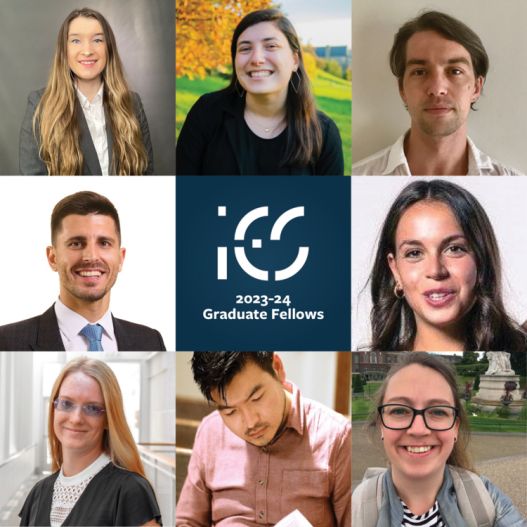
IES Fellows Research Workshop
October 25, 2023
4:30 pm
Uris Hall, G02
This workshop is an interdisciplinary space for IES Graduate Fellows to present their research in progress.
Open to current Cornell graduate students and faculty.
Additional Information
Program
Institute for European Studies