
Institute for European Studies
Fears For Rights Under Italy's "Christian Mother" Meloni
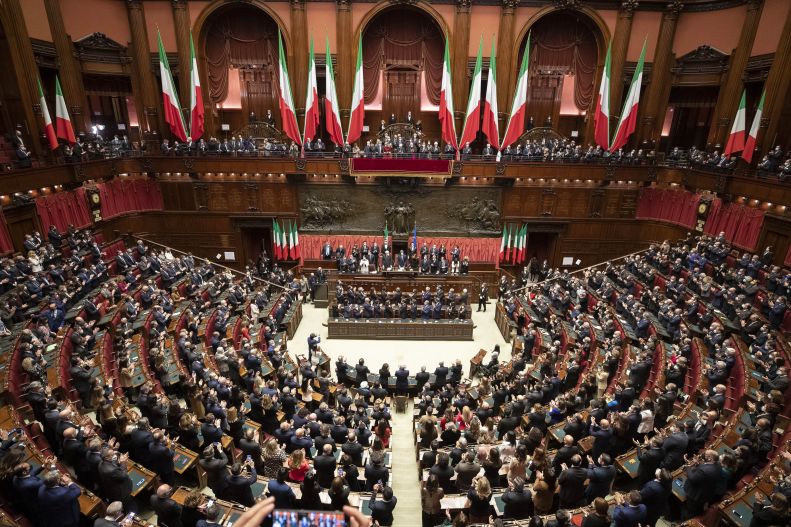
Mabel Berezin, IES
“Some of the old guard remain, but Meloni is attempting to construe herself instead as a "nationalist conservative," said Mabel Berezin, an expert on fascist, nationalist and populist movements at Cornell.
Additional Information
Sara Brenneis: "Los Campos: The Spanish Deportation to Nazi Concentration Camps"
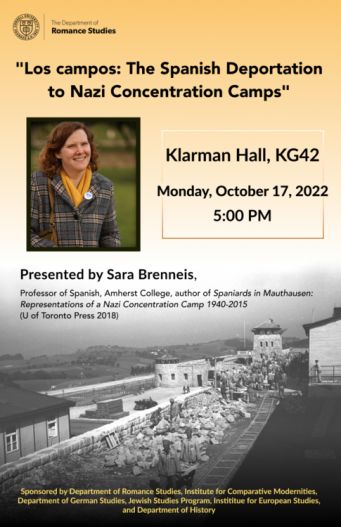
October 17, 2022
5:00 pm
Klarman Hall, KG42
Sara Brenneis
"Los campos: The Spanish Deportation to Nazi Concentration Camps"
5 p.m. Monday, October 17
Klarman Hall KG42
Reception to follow.
Sponsored by
the Department of Romance Studies, Institute for Comparative Modernities,
Department of German Studies, Jewish Studies Program,
Institute for European Studies and Department of History
Additional Information
Program
Institute for European Studies
Career Info Session: U.S. Department of State and Public Service Careers

September 27, 2022
5:00 pm
Are you interested in a possible career in public service, and maybe specifically with the U.S. Department of State? Ever wondered what it's like to work in various capacities at State -- ranging from a Foreign Service Officer to policy analyst and intelligence officer -- or how to go about preparing yourself to be a successful applicant for jobs at State?
Please join the Einaudi Center for a virtual discussion about career paths and opportunities at the State Department and in public service, featuring three Cornell alumni who will share their insights:
Benjamin Brake, Director, Office of Cyber Affairs and Emerging Technology, Bureau of Intelligence and Research, U.S. Department of StateJason Oaks, Deputy National Intelligence Officer for East Asia, U.S. Department of StateEric Anderson, Foreign Service Office, Political Counselor in Islamabad, Pakistan, U.S. Department of StateThis career info session is presented by the Einaudi Center's International Studies Minor, and its outgoing director (Christopher Way) and incoming director (Oumar Ba). The International Relations Minor is open to all Cornell undergraduate students interested in learning about the politics, economics, history, languages, and cultures of the world.
Contact: irm@einaudi.cornell.edu
Additional Information
Program
Einaudi Center for International Studies
Reppy Institute for Peace and Conflict Studies
East Asia Program
Southeast Asia Program
Latin American and Caribbean Studies
Institute for African Development
Institute for European Studies
South Asia Program
The European History Colloquium: Monica Green
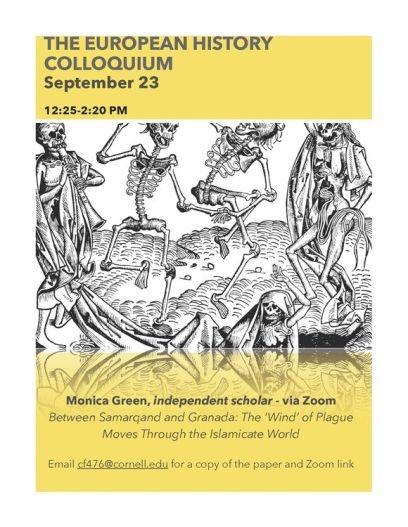
September 23, 2022
12:25 pm
Monica Green, independent scholar - via Zoom
Between Samarqand and Granada: The 'Wind' of Plague Moves Through the Islamicate World
Additional Information
Program
Institute for European Studies
Children and Youths’ Migration in a Global Landscape Talk

October 5, 2022
10:30 am
Contributing authors of Children and Youths’ Migration in a Global Landscape (Emerald, 2022) are joining the Migrations initiative to speak about their work and writing.
The edited volume asks how transnational mobility shapes the lives of young people and in each chapter, scholars present the stories of children from areas such as Myanmar, India, Hungary, the U.S., and Central America. Individually, these case studies address issues related to educational attainment, family reunification, social mobility, and identity. Collectively, these studies push us to question our assumptions about what it means to be a transnationally mobile child or youth.
The discussion will be moderated by Migrations postdoc Angel Escamilla García and one of the book’s editors, Adrienne Lee Atterberry.
Additional Information
Program
Einaudi Center for International Studies
Southeast Asia Program
Latin American and Caribbean Studies
Institute for European Studies
South Asia Program
Dissidence: Reading and Reception

Dmitry Bykov and Pedro X. Molina
September 23 at noon: Einaudi visiting critics share their experiences at this joint event with Migrations and Ithaca City of Asylum.
Additional Information
FLIP Volunteer Orientation & Organizational Meeting

September 23, 2022
11:30 am
Uris Hall, G08
Volunteer with the Foreign Language Introduction Program! FLIP has introduced thousands of children in Upstate New York to world languages and cultures. Volunteers from Cornell and surrounding communities who speak foreign languages provide fun ways for K–12 students to learn about and engage with our increasingly interconnected world.
FLIP's first organizational meeting and volunteer orientation of the semester will take place on September 23rd, 11:30am to 1:00pm, at Uris Hall G08. Lunch and beverages will be served! We welcome everyone who considers joining FLIP or has any questions about FLIP to attend this organizational event – a great opportunity to meet with our team members, previous volunteers, and get to know more about our program.
Please let us know about if you would like to attend, and any dietary restrictions! If you have friends who are interested in FLIP, please feel free to forward this email to them as well. We are looking forward to seeing you all next Friday!
Additional Information
Program
Einaudi Center for International Studies
Reppy Institute for Peace and Conflict Studies
East Asia Program
Southeast Asia Program
Latin American and Caribbean Studies
Institute for African Development
Institute for European Studies
South Asia Program
Global Hubs Info Session: Joint Seed Grants with University College London
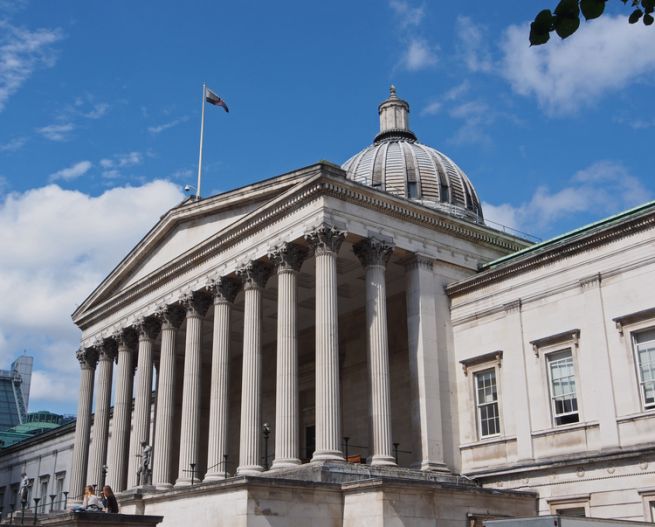
October 4, 2022
9:00 am
Global Cornell is offering competitive faculty grants in collaboration with Global Hubs partners.
Apply for funding to explore potential research collaborations with colleagues at Hubs universities.
These Joint Research and Seed Grants have been established to bring faculty from partner institutions together to develop joint projects that will strengthen Cornell and Global Hubs partner universities' strategic priorities and develop multidisciplinary cutting-edge research and curriculum to create academic and societal impact.
Please join us on October 4 (9:00–10:00 a.m. ET / 2:00–3:00 p.m. GMT) for a joint info session to learn more about the King's College London–Cornell grant opportunity. Q&A and collaboration matchmaking will follow a short presentation.
UCL-Cornell Seed Funds:
Up to five (5) research proposals will be fundedEach successful proposal may receive up to $5,000/£4,000 from each university for a total of $10,000/£8,000Project duration: January 1–December 31, 2023Submission deadline: October 21 by 11:59 pm ET/October 22 by 4:59 a.m. GMTRegister today for the UCL-Cornell Joint Info Session on Zoom
Learn about additional seed grants available with other Global Hubs partners.
Additional Information
Program
Einaudi Center for International Studies
Institute for European Studies
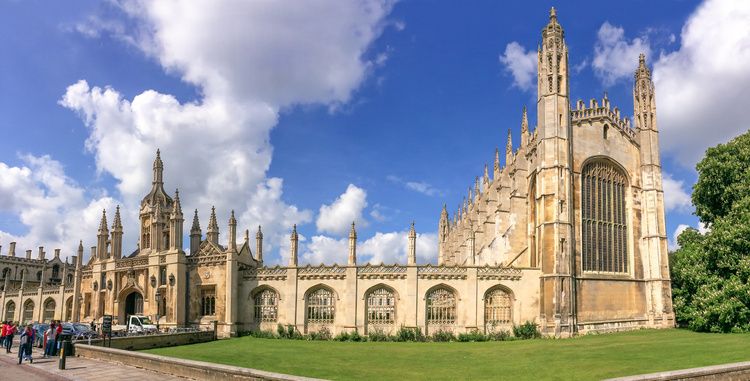
Global Hubs Info Session: Joint Seed Grants with King's College London
September 30, 2022
9:00 am
Apply for funding to explore potential research collaborations with colleagues at Hubs universities.
These Joint Research and Seed Grants have been established to bring faculty from partner institutions together to develop joint projects that will strengthen Cornell and Global Hubs partner universities' strategic priorities and develop multidisciplinary cutting-edge research and curriculum to create academic and societal impact.
Please join us on September 30 (9:00–10:00 a.m. ET / 2:00–3:00 p.m. GMT) for a joint info session to learn more about the King's College London–Cornell grant opportunity. Q&A and collaboration matchmaking will follow a short presentation.
King's–Cornell Seed Funds:
Up to five (5) proposals will be fundedEach successful proposal may receive up to the equivalent of $5,000/£4,000 from each university for a total of $10,000/£8,000Project duration: January 1–December 31, 2023Submission deadline: October 21 by 11:59 pm ET/October 22 by 4:59 a.m. GMTRegister today for the King’s-Cornell Joint Info Session on Zoom
Learn about additional seed grants available with other Global Hubs partners.
Additional Information
Program
Einaudi Center for International Studies
Institute for European Studies
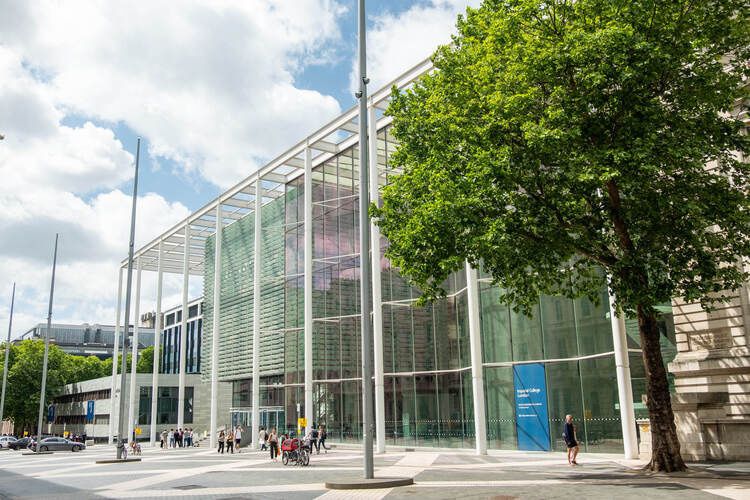
Global Hubs Info Session: Joint Seed Grants with Imperial College London
September 26, 2022
9:00 am
Global Cornell is offering competitive faculty grants in collaboration with Global Hubs partners.
Apply for funding to explore potential research collaborations with colleagues at Hubs universities.
These Joint Research and Seed Grants have been established to bring faculty from partner institutions together to develop joint projects that will strengthen Cornell and Global Hubs partner universities' strategic priorities and develop multidisciplinary cutting-edge research and curriculum to create academic and societal impact.
Please join us on September 26 (9:00–10:00 a.m. ET / 2:00–3:00 p.m. GMT) for a joint info session to learn more about the Imperial College London–Cornell grant opportunity. Q&A and collaboration matchmaking will follow a short presentation.
Imperial-Cornell Seed Fund:
Up to five (5) teaching proposals will be funded. Each successful proposal may receive up to $4,000 from each university for a total of $8,000Project duration: January 1–December 31, 2023Submission deadline: October 21 by 6:59 p.m. ET/11:59 p.m. GMTRegister today for the Imperial-Cornell Joint Info Session on Zoom
Learn about additional seed grants available with other Global Hubs partners.
Additional Information
Program
Einaudi Center for International Studies
Institute for European Studies