
Institute for European Studies
Iran Weaponizes Global Oil Trade in War with the United States

Nicholas Mulder, IES
Nicholas Mulder, a sanctions expert and history professor at Cornell University, analyzes Iran's selective control over the Strait of Hormuz as a form of economic warfare.
Additional Information
Iran Exploiting Trump Administration's Sensitivity to Pressure From the Markets, Expert Says

Nicholas Mulder, IES
Nicholas Mulder, a Cornell University assistant professor, analyzes U.S.-Iran tensions and economic tactics in a televised interview.
Additional Information
Borderlands of Bukovina: A Dialogue with Cristina Florea
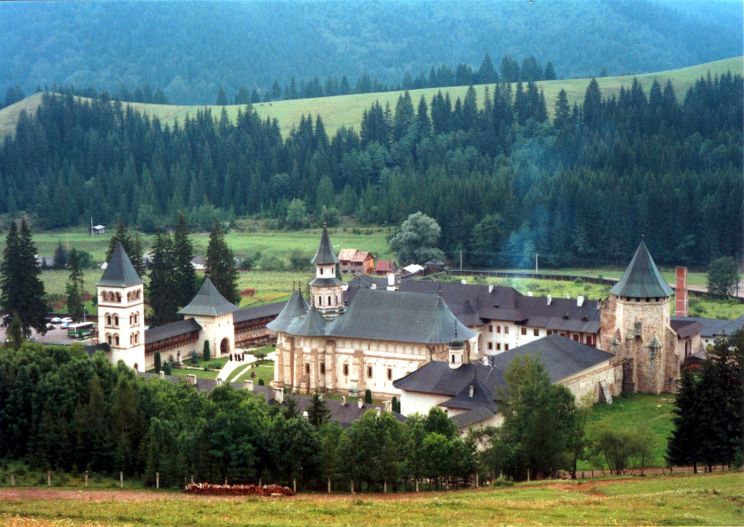
Cristina Florea, IES
In this episode of Converging Dialogues, Xavier Bonilla has a dialogue with Cristina Florea about Bukovina. They provide an overview of Bukovina, ethnic makeup, Hapsburgs and Austrian-Hungarian Empire.
Additional Information
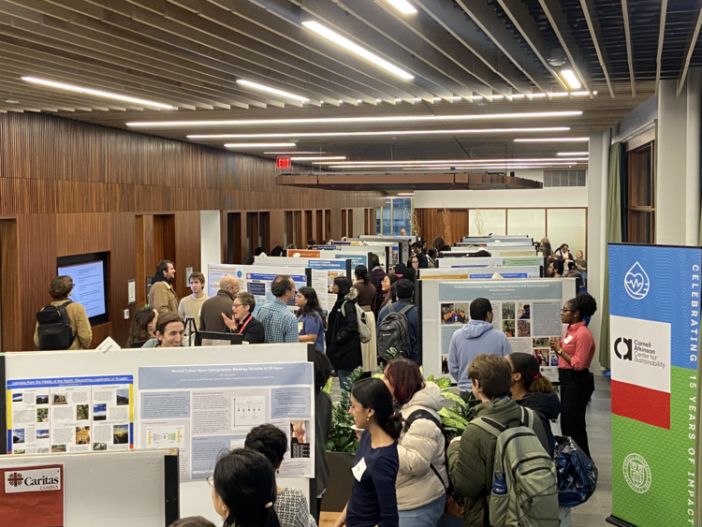
Einaudi Spring Showcase
April 20, 2026
4:30 pm
Statler Hotel, Room E/F
Come and explore international research from students at the Einaudi Center for International Studies. Our undergraduate Global Scholars will present posters on their international aid projects.
Global Scholars Showcase
Global Scholars will present a showcase of their capstone projects providing public commentary and perspectives on international aid.
Undergraduate global scholars consider the multiple perspectives that shape the global landscape of international aid and the communities impacted. They have partnered with Einaudi Center practitioner in residence Paul Kaiser and faculty mentor Ed Mabaya—expert researchers and practitioners on international development—to design their projects. Applications for the next cohort will open in fall 2026.
***
The Einaudi Spring Showcase is hosted by the Einaudi Center for International Studies.
Additional Information
Program
Einaudi Center for International Studies
Reppy Institute for Peace and Conflict Studies
East Asia Program
Southeast Asia Program
Latin American and Caribbean Studies
Institute for African Development
Institute for European Studies
South Asia Program
Migrations Program
Southwest Asia and North Africa Program
The Era of US Dominance in Economic Warfare Is Over

Nicholas Mulder, IES
Nicholas Mulder, an assistant professor at Cornell University, authored the piece analyzing changes in global economic warfare.
Additional Information
The Authoritarian Feelings Machine
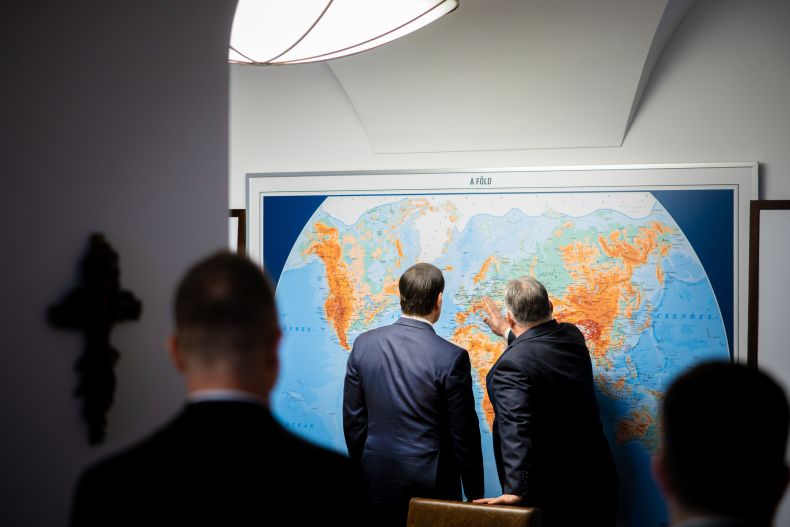
IES Director on Emotions as Political Tools
IES director Mabel Berezin talks with Jacobin about how leaders around the world have turned fear, grievance, and national pride into political instruments.
Additional Information
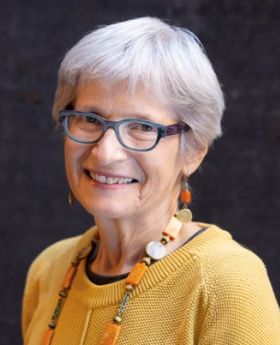
European History Colloquium - Atina Grossmann
April 8, 2026
4:30 pm
Mary Ann Wood, B21
European History Colloquium - Atina Grossmann, Distinguished Professor of History, The Cooper Union
Between “Orient” and European Catastrophe: Jewish Refugees from National Socialism in Iran and India 1935-1948.
Atina Grossmann is Distinguished Professor of History at the Cooper Union in New York City where she teaches courses on modern Europe, Fascism and National Socialism, the Holocaust, refugees and migration in global context as well as gender and sexuality studies. Relevant publications include: The Surviving Remnant: Documents on Jewish Displaced Persons in Postwar Germany 1945-1950 (with A.Kramen, A Patt, T. Lewinsky, 2024); chapter on “Aftermath” (with K. Bohus) in Cambridge Encyclopedia of the Holocaust (2015); Our Courage/Unser Mut: Jews in Europe after 1945 (with K. Bohus 2020), Shelter from the Holocaust: Rethinking Jewish Survival in the Soviet Union (with M.Edele and S. Fitzpatrick 2017), Wege in der Fremde: Deutsch-jüdische Begegnungsgeschichte zwischen New York, Berlin, und Teheran (2012), and Jews, Germans, and Allies: Close Encounters in Occupied Germany (Princeton 2007/09, German edition Wallstein 2012). as well as “Trauma, Privilege, and Adventure: Jewish Refugees in Iran and India” (in Jews and Colonialism, ed. Stefan Vogt, 2023). In 2022-23 she was the Ina Levine Invitational Senior Scholar in Residence at the Mandel Center for Advanced Holocaust Studies, USHMM. Her current research focuses on” Jewish Refugees from National Socialism in Iran and India: Between ‘Orient’ and European Catastrophe” as well as the entanglements of family memoir and historical scholarship.
Additional Information
Program
Institute for European Studies
South Asia Program
Southwest Asia and North Africa Program
International Fair
August 26, 2026
11:00 am
Uris Hall, Terrace
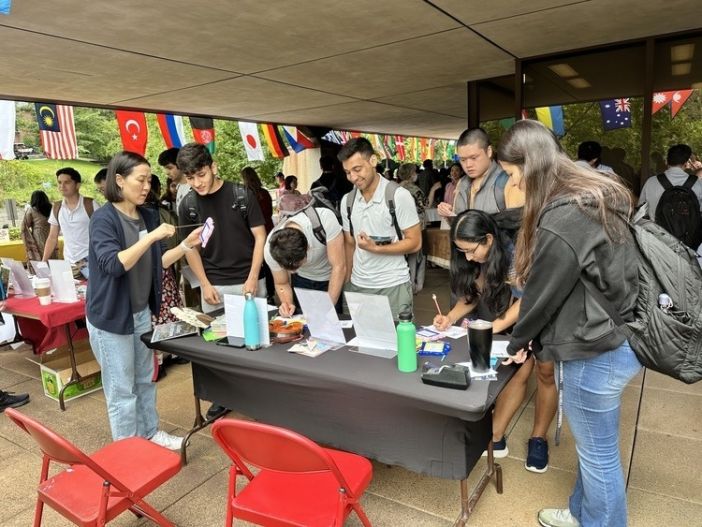
International Fair showcases Cornell's global opportunities for undergraduate and graduate students. Explore the fair and find out about study abroad, international studies programs, funding opportunities like Global Internships, Laidlaw Scholars Program, graduate student fellowship and research awards, international minors, language study, and more.
The International Fair is sponsored by the Mario Einaudi Center for International Studies and Office of Global Learning (both part of Global Cornell) in partnership with the Language Resource Center.
Additional Information
Program
Einaudi Center for International Studies
Reppy Institute for Peace and Conflict Studies
East Asia Program
Southeast Asia Program
Latin American and Caribbean Studies
Institute for African Development
Institute for European Studies
South Asia Program
Migrations Program
Southwest Asia and North Africa Program
IES Graduate Fellows Symposium: Tracing Europe: Methods, Archives, and Interdisciplinary Encounters

May 7, 2026
9:00 am
Uris Hall, G08
9:00 - 10:15 am: Sites of Exchange: Economy, Community, and Heritage across Europe
Angela Kothe, “Rainbow Connection: An Economic Analysis of Gay Restaurants and Public houses in the UK”Duncan Eaton, “Interwar Sugar Production and the Challenges of Czechoslovak Integration”Julia Sebastien, “Walk Like a Roman: Immersive Embodied Role Play and Experiential Learning in Virtual Ancient Pompeii”10:30 am - 12:00 pm: Governing Europe: Responses to Conflict in the 20th and 21st Centuries
Georgy Tarasenko, “Religious Infrastructure and Public Opinion in Wartime Autocracies: Evidence from the Orthodox Church during Russia's Invasion of Ukraine”Frances Cayton, “Coming To: How Civic Consciousness Shapes Democratic Resilience”Kaitlin Findlay, “Evidence of Humanity: the International Committee of the Red Cross and Inspection Tour Photography, WWII" Madeleine Lemos, “Spain is Different: Tourism, Culture, and Reintegration in the 1950s and 60s”Lunch Break 12:00 - 1:00 pm
1:00 - 2:30 pm: Resonances: Making Sense of European Literatures, Arts and Music
Xinyu Zhang, “Was heißt Poignancy?”Spencer Hadley, “Poetry makes a statement at the 1977 Berliner Jazztage: Amiri Baraka’s “Advanced Workers” Meet the West German Press”Nora Siena, “Nanni Balestrini and the Cut-up Technique Before, During, and After Autunno Caldo”Chiara Visentin, “Bible for a Lordly Lady: Countess Marie de Champagne’s Patronage of Biblical Translation”
Additional Information
Program
Einaudi Center for International Studies
Institute for European Studies
Reimagining International Aid
April 16, 2026
5:00 pm
Rockefeller Hall, 201 (Schwartz Auditorium)
Bartels World Affairs Lecture
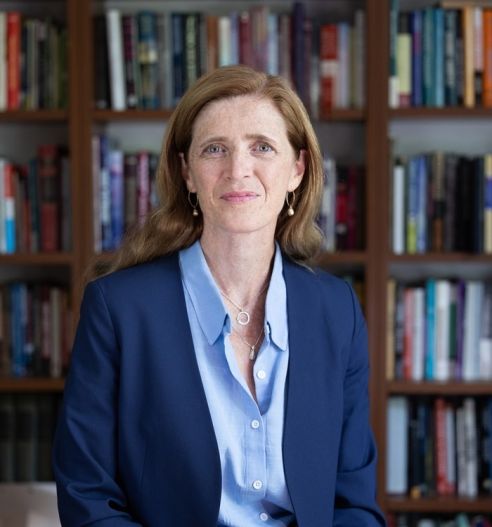
In this year’s Bartels lecture, Ambassador Samantha Power examines the causes and consequences of dismantling the U.S. Agency for International Development (USAID). While reductions in United States foreign assistance have inflicted harm on millions of people, the principal beneficiaries of the cuts, Power contends, are the People’s Republic of China and other governments that prefer to operate without scrutiny or accountability.
Join us as Power outlines a strategy for revitalizing a broad bipartisan coalition to support foreign assistance. To succeed in building resilient aid structures, politicians and stakeholders will need to demonstrate the effectiveness of aid programs to the public. U.S. resources should be used as leverage to secure new commitments from partner countries and mobilize additional investments from allied governments, the private sector, philanthropy, and members of the diaspora.
***
Speaker
Ambassador Samantha Power served in the Biden-Harris administration as the administrator of the U.S. Agency for International Development (USAID), the world’s premier international development agency. She was the 28th U.S. ambassador to the United Nations during the Obama-Biden administration. Her first book, "A Problem from Hell": America and the Age of Genocide, won the 2003 Pulitzer Prize for General Nonfiction.
***
About the Bartels World Affairs Lecture
The Bartels World Affairs Lecture is a signature event of the Einaudi Center for International Studies. This flagship event brings distinguished international figures to campus each academic year to speak on global topics and meet with Cornell faculty and students, particularly undergraduates. The lecture and related events are made possible by the generosity of Henry E. Bartels ’48 and Nancy Horton Bartels ’48.
Additional Information
Program
Einaudi Center for International Studies
Reppy Institute for Peace and Conflict Studies
East Asia Program
Southeast Asia Program
Latin American and Caribbean Studies
Institute for African Development
Institute for European Studies
South Asia Program
Migrations Program
Southwest Asia and North Africa Program