
Institute for European Studies
Crude Oil Prices Swing Wildly as Iran War Threatens Supplies

Nicholas Mulder, IES
Nicholas Mulder, a Cornell University assistant professor, described the situation as the largest oil supply shock ever compared to previous crises.
Additional Information
European History Colloquium - Colin Jones

March 23, 2026
4:30 pm
Mary Ann Wood Dr., B21
Robespierre’s Lists: Power and Connection in the French Revolutionary Terror
Colin Jones is Emeritus Professor of History at Queen Mary University of London. He has written many books on French history, most recently The Fall of Robespierre (2021), French Revolutionary Lives (2024) and The Shortest History of France (2025). For 2025-26 he is John and Constance Birkelund Fellow at the Cullman Center for Scholars and Writers at the New York Public Library.
In the last months of his life, Maximilien Robespierre (1758-94), then a major figure on the Committee of Public Safety that was running the Terror, drew up a number of lists of what he called ‘patriots with more or less talent’. Identifying the nearly 200 individuals on these lists and calculating their connections to Robespierre allows us to explore how he built a political network and how this affected the operations of the Terror. It also offers a perspective on why Robespierre was overthrown in July 1794.
Additional Information
Program
Institute for European Studies
Relocation Threats Shouldn’t Stop California From Taxing Billionaires

Cristobal Young, IES
Cornell University Professor Cristobal Young's research on millionaire migration patterns is cited to dispute claims that higher taxes prompt wealthy residents to relocate.
Additional Information
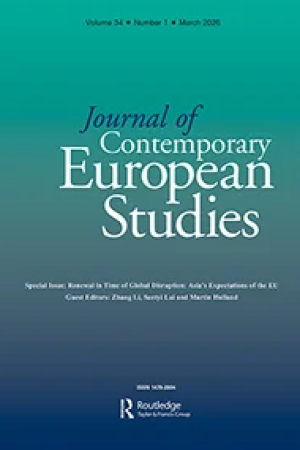
The End of Thick Security and the Normalization of the European Nationalist Right: A Historical Analysis
By Our Faculty
In the years between 2000 and 2022, thick security weakened and left European nationstates vulnerable to political, economic, and cultural ruptures with no organizational fallback in sight. A ‘post-security’ polity emerged that lacked the institutions that guarded security in the past. Post-security implies the absence of security mechanisms, not the absence of a need for security. The post-security polity privileges markets and peoples that cross borders, fosters austerity that threatens solidarity, and supports multicultural inclusion at the expense of nationalist exclusion.
Article
Additional Information
Program
Type
- Article
Publication Details
Publication Year: 2026
Journal: Journal of Contemporary European Studies
Travel Grants Send Grad Students Abroad
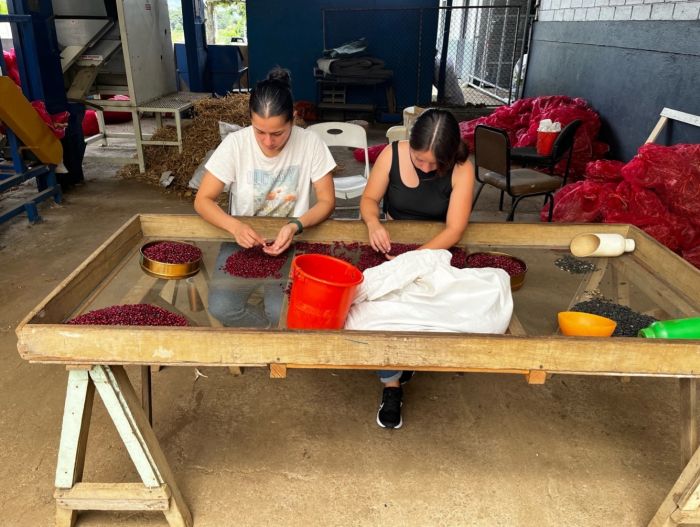
Eighty-three graduate students traveled internationally for fieldwork last summer with Einaudi Center support.
Additional Information
Europe and the Return of History
October 8, 2026
5:00 pm
Physical Sciences Building, 120
Russia's invasion of Ukraine, political radicalization, the crisis of the U.S., the rise of China—these are global shocks that define our current moment.
But in Europe, it is commonly said, they have a particular meaning. Not only are they close at hand. They signify a particular type of shock, a "pivot in time" as Germany's Chancellor Scholz put it. They signify an awakening. They signify the "return of history."
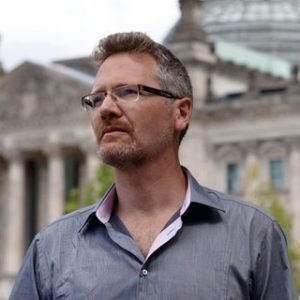
Looking back to the 20th century, Adam Tooze will explore the recurring theme in European public debate of the "end" and "return" of history.
***
About the Speaker
Professor Adam Tooze (Columbia University) teaches and researches widely in the fields of 20th-century and contemporary history. From a start in modern German history with a special focus on the history of economics and economic history his interests have widened to take in a range of themes in political, intellectual and military history, across a canvass stretching from Europe across the Atlantic. His most recent book was Crashed: How a Decade of Financial Crises Changed the World (2018).
About the Event
This event is hosted by the Institute for European Studies (IES), part of the Mario Einaudi Center for International Studies. The IES Luigi Einaudi Distinguished Lecture is an annual event.
Additional Information
Program
Einaudi Center for International Studies
Institute for European Studies
Information Session: Fulbright U.S. Student Program

May 18, 2026
5:00 pm
The Fulbright U.S. Student Program supports U.S. citizens to study, conduct research in any field, or teach English in more than 150 countries. The program is open to graduate students, recent graduates, and young professionals. Undergraduate students who wish to begin the program immediately after graduation are encouraged to start the process in their junior year. Recent graduates are welcome to apply through Cornell.
The Fulbright program at Cornell is administered by the Mario Einaudi Center for International studies. Applicants are supported through all stages of the application and are encouraged to start early by contacting fulbright@einaudi.cornell.edu.
Register for the virtual session.
Can’t attend? Contact fulbright@einaudi.cornell.edu.
Additional Information
Program
Einaudi Center for International Studies
Reppy Institute for Peace and Conflict Studies
East Asia Program
Southeast Asia Program
Latin American and Caribbean Studies
Institute for African Development
Institute for European Studies
South Asia Program
Migrations Program
Pop after Empire: Disco, Decolonization, and the Re-Making of Europe's Pop Music Industry
April 14, 2026
5:00 pm
A. D. White House, Guerlac Room
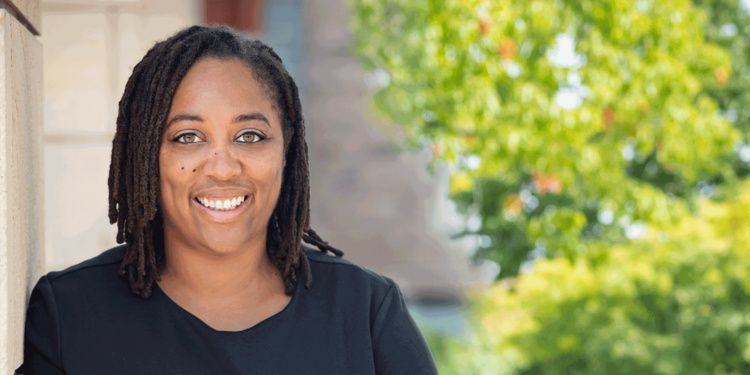
In this talk, Kira Thurman investigates the rise of Black Europeans in popular music since WWII. After the collapse of European empires, European popular music industries turned to the musical labor of former colonial subjects to reinvent themselves in an increasingly global and English-speaking marketplace. Interpreting many Black European pop stars such as Boney M or Milli Vanilli as Black Americans, however, transatlantic listeners often failed to recognize the musicians performing in front of them as belonging to European history. How, then, do we account for both the overwhelming presence—and discursive absence—of Black Europeans in modern history? This talk seeks to illuminate how musical producers, performers, and their audiences sought to make sense of—and occasionally reject—the category of ‘Black Europe’ in the wake of a newly emerging post-imperial Western Europe.
About the speaker
Kira Thurman is a highly-sought-after and award-winning historian and musicologist. A classically-trained pianist who grew up in Vienna, Austria, Thurman earned her PhD in history from the University of Rochester with a minor field in musicology from the Eastman School of Music. Her research, which has appeared in German Studies Review, the American Historical Review, Journal of the American Musicological Society (JAMS), Opera Quarterly, and Journal of World History, focuses on two topics that occasionally converge: the relationship between music and national identity, and Central Europe's historical and contemporary relationship with the Black diaspora.
Host
The Institute for European Studies, part of the Einaudi Center for International Studies
Additional Information
Program
Einaudi Center for International Studies
Institute for European Studies
Information Session: Fulbright U.S. Student Program

April 13, 2026
4:45 pm
The Fulbright U.S. Student Program supports U.S. citizens to study, conduct research in any field, or teach English in more than 150 countries. The program is open to graduate students, recent graduates, and young professionals. Undergraduate students who wish to begin the program immediately after graduation are encouraged to start the process in their junior year. Recent graduates are welcome to apply through Cornell.
The Fulbright program at Cornell is administered by the Mario Einaudi Center for International studies. Applicants are supported through all stages of the application and are encouraged to start early by contacting fulbright@einaudi.cornell.edu.
Register for the virtual session.
Can’t attend? Contact fulbright@einaudi.cornell.edu.
Additional Information
Program
Einaudi Center for International Studies
Reppy Institute for Peace and Conflict Studies
East Asia Program
Southeast Asia Program
Latin American and Caribbean Studies
Institute for African Development
Institute for European Studies
South Asia Program
Migrations Program
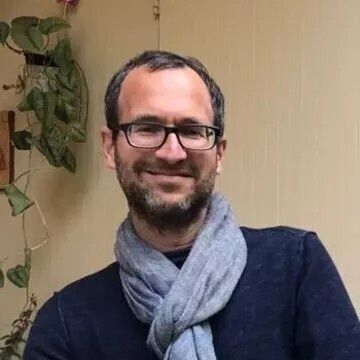
European History Colloquium - Dan Edelstein
April 9, 2026
4:30 pm
Mary Ann Wood, B21
European History Colloquium - Dan Edelstein, William H. Bonsall Professor of French and (by courtesy) of Political Science and History at Stanford University
“Civilization and the Anthropologists"
Thursday April 9, 4:30 pm
120 Mary Ann Wood Dr.
Room B21
Additional Information
Program
Institute for European Studies