
Institute for European Studies
Race and Racism Across Borders
April 12, 2021
11:00 am
Keynote Speaker: Nanjala Nyabola
Cornell Students: Critical Reflections
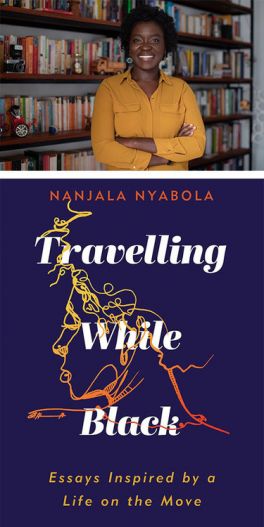
Nanjala Nyabola, author of Travelling While Black-Essays Inspired by a Life on the Move, will be in conversation with professors Rachel Beatty Riedl, Kim Yi Dionne, and postdoc Eleanor Paynter.
Nanjala Nyabola is a writer, political analyst, and activist based in Nairobi, Kenya. Nyabola writes extensively about African society and politics, technology, international law, and feminism for academic and non-academic publications. Her first book, Digital Democracy, Analogue Politics: How the Internet Era is Transforming Politics in Kenya (Zed Books, 2018), was described as "a must-read for all researchers and journalists writing about Kenya today." Nyabola's ground-breaking work opens up new ways of understanding the current global online era, reframing digital democracy from the African perspective.
Nyabola’s latest book, the critically acclaimed Travelling While Black; Essays Inspired by a Life on the Move, (available electronically from the Cornell Library) is a stark reminder that the world needs to be seen through the lens of others. Her work has featured in publications including African Arguments, Al Jazeera, Financial Times, Foreign Affairs, Foreign Policy (magazine), The Guardian, New African, The New Humanitarian, The New Inquiry, New Internationalist, and World Policy Journal.
Nyabola holds a BA in African studies and political science from the University of Birmingham, an MSc in forced migration and an MSc in African studies from the University of Oxford, which she attended as a Rhodes Scholar, and a JD from Harvard Law School.
Following the dialogue, students will present select prose, poems, and visual art published as part of Global Cornell's Race and Racism Across Borders, a call that asked students and alumni to reflect on the new knowledge gained about racial dynamics when they crossed a literal or figurative border.
Register Now
Additional Information
Program
Einaudi Center for International Studies
Reppy Institute for Peace and Conflict Studies
East Asia Program
Southeast Asia Program
Latin American and Caribbean Studies
Institute for African Development
Institute for European Studies
South Asia Program
Ban On US Water Shutoffs Could Have Prevented Thousands of Covid Deaths - Study

Mildred Warner, IES
Mildred Warner, professor of city and regional planning, says, “This study shows the importance of a national standard for access to water, especially for low-income households. The Covid-19 pandemic has revealed so many structural inequities in our society, and access to drinking water is one that demands our attention.”
Additional Information
No Turning Back: Facebook Reckons With A Post-2020 World

Alexandra Cirone, IES
“At the end of the day, Facebook’s response to disinformation is always going to be driven by how to increase their user engagement and advertising revenue,” says Alexandra Cirone, assistant professor of government.
Additional Information
EU to Bosnia: Refuge, Reparations, and Global Apartheid
April 19, 2021
11:00 am
The foreclosure of asylum in the European Union and the militarization of the EU borders have resulted in EU pushbacks of refugees and migrants from the Middle East, North Africa, and South Asia to European countries that do not belong to the EU, such as Bosnia. This panel critically examines the foreclosure of asylum at the EU/Bosnia border as a case study of the global apartheid regime that produces humanitarian crises while denying refugees mobility and safety. What might accountability for the damages wrought by global apartheid look like? And what kinds of futures can we imagine and fight for?
Panelists:
Nidžara Ahmetašević is an independent scholar, journalist, and activist and the author of many articles, essays, and reports, including The Dark Side of Europeanisation: Serbia, Bosnia and Herzegovina and the European Border Regime and People on the Move in Bosnia and Herzegovina in 2018: Stuck in the corridors to the EU.
Catherine L. Besteman is the Francis F. Bartlett and Ruth K. Bartlett Professor of Anthropology at Colby College and the author of four books, including Militarized Global Apartheid.
Azra Hromadžić is an O’Hanley Faculty Scholar and Associate Professor of Anthropology at Syracuse University and the author of Citizens of an Empty Nation: Youth and State-making in Postwar Bosnia and Herzegovina.
Moderated by Saida Hodžić, Associate Professor of Anthropology and Feminist, Gender, and Sexuality Studies at Cornell University.
This panel is organized as part of the Institute for European Studies’ Migration Series for its AY 2020-21 theme Repair and Reparations and sponsored by the Migrations Forum. It is co-sponsored by the American Studies Program, Feminist, Gender, and Sexuality Studies, Near Eastern Studies, the Society for the Humanities, and the South Asia Program. You may find information about past events and video recordings at https://einaudi.cornell.edu/programs/institute-european-studies/events/….
Additional Information
Program
Einaudi Center for International Studies
Institute for European Studies
South Asia Program
Labor-Friendly Laws Promote Local Economic Growth

Mildred Warner, IES
Professor of City and Regional Planning in the College of Architecture, Art and Planning, Mildred Warner "shows that state laws designed to hinder union activity and indulge corporate entities do not enhance economic productivity."
Additional Information
Patricia Wasyliw

Senior Associate Director of International Admissions, College of Arts and Sciences
Patricia Wasyliw is a senior associate director of international admissions, and an assistant dean in the College of Arts and Sciences.
Additional Information
Panagiotis Angelopoulos
Senior Lecturer, Performing and Media Arts
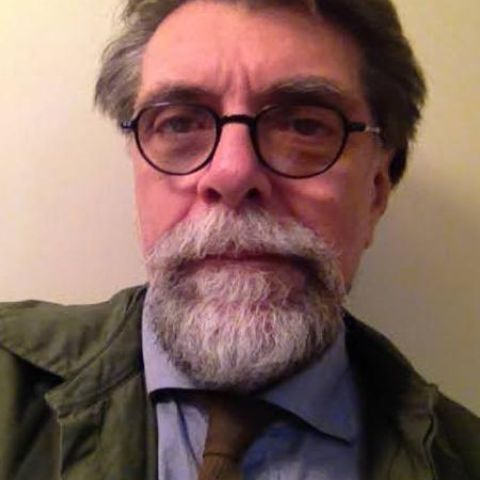
Panagiotis Angelopoulos is a senior lecturer in the Department of Performing and Media Arts.
Additional Information
Watch the recording of latest webinar in the IES Migrations Series
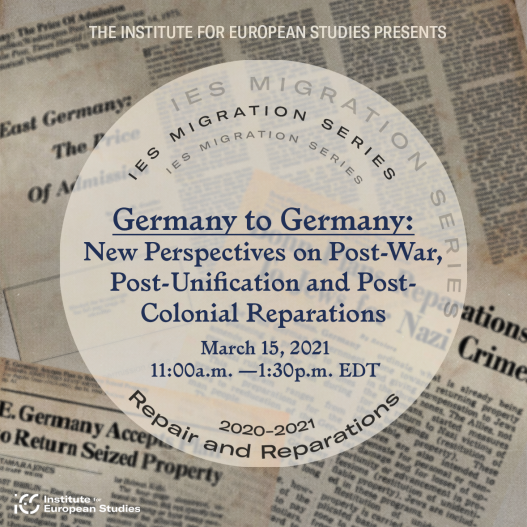
Germany to Germany: New Perspectives on Post-War, Post-Unification and Post-Colonial Reparation
This panel brought together scholars who provided new perspectives on the material and moral reparations of the postcolonial, post-Nazi and post-communist eras in Germany, as well as the significance of these restitutions in serving as models for transitional justice and international law. It explored both material and moral reparations, such as return and restitution of property that had been confiscated, monetary payments as compensation, and educational steps to take accountability for the past. The panel not only acknowledged these reparations to ex-citizens and refugees, but also questioned the limits of established formulas and the lack or inequality of restitutions throughout the history of today’s Germany.
Additional Information
President Speaks Out on Atlanta Shootings
Condemns Anti-Asian Racism and Violence
Einaudi stands with our Asian and Asian American colleagues and students. Read the statement to find out how to report campus incidents of bias.