
Institute for European Studies
Valerie Jane Bunce

Aaron Binenkorb Professor of International Studies Emerita
Additional Information
Benjamin Anderson
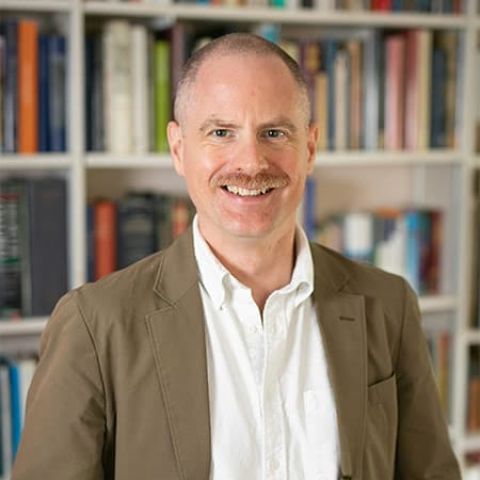
Associate Professor, History of Art and Visual Studies
Benjamin Anderson studies the visual and material cultures of the eastern Mediterranean and adjacent landmasses, with a particular focus on late antique and Byzantine art and architecture. His first book, Cosmos and Community in Early Medieval Art, addresses the reception of Greco-Roman astronomical imagery in the Byzantine, Frankish, and Islamic states.
Additional Information
Program
Role
- Faculty
- IES Faculty Associate
- SWANA Core Faculty
- SWANA Steering Committee
Contact
Email: bwa32@cornell.edu
Acasa, My Home

February 22, 2021
12:01 am
Ithaca Premiere>2020 > Romania/Germany > Directed by Radu Ciorniciuc
With an empathetic and cinematic eye, filmmaker Radu Ciorniciuc offers viewers a compelling tale of an impoverished family living in the wilderness on the fringes of society in Romania, fighting for acceptance and their own version of freedom. Shortlisted for the 2021 International Documentary Association (IDA) Awards for Best Feature. In Romanian & English. Subtitled. More at zeitgeistfilms.com/film/acasamyhome
1 hr 26 min
We will start taking reservations one week in advance of a film's first play date.
Reservations can be made here:
https://cinema.cornell.edu/virtual-cinema-order-form
Additional Information
Program
Einaudi Center for International Studies
Institute for European Studies
M.C. Escher: Journey to Infinity

February 15, 2021
12:01 am
Ithaca Premiere>2018 > Netherlands > Directed by Robin Lutz
With narration by Stephen Fry
"This engaging film about Dutch graphic artist Maurits Cornelis Escher takes viewers into his dreamlike world. Rich testimonials offer viewers a glimpse into the soul of the artist, who saw himself as a mathematician above all. The film's animations deftly express the mathematical dimensions of his work. Escher inspired many musicians in the 1960s and '70s, and his brilliant influence continues in contemporary graphic novels and cinema." (The International Festival of Films on Art) In Dutch, English, Italian & German. Subtitled. More at www.zeitgeistfilms.com/film/mcescherjourneytoinfinity
1 hr 21 min
Additional Information
Program
Institute for European Studies
Info Session: Fulbright U.S. Student Program for Undergraduates
April 12, 2021
4:30 pm
The Fulbright U.S. Student Program supports college graduates conducting research or teaching in any field in more than 150 countries. Applications are due in the fall; students who wish to begin the program immediately after graduation are encouraged to start the process in their junior year.
United States citizens in any field of study are eligible.
Contact: fulbright@einaudi.cornell.edu, https://einaudi.cornell.edu/fulbright-us-student-program
Additional Information
Program
Einaudi Center for International Studies
Reppy Institute for Peace and Conflict Studies
East Asia Program
Southeast Asia Program
Latin American and Caribbean Studies
Institute for African Development
Institute for European Studies
South Asia Program
Info Session: Fulbright U.S. Student Program for Undergraduates
March 3, 2021
4:30 pm
The Fulbright U.S. Student Program supports college graduates conducting research or teaching in any field in more than 150 countries. Applications are due in the fall; students who wish to begin the program immediately after graduation are encouraged to start the process in their junior year.
United States citizens in any field of study are eligible.
Contact: fulbright@einaudi.cornell.edu, https://einaudi.cornell.edu/fulbright-us-student-program
Additional Information
Program
Einaudi Center for International Studies
Reppy Institute for Peace and Conflict Studies
East Asia Program
Southeast Asia Program
Latin American and Caribbean Studies
Institute for African Development
Institute for European Studies
South Asia Program
Info Session: Einaudi Center Regional and Thematic Minors
April 5, 2021
4:30 pm
Take your learning to the next level with regional and thematic minors from the Mario Einaudi Center for International Studies and our programs. Whatever your major and career goals, our wide geographical reach and interdisciplinary focus provide opportunities for you to expand your global knowledge and broaden your approach to your studies and the world. Find out if an Einaudi Center minor is right for you and how to apply.
Co-sponsored by the Tatkon Center for First-Year Students
Contact: einaudi_center@einaudi.cornell.edu; https://einaudi.cornell.edu/learn/minors-and-academics
Additional Information
Program
Einaudi Center for International Studies
Southeast Asia Program
Latin American and Caribbean Studies
Institute for European Studies
South Asia Program
East Asia Program
Institute for African Development
Info Session: Careers Beyond Academia - Resources for PhD students and Postdocs
March 24, 2021
4:30 pm
Explore options beyond academia and discover how to make informed decisions for career choices in government, non-profits and industry. Test-drive career opportunities through career panels, individual and group sessions, site visits and more. Visit website for more details.
Contact: sap@cornell.edu
Additional Information
Program
Einaudi Center for International Studies
East Asia Program
Southeast Asia Program
Latin American and Caribbean Studies
Institute for European Studies
South Asia Program
Institute for African Development
Info Session: International Relations Minor
February 25, 2021
4:45 pm
Is the Einaudi Center's International Relations minor for you? Here's a chance to find out. Graduates go on to successful careers in fields like international law, economics, agriculture, trade, finance, journalism, education, and government service.
Contact: irm@einaudi.cornell.edu; https://einaudi.cornell.edu/academics/international-relations-minor
Additional Information
Program
Einaudi Center for International Studies
Reppy Institute for Peace and Conflict Studies
East Asia Program
Southeast Asia Program
Latin American and Caribbean Studies
Institute for African Development
Institute for European Studies
South Asia Program
Info Session: Fulbright Opportunities for Graduate Students
February 15, 2021
4:30 pm
The Fulbright U.S. Student Program provides full funding for graduate and professional students conducting research or teaching in any field in more than 150 countries. Open to U.S. citizens only.
The Fulbright-Hays Doctoral Dissertation Research Abroad Program supports doctoral students conducting research in modern languages or area studies for six to 12 months. Open to U.S. citizens and permanent residents of the United States. Travel to Western European countries is not eligible.
Contact: fulbright@einaudi.cornell.edu, https://einaudi.cornell.edu/fulbright-us-student-program
Additional Information
Program
Einaudi Center for International Studies
Reppy Institute for Peace and Conflict Studies
East Asia Program
Southeast Asia Program
Latin American and Caribbean Studies
Institute for African Development
Institute for European Studies
South Asia Program