
Institute for European Studies
Barrett Honored by National Geographic
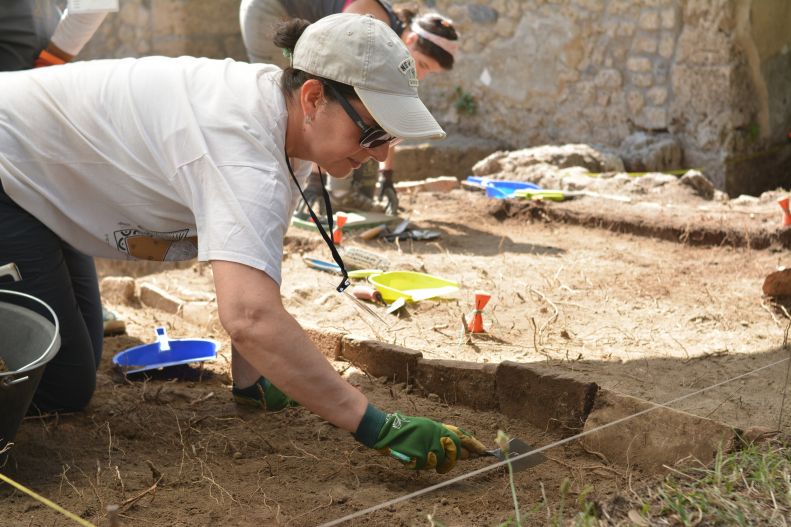
Einaudi-Funded Researcher Studies Daily Life in Pompeii
Caitlín Barrett (IES) received a 2019 Einaudi seed grant to reconstruct a garden of Pompeii.
Additional Information
IES Graduate Research Grant

Details
The IES Graduate Research Grant is available to graduate students in any field of study whose research is focused on the study of Europe.
Criteria
- Quality of the research proposal within the field
- Validity and feasibility of the project
- Research and professional qualifications
- Strength of academic performance and letter of recommendation
Requirements
- 4-5 page research proposal (double-spaced) with bibliography
- Project budget
- 1 letter of recommendation*
Winners receive up to $4,000 in funding, distributed through their bursar account. The IES Graduate Research Grant application is conducted together with the Manon Michels and Michele Sicca Grant competitions. Candidates submit a single application and are automatically considered for each of the awards.
Contact IES with questions about this award.
Additional Information
Luigi Einaudi Graduate Dissertation Fellowship

Details
The Luigi Einaudi Graduate Dissertation Fellowship is a semester-long or year-long fellowship available to graduate students in modern European government, history, economics, and related social science fields. The award consists of a graduate student stipend for one or two semesters, in-absentia fees, and enrollment in Cornell's student health insurance plan.
Criteria
This fellowship is designed to enable graduate students to conduct field and archival research focused on Europe for an extended period (4-8 months). To be eligible, applicants must have completed the "A" exam in their department or have an exam date scheduled prior to submitting their application and have a dissertation project approved by their dissertation committee.
- Quality of the research proposal in a social science field
- Validity and feasibility of the applicant’s research project
- Research and professional qualifications
- Strength of the student’s academic performance and letters of recommendation
Requirements
- 8-10 page project proposal (double-spaced) with bibliography
- 2 letters of recommendation
Contact IES with questions about this award.
Additional Information
Susan Tarrow Fellowship for Research in Europe

Details
The Susan Tarrow Fellowship for Research in Europe was established in 2005 in honor of the associate director of the Institute for European Studies from 1985-2005. One of Tarrow's priorities was to establish funding to enable Cornell undergraduate students to pursue summer field research in Europe and to provide them with the intellectual and practical advising they need at all stages of their projects.
Undergraduate students from all fields of study are invited to submit applications to pursue research projects focused on Europe. In light of Tarrow’s passion for France and Italy, students planning a project in those countries are particularly encouraged to apply, though the fellowship is open to all Europeanists.
Requirements
- 4-5 page project proposal (double-spaced) with bibliography
- Budget listing estimated costs for airfare, lodging, food, etc.
- 1 letter of recommendation from Cornell Faculty
- Transcript
The winner will receive up to $4,000 in funding, distributed through their bursar account.
Contact IES with questions about this award.
Additional Information
Manon Michels Einaudi Grant
Details
This graduate research grant honors the memory of Manon Michels Einaudi, a Cornell faculty wife and mother. One award is given each year for graduate research in a field close to Mrs. Einaudi's interests: European art and architecture, art history, literature, philosophy, and culture.
Graduate students in those fields whose research is in Europe and who are recommended by their faculty committee are eligible.
The primary aim of the Manon Einaudi Grant is to help Cornell doctoral candidates explore possible topics or otherwise launch their dissertation work, although applications from students whose dissertations are already in progress may also be considered if funding is available.
Criteria
- The quality and feasibility of the applicant's research proposal
- Evidence that funded research focused on Europe will advance the applicant’s doctoral program
- Applicant's academic performance and qualifications to complete the proposed project
- Strength of the applicant's letters of recommendation
Requirements
- 4-5 page project proposal (double-spaced) with bibliography
- Project budget
- 1 letter of recommendation
Winners receive up to $4,000 in funding, distributed through their bursar account. The Manon Michels Einaudi Grant competition is conducted together with the IES Graduate Research Grant and Michele Sicca Grant competitions. Candidates submit a single application and are automatically considered for each of the awards.
Contact IES with questions about this award.
Additional Information
Michele Sicca Research Grant

Details
The Michele Sicca Research Grant was created by the late Mario Einaudi, Goldwin Smith Professor of International and Comparative Politics and former director of the Center for International Studies. Michele Sicca was an antifascist physician with whom Einaudi worked in exile during the Mussolini period.
The primary aim of the Sicca grant program is to help Cornell doctoral candidates explore possible research topics in European studies or otherwise launch their dissertation work via preliminary summer fieldwork in Europe. Applications from advanced doctoral students for completion of Europe-related dissertations may also be considered if funding is available.
Criteria
- The quality and feasibility of the applicant's Europe-focused research proposal
- Evidence that field research in Europe will advance the applicant’s doctoral program
- Applicant's academic performance and qualifications to complete the proposed project
- Strength of the applicant's letters of recommendation
Requirements
- 4-5 page project proposal (double-spaced) with bibliography
- Project budget
- 1 letter of recommendation
Winners receive up to $4,000 in funding, distributed through their bursar account. The Michele Sicca Grant competition is conducted together with the IES Graduate Research Grant and Manon Michels Einaudi Grant competitions. Candidates submit a single application and are automatically considered for each of the awards.
Contact IES with questions about this award.
Additional Information
Repatriation of Museum Objects
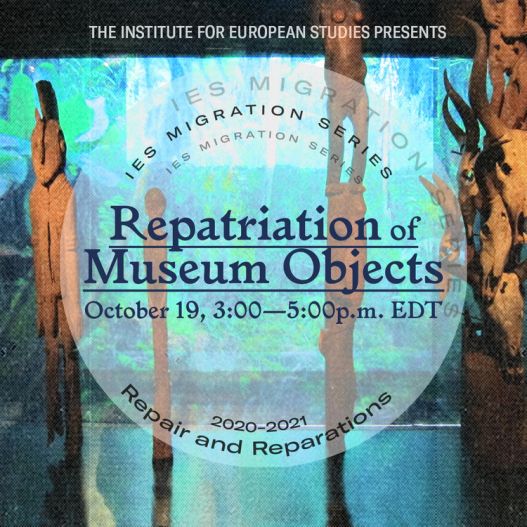
October 19, 2020
3:00 pm
This panel is organized to bring together museum directors, curators, architects, and scholars to comment on the recent discussions on repatriation and restitution as a form of reparation to colonized and looted lands.
While museums in Europe and North America have occasionally returned objects to their native communities or lands of arrival, the issue of repatriation gained an accelerated epistemological and ethical momentum at the end of 2018. What is the responsibility of museums to objects taken into their collections by violence or deceit during the colonial times or wars? What is the role of museum-object-repatriation in the recognition of colonial and military violence? What are the procedural and ethical differences between repatriation, restitution, and other possible forms of reparations? What are the legal structures that prohibit or allow deaccession in the museums of different countries? Once the objects are parted from their communities and no longer serve their original sacred functions, where are they returned back to? What determines how far back museums consider repatriation claims legitimate and why? What is the future of “universal museums” around the world?
Speakers will each make a 15-minute presentation, commenting on the contemporary debates from the perspectives of their own work and study area. A question and answer session will follow the presentations.
Speakers:
Souleymane Bachir Diagne | Columbia University | New York
Jonathan Fine | Humboldt Forum | Berlin
Cecile Fromont | Yale University | New Haven
Moderator:
Esra Akcan | Cornell University | Ithaca
Additional Information
Program
Einaudi Center for International Studies
Institute for European Studies
Watch the "Repatriation of Museum Objects" Webinar Recording
Moderated by Esra Akcan
Held on October 19th, 2020, this panel was organized to bring together museum directors, curators, architects, and scholars to comment on the recent discussions on repatriation and restitution as a form of reparation to colonized and looted lands. Over 500 participants attended from 52 different countries.
While museums in Europe and North America have occasionally returned objects to their native communities or lands of arrival, the issue of repatriation gained an accelerated epistemological and ethical momentum at the end of 2018. What is the responsibility of museums to objects taken into their collections by violence or deceit during the colonial times or wars? What is the role of museum-object-repatriation in the recognition of colonial and military violence? What are the legal structures that prohibit or allow deaccession in the museums of different countries? Once the objects are parted from their communities and no longer serve their original sacred functions, where are they to be returned? What determines how far back museums consider repatriation claims legitimate and why? What is the future of “universal museums” around the world?"
Speakers each made a 15-minute presentation, commenting on the contemporary debates from the perspectives of their own work and study area. A question and answer session followed the presentations.
Speakers:
Souleymane Bachir Diagne | Columbia University | New York
Jonathan Fine | Humboldt Forum | Berlin
Cecile Fromont | Yale University | New Haven
Moderator:
Esra Akcan | Cornell University | Ithaca
Additional Information
Global Challenges to Democracy: Perspectives from Europe, Asia, Africa, and Latin America

October 2, 2020
11:00 am
Over the past decade, democracy has been in retreat in a large number of countries in different regions, at least partially reversing the wave of democratization that swept across much of the world in the late 20th century. This webinar explores patterns of "democratic backsliding" in different world regions and their implications for democratic rule and its political resiliency in the face of autocratic challenges.
Panel: Valerie Bunce, Tom Pepinsky, Rachel Riedl, and Kenneth Roberts
Co-sponsored by the Mario Einaudi Center for International Studies, Latin American Studies Program, Institute for African Development, Institute for European Studies, and Southeast Asia Program.
Please register through the following link:
https://cornell.zoom.us/webinar/register/WN_PWKFidVjSgy3Pwxf7xmmXg
Additional Information
Program
Einaudi Center for International Studies
Latin American and Caribbean Studies
Southeast Asia Program
Institute for African Development
Institute for European Studies
Laidlaw Leadership and Research Program
Details
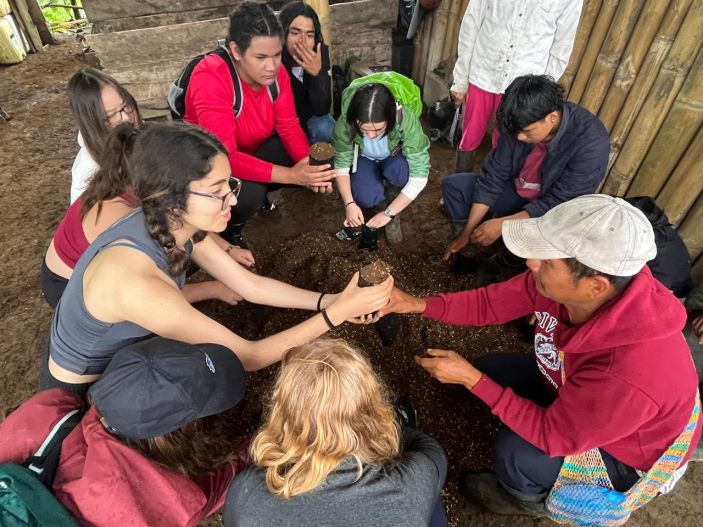
The Laidlaw Leadership and Research Program for undergraduates promotes ethical leadership and international research around the world—starting with the passionate leaders and learners found on campuses like Cornell.
With generous support for your leadership development, a summer abroad putting your skills into action, and research, this two-year cohort program for emerging leaders lays out a path for you to invest your skills, knowledge, and experience to make global change. Learn more about the program and its global reach on the Laidlaw Foundation website.
The Program
Research
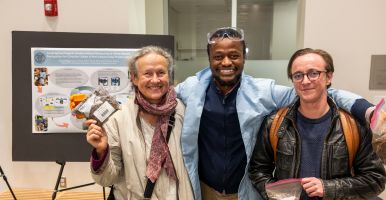
Build your research skills on an internationally focused research project with the support of a faculty mentor and/or an experienced research team during your first summer. We'll help you find a project and a faculty mentor or you may propose your own.

Leadership Training
Learn about your unique leadership strengths, further develop your skills through critical reflection, and explore how to be an ethical and values-driven leader. You'll receive an Oxford certificate in ethical leadership at the end of the program.
Leadership-in-Action
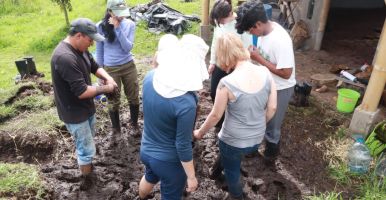
Work internationally on a hands-on, community-based project. You can develop your own leadership-in-action project, or we'll help you identify an international organization to work with. You'll learn from real-world leaders enacting change in their communities.

Networking
Connect with like-minded scholars who are passionate about Laidlaw's shared values—ethical leadership, global perspective, and research with a real-world impact. The international network of Laidlaw scholars extends beyond Cornell.
Faculty Fellows
Our Laidlaw faculty fellows support and mentor scholars throughout the experience. Meet our faculty fellows: Beth Lyon, clinical professor of law in the Cornell Law School, and Johannes Haushofer, professor of economics in the Brooks School of Public Policy.
Award
Summer 1: Up to $3,900 stipend while you conduct full-time research in Ithaca.
Summer 2: Up to $3,900 stipend for living expenses during your leadership-in-action experience, plus up to $1,950 stipend for international travel expenses.
Eligibility
First- and second-year students from any college or major may apply. You should have a strong academic background and must be able to commit to full participation in the program. U.S. citizenship is not required.
In order to be eligible for program funding, scholars must commit to all components of the program. Expectations are outlined below. If you have any questions about what full commitment to the program entails, please contact us at laidlaw.scholars@cornell.edu
Scholar Stories
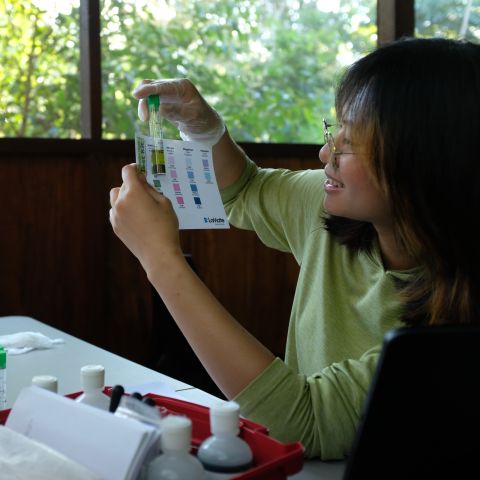
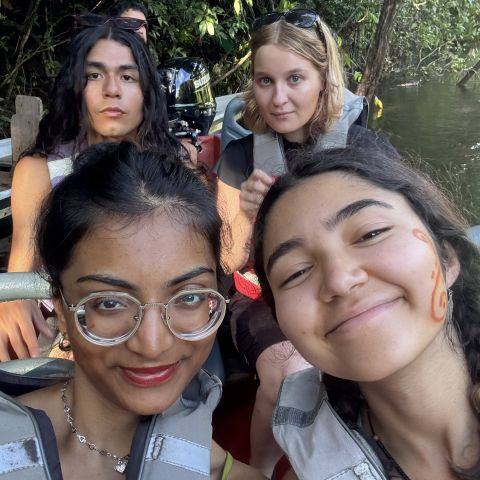
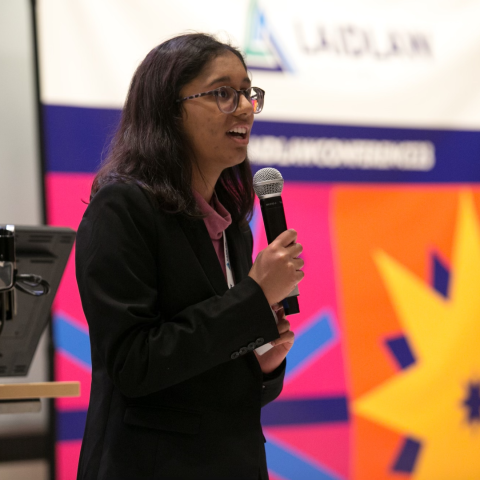
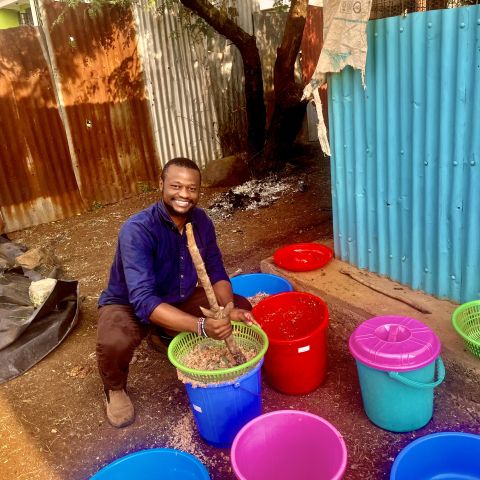
Meet Our Current Laidlaw Scholars
How to Apply
Apply by January 6, 2027 using the link below. Students who are selected to become Laidlaw scholars are notified by March 1.
Documents to Submit with Your Application
- Statement of Interest (2 page maximum, upload as PDF)
- Research Application (apply to 3 faculty-proposed projects or submit an independent proposal)
- Resume/CV (2 page maximum, upload as PDF)
- At least one reference who can submit a letter of recommendation
Important Dates
- October: Applications open
- January: Applications due
- February: Applicant interviews
- March: Decisions announced
As a part of the next cohort of Laidlaw scholars, you'll be active in the program from March 2027 to March 2029.
Questions? Join us for an upcoming information session, meet the current Scholars at the International Research Showcase, or contact our Laidlaw coordinator.
Additional Information
Funding Type
- Scholarship
Role
- Student