
Institute for European Studies
Information Session: Fulbright U.S. Student Program

March 18, 2026
4:45 pm
The Fulbright U.S. Student Program supports U.S. citizens to study, conduct research in any field, or teach English in more than 150 countries. The program is open to graduate students, recent graduates, and young professionals. Undergraduate students who wish to begin the program immediately after graduation are encouraged to start the process in their junior year. Recent graduates are welcome to apply through Cornell.
The Fulbright program at Cornell is administered by the Mario Einaudi Center for International studies. Applicants are supported through all stages of the application and are encouraged to start early by contacting fulbright@einaudi.cornell.edu.
Register for the virtual session.
Can’t attend? Contact fulbright@einaudi.cornell.edu.
Additional Information
Program
Einaudi Center for International Studies
Reppy Institute for Peace and Conflict Studies
East Asia Program
Southeast Asia Program
Latin American and Caribbean Studies
Institute for African Development
Institute for European Studies
South Asia Program
Migrations Program
Bay Area Braces for ‘March for Billionaires’, Which Organizers Promise Is Serious

Cristobal Young, IES
Cornell University sociologist Cristobal Young discusses how the ultra-wealthy are unlikely to leave California in response to new taxes.
Additional Information
World in Focus: Immigration Enforcement as Political Punishment

February 10, 2026
4:00 pm
Uris Hall, G08
Join Einaudi Center experts for World in Focus Talks on global events in the news and on your mind. Our faculty's research and policy insights put the world in focus.
This year we’re hosting informal campus discussions on many Tuesday afternoons. This week’s topic:
In the United States and around the world, strict immigration enforcement and violence are being wielded as political tools. Recent U.S. actions include surveillance of communities, indiscriminate detainment, and violence against protestors. Despite being framed as necessary for the safety of citizens, these tactics are rooted in histories of slavery, the prison industrial complex, and xenophobia.
Does this type of enforcement infringe on rights? How can we understand current events through the lens of global and historical contexts? Do present-day immigration policies make communities safer?
***
Featured Faculty
Shannon Gleeson (Migrations) | Industrial and Labor RelationsTristan Ivory (EAP, IAD) | International and Comparative LaborJaclyn Kelley-Widmer | LawNatasha Raheja (SAP) | AnthropologyIan Kysel | Law
***
Conversations Matter at Einaudi
This conversation is hosted by the Mario Einaudi Center for International Studies and its regional and thematic programs. Find out what's in store for students at Einaudi!
Additional Information
Program
Einaudi Center for International Studies
Reppy Institute for Peace and Conflict Studies
East Asia Program
Southeast Asia Program
Latin American and Caribbean Studies
Institute for African Development
Institute for European Studies
South Asia Program
Migrations Program
Southwest Asia and North Africa Program
US Immigration Crackdown Has Europeans Rethinking 'America'
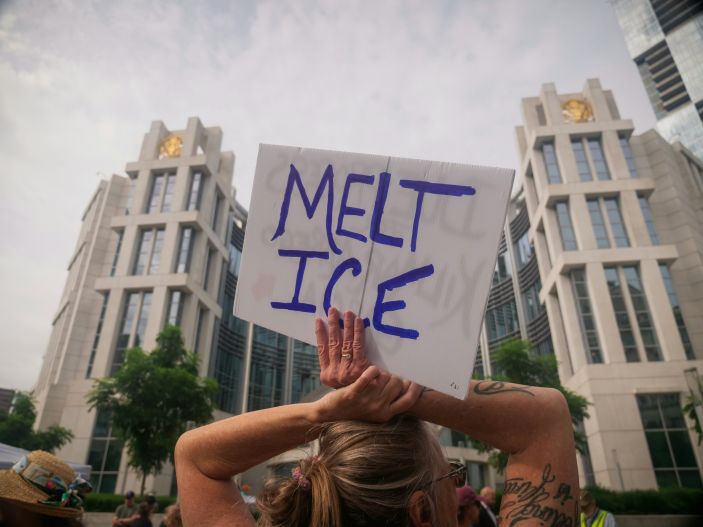
Mabel Berezin, IES
Mabel Berezin, director of the Institute for European Studies at Cornell University, provides a perspective on the erosion of trust between Europe and the U.S.
Additional Information
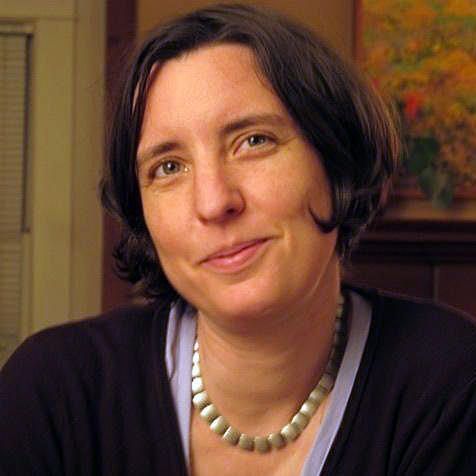
European History Colloquium - Victoria Frede
February 27, 2026
12:20 pm
Goldwin Smith Hall, 283
European History Colloquium
Victoria Frede, Associate Professor, History, UC Berkeley
Friday, February 27, 12:20 pm
Goldwin Smith Hall - 283
The Reign of Virtue: The Cult of Friendship at the Court of Empress Elizabeth
The cult of friendship arrived in Russia in the mid-1750s, during the reign of Elizabeth (r. 1741-1762). Hoping to tame the fractious clans that dominated Russian politics at the time of her enthronement, her advisors discovered friendship as a disciplinary remedy. A voluntary relationship between adults who selected one another to practice higher ideals in tandem, it would breed a new type of statesman, whose relationship to the state, too, would become a voluntary, virtuous commitment. This ideal became key to her governing ideology: cast as the goddess, Astraea, she would preside over the return of a “golden age” of virtue, peace and plenty. Tracing the adoption of the cult of friendship, the chapter contrasts correspondence between Elizabeth’s advisors of the 1740s against those of the later 1750s. Led by her favorite, Ivan Shuvalov, they rapidly began to mix invocations of friendship with those of civic virtue: zeal for the wellbeing of the empress, fatherland, and common good.
Additional Information
Program
Institute for European Studies
If You Tax Them, Will They Leave?
Cristobal Young, IES
Cristobal Young, a Cornell University sociologist, discusses the unique uncertainty posed by California's proposed wealth tax and its potential impact on billionaire migration.
Additional Information
Information Session: Fulbright U.S. Student Program

February 23, 2026
4:45 pm
The Fulbright U.S. Student Program supports U.S. citizens to study, conduct research in any field, or teach English in more than 150 countries. The program is open to graduate students, recent graduates, and young professionals. Undergraduate students who wish to begin the program immediately after graduation are encouraged to start the process in their junior year. Recent graduates are welcome to apply through Cornell.
The Fulbright program at Cornell is administered by the Mario Einaudi Center for International studies. Applicants are supported through all stages of the application and are encouraged to start early by contacting fulbright@einaudi.cornell.edu.
Register for the virtual session.
Can’t attend? Contact fulbright@einaudi.cornell.edu.
Additional Information
Program
Einaudi Center for International Studies
Reppy Institute for Peace and Conflict Studies
East Asia Program
Southeast Asia Program
Latin American and Caribbean Studies
Institute for African Development
Institute for European Studies
South Asia Program
Migrations Program
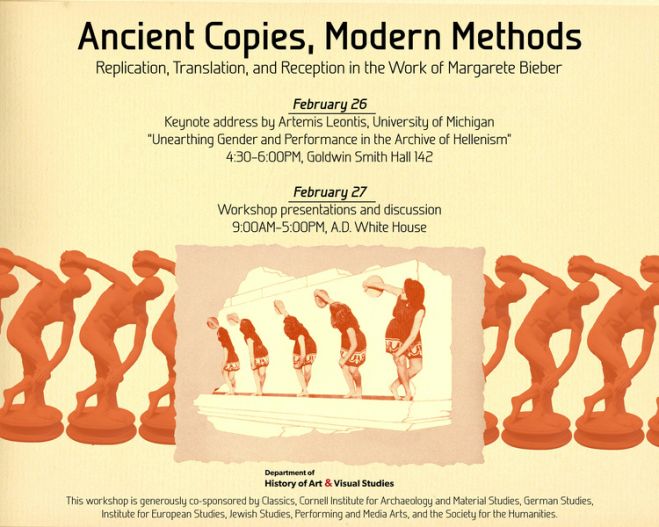
Workshop: Ancient Copies, Modern Methods: Replication, Translation, and Reception in the Work of Margarete Bieber
February 27, 2026
9:00 am
A. D. White House
Margarete Bieber is a prominent yet enigmatic figure in the history of classical art and archaeology. She was pathbreaking in many respects: Bieber was the second woman in Germany to earn a doctorate in archaeology in 1907, and only the second woman across all fields of study in Germany to receive her habilitation in 1919. In 1932 Bieber was appointed associate professor of classical archaeology at the University of Giessen, an unprecedented accomplishment for women scholars of the ancient Mediterranean. Yet, in the 1930’s she and countless other scholars of Jewish heritage were summarily dismissed from their university posts, leading Bieber to join a growing surge of German refugee academics fleeing the Nazi regime for communities in the United Kingdom and United States. She eventually joined the faculty at Barnard College and Columbia University. Despite officially retiring in 1948, she continued to pursue a prolific career until her death in 1978.
Her vast body of scholarship on the Greek and Roman theater, Hellenistic sculpture, ancient dress, and Roman copies of Greek art continues to enjoy a place of authority within classical scholarship. However, in its development across her intellectual youth in Germany and later career in New York, Bieber’s work exhibits generative tensions between traditional and innovative disciplinary approaches. In her endeavors to translate, literally and culturally, her foundational research for a broader, American audience, Bieber and her biography pose a number of implicit questions regarding the transformation and transmission of knowledge within the contexts of exile, emigration, and assimilation.
Beginning in 2018, a team of researchers collaborating between Cornell University and Columbia University came together to explore how the academic, cultural, and social milieu of American academia transformed Margarete Bieber’s intellectual trajectory, writing style, and attitudes toward her field. While recent scholarship continues to examine the consequences of Nazi rule on the German intellectual class, the opportunities and challenges of women in 20th-century archaeology, and even the idiosyncratic collecting habits of Bieber herself, no project has yet to critically analyze how Bieber’s personal biography and intellectual methods illuminate processes of translation and reception at the heart of her oeuvre. By focusing primarily on Bieber’s scholarship concerning sculpture and artistic copying, this one-day workshop aims to address the following goals:
-to explore the enduring relevance of her research on replication and copying in the study of sculpture and historical dress, especially her embrace of photographic technologies.
-to more firmly contextualize her scholarly contributions in light of her biography as a Jewish refugee scholar forced to emigrate in response to early 20th-century authoritarianism.
-to advance a reconciliation of her conservative or traditional style of art history with her more experimental and innovative scholarly methods.
-to integrate unpublished correspondences held by the Tulane University Special Collections into the recovery of Bieber’s intellectual milieu.
The workshop will begin with a keynote address on Thursday, February 26, by Artemis Leontis (Michigan) entitled, “Unearthing Gender and Performance in the Archive of Hellenism” beginning at 4:30PM in Goldwin Smith Hall 142.
This workshop is hosted by the Department of the History of Art and Visual Studies and generously co-sponsored by Classics, Cornell Institute for Archaeology and Material Studies, German Studies, Institute for European Studies, Jewish Studies, Performing and Media Arts, and the Society for the Humanities.
Additional Information
Program
Institute for European Studies
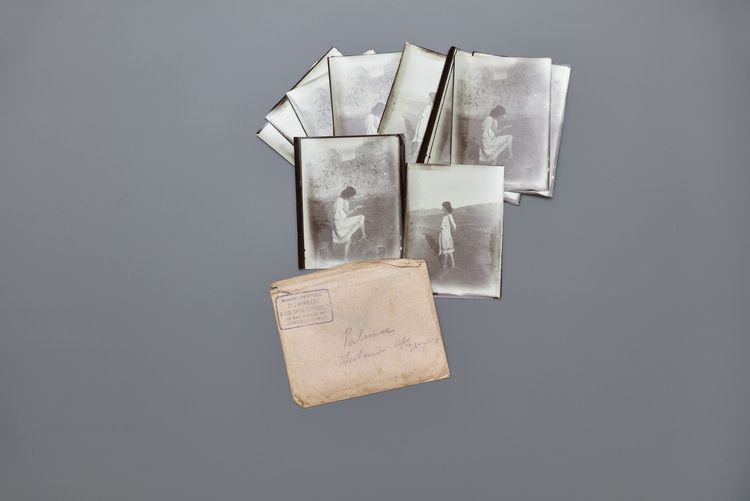
Keynote Lecture: "Unearthing Gender and Performance in the Archive of Hellenism"
February 26, 2026
4:30 pm
Goldwin Smith Hall, 142
"Unearthing Gender and Performance in the Archive of Hellenism"
Artemis Leontis, University of Michigan
This talk explores how feminist archival practices challenge conventional histories and open new ground for understanding Hellenism and Classicism. By placing Eva Palmer Sikelianos’ radical practice of alternative archaeologies and her complex archival legacy into conversation with the life and work of Margarete Bieber, the presentation asks: what becomes possible when the margins of the archive are excavated? Through acts of recovery, reinterpretation, and disruption, the archive shifts from a site of passive preservation to a dynamic space where gender, memory, and authority are actively contested and remade. Focusing on the politics and procedures of recovering hidden queer sources, the talk shows how such work destabilizes—and should expand—the frameworks of classical scholarship and reception.
This event is hosted by the Department of the History of Art and Visual Studies and generously co-sponsored by Classics, Cornell Institute for Archaeology and Material Studies, German Studies, Institute for European Studies, Jewish Studies, Performing and Media Arts, and the Society for the Humanities.
Additional Information
Program
Institute for European Studies
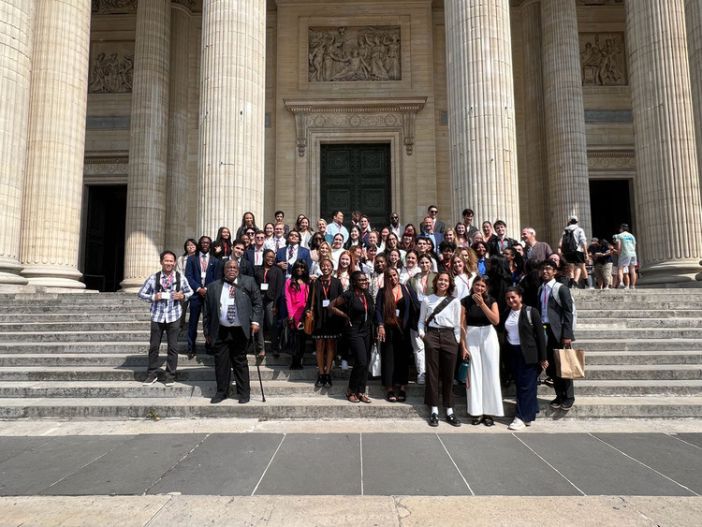
Paris Prelaw Info Session
February 3, 2026
6:00 pm
Have you considered summer study abroad and are interested in studying law? Join Cornell Law School faculty and the Office of Global Learning to learn more about the Cornell Prelaw Program in Paris, a three-week academic program in international and comparative law. Study law in a uniquely international and culturally rich environment, combining the excellence of Cornell Law School faculty and the Université Paris I Panthéon-Sorbonne. Prepare for the law school admissions process and acquire the study skills for success in law school.
Additional Information
Program
Institute for European Studies