
Latin American and Caribbean Studies
LACS Research Symposium: Futures in (Re)Construction

February 21, 2026
9:00 am
PSB, 401
Faced with a past that seems to repeat itself ad infinitum, through the dynamics of colonialism, neocolonialism, and neoliberalism, we ask ourselves about the past, present, and future of Latin America and Caribbean. The slogan “Otro futuro es posible” –another future is possible– has been appropriated in a wide array of spaces, movements, and temporalities to trigger the imagination of many, from political movements to environmental causes. This symposium is an invitation to explore this expression not as an enthusiastic affirmation but rather a question awaiting an answer: is another future possible in Latin America and the Caribbean? Thinking about and with categories such as encounters, crossings, (dis)continuities, fractures and unions in space and time, and the search for autonomy, we ask: how can we think about the future of the region?
With this in mind, we invite the Cornell community to participate in the Latin American and Caribbean Studies program’s annual research symposium entitled “Futures in (Re)Construction”, to take place on February 20th and 21st, 2026. VENUE In the midst of the current political sphere that especially affects Latin American and Caribbean communities and has sought to silence not only their traditions, heritage, and languages but also the academic study of the land and the impacts of climate change in various communities, we especially welcome abstracts for projects related to categories, concepts, and keywords that, in the current political climate, have been erased and discarded, such as gender, race, climate and environmental justice, and cuir/queer.
Additional Information
Program
Einaudi Center for International Studies
Latin American and Caribbean Studies
LACS Research Symposium: Futures in (Re)Construction
February 20, 2026
5:00 pm
PSB, 401
Faced with a past that seems to repeat itself ad infinitum, through the dynamics of colonialism, neocolonialism, and neoliberalism, we ask ourselves about the past, present, and future of Latin America and Caribbean. The slogan “Otro futuro es posible” –another future is possible– has been appropriated in a wide array of spaces, movements, and temporalities to trigger the imagination of many, from political movements to environmental causes. This symposium is an invitation to explore this expression not as an enthusiastic affirmation but rather a question awaiting an answer: is another future possible in Latin America and the Caribbean? Thinking about and with categories such as encounters, crossings, (dis)continuities, fractures and unions in space and time, and the search for autonomy, we ask: how can we think about the future of the region?
With this in mind, we invite the Cornell community to participate in the Latin American and Caribbean Studies program’s annual research symposium entitled “Futures in (Re)Construction”, to take place on February 20th and 21st, 2026. VENUE In the midst of the current political sphere that especially affects Latin American and Caribbean communities and has sought to silence not only their traditions, heritage, and languages but also the academic study of the land and the impacts of climate change in various communities, we especially welcome abstracts for projects related to categories, concepts, and keywords that, in the current political climate, have been erased and discarded, such as gender, race, climate and environmental justice, and cuir/queer.
Additional Information
Program
Einaudi Center for International Studies
Latin American and Caribbean Studies
Refusing to Fear: Benevolence and Deportation Among Central Americans in Rural New York

February 10, 2026
12:20 pm
Uris Hall, G08
“We’re not going to be afraid of Immigration.” Juana spoke those words to her undocumented niece Sonia while they agonized over Sonia’s upcoming court hearing. Sonia had missed a previous hearing and might have a deportation order awaiting her. It was February 2025. But Juana advised against fear. She told her niece, We’ll go to court together.
This paper reaches for a theory of the state in order to think through the dilemmas faced by Central American immigrants in the rural and small-town Hudson Valley. To start, I focus on people who are at high risk of deportation and decide to go to court anyway. As Juana says, they are deciding not to be afraid. Why refuse to fear?
To search for an answer, I turn to 2021, when New York State created the Excluded Worker Fund, a COVID unemployment benefit designed specifically for undocumented New Yorkers. The shift from 2021 to 2025 – from state benevolence to mass deportation – can seem like a dramatic transformation in regimes. Immigrants, however, may be detecting an underlying continuity. In both periods, state intervention is managing the rural labor market by rewarding workers who have strong links to their employers. First trust and then loyalty (rather than enterprise) emerge as key dispositions. Through their refusal to fear, immigrants may demonstrate loyalty in the midst of danger. This paper turns an ethnographic eye to the practices and attitudes that rural New Yorkers develop in the current moment. By charting five tumultuous years in a single valley, we aim to understand what, during a time of change, ends up remaining the same.
Gregory Duff Morton is an economic anthropologist and social worker. He wants to know how people send value across borders in the Americas. He has engaged with welfare programs in Latin America, with Brazilian migrants who move back to the countryside, with Dominican seniors undergoing surgery in New York City, and, most recently, with Central Americans and the activists they meet in upstate New York. Morton has a special interest in the MST, Brazil’s landless movement, which brings small farmers together to occupy plantations. By thinking internationally about human services, he hopes, we can equip ourselves to confront the inequalities so characteristic of public life in the Americas.
Additional Information
Program
Einaudi Center for International Studies
Latin American and Caribbean Studies
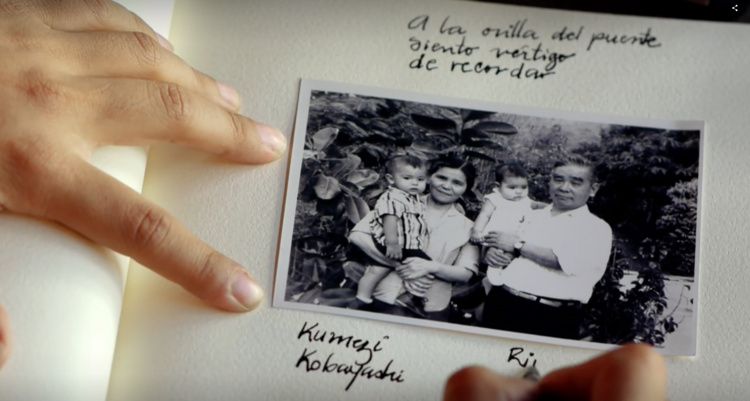
Hemispheric Internment and Its Afterlives in Nikkei (2011)
February 3, 2026
12:20 pm
Uris Hall, G08
Cancelled due to an emergency!
Although the internment of Japanese Americans during World War II following the invocation of the Enemy Aliens Act has been well documented, the parallel experiences of Latin Americans of Japanese descent remain far less examined. Like their U.S.-based counterparts, these communities were removed from their homes, stripped of property, and interned in U.S.-run camps. In Venezuela, rather than being interned abroad, Caracas’ Japanese community was confined to a camp in Ocumare del Tuy—a story almost entirely erased from both Venezuelan historical memory. This history raises urgent questions about whose experiences are recorded, whose are forgotten, and which forms of memory gain recognition. In this talk, Elizabeth Barrios explores these questions through Nikkei (2011), the largely overlooked documentary by filmmaker Kaori Flores Yonekura, which traces her own family’s experiences and illuminates a hidden chapter of Venezuelan and hemispheric history. The film not only preserves personal and collective memory but also challenges us to rethink the boundaries of national and transnational histories, exposing the racial and political logics that made such internments possible. These questions are particularly urgent today, as the Enemy Aliens Act has been invoked once more (this time specifically targeting Venezuelans), revealing how the mechanisms of exclusion and surveillance from the past continue to resonate in the present.
Elizabeth Barrios is an Associate Professor in the Department of Modern Languages and Cultures at Albion College. This year she is a fellow at the Society for the Humanities. Her research explores ecology, energy humanities, and Latin American and Latina/o literature and media, with an emphasis on Venezuela and its diaspora. She is the author of Failures of the Imagination: Reckoning with Oil in Venezuelan Cultural Production (University of Pittsburgh Press, 2026), which examines how Venezuelan literature and media have confronted the social and ecological toll of oil, often in ways overlooked or deliberately obscured by critics and institutions
Additional Information
Program
Einaudi Center for International Studies
Latin American and Caribbean Studies
Reppy Institute for Peace and Conflict Studies
Quechua Conversation Hour
May 1, 2026
10:00 am
Stimson Hall, G25
Come to the LRC to practice your language skills and meet new people. Conversation Hours provide an opportunity to use the target language in an informal, low-pressure atmosphere. Have fun practicing a language you are learning! Gain confidence through experience! Just using your new language skills helps you learn more than you might think. Conversation Hours are open to any learner, including the public.
Additional Information
Program
Latin American and Caribbean Studies
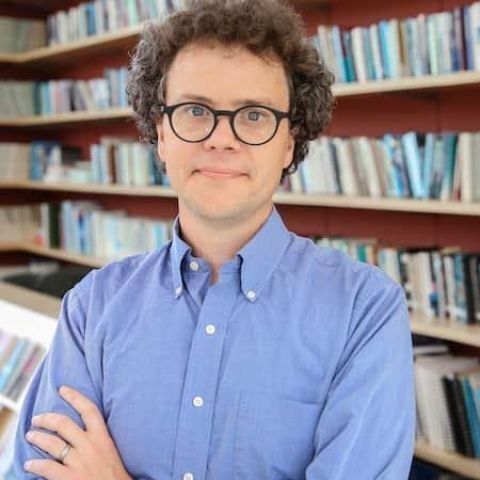
Director’s Introduction to LACS Seminar/ course LATA 4000
January 20, 2026
12:20 pm
Uris Hall, G08
Interested in Latino Studies and Latin American Studies? This course will explore topics in Anthropology, Art, Economics, History, Literature, Government, Sociology, etc., of US Latino and Latin American contexts. Course features guest speakers from Cornell and other institutions.
https://classes.cornell.edu/browse/roster/SP26/class/LATA/4000
Additional Information
Program
Einaudi Center for International Studies
Latin American and Caribbean Studies
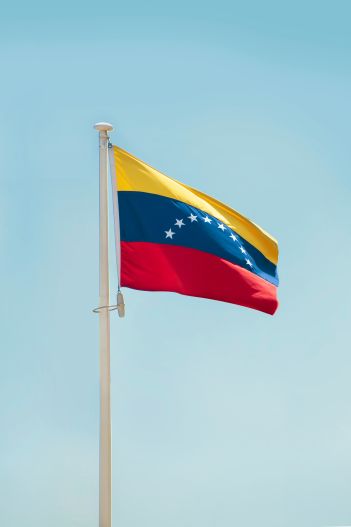
Latin American Left Responds to Trump's Pledge to Take Over Venezuelan Oil
Santiago Anria, LACS
Cornell University political scientist Santiago Anria provides analysis on the weakening and fragmentation of Latin America's political left.
Additional Information
Spanish Conversation Hour
May 5, 2026
5:00 pm
Stimson Hall, G25
Come to the LRC to practice your language skills and meet new people. Conversation Hours provide an opportunity to use the target language in an informal, low-pressure atmosphere. Have fun practicing a language you are learning! Gain confidence through experience! Just using your new language skills helps you learn more than you might think. Conversation Hours are open to any learner, including the public.
Additional Information
Program
Latin American and Caribbean Studies
Early Career Development Grants
Details
The Einaudi Center's newest grants support career advancement for tenure-track Cornell faculty with demonstrated commitment to international studies.
The awards are intended to help early-career scholars—primarily at the assistant professor level—make essential progress on research activities required for tenure. All disciplines and research topics are welcome.
Amount
Up to $10,000 for activities supporting an upcoming tenure application.
Eligibility
Tenure-track Cornell faculty in all colleges and schools are eligible to apply. Early Career Development Grants are awarded to individual researchers, not research teams.
- Funding-eligible activities: Field research, data collection, travel, editorial/research assistance, book development workshops, meetings, publication-related expenses, purchase of essential books/software/subscriptions
- Not eligible for funding: Salary offset, summer salary, computers and equipment, student stipends/tuition
Requirements
- All funds must be used within one year of the award date.
- You must participate in activities of the Einaudi Center and our international studies programs during the award year, including sharing your expertise in at least one talk, seminar, or panel.
- You must submit a final report to the Einaudi Center director within one year of the award date. The report must include:
- A summary of the activities you accomplished and assessment of how they support your tenure application.
- An overview of your Einaudi Center engagement.
- A promotional paragraph written for nonspecialists (100 words maximum) describing the progress you made on tenure-eligible research—for example, a book or peer-reviewed articles.
- Please inform the Einaudi Center when you receive your tenure decision and in advance of publications and other project outcomes. The Einaudi Center must be acknowledged in all publications, promotion, and media coverage related to your funded research and activities.
How to Apply
Complete the early career funding application and submit a proposal including the following:
- Curricula vitae (CV)
- Statement including research objectives, activities, work plan, expected outputs, and impact
- Explanation of how the proposed activities support your tenure application
- Human subjects approval, if relevant
- Detailed budget with justification of expenses
Evaluation
All successful proposals will meet these criteria. The proposal:
- Supports research informed by international studies perspectives that promises to advance knowledge of key economic, environmental, social, cultural, or political problems in the world.
- Indicates a commitment to engage with the Einaudi Center during the award year.
- Includes clearly articulated deliverables.
- Includes a budget appropriate for planned activities.
Questions?
Please email our academic programming staff if you have questions about your eligibility or application.
Additional Information
Funding Type
- Award
Role
- Faculty
Program
Information Session: Graduate Student Opportunities at the Einaudi Center
February 9, 2026
4:30 pm
Uris Hall, G08
Join us to learn about opportunities for graduate students with the Einaudi Center for International Studies. This session will discuss how to discover or strengthen global interests, including research and travel grants, guest lectures, fellowships, and more!
Can't attend? Email programs@einaudi.cornell.edu for more information.
Additional Information
Program
Einaudi Center for International Studies
Reppy Institute for Peace and Conflict Studies
East Asia Program
Southeast Asia Program
Latin American and Caribbean Studies
Institute for European Studies
South Asia Program
Migrations Program
Institute for African Development
Southwest Asia and North Africa Program