
Latin American and Caribbean Studies
Spring Break Sustainability Education Policy Program in Ecuador Info Session
October 8, 2025
7:00 pm
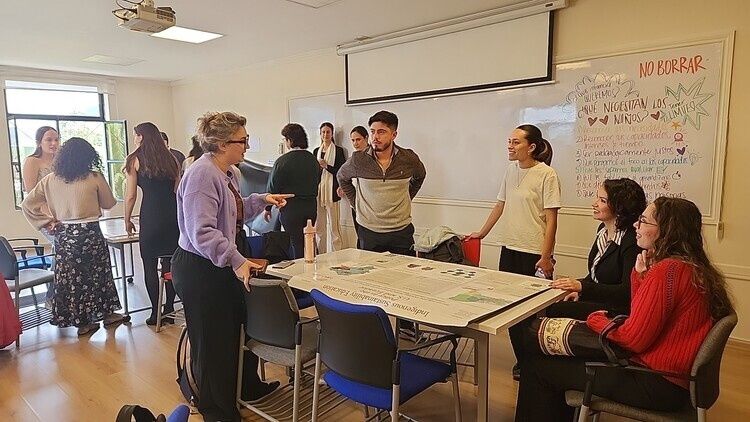
Come learn more about this spring opportunity with spring break travel, developed in partnership with Universidad San Francisco de Quito (USFQ), National University of Singapore (NUS), and as part of the Jeb E. Brooks School’s Global Policy Exchange Lab. This collaborative online international learning (COIL) and community-based global learning (CBGL) course allows a unique exchange as highlighted in our overview of the Spring 2024 program. The program invites Cornell students to explore the complexities of education policy and practice in the United States and Ecuador with students and faculty from USFQ and NUS as well as with teachers, administrators, and policy makers in both contexts.
Additional Information
Program
Latin American and Caribbean Studies
Shadow Knowledge and the Politics of Indistinction in Mexico’s Drug War
October 7, 2025
12:20 pm
G08, Uris Hall
This talk explores an unconventional form in which knowledge on Mexico's "war on drug trafficking" is produced and circulates, and the kind of symptomatic reading that it performs. By analyzing two such instances—a journalist's testimony on her experience of drug-war violence before a federal government committee and a protest of relatives of the war's victims—I examine how this form of shadow knowledge operates through simultaneous concealment and revelation, illuminating key contradictions at the core of the drug war—the large-scale militarized combat of drug trafficking organizations that began in 2006. While this conflict's structuring logic follows the principles of the US security state—including the designation of an external enemy that threatens the national community and must be fought militarily—its unfolding within the Mexican territory reveals the impossibility of such a designation. Instead, as I will explore in this talk, those discursive articulations outline the symptoms of a new kind of state formation that has emerged in Mexico's drug war: an entity that makes itself felt through the traces of its extralegal violence. Those traces, I will argue, point to two kinds of indistinction: first, that between the state and its criminal enemy—el narco—and second, that between such an enemy and the national community the state was supposed to protect.
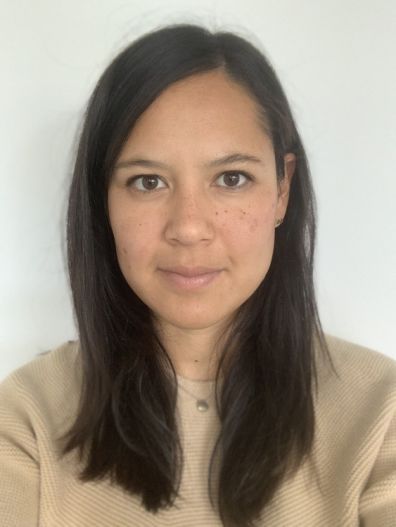
Agnes Mondragón-Celis is an Assistant Professor of Anthropology at the University of Rochester. Her research explores the forms of knowledge production and circulation that emerge in contexts of generalized violence and opacity. She analyzes the psychosocial and performative effects of these forms of mediation, including how they sustain or challenge political authority. Her work has been published in American Anthropologist, Environment and Planning C: Politics and Space, and Anthropology News.
Additional Information
Program
Einaudi Center for International Studies
Latin American and Caribbean Studies
Information Session: Critical Language Scholarship (CLS) Program

September 30, 2025
4:30 pm
Uris Hall, G08
The Critical Language Scholarship (CLS) Program provides fully funded immersive summer programs for U.S. undergraduate and graduate students to learn languages of strategic importance to the United States’ national security, economic prosperity, and engagement with the world. Each summer, over 500 American students enrolled at colleges and universities across the United States spend approximately eight weeks studying one of a dozen languages either overseas or virtually. Participants gain the equivalent of one year of language study, as the CLS Program maximizes language and cultural instruction in an intensive environment.
Can't attend? Email programs@einaudi.cornell.edu for more information.
Additional Information
Program
Einaudi Center for International Studies
Reppy Institute for Peace and Conflict Studies
East Asia Program
Southeast Asia Program
Latin American and Caribbean Studies
Institute for European Studies
South Asia Program
Migrations Program
Institute for African Development
Southwest Asia and North Africa Program
From Sicario to Emilia Pérez: Securitarian violence and technopolitical surveillance culture in the Mexican “drug wars
December 4, 2025
4:45 pm
A.D. White House
National security discourses have profoundly permeated the film industry in the United States for decades. Through direct and indirect intervention in major film productions, US security institutions (including the Pentagon, DEA, CIA, and FBI) have pushed for what Matthew Alford and Tom Secker call “national security cinema,” with hundreds of films complacent with a transnational militarist agenda promoting state violence in the global south. For this presentation I will analyze the films Sicario (Denis Villeneuve, 2015) and Emilia Pérez (Jacques Audiard, 2024) as symptomatic not only of securitarian propaganda criminalizing racialized populations but also erasing the devasting effects of the US-backed militarized antidrug policy in Mexico. I will ultimately consider the normalization of the militarization and its technopolitical surveillance culture (following the work of scholars Camilla Fojas, Huub Dijstelbloem, and Iván Chaar López) through the “drug wars” narrative at the US-Mexico border region.
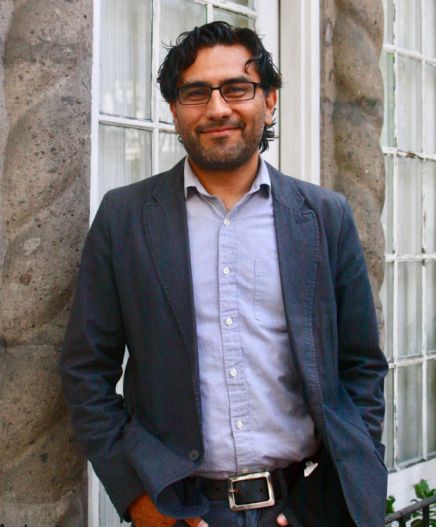
Oswaldo Zavala is Professor of contemporary Latin American literature and culture at the College of Staten Island and at the Graduate Center of the City University of New York (CUNY). He is the author of La modernidad insufrible. Roberto Bolaño en los límites de la literatura latinoamericana contemporánea (2015), Volver a la modernidad. Genealogías de la literatura mexicana de fin de siglo (2017), Drug Cartels Do Not Exist. Narcotrafficking in US and Mexican Culture (2018), and La guerra en las palabras. Una historia intelectual del “narco” (1975-2020) (2022). He co-edited, with Viviane Mahieux, Tierras de nadie: el norte en la narrativa mexicana contemporánea (2012); with José Ramón Ruisánchez, Materias dispuestas: Juan Villoro ante la crítica (2011); and with Magdalena Perkowska, Tiranas ficciones. Poética y política de la escritura en la obra de Horacio Castellanos Moya (2018). He has published more than fifty articles on contemporary Latin American narrative, the U.S.-Mexico border, and the link between violence, culture and late capitalism.
Additional Information
Program
Einaudi Center for International Studies
Latin American and Caribbean Studies
Information Session: Laidlaw Scholars Leadership & Research Program

October 15, 2025
5:00 pm
The Laidlaw Scholars Leadership and Research Program promotes ethical leadership and international research around the world—starting with the passionate leaders and learners found on campuses like Cornell. Open to first- and second-year students, the two-year Laidlaw program provides generous support to carry out internationally focused research, develop leadership skills, engage with community projects overseas, and become part of a global network of like-minded scholars from twenty universities worldwide.
At this session, we'll share more information about the program, including Cornell's cohort-based intercultural community-engaged learning summer experience in Ecuador, and tips for writing a successful application. Applications are due January 12, 2026.
Applicants are also strongly encouraged to attend a Q+A webinar about the summer experience in Ecuador. Q+A webinars are scheduled for November 5 and November 6.
Register here. Can’t attend? Contact programs@einaudi.cornell.edu.
***
The Mario Einaudi Center for International Studies hosts info sessions for graduate and for undergraduate students to learn more about funding opportunities, international travel, research, and internships. View the full calendar of fall semester sessions.
Additional Information
Program
Einaudi Center for International Studies
Reppy Institute for Peace and Conflict Studies
East Asia Program
Southeast Asia Program
Latin American and Caribbean Studies
Institute for African Development
Institute for European Studies
South Asia Program
Migrations Program
Information Session: Laidlaw Scholars Leadership & Research Program

October 7, 2025
5:00 pm
Uris Hall, G02
The Laidlaw Scholars Leadership and Research Program promotes ethical leadership and international research around the world—starting with the passionate leaders and learners found on campuses like Cornell. Open to first- and second-year students, the two-year Laidlaw program provides generous support to carry out internationally focused research, develop leadership skills, engage with community projects overseas, and become part of a global network of like-minded scholars from twenty universities worldwide.
At this session, we'll share more information about the program, including Cornell's cohort-based intercultural community-engaged learning summer experience in Ecuador, and tips for writing a successful application. Applications are due January 12, 2026.
Applicants are also strongly encouraged to attend a Q+A webinar about the summer experience in Ecuador. Q+A webinars are scheduled for November 5 and November 6.
Can’t attend? Contact programs@einaudi.cornell.edu.
***
The Mario Einaudi Center for International Studies hosts info sessions for graduate and for undergraduate students to learn more about funding opportunities, international travel, research, and internships. View the full calendar of fall semester sessions.
Additional Information
Program
Einaudi Center for International Studies
Reppy Institute for Peace and Conflict Studies
East Asia Program
Southeast Asia Program
Latin American and Caribbean Studies
Institute for African Development
Institute for European Studies
South Asia Program
Migrations Program
Santiago García

Regional Affiliate Scholar
Santiago García is a conservation scientist and policy expert with over 15 years of experience across Latin America, Africa, and the U.S. He is Director of Forests Partnerships at Environmental Defense Fund (EDF), supporting forest governance and climate finance. Santiago previously served as Ecuador’s National Forestry Director and led national REDD+, restoration, and wildfire programs. He holds a PhD in Natural Resources from Cornell University and a Master’s in Conservation Leadership from Colorado State University.
Additional Information
Information Session: Global Internships
December 3, 2025
4:30 pm
Uris Hall, G02
Go global in summer 2026! Global Internships give you valuable international work experience in fields spanning global development, climate and sustainability, international relations, communication, business, governance, and more.
Applications are open now.
Can’t attend? Contact programs@einaudi.cornell.edu.
***
The Mario Einaudi Center for International Studies hosts info sessions for graduate and for undergraduate students to learn more about funding opportunities, international travel, research, and internships. View the full calendar of fall semester sessions.
Additional Information
Program
Einaudi Center for International Studies
Reppy Institute for Peace and Conflict Studies
East Asia Program
Southeast Asia Program
Latin American and Caribbean Studies
Institute for African Development
Institute for European Studies
South Asia Program
Migrations Program
Southwest Asia and North Africa Program
Information Session: Global Internships
November 13, 2025
4:30 pm
Uris Hall, G08
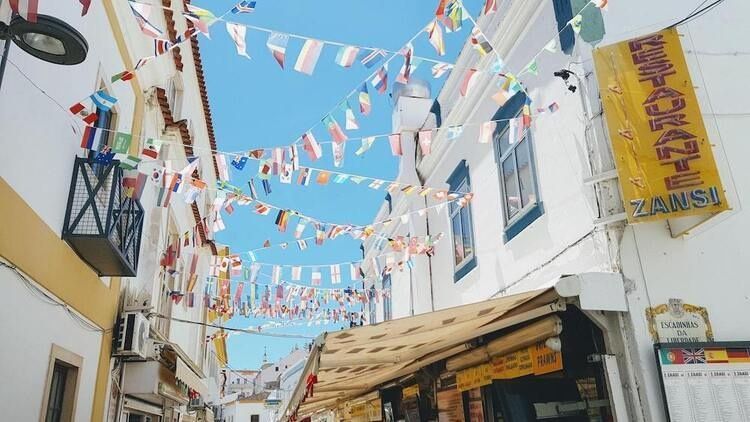
Go global in summer 2026! Global Internships give you valuable international work experience in fields spanning global development, climate and sustainability, international relations, communication, business, governance, and more.
Applications are open now.
Can’t attend? Contact programs@einaudi.cornell.edu.
***
The Mario Einaudi Center for International Studies hosts info sessions for graduate and for undergraduate students to learn more about funding opportunities, international travel, research, and internships. View the full calendar of fall semester sessions.
Additional Information
Program
Einaudi Center for International Studies
Reppy Institute for Peace and Conflict Studies
East Asia Program
Southeast Asia Program
Latin American and Caribbean Studies
Institute for African Development
Institute for European Studies
South Asia Program
Migrations Program
Southwest Asia and North Africa Program
Information Session: Global Internships
October 23, 2025
4:30 pm
Uris Hall, G08
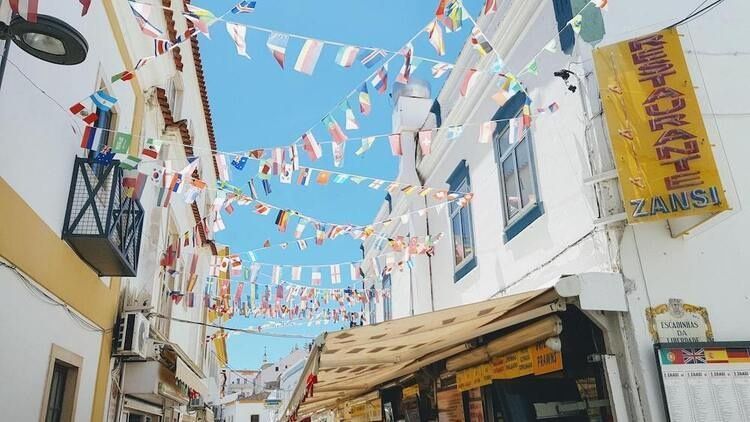
Go global in summer 2026! Global Internships give you valuable international work experience in fields spanning global development, climate and sustainability, international relations, communication, business, governance, and more.
Applications are open now.
Can’t attend? Contact programs@einaudi.cornell.edu.
***
The Mario Einaudi Center for International Studies hosts info sessions for graduate and for undergraduate students to learn more about funding opportunities, international travel, research, and internships. View the full calendar of fall semester sessions.
Additional Information
Program
Einaudi Center for International Studies
Reppy Institute for Peace and Conflict Studies
East Asia Program
Southeast Asia Program
Latin American and Caribbean Studies
Institute for African Development
Institute for European Studies
South Asia Program
Migrations Program
Southwest Asia and North Africa Program