
Latin American and Caribbean Studies
Information Session: Global Internships
October 2, 2025
4:30 pm
Uris Hall, G08
Go global in summer 2026! Global Internships give you valuable international work experience in fields spanning global development, climate and sustainability, international relations, communication, business, governance, and more.
Applications will open in the fall.
Can’t attend? Contact programs@einaudi.cornell.edu.
***
The Mario Einaudi Center for International Studies hosts info sessions for graduate and for undergraduate students to learn more about funding opportunities, international travel, research, and internships. View the full calendar of fall semester sessions.
Additional Information
Program
Einaudi Center for International Studies
Reppy Institute for Peace and Conflict Studies
East Asia Program
Southeast Asia Program
Latin American and Caribbean Studies
Institute for African Development
Institute for European Studies
South Asia Program
Migrations Program
Information Session: Graduate Student Opportunities at the Einaudi Center
September 18, 2025
4:30 pm
Uris Hall, G08
Join us to learn about opportunities for graduate students with the Einaudi Center for International Studies. This session will discuss how to discover or strengthen global interests, including research and travel grants, guest lectures, fellowships, and more!
Can't attend? Email programs@einaudi.cornell.edu for more information.
Additional Information
Program
Einaudi Center for International Studies
Reppy Institute for Peace and Conflict Studies
East Asia Program
Southeast Asia Program
Latin American and Caribbean Studies
Institute for European Studies
South Asia Program
Migrations Program
Institute for African Development
Southwest Asia and North Africa Program
Information Session: Undergraduate Opportunities at the Einaudi Center
September 9, 2025
4:30 pm
Uris Hall, G08
Join us to learn about opportunities for undergraduate students with the Einaudi Center for International Studies. This session will discuss how to discover or strengthen global interests, including academic minors, guest lectures, summer research and travel experiences, and more!
Can't attend? Email programs@einaudi.cornell.edu for more information.
Additional Information
Program
Einaudi Center for International Studies
Reppy Institute for Peace and Conflict Studies
East Asia Program
Southeast Asia Program
Latin American and Caribbean Studies
Institute for European Studies
South Asia Program
Migrations Program
Institute for African Development
Southwest Asia and North Africa Program
New Book on Global Democratic Erosion

Inspired by Einaudi Conferences
Inspired by Einaudi conferences, the volume is edited by DTR faculty lead Ken Roberts (LACS), Valerie Bunce (IES), Tom Pepinsky (SEAP), and Rachel Beatty Riedl (IAD).
Additional Information
Topic
- World in Focus
Program
Trump’s Brazil Blow-Up Raises Stakes for Leftist Summit in Chile
Kenneth Roberts, LACS
“These are countries that are not inclined to just bow down and make concessions to Washington, given the very coercive and punitive approach that Washington is taking,” said Kenneth Roberts, a professor of government who focuses on Latin American politics.
Additional Information
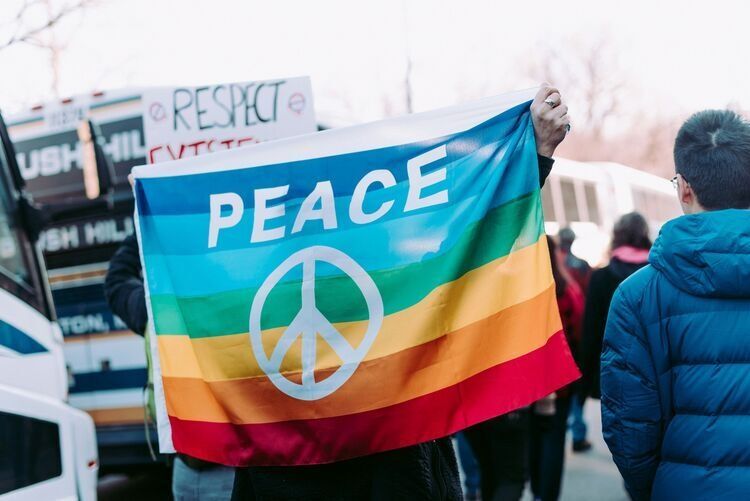
Peace, Security, and U.S. Presence in the World
September 4, 2025
12:00 pm
Clark Hall, 700
Please RSVP for the panel on Eventbrite.
Lunch will be served starting at 11:30 am.
U.S. foreign policies are changing dramatically, with profound implications for peace and security throughout the world. The administration of Donald J. Trump has broken with many decades of precedent by expressing sharp criticism of NATO and historical allies, while expressing admiration for historic adversaries such as Russia. U.S. support for Ukraine’s defense against Russia’s invasion has wavered, with Trump even suggesting that Ukraine rather than Russia is to blame for the conflict. U.S. humanitarian aid to many of the world’s most needy people has ended or been sharply reduced. Changes in migration policy are also placing many groups at heightened risk of political violence. The administration has bombed Iran’s nuclear facilities, acting in violation of international law and suggesting a preference for military action over diplomacy. And changes in trade policy, particularly with China, have the potential to reshape military capabilities and alliances around the world.
These changes raise several questions. Is the re-arming of Europe a necessary bulwark against an expansionist Russia, or a new arms race that encourages nuclear proliferation and increases the risk of war? Will the cancellation of humanitarian aid encourage other nations to increase their capacity, or simply leave the world’s most vulnerable people without hope? What other nations might step in to fill the vacuum left by the loss of such aid, and will these nations be more or less exploitative than the United States? How will changing U.S. policies affect regional security alliances, for example between Russia and China? This panel will provide perspectives on how recent changes to foreign policy are likely to affect issues of peace and security in several regions around the world.
Panelists
Jok Madut Jok, Professor of Anthropology, Syracuse University
Jok’s areas of specialization include security, governance, democracy and development in South Sudan and Sudan. He has also written extensively about gender, sexuality and reproductive health, humanitarian aid, ethnography of political violence, gender-based violence, and war and slavery and the politics of identity in South Sudan and Sudan. He is the author of Breaking Sudan: The Search for Peace (Oneworld Publications, 2017), Sudan: Race, Religion and Violence (One World Publication, 2007), War and Slavery in Sudan (University of Pennsylvania Press, 2001), and Militarization, Gender and Reproductive Health in South Sudan (Edwin Mellen Press, 1998). He also co-edited The Sudan Handbook (with J. Willis, J. Ryle and S. Baldo, James Currey, 2011). Before joining Maxwell he was visiting professor of anthropology at the University of Oxford and a Fellow of Linacre College. He also served in the government of South Sudan as undersecretary in the Ministry of Culture and Heritage, 2010-13. He is the founding director of the Sudd Institute, a public policy research center.
Kaija E. Schilde, Associate Professor of International Studies, Pardee School of Global Studies, Boston University
Professor Schilde’s research focuses on the political economy of security, with a particular emphasis on defense industry politics and the political development of the European Union. In July 2021 she was named Acting Director of BU’s Center for the Study of Europe and in January 2022 she received the Jean Monnet Chair in European Security and Defense. Her book, The Political Economy of European Security (Cambridge University Press, 2017) investigates the state-society relations between the EU and interest groups, with a particular focus on security and defense institutions, industries, and markets. Her research interests span multiple dimensions of the historical institutionalism of security organizations, including the causes and consequences of military spending; the relationship between spending, innovation, and capabilities; defense reform and force transformation; the politics of defense protectionism; and the international diffusion of internal and border security practices.
Zheng Wang, Professor at the School of Diplomacy and International Relations, Seton Hall University
Professor Wang’s research interests lie in three closely connected areas: (1) identity-based conflicts, nationalism, and the politics of historical memory; (2) peace and conflict management in East Asia, with a special focus on China’s rise and its impact on regional peace and security; (3) foreign-domestic linkages in Chinese politics and foreign relations. He is the author of Never Forget National Humiliation: Historical Memory in Chinese Politics and Foreign Relations (Columbia University Press, 2012), which received the International Studies Association’s Yale H. Ferguson Award in 2013. He is also author of Memory Politics, Identity and Conflict: Historical Memory as a Variable (Palgrave Macmillan, 2018) and editor of COVID-19 and U.S.-China Relations (Palgrave Macmillan, 2024). He is currently under contract with the Oxford University Press to write a book about the rise of nationalism and populism and the crises in the US-China relations. He is Director of the Center for Peace and Conflict Studies (CPCS) at Seton Hall University.
Diego Chaves-González, Senior Manager for Latin America and Caribbean Initiative, Migration Policy Institute
Chaves-González’s research focuses on forced displacement, legal pathways, integration, migration and development, and regional cooperation in migration management. He previously worked for the World Bank and the United Nations. While at the World Bank, he helped expand the scope of the Global Concessional Financing Facility (GCFF). He also co-authored the 2019, 2020, and 2021 GCFF annual reports, and helped coordinate the Secretary of the Multilateral Development Bank platform. While working for the United Nations, Mr. Chaves-González initiated a platform in Colombia to coordinate the work of UN agencies, NGOs, and their partners in response to migrant and refugee situations. He also helped develop a strategy to involve victims of conflict and internally displaced persons in the peace deal negotiations that ended Colombia’s civil war. Chaves-González also played an essential role as a presidential advisor in the registration and regularization of 500,000 migrants in Colombia and helped provide advice on how to structure similar initiatives in Costa Rica, Ecuador, and Peru. Since the start of the Venezuelan crisis, he has assisted Latin American governments in developing policies to integrate arriving migrants and refugees into receiving communities, accommodating both newcomer and local needs.
Host
Reppy Institute for Peace and Conflict Studies, part of the Einaudi Center for International Studies
Co-sponsors
Institute for European Studies, part of the Einaudi Center for International Studies
Migrations Program, part of the Mario Einaudi Center for International Studies, and the Mellon Foundation’s Just Futures Initiative
Additional Information
Program
Einaudi Center for International Studies
Reppy Institute for Peace and Conflict Studies
East Asia Program
Southeast Asia Program
Latin American and Caribbean Studies
Institute for African Development
Institute for European Studies
South Asia Program
Migrations Program
Southwest Asia and North Africa Program
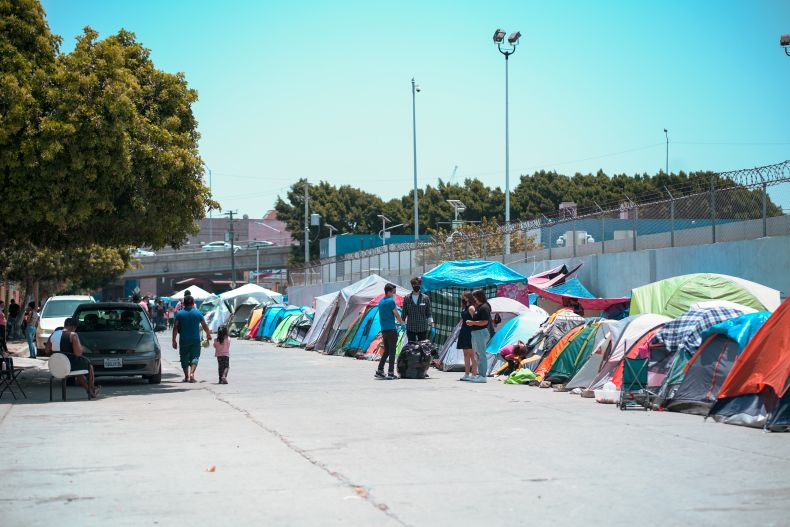
Immigrants are Embracing Trump's Crackdown on Immigration
Maria Cristina Garcia, LACS
Maria Cristina Garcia, professor of American Studies, cautions against drawing broad conclusions from polling, noting that Latino and immigrant communities are not monolithic and that the data presented “doesn’t really tell me much.”
Additional Information
Mexico's New Supreme Court Will Likely Heavily Favor Sheinbaum's Ruling Party

Gustavo Flores-Macias, LACS
While Lopez Obrador ultimately found ways to accomplish his agenda, the Supreme Court served as an important check on his powers, says public policy professor Gustavo Flores-Macias.
Additional Information
Spanish Conversation Hour

August 13, 2025
5:30 pm
Klarman Hall, Atrium
Join us this summer to practice your language skills and meet new people. Conversation Hours provide an opportunity to use the target language in an informal, low-pressure atmosphere. Have fun practicing a language you are learning! Gain confidence through experience! Just using your new language skills helps you learn more than you might think. Conversation Hours are open to any learner, including the public.
Additional Information
Program
Latin American and Caribbean Studies
Chinese Firms Rise Between Hard and Soft Power

Lourdes Casanova, LACS
Lourdes Casanova, senior lecturer of management, discusses the rise of Chinese companies in this op-ed.