
Latin American and Caribbean Studies
New IES, LACS, SAP Directors
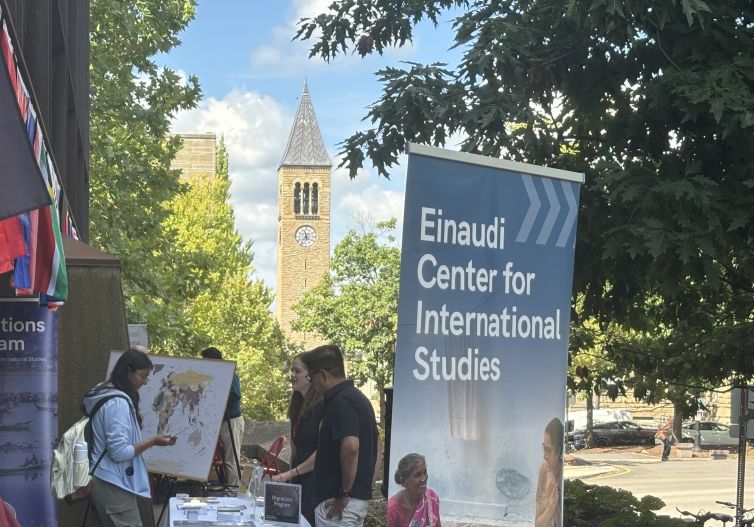
Einaudi Welcomes Program Directors
Three program directors join our leadership this fall: Chris Way, Ken Roberts, and Robert Travers.
We're excited to introduce new program directors in the Institute for European Studies, Latin American and Caribbean Studies Program, and South Asia Program. Below, meet the directors and learn about their plans for the year.
IES: Chris Way
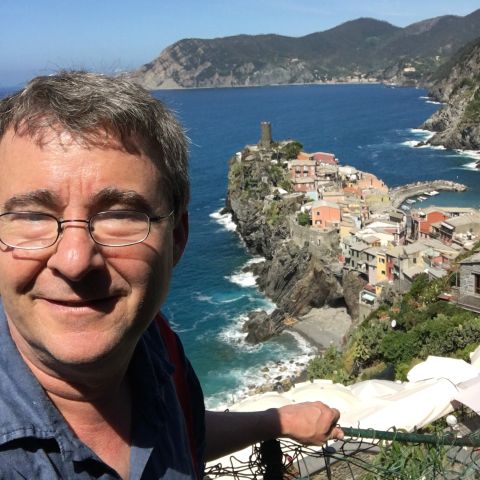
Chris Way is an associate professor of government in the College of Arts and Sciences (A&S). His research focuses on OECD democracies, the proliferation of weapons of mass destruction, and the relationship between economic interdependence and conflict.
“Europe is at the center of many consequential questions in international affairs," Way said, "including the war in Ukraine and the future of European security, changing relations with the United States, migration, and economic transformation. IES brings together scholars across disciplines and approaches, so we are well-positioned to shed light on these and other challenges facing Europe and the world.”
LACS: Ken Roberts
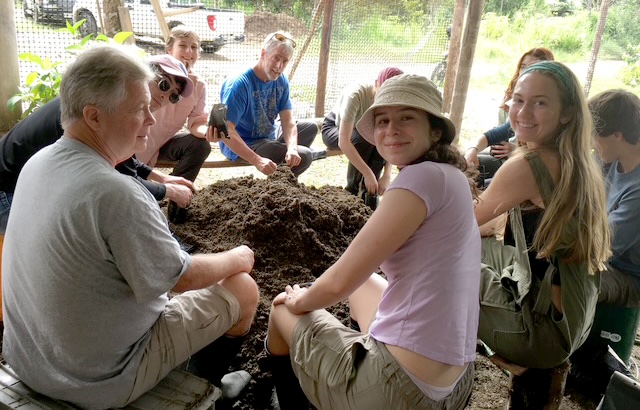
Ken Roberts is the Susan August Rubinstein Professor of Government in A&S. His current research focuses on political parties, populism, and polarization in contemporary Latin American democracies and crises of democracy in the global arena.
"LACS continues to be a meeting ground for undergraduate and graduate students, faculty, and members of the larger community who take a special interest in Latin America," said Roberts. "We've planned a full year of activities, including seminars, cultural events, a research symposium, and support for student internships, research, and study abroad opportunities."
SAP: Robert Travers
Robert Travers is a professor in the Department of History in A&S. His research on the consolidation of the British empire in India focuses on encounters between British and South Asian forms of political life. Travers kicked off the South Asia Program's fall seminars with his August 31 talk, Sex, Lies, and the Company State: An Indo-Persian Counter-History of the Early British Empire in India.
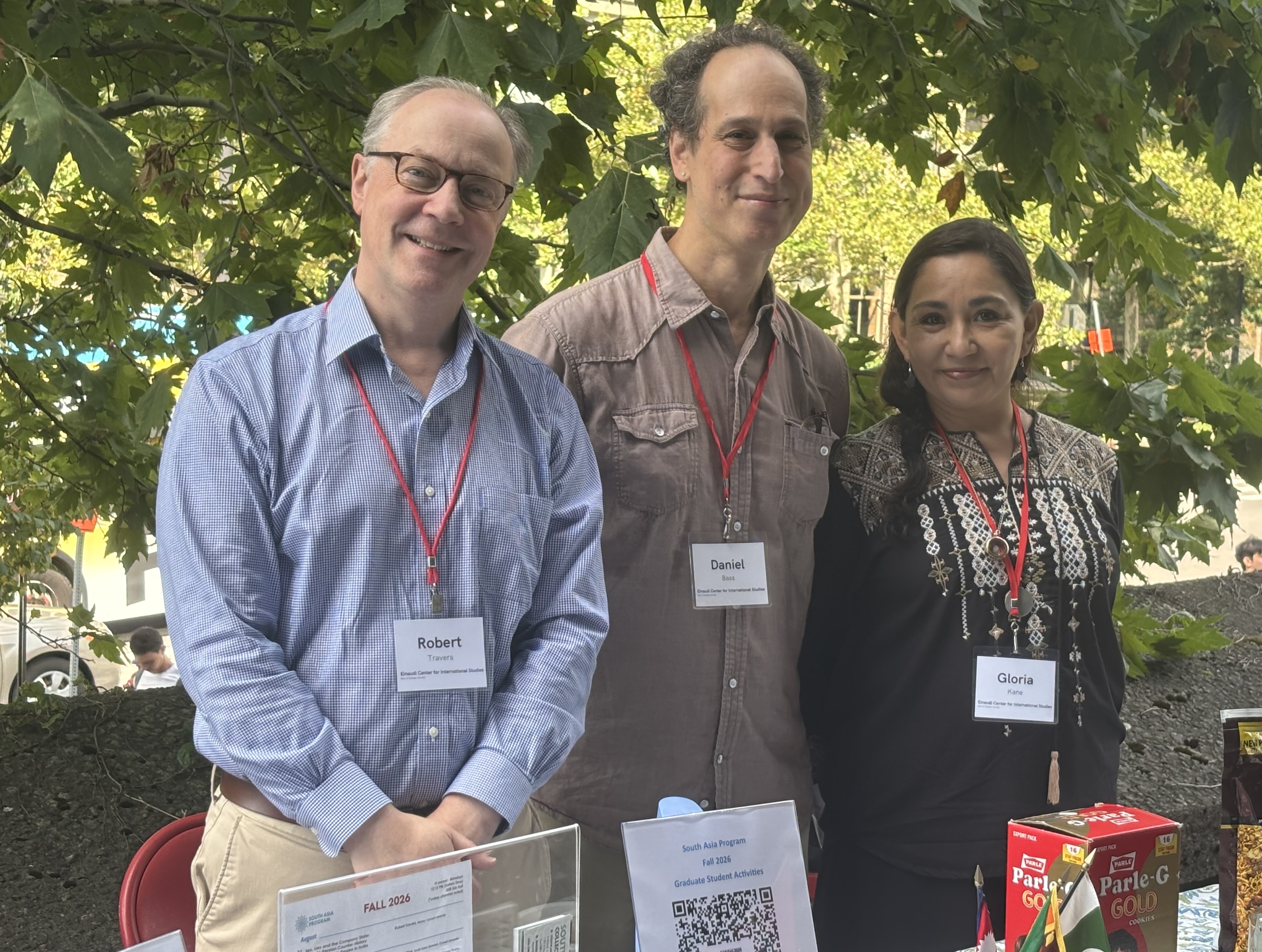
“Our seminar series this fall will showcase new directions in South Asian studies across many disciplines," Travers said. "We are especially excited to welcome back two professors who received their PhDs at Cornell, Anaar Desai-Stephens (CUNY Graduate Center) and Rishad Choudhury (Oberlin).”
Additional Information
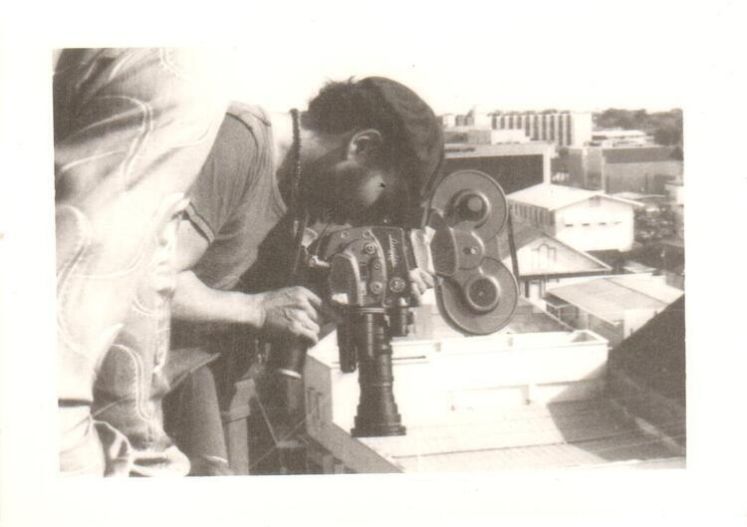
The Terror and the Time and In the Sky's Wild Noise I Victor Jara Collective - Film Screening and Discussion
October 26, 2026
4:45 pm
Schwartz Center for Performing Arts, Film Forum
The Terror and the Time and In the Sky's Wild Noise I Victor Jara Collective
Film Screening and Discussion
In the mid-1970s, a group of students, staff, and professors at Cornell University united by an urgency to make revolutionary art formed the Victor Jara Collective, named after the Chilean musician assassinated during the Pinochet regime. Among its members were Rupert Roopnaraine, Raymond Kril, Susumu Tokunow, and Lewanne Jones. In 1976, members of the Collective traveled to Guyana to, as Jones puts it to, “make film, forge cultural alliances, and activate revolution.” They returned with The Terror and the Time, a landmark of anticolonial cinema.
In the 50th anniversary year of the Victor Jara Collective’s formation, the Anthropology Department will present newly restored versions of The Terror and the Time and In the Sky’s Wild Noise, followed by a conversation with Victor Jara Collective member Lewanne Jones and Associate Professors Parisa Vaziri (Comparative Literature & Near Eastern Studies) and Russell Rickford (History).
THE TERROR AND THE TIME (1978, 75 min)
The terror is British colonialism in Guyana; the time is 1953, the year of the first
elections under a provisional democratic constitution. Stylized scenes photographed
throughout Georgetown, capital of Guyana and the Guyanese countryside,
accompany the poems of Martin Carter and convey a sense of intense political
reform against a backdrop of poverty, repression and silence. The local scene is
viewed against the international mise-en-scene of the Cold War, 1950s: the growth
of foreign economic and military interests in the Caribbean basin, the coronation of
Queen Elizabeth, Mau Mau revolts in Kenya, and the U.S. covert wars against Cuba,
Malaysia, Vietnam, and Iran.
IN THE SKY’S WILD NOISE (1983, 29 min)
In the Sky’s Wild Noise is presents Guyana in the 1970s focused around an interview
with Walter Rodney, Guyanese historian and political activist, who was assassinated
in 1980. The interview with Walter Rodney was clandestinely filmed by the Victor
Jara Collective in 1976 in Georgetown during the production of The Terror and The
Time. After Rodney’s death in 1980, Lewanne Jones produced and edited In the Sky’s
Wild Noise, making use of the interview and incorporating newly acquired footage of
Rodney after his release from jail 1979 and his funeral in 1980. Rodney speaks
about the political, social and economic conditions of the working class in Guyana in
the 1970s.
Lewanne Jones is an audio-visual researcher and Archival Producer in New York
City. She began her work in archives in the late 1970s as a member of the Victor
Jara Collective that produced a ground-breaking documentary about colonialism in
British Guiana, The Terror and The Time. Since then, she has conducted international
research for films and television series, museum installations and online educational
productions. Her work has been recognized by two nominations for News &
Documentary Emmy awards (in the archival research category) and she received an
Acker Award for community archival contributions in New York City. Eyes on the
Prize, ABC’s Century, PBS’s Freedom Riders and Black Panther: Vanguard of the
Revolution, 32 Sounds and Borderland are among the award-winning projects to
which she has contributed. She has conducted workshops on archival theory and
practice at media research centers including at Union Docs and BRIC TV (Brooklyn)
the Better Angels Foundation (Washington DC) and the Global Media Research
Center (Illinois), and has mentored emerging filmmakers in the craft of using
archival materials. Since 2018, she has been presenting the work of the Victor Jara
Collective at festivals in the US, Great Britain, Belgium and Chile and is the project
manager for the preservation and restoration of its two films, The Terror and The
Time (1978) and In The Sky’s Wild Noise (1983).
Co-sponsored by the Institute for Comparative Modernities; the Latin American and Caribbean Studies Program; the Department of Performing and Media Arts; the Public History Initiative; the Africana Studies and Research Center; the Asian American Studies Program; Cornell Media Studies; the Nazaara Media Lab; the Department of Comparative Literature; and Cornell Cinema.
Additional Information
Program
Latin American and Caribbean Studies
Bienvenidos BBQ
September 13, 2026
7:00 pm
Anna Comstock Hall (Latino Living Center)
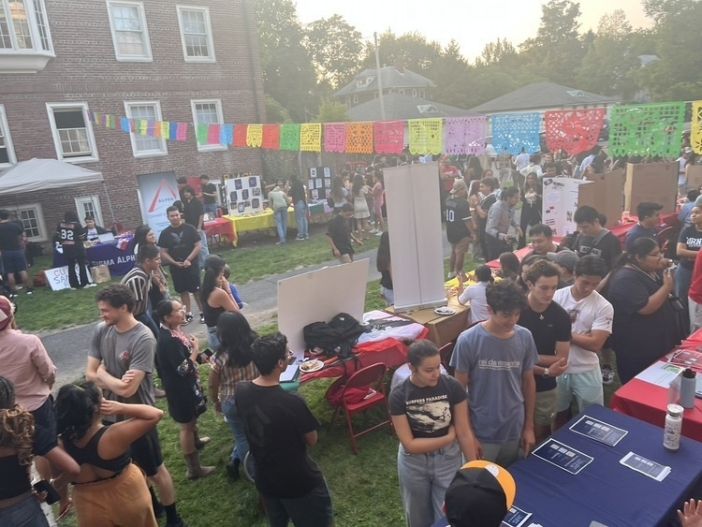
Join the Latino Living Center to celebrate and welcome in a new school year! There will be some finger foods, a raffle, performances and tables to put you in touch with different organizations on campus.
Please register via Campus groups here
Hosted by the Latino Living Center.
Additional Information
Program
Latin American and Caribbean Studies
Language Resource Center Speaker Series - Aditya Vashistha - AI Safety for the Global Majority
October 19, 2026
3:30 pm
Stimson Hall, G25
"AI Safety for the Global Majority"
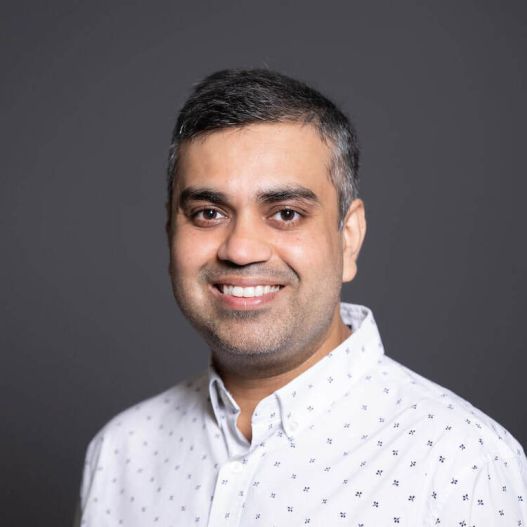
Aditya Vashistha
Assistant Professor of Information Science and Director of the Cornell Global AI Initiative, Cornell University
AI safety is often framed around alignment failures, existential risk, or misuse by powerful actors. Yet for much of the world, the risks of AI are far more immediate: misrepresentation, exclusion, stereotyping, and the erosion of dignity. These harms disproportionately affect communities that are already marginalized — including people with disabilities and those in non-Western cultural contexts.
In this talk, I argue that current approaches to AI safety are limited not only in scope but in standpoint. When safety is defined from dominant social and geographic positions, the harms that matter most to marginalized communities become invisible, anecdotal, or secondary. Drawing on case studies from my work with people with disabilities in the US and India, I show how AI systems both promise expanded access and simultaneously reproduce cultural bias, ableism, and structural inequities. I conclude by outlining pathways toward a globally grounded approach to AI safety — one that treats representation, cultural context, and participatory governance as core safety challenges rather than peripheral concerns.
Bio: Dr. Aditya Vashistha is an Assistant Professor of Information Science at Cornell University, where he directs the Cornell Global AI Initiative, a university-wide effort to integrate global perspectives into the design, evaluation, and governance of AI. His research focuses on building and studying AI systems that advance equity for historically marginalized communities, particularly across South Asia and Sub-Saharan Africa. His work has led to widely deployed systems impacting over 300,000 people and has received multiple best paper awards. He is the recipient of the Facebook Access Innovation Prize, Google and Microsoft Faculty Awards, and Cornell's President's and Provost's Faculty Award for Excellence in Research, Teaching, and Service. He received his Ph.D. in Computer Science from the University of Washington.
This event will be held in person in G25 Stimson and will also be streamed live over Zoom (registration required). Join us at the LRC or on Zoom.
The event is free and open to the public.
Additional Information
Program
Einaudi Center for International Studies
Latin American and Caribbean Studies
South Asia Program
Language Resource Center Speaker Series - Anne Violin-Wigent - Including Pronunciation Practice in All Language Classes
September 17, 2026
4:30 pm
Stimson Hall, G25
"Including Pronunciation Practice in All Language Classes: Why and How"
LRC Signature Speaker
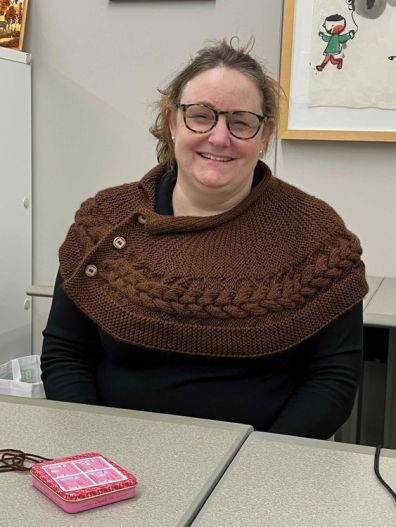
Anne Violin-Wigent
Associate Professor of French and Director of the Basic Language Instruction Program, Michigan State University
Pronunciation instruction tends not to be included in language classes due to lack of time and/or training. In this presentation, attendees will learn a formula for teaching pronunciation in three simple steps. The presentation focuses on elements of pronunciation linked with meaningful grammatical distinctions. Examples are in/about French but the formula can easily be adapted to other languages. With these activities, in addition to improving their accent, their oral comprehension, and their confidence, students will gain a greater awareness of grammatical structure and use them more accurately (Martin & Jackson, 2016; Violin-Wigent, 2022).
Bio: Dr. Anne Violin-Wigent is an Associate Professor of French at Michigan State University. Her research currently focuses on the effectiveness of explicit instruction in the acquisition of a second language (in particular on the development of pronunciation) and on student retention in language programs past requirements. She has been serving as the French Language Director and Assistant to the Language Director for many years and has taught a wide variety of classes, including History of the French language, Evolution of French Gastronomy, Teaching Methods, and French linguistics and phonetics to name but a few. She has co-authored Sons et Sens: La prononciation du français en contexte, published in 2013 by Georgetown University Press. She is also actively involved in teacher professional development, with the Michigan World Language Association, and in mentoring undergraduate and graduate students.
This event will be held in person in G25 Stimson and will also be streamed live over Zoom (registration required). Join us at the LRC or on Zoom.
The event is free and open to the public.
Additional Information
Program
Einaudi Center for International Studies
Latin American and Caribbean Studies
When Research Meets Climate Action
September 15, 2026
12:20 pm
Uris Hall, G08
Protecting forests is about much more than protecting trees. It is about people, culture, livelihoods, and understanding the local realities that shape how conservation actually works. Drawing from experiences in different countries, this session will explore what we can learn when research meets practice—and how universities, communities, governments, and conservation organizations can work together to turn knowledge into action. Rather than a traditional presentation, this will be an open and interactive conversation about what works, what does not, and where new opportunities for collaboration can emerge.
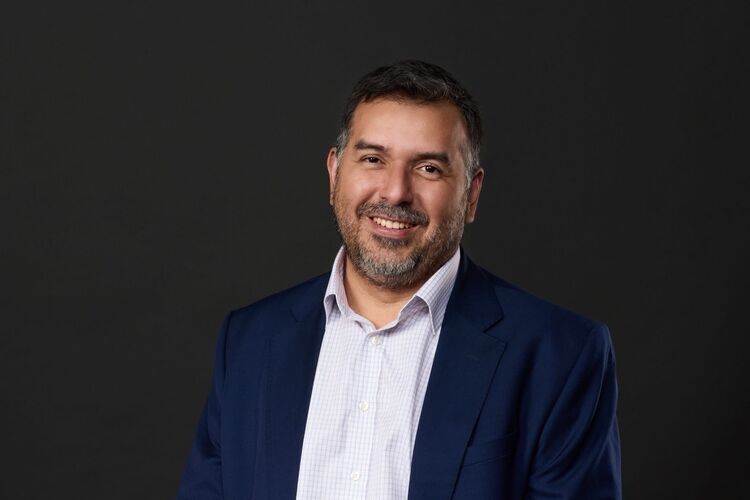
Santiago Garcia is Director of Forest Partnerships at Environmental Defense Fund (EDF). He has more than 20 years of experience working on forest conservation and climate action across different regions of the world, bringing together governments, Indigenous Peoples and local communities, researchers, and conservation organizations. He holds a Ph.D. in Natural Resources from Cornell University and a Master’s degree in Conservation Leadership from Colorado State University. He is also a Regional Affiliate Scholar with the Latin American and Caribbean Studies Program at Cornell University’s Mario Einaudi Center for International Studies, where he continues to collaborate on research and initiatives connecting conservation, people, and policy.
Additional Information
Program
Einaudi Center for International Studies
Latin American and Caribbean Studies
Todo Cuba: Public Lecture, Community Dialogue, and Dance Workshop
September 11, 2026
4:30 pm
Willard S. Hall , 414
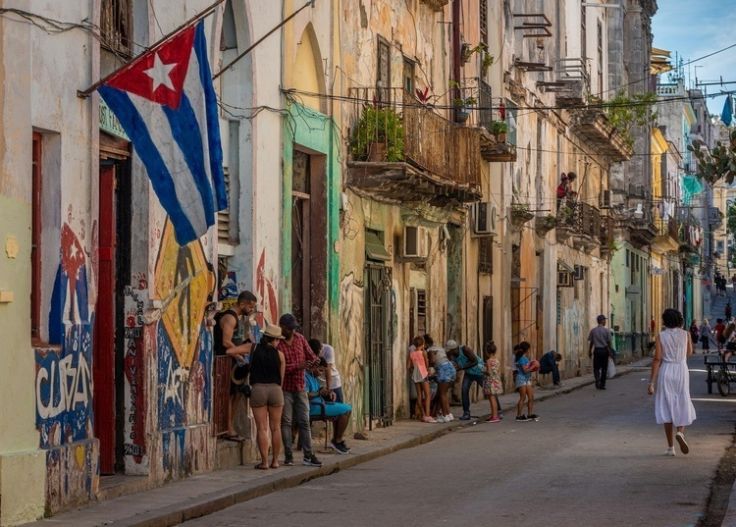
The Einaudi Center's Latin American and Caribbean Studies Program (LACS) is sponsoring this event series on the contemporary crisis in Cuba, in collaboration with Cornell's Committee on U.S.-Latin American Relations (CUSLAR). The on-campus events will take place in Willard Straight Hall.
***
4:30-5:45: Lecture by Eric Hershberg, followed by community discussion
Cuba’s Multidimensional Crisis and Donald Trump’s (Marco Rubio’s…) Revival of the Monroe Doctrine
Eric Hershberg is Professor Emeritus of Latin American Studies and Political Science at American University in Washington, where he was inaugural director of the Center for Latin American and Latino Studies. Previously, he has been a visiting professor or researcher at Simon Fraser University, Columbia University, NYU, New School, Princeton University, and Southern Illinois University. Between 1990 and 2006 he was Director for Latin America at the Social Science Research Council, in New York, and was president of the Latin American Studies Association between 2007 and 2009. His most recent publications include "North American Regionalism: Stagnation, Decline or Renewal?" (co-edited with Tom Long; University of New Mexico Press), translated and published by the Colegio de México under the title "“El regionalismo en America del Norte: ¿estancamiento, declive, o renovación?,” and “Cuba: Regime Resilience Amidst Economic Collapse,” co-authored with William M. LeoGrande, Revista de Ciencia Politica. Vol. 45, No. 22, pp. 229-256 (2025).
***
6:00-7:15: Dance workshop
From Changüí to Son Cubano: The Roots of Salsa
This fun and interactive class will explore the evolution of Cuban musical and dance traditions and their influence on popular, contemporary rhythms such as salsa.
Adolfo Castillo Duvergel began his professional career in 2008 as a dancer in the company of musical shows of the Provincial Music Center of Guantánamo. He was a member of the Babul Folkloric Ballet company in the province of Guantánamo and served as a dance specialist in the Provincial Music Center. In 2019, he began to work as a dancer in the Soldance Company in the province of Matanzas and as a teacher of Folkloric and General Dances at the Professional School of Dance of that province. In 2021, he created the DanSaril project that brought together dancers with the aim of exchanging experience and experimenting with dance creation and artistic expression on stage while cultivating the value of cultural traditions and respect for Cuban cultural identity. In 2022, he was selected by the International Dance Council (CID) to be an active member of this prestigious institution that belongs to the UN, representing traditional Cuban and Caribbean popular culture. Since February 2024, he has been residing in Ithaca and working as part of the Salsa Ithaca team, teaching Master Classes and workshops on Latin, Afro-Cuban, and percussion Dances to contribute to the development and preservation of Latin, Afro-Cuban, and Caribbean cultures.
Lisbet Lisnay López Luna is a professional dancer who graduated from the Alfredo Velázquez Carcases Professional School of Dance in the province of Guantánamo (2018). Professor of modern dance technique at the Professional School of Art of Matanzas, Lisbet began her professional dance career in 2018 in the Babul Folkloric Ballet Company as part of its Social Service. Here, she participated in different events, shows, cultural and artistic galas, and national tours, gaining vast experience and raising her technical-artistic level. In 2020, she began working as a teacher of modern dance technique at the Alfonzo Pérez Isaac Professional School of Art in the province of Matanzas. She stood out for her excellent results in the training and preparation of elementary school students. That same year, she performed as a professional dancer in the Somos Latinos company. From 2021 to 2024, she has worked with the DanSaril Project as a dancer, teacher, and choreographer, and as a dancer in the Soldance Company in the tourist center of Varadero. Since February 2024, she has lived in Ithaca, New York, working with Salsa Ithaca in its cultural events, classes, workshops, and performances.
***
About the Event
Hosted by the Latin American and Caribbean Studies Program (LACS), part of the Mario Einaudi Center for International Studies, this community conversation and cultural event is cosponsored by Cornell's Department of Government, CUSLAR, MeCha and ACAU, and Salsa Palante. The series seeks to analyze and encourage dialogue about Cuba's multidimensional crisis, its relationship to a newly assertive U.S. hegemonic stance in the Western Hemisphere, and potential responses from domestic civil society networks that work on human rights and social justice issues in Latin America. The conversations, guided by the expertise of Professor Eric Hershberg of American University, will take place both on campus and in the downtown Ithaca area, bridging the gap between university and local community audiences. With the goal of uplifting Cuba's rich cultural tradition, the series will also feature a dance workshop led by Lisnay López Luna and Adolfo Castillo Duvergel.
The event is funded with support from an Undergraduate International Studies and Foreign Language (UISFL) grant.
Additional Information
Program
Einaudi Center for International Studies
Latin American and Caribbean Studies
Book Talk: I Have Avenged America: Jean-Jacques Dessalines and Haiti’s Fight for Freedom

September 4, 2026
11:30 am
Uris Hall, G08
A moving and humane portrait of the abolitionist revolutionary Jean-Jacques Dessalines, who led Haiti’s fight for independence from French colonial rule
“My name has become a horror to all those who want slavery,” declared Jean‑Jacques Dessalines as he announced the independence of Haiti, the most radical nation‑state during the Age of Revolution and the first country ever to permanently outlaw slavery. Enslaved for the first thirty years of his life, Dessalines (c. 1758–1806) joined the revolution that abolished slavery within the French colony. Then he became a general in the colonial army of the new French Republic. When it was discovered that France once again supported slavery, Dessalines declared war on his former allies. Fighting under the slogan “Liberty or Death,” his army forced the French to evacuate in late 1803. At the start of the new year, Dessalines declared independence from France and became the leader of a free Haiti.
A hero to Haitians for centuries, Dessalines is portrayed abroad as barbarous and violent. Yet this caricature derives not from facts―as Julia Gaffield demonstrates with extensive new research―but from the fears of contemporary enslavers. Showcasing the man behind the myths, Gaffield reveals Dessalines’s deep suffering, warm friendships, and unwavering commitment to destroying slavery, racism, and colonialism, and his bold insistence on his people’s right to liberty and equality.
Julia Gaffield is a Professor of History at William & Mary. She is the author of Haitian Connections in the Atlantic World: Recognition after Revolution (UNC Press, 2015), winner of the Boucher Book Prize from the French Colonial Historical Society, and I Have Avenged America: Jean-Jacques Dessalines and Haiti's Fight for Freedom (Yale UP, 2025).
Additional Information
Program
Einaudi Center for International Studies
Latin American and Caribbean Studies
Mapping Lima: The Poetics of Urban Space in the 20th and 21st Century
October 6, 2026
12:20 pm
Uris Hall, G08
This presentation examines poetic representations of the city of Lima over the last fifty years, with a particular focus on the city’s transformation under Peru’s neoliberal project since the 1990s. Beginning in the 1970s, Peruvian poetry embraced the city and explored the possibilities of colloquial language to represent the experiences and aspirations of a rapidly expanding urban population. During the economic and political crises of the 1980s and 1990s, these representations became increasingly marked by violence, instability, and social fragmentation. In the neoliberal era, Lima emerges as a city shaped by market logic and its contradictions. Drawing on Walter Benjamin’s concept of the flâneur, this presentation argues that contemporary poetry reimagines Lima as a space where political critique and poetic resistance converge.
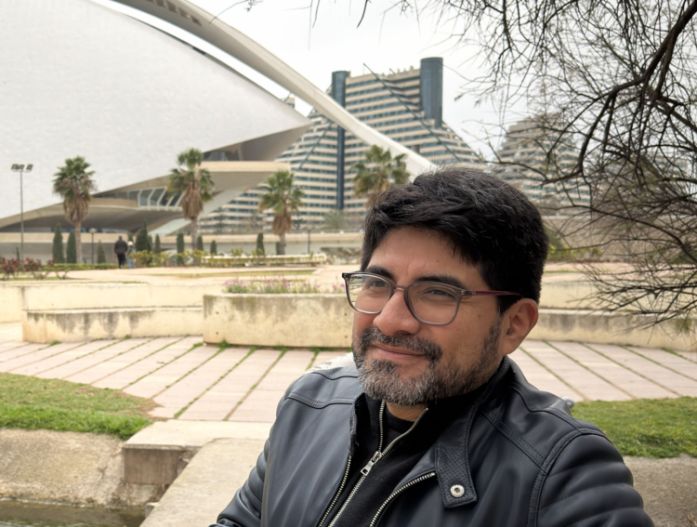
Carlos Villacorta Gonzáles is a writer and Professor of Latin American Literature at the University of Maine. His research focuses on contemporary Peruvian and Latin American poetry, urban representations in literature, and cultural studies. His publications include Poéticas de la ciudad: Lima en la poesía peruana (2018) and the anthology Lima escrita: Arquitectura poética de la ciudad, 1970–2020 (2021). He also co-edited Vivir la violencia en el Perú del nuevo milenio (2023). He is editor in chief of the digital magazine Polis Poesía (https://www.polispoesia.com/)
Additional Information
Program
Einaudi Center for International Studies
Latin American and Caribbean Studies
Hard Hands, Weaker States. Bukelismo in Latin America’s Unlikely Democracies
November 3, 2026
12:20 pm
Uris Hall G-08
Why is Bukele-style punitivism gaining traction in Latin America’s least likely democracies? This talk examines Chile and Uruguay, two countries long treated as regional exceptions because of their stable party systems, stronger states, and comparatively low levels of violence. Both now face a post-pandemic transformation of organized crime, but they processed the shock differently: Chile’s decomposed party system turned insecurity into punitive competition, while Uruguay’s more legitimate parties initially channeled it through deliberation and cross-partisan coordination. Yet both cases are converging toward the same demand for authoritarian shortcuts. I argue that this convergence reflects state erosion from below: the declining centrality of the state and formal economy in organizing citizens’ life chances, reinforced by party-society detachment, expanding informal and illegal markets, and the time compression of democratic governance. Bukelismo is less a leader-driven export than the political name for a structural demand democracies increasingly struggle to contain, manage, and fulfill.
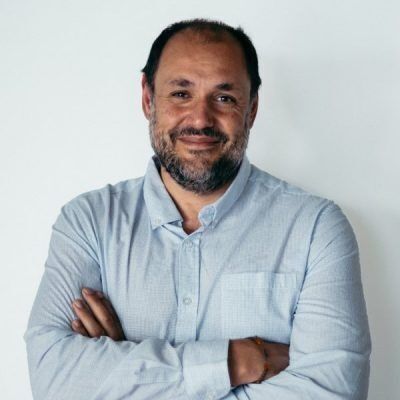
Juan Pablo Luna is the Inaugural Diamond Brown Chair in Democratic Studies at McGill. While mainly focused on comparative Latin American politics, his research analyzes how socio-structural conditions such as social inequality and state capacity shape democratic institutions and development trajectories. In recent years, he has researched how organized crime dynamics is contributing to reshape politics, states, and markets in Latin America.
Additional Information
Program
Einaudi Center for International Studies
Latin American and Caribbean Studies