
Latin American and Caribbean Studies
Sir Hilary Beckles Returns to Cornell
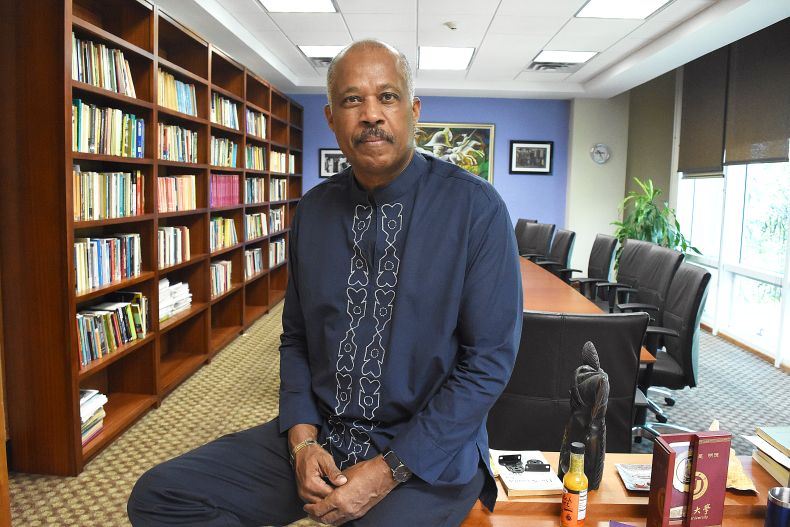
Across the final week of March, Sir Hilary Beckles returns to Cornell as part of the A.D. White Professors-at-Large Program
Biography
Sir Hilary Beckles is a distinguished scholar, internationally acclaimed historian of the Caribbean, and a revered reparations advocate, who has served as the Vice-Chancellor of the University of the West Indies (UWI) since 2015, and as the Chairman of theCaribbean Community (CARICOM) Reparations Commission since 2013. Equally regarded as an esteemed global public activist in the field of sustainability, social justice and minority empowerment, Beckles has also served as an inaugural member of the United Nations Science Advisory Board on Sustainable Development and an advisor for the UN World Culture Report. A Professor of Economic and Social History at UWI since 1991, Beckles has been a leading voice in higher education recognized for his contributions to the field of economic history, as a pathway in exploring reparatory justice for slavery and the history of slavery and colonialism in the Caribbean.In 2021, Beckles was named as a Visionary Expert for United Nations Educational, Scientific and Cultural Organization’s(UNESCO) International Institute for Higher Education in Latin America and the Caribbean (IESALC) Futures of Higher Education project, aimed at generating innovative and imaginative ideas about the future of higher education, from a global perspective.
Beckles is an author of thirteen books, eight plays, and over 100 peer reviewed essays covering an extensive range of issues including the history of slavery, gender relations in the Caribbean, sports, and popular culture. The breadth of Beckles’s scholarship and its generalizability to many fields has captured the interests and imaginationsof a vast array of audiences, including numerous departments, programs, and audiences across campus, as well as regional community organizations, particularly as it relates to the matters of social justice and a just future. Through the professorship, Beckles aims to provide public engagement opportunities through a series of lectures, seminars, and workshops, for comparative discussions about slavery and its legacies in the United States and the Caribbean, as well as opportunities to imagine strategies for reparations in the US; discussions made even more urgent in the wake of protests following the murder of George Floyd.
Beckles received his higher education in the United Kingdom and graduated in 1976 with a B.A. (Hons) degree in Economic and Social History from The University of Hull, and a Ph.D. from the same university in 1980.
Schedule of Events
“White Women and the Atlantic Slave System"
Tsujimoto Perspectives in Global Development seminar series
Wednesday, March 26, at 12:20-1:10pm
101 Bradfield Hall and via Zoom
Open to all.
Abstract: The intersection of race, class and gender in the conception and design of the Atlantic Slave system continues to attract multidisciplinary research interest. The Caribbean, and the southern US colonies, provide sharp contrast in some areas but share common structural and social aspects. The presence of white women, bonded and free, was central to the roll out of chattel enslavement as a race-specific order that targeted Africans. The social interactions of white women and Africans, male and female, challenged legislators and provided the core context for continuous refinement of the rules of racial engagement. Indeed, the specific legal architecture of black enslavement (in particular the slave code) was principally a response by white males to protect property rights in production and reproduction. By defining the role and function of white women as carriers of the seed of freedom the slave based order was rendered economically sustainable.
The Tsujimoto Perspectives in Global Development seminar series is cosponsored by the Dept. of Global Development, Dept. of Natural Resources and the Environment, and Charles H. Dyson School of Applied Economics and Management.
West Campus Student Engagement Event
Wednesday, March 26, at Alice Cook House
6:00pm Dinner ⋅ 7:15pm Talk
Open to all.
Hosts: Chantal Thomas (Vice Dean and the Radice Family Professor of Law, Cornell Law School; Director of the Cornell Center for Global Economic Justice; and Faculty Director for the Clarke Initiative for Law and Development in the Middle East and North Africa)
Bassel Khoury (House Assistant Dean, Alice Cook House)
Keynote Lecture: “The Idea of White Slavery: The West Indies Experience in the 17th Century”
An A.D. White Professors-at-Large keynote public lecture
Thursday, March 27, at 4:45pm
Klarman Hall Auditorium and via Zoom
Open to all. A reception will follow in Klarman Atrium.
Abstract: The establishment of colonial dispensations on the Caribbean frontier by rival European imperial powers was conceived and implemented within an ideological framework that sanctioned and mandated the extensive use of servile labour. The creation and survival of economic enterprises across imperial borders in mining, agriculture, distributive trades and services, depended upon the availability of coerced unfree labour. Entrepreneurial thinking, likewise, was constrained by a set of specific economic references in which the attainment of growth and profitability, and a stable social order, were seen as contingent upon the supply and organization of unfree labour.
It was clear to all with an interest in the colonial mission that by the seventeenth century the options as far as labour use was concerned were reduced to three basic forms. These choices were the reduction of the conquered indigenous population to servitude on lands apropriated from them, the transfer or surplus labour from the imperial centre to the colonial periphery under set contractual conditions, and the trading in chattel labour from the already well established African market. Also, these forms were considered discrete in the sense that their structures were clilnically demarcated by racial differences – heightened by clearly distinct methods of recruitment.
All events are cosponsored by the Dept. of History and the Latin American and Caribbean Studies Program.
Judith Byfield (Professor, Dept. of History) serves as faculty host.
Ernesto Bassi (Associate Professor, Dept. of History) serves as faculty co-host.
Additional Information
Mexico’s President Opts for Caution in Face of Trump Tariffs

Gustavo Flores-Macías, LACS
“Even though both Canada and Mexico are affected by President Trump’s tariffs, there is an asymmetry in their ability to push back. President Sheinbaum’s thoughtful, non-confrontational approach acknowledges this asymmetry,” says Gustavo Flores-Macias, professor of government.
Additional Information
What Mexico is Doing to Placate Trump as Tariffs Loom

Gustavo Flores-Macías, LACS
Gustavo Flores-Macias, professor of government, says “Everything Trump says has to be taken at face value. The Mexican government cannot afford to do otherwise."
Additional Information
Dow Tumbles 650 Points as Trump Confirms Tariffs on Mexico and Canada will Start Tuesday

Gustavo Flores-Macias, LACS
Gustavo Flores-Macias, professor of government, says “Due to the uncertainty surrounding the tariffs, the stock market has erased the gains from the ‘Trump bump’ following the presidential election and the expected upward pressure on prices is giving investors pause.”
Additional Information
The Idea of White Slavery: The West Indies Experience in the 17th Century

March 27, 2025
4:45 pm
Klarman Hall, Rhodes-Rawlings Auditorium
An A.D. White Professors-at-Large keynote public lecture
Thursday, March 27, at 4:45pm, Rhodes-Rawlings Auditorium, Klarman Hall, and via Zoom
Open to all. A reception will follow.
Abstract
The establishment of colonial dispensations on the Caribbean frontier by rival European imperial powers was conceived and implemented within an ideological framework that sanctioned and mandated the extensive use of servile labour. The creation and survival of economic enterprises across imperial borders in mining, agriculture, distributive trades and services, depended upon the availability of coerced unfree labour. Entrepreneurial thinking, likewise, was constrained by a set of specific economic references in which the attainment of growth and profitability, and a stable social order, were seen as contingent upon the supply and organization of unfree labour.
It was clear to all with an interest in the colonial mission that by the seventeenth century the options as far as labour use was concerned were reduced to three basic forms. These choices were the reduction of the conquered indigenous population to servitude on lands apropriated from them, the transfer or surplus labour from the imperial centre to the colonial periphery under set contractual conditions, and the trading in chattel labour from the already well established African market. Also, these forms were considered discrete in the sense that their structures were clilnically demarcated by racial differences – heightened by clearly distinct methods of recruitment.
About the speaker
Sir Hilary Beckles is the eighth vice chancellor of The University of the West Indies-UWI and a distinguished academic, international thought leader, United Nations committee official, and global public activist in the field of sustainability, social justice and minority empowerment. He is president of Universities Caribbean, chair of the Caribbean Examinations Council, chair of the CARICOM Reparations Commission, and advisor on sustainable development to former United Nations secretary-general Ban Ki-moon. He was knighted by the government of Barbados in 2007.
In 2021, Sir Hilary received the Martin Luther King Jr. Peace and Freedom Award. In 2022, he was elected as an Andrew D. White Professor-At-Large at Cornell University. Also in 2022, Sir Hilary presented an Einaudi Distinguished Speaker Series lecture at Cornell. In 2024, he was appointed as Chairman/Chancellor of the United Nations University (Tokyo), begin in May 2025.
Sir Hilary has published over 100 peer reviewed essays in scholarly journals, eight plays, and over 13 books on subjects ranging from Atlantic and Caribbean History to gender relations in the Caribbean, sport development, and popular culture. The breadth of Beckles’s scholarship and its generalizability to many fields has captured the interests and imaginations of a vast array of audiences worldwide.
A highly sought-after speaker, Sir HIlary has lectured extensively throughout Europe and Asia. Beckles received his higher education in the United Kingdom and graduated in 1976 with a B.A. (Hons) degree in Economic and Social History from The University of Hull, and a Ph.D. from the same university in 1980.
This event is part of an A.D. White Professors-at-Large (ADW-PAL) visit and is cosponsored by the Dept. of History and the Latin American and Caribbean Studies Program. For more information on a week of events with Sir Hilary Beckles, please visit this site.
Additional Information
Program
Einaudi Center for International Studies
Latin American and Caribbean Studies
White Women and the Atlantic Slave System

March 26, 2025
12:20 pm
101 Bradfield Hall, 101 Bradfield Hall
Spring 2025 Harry ’51 and Joshua ’49 Tsujimoto Perspectives in Global Development Seminar Series
Abstract
The intersection of race, class and gender in the conception and design of the Atlantic Slave system continues to attract multidisciplinary research interest. The Caribbean, and the southern US colonies, provide sharp contrast in some areas but share common structural and social aspects. The presence of white women, bonded and free, was central to the roll out of chattel enslavement as a race-specific order that targeted Africans. The social interactions of white women and Africans, male and female, challenged legislators and provided the core context for continuous refinement of the rules of racial engagement. Indeed, the specific legal architecture of black enslavement (in particular the slave code) was principally a response by white males to protect property rights in production and reproduction. By defining the role and function of white women as carriers of the seed of freedom the slave based order was rendered economically sustainable.
About the speaker
Sir Hilary Beckles, eighth vice chancellor of the University of the West Indies, is a distinguished academic, international thought leader, United Nations committee official, and global public activist in the field of social justice and minority empowerment. Beckles is a 2024 Andrew D. White Professor-At-Large at Cornell University.
He received his higher education in the United Kingdom and is professor of economic history. He has lectured extensively in Europe, the Americas, Africa, and Asia. He has published over 100 peer reviewed essays in scholarly journals and over 13 books on subjects ranging from Atlantic and Caribbean History, to gender relations in the Caribbean, sport development, and popular culture.
Beckles is president of Universities Caribbean, chair of the Caribbean Examinations Council, chair of the CARICOM Reparations Commission, and advisor on sustainable development to former United Nations secretary-general Ban Ki-moon. He was knighted by the government of Barbados. He has received numerous honorary doctorates from around the world and recently received the Martin Luther King Jr. Peace and Freedom Award.
About the seminar series
The Harry ’51 & Joshua ’49 Tsujimoto Perspectives in Global Development Seminar Series showcases innovative approaches to development with experts from around the globe. Each year, the series attracts online registrants from over 45 countries and more than 350 organizations.
Seminars are held Wednesdays from 12:20-1:10 p.m. eastern time during the semester in 101 Bradfield Hall. Students, faculty and the general public are welcome to attend in-person or via Zoom.
The series is co-sponsored by the Department of Global Development, the Department of Natural Resources and the Environment, and the Charles H. Dyson School of Applied Economics and Management as part of courses GDEV 4961, AEM 4961, NTRES 4961, GDEV 6960, AEM 6960, and NTRES 6960.
Part of the A.D. White Professors-at-Large Program. For more information on a week of events with Sir Hilary Beckles, please visit this site.
Additional Information
Program
Einaudi Center for International Studies
Latin American and Caribbean Studies
El Mundo Envejece, pero ¿Estamos Preparados para una Economía con Menos Jóvenes?

Mildred Warner, LACS/IES
A study published in the Cambridge Journal of Regions by researchers from USFQ, Cornell University, and Penn State warns that we need to rethink the economic and social structure at a global level.
Additional Information
Portuguese Conversation Hour

May 1, 2025
4:20 pm
Stimson Hall, G25
Come to the LRC to practice your language skills and meet new people. Conversation Hours provide an opportunity to use the target language in an informal, low-pressure atmosphere. Have fun practicing a language you are learning! Gain confidence through experience! Just using your new language skills helps you learn more than you might think. Conversation Hours are open to any learner, including the public.
Additional Information
Program
Latin American and Caribbean Studies
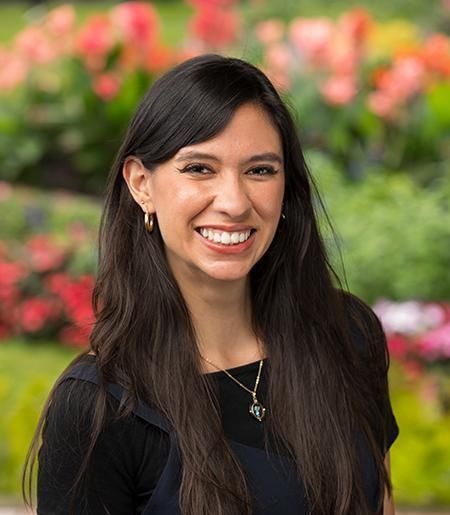
Irina Troconis, "The Necromantic State: Spectral Remains in the Afterglow of Venezuela's Bolivarian Revolution" ICM New Books/New Conversations
April 21, 2025
4:45 pm
Goldwin Smith Hall, G22
ICM NEW BOOKS SERIES
IRINA TROCONIS (Associate Professor, Department of Romance Studies, Cornell University)
The Necromantic State: Spectral Remains in the Afterglow of Venezuela's Bolivarian Revolution
A conversation with Cornell faculty member Irina Troconis about her new book, The Necromantic State: Spectral Remains in the Afterglow of Venezuela's Bolivarian Revolution (Duke UP, 2025)
In the spring of 2013, televisions across Venezuela announced the death of then-president Hugo Chávez, leader of the Bolivarian Revolution and key political actor in Latin America’s “turn to the left.” Chávez’s death, however, was not the end of Chávez’s life. In The Necromantic State, Irina R. Troconis examines how Chávez, as a “specter,” has lingered in Venezuela’s public, private, and digital spaces. Focusing on contemporary Venezuela and drawing from a diverse corpus that includes tattoos, toys, memes, graffiti, and a hologram haunting the streets of downtown Caracas, Troconis contends that, in moments of failed transitions, political tensions, and crises of legitimacy, the state brings the dead back to life to negotiate the terms of its survival. By showing how this necromantic performance enables the state’s material and visual manifestations in public and private spaces, Troconis untangles a sociopolitical moment in which the ghostly acts as the affective, social, and political force that grounds state authority and ensures the preservation of the status quo, as it circumscribes acts of political imagination and limits popular resistance.
IRINA TROCONIS is Assistant Professor of Latin American Studies in the Department of Romance Studies. She holds a PhD in Spanish and Portuguese Languages and Literatures from New York University, and an MPhil Degree in Latin American Studies from the University of Cambridge (UK). Her areas of specialization include: Memory Studies, Venezuelan Studies, Politics and Performance, Affect Theory, Visual Culture, Material Culture, and Digital Humanities. She is the co-organizer of the online conversation series (Re)thinking Venezuela/(Re)pensando a Venezuela, currently in its fifth seasonrina R. Troconis is Assistant Professor of Latin American Studies in the Department of Romance Studies. She holds a PhD in Spanish and Portuguese Languages and Literatures from New York University, and an MPhil Degree in Latin American Studies from the University of Cambridge (UK). Her areas of specialization include: Memory Studies, Venezuelan Studies, Politics and Performance, Affect Theory, Visual Culture, Material Culture, and Digital Humanities. She is the co-organizer of the online conversation series (Re)thinking Venezuela/(Re)pensando a Venezuela, currently in its fifth season.
Additional Information
Program
Latin American and Caribbean Studies
Grad Students Study World with Einaudi Travel Grants

Alonso Alegre-Bravo (LACS) studied electricity access in Guatemala. Jessie Taieun Yoon (EAP) researched queer Asianness in Hong Kong and beyond.