
Latin American and Caribbean Studies
Aquaculture in the Amazon

Lessons for Food Security and Sustainability
A new paper advocates for five key principles to enable sustainable expansion of aquaculture in the Amazon. The project received a 2021 seed grant.
Additional Information
Will El Salvador’s Prisons House Trump’s Deportees?

Gustavo Flores-Macías, LACS
Gustavo Flores-Macías (A&S, Brooks School) says the announcement is a public relations win for President Trump because it may dissuade undocumented migration.
Additional Information
Quechua Conversation Hour
May 6, 2025
10:00 am
Stimson Hall, G25
Come to the LRC to practice your language skills and meet new people. Conversation Hours provide an opportunity to use the target language in an informal, low-pressure atmosphere. Have fun practicing a language you are learning! Gain confidence through experience! Just using your new language skills helps you learn more than you might think. Conversation Hours are open to any learner, including the public.
Additional Information
Program
Latin American and Caribbean Studies
LACS and LSP Graduate Student Writing Group

April 30, 2025
5:00 pm
Big Red Barn
Join graduate student writers to share goals and write in community. The writing workshop will begin with group introductions and a moment to share what we're working on. The bulk of the time will then be dedicated to writing in community and end with the opportunity to share what you accomplished with a supportive group of peers. For those who can't make it at 5 pm, feel free to drop in at any point.
This writing group, while open to all graduate and professional students, aims to make a place for multilingual writers in particular.
To sign up for weekly reminder emails, please fill out this form.
Sponsored by the Latin American and Caribbean Studies Program and Latina/o Studies Program.
All Welcome!
Additional Information
Program
Einaudi Center for International Studies
Latin American and Caribbean Studies
Mauricio Funes, Former El Salvador Leader Who Fled to Exile, Dies at 65

Gustavo Flores-Macías, LACS
Gustavo Flores-Macias, professor of government, discusses Mauricio Funes.
Additional Information
Spanish Conversation Hour

May 6, 2025
3:45 pm
Stimson Hall, G25
Come to the LRC to practice your language skills and meet new people. Conversation Hours provide an opportunity to use the target language in an informal, low-pressure atmosphere. Have fun practicing a language you are learning! Gain confidence through experience! Just using your new language skills helps you learn more than you might think. Conversation Hours are open to any learner, including the public.
Additional Information
Program
Latin American and Caribbean Studies
Ware Rotary Award for International Graduate Professional Development

Details
International students: Do you plan to travel to a U.S. conference or networking event related to your field of study?
The W. Barlow Ware Rotary Award for International Graduate Student Professional Development provides three awards annually to international graduate and professional students at Cornell. The awards ($650 maximum) support domestic travel and attendance costs for conferences or professional events promoting international graduate students' professional development.
Amount
Up to $650. Award recipients will have funds directly deposited through the Cornell Bursar system. Per U.S. Internal Revenue Service guidelines, 14% of the funds may be withheld for tax purposes.
Eligibility
Graduate students and students enrolled in Cornell’s professional schools are eligible. In addition, you must be:
- An international student with citizenship outside the United States (nonresident on a Cornell-sponsored student visa)
- Actively engaged with the Mario Einaudi Center for International Studies or one of our regional and thematic programs
Requirements
- In your application, you must clearly explain the value of your proposed conference or networking experience—as well as the alignment of your research or professional studies—with one or more of the Seven Rotary Causes:
- Promoting peace
- Fighting disease
- Providing clean water, sanitation, and hygiene
- Saving mothers and children
- Supporting education
- Growing local economies
- Protecting the environment
- Ware Rotary awards support domestic airfare or train/bus, hotel, and other associated costs for attendance at an event directly related to your dissertation, thesis research, or planned professional career.
- The proposed conference, meeting, or event must be held in the United States, with your travel beginning and ending in the U.S.
- You must attend the conference or event described in your application. Awards are not transferable.
- Travel must take place between March 1 and August 15, 2025, and cannot be funded retroactively.
Reporting
Post-event reporting is mandatory for all award recipients. By applying, you agree to complete the following reporting no later than August 29, 2025:
- Provide proof of event attendance, such as a registration email and a copy of the conference program.
- Provide a testimonial stating how your attendance benefited your professional development and promoted one or more of the Seven Rotary Causes.
- Photos of you attending your event are appreciated! Please sign this multimedia release before submitting photos.
Questions?
Additional Information
Funding Type
- Award
Role
- Student
Program
Maritime History from Latin American Shores (In Spanish)
March 3, 2025
4:45 pm
Uris Hall, Uris G08
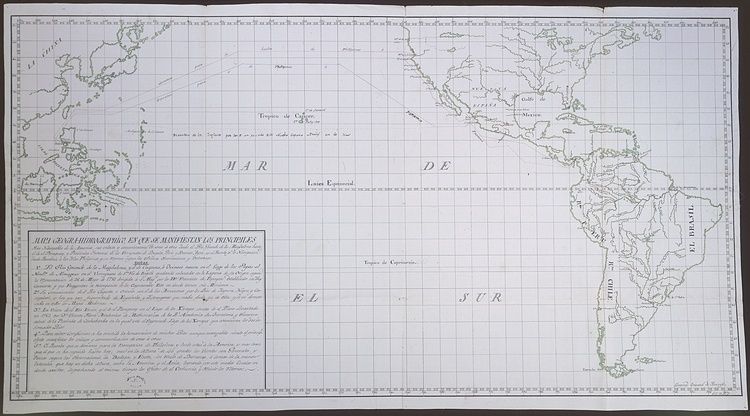
Guadelupe Pinzón is one of Mexico’s leading maritime historians. Her work expands Mexico’s territory into both the Caribbean and the Pacific, thus offering an uncommon approach to Mexican history. In this conversation Dr. Pinzón and Ernesto Bassi will speak about how thinking of Mexico’s maritime space reframes Mexican history, as well as about the opportunities and challenges of doing maritime history from Mexican shores and the prospects of a maritime history of Latin America. Monday's conversation will be in Spanish, and Pinzón will also be giving a talk in English on Tuesday, March 4 titled "From the Atlantic to the Pacific: Interoceanic Connections through Tehuantepec and Nicaragua in the Late 18th Century."
Guadalupe Pinzón Ríos is a Doctor in History from the Faculty of Philosophy and Letters of the UNAM, where she is currently a researcher and professor at the Institute for Historical Research. Pinzón Ríos is also a member of the National System of Researchers and an advisor of the graduate program in history. She has been studying maritime port activities throughout the Pacific, especially in New Spain, and has published Acciones y reacciones en los puertos del Mar del Sur. Desarrollo portuario del Pacífico novohispano a partir de sus políticas defensivas (1713-1789) and Hombres de mar en las costas novohispanas. Trabajos, trabajadores y vida portuaria en el departamento marítimo de San Blas (siglo XVIII). She also has various published works, articles, and book chapters.
Co-sponsored by Romance Studies, Science & Technology Studies, and Society for the Humanities.
Additional Information
Program
Einaudi Center for International Studies
Latin American and Caribbean Studies
Nuclear Colonialism and Its Discontents

February 6, 2025
12:00 pm
Nuclear weapons and associated technologies have been primarily developed by and for Global North nations, often using the labor and natural resources of indigenous populations around the world, and often doing violence to those populations and their environments. As a result, many scholars analyze the development of nuclear technologies–including uranium mining, the processing and production of fissile materials, nuclear weapons testing, and use–as a form of colonialism. But as a state-centric framework, colonialism does not always capture practices that transcend national boundaries; radioactivity does not respect borders. This panel will elucidate the uses and limitations of the colonial framework for understanding the social and political implications of nuclear technologies. The panel will discuss how nuclear technologies have been developed in ways that are both locally specific and globally-interconnected, and the implications of this history for social and environmental justice.
Virtual panel discussion with-
Vincent Intondi, PACS Domestic Affiliate Scholar
Myrriah Gomez, Associate Professor at University of New Mexico
Mary Mitchell, Assistant Professor at New Jersey Institute of Technology and Rutgers Newark
Magdalena Stawkowski, Assistant Professor at University of South Carolina
Hirokazu Miyazaki, Former Director of the Einaudi Center, Professor at Northwestern University
Register here.
Host
Reppy Institute for Peace and Conflict Studies
Additional Information
Program
Einaudi Center for International Studies
Reppy Institute for Peace and Conflict Studies
Institute for African Development
Institute for European Studies
East Asia Program
Latin American and Caribbean Studies
Information Session: Einaudi Center Undergraduate Opportunities

March 11, 2025
5:00 pm
Uris Hall, G08
Join us to learn about opportunities for undergraduate students with the Einaudi Center for International Studies! This session will discuss how to successfully apply for programs like Global Internships and Laidlaw Scholars, and how to discover or strengthen global interests, including academic minors, weekly seminars, and language study.
Can't attend? Email programs@einaudi.cornell.edu for more information.
Additional Information
Program
Einaudi Center for International Studies
Reppy Institute for Peace and Conflict Studies
East Asia Program
Southeast Asia Program
Latin American and Caribbean Studies
Institute for European Studies
South Asia Program
Migrations Program