
Latin American and Caribbean Studies
Conference: Research Frontiers in Democratic Threats and Resilience

March 23, 2024
9:00 am
Africana Studies and Research Center
This conference brings together scholars undertaking new research on questions of democratic resistance and sources of resilience in response to global evidence of democratic backsliding.
We will work together to analyze domestic and international factors, including institutions, civil society, political parties, voters, media, and foreign policy. In an era marked by threats to democracy from within nominally democratic institutions, by elected officials, and with varying degrees of support from the voting public, we seek to understand the interactive nature of democratic threats and resistance strategies.
As democracy can be conceived of as a continued contestation over rights, responsibilities, and rules, we aim to use this critical historical moment of contestation to expand our comparative conceptions of democratic practice, strategies of endurance and deepening or weakening of democratic regimes, and the social, economic, technological, and institutional factors that contribute to varied outcomes worldwide.
Hosted by the Mario Einaudi Center for International Studies, the conference is part of Einaudi's work on democratic threats and resilience.
Register to attend the conference
***
March 22 Panels
Panel 1: Concepts and Measurement: Democracy 2.0
This panel will push beyond the measurement debates to address conceptual and ontological questions about how to measure democracy, and definitional questions at the heart of democracy’s weaknesses and promise in contemporary practice. Does the practice of a minimal definition of democracy contribute to public disenchantment, and is such practice durable?
Panel 2: Resilience Factors, Resistance Strategies, and Opposition Tactics
This panel will examine the social and economic bases of democratic resiliency, as well as various strategies, actors, and institutions that can fortify and even enhance democratic practice.
Panel 3: Stabilizing Forces? Historical Patterns and Contemporary Challenges
This panel will dissect the factors that have historically stabilized advanced industrial democracies—including party systems, modes of political representation, and patterns of capitalist development-- and their potential applicability to contemporary patterns of democratic backsliding and resistance.
March 23 Panel
Panel 4: International Actors and Regional Organizations
This panel will explore the ways in which authoritarian or democratic leaders and regimes exert influence on the regime types of other countries and the influence of regional organizations on participating countries’ regime trajectories.
Additional Information
Program
Einaudi Center for International Studies
Reppy Institute for Peace and Conflict Studies
East Asia Program
Southeast Asia Program
Latin American and Caribbean Studies
Institute for African Development
Institute for European Studies
South Asia Program
Bukele, the Iron Fist Leader Without Rival in El Salvador’s Elections
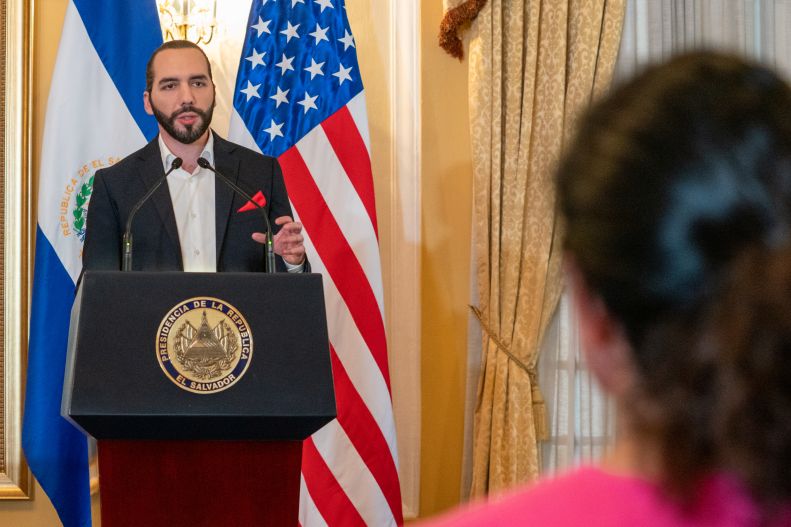
Gustavo Flores-Macías, LACS
Gustavo Flores-Macías, a professor specialized in governments and public policies at Cornell University in the United States, believes that the elections in El Salvador will serve as a referendum on Bukele’s measures.
Additional Information
Faculty Info Session: Global Grand Challenge Call for Proposals

February 12, 2024
12:00 pm
Learn about Cornell's new Global Grand Challenge: The Future and how you can propose a research or curricular project.
Global Cornell is opening what will be The Future’s only call for proposals. Interdisciplinary teams of faculty and researchers from all Cornell colleges, schools, and departments are encouraged to identify a research issue of global importance and plan a path to a successful alternative future.
Teams may apply for research project support up to $150,000 per year for two years. Stand-alone curricular projects are eligible for up to $20,000 per year for two years.
Deadline for letters of intent to apply (1 page): February 26, 2024Deadline for full proposals (5–7 pages): May 6, 2024Register here to join the virtual info session. The session will include an opportunity to ask questions and network with others interested in finding collaborators.
The information session slides and Q&A will be posted online after the event.
Additional Information
Program
Reppy Institute for Peace and Conflict Studies
East Asia Program
Southeast Asia Program
Latin American and Caribbean Studies
Institute for African Development
Institute for European Studies
South Asia Program
Einaudi Center for International Studies
Religions on the Move series: "Diasporic Devotions"
March 21, 2024
5:00 pm
A. D. White House, Guerlac Room
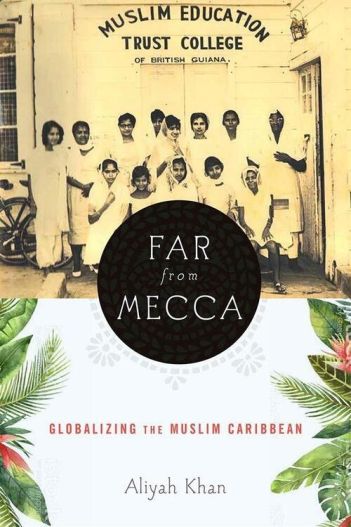
Associate Professor Aliyah Khan from the University of Michigan will give a talk titled "Diasporic Devotions: The Indo-Caribbean Islamic Qasida and Gendered Performance" on Thursday, March 21.
The Indo-Caribbean Islamic qasida is a diasporic devotional song that propagates Indian subcontinental Islamic ritual practices and preserves the use of Urdu in the post-indentureship Caribbean through performances of religious authenticity. But it is simultaneously creolized in transliteration and translation, in part through Muslim women’s participation in public worship. This talk explores the gendered and racialized performances, songbook and vinyl record dissemination, and transliterated creolization of Urdu qasida poetic, devotional praise songs brought to Trinidad and Guyana by Indian Muslim indentured laborers in the nineteenth and early twentieth centuries.
In this lecture, Khan focuses on the evolution of women’s public devotional and competitive performances of qasidas in the Indo-Caribbean Muslim context of sectarian Sunni and Ahmadi differences, local engagement with global revivalist principles of bid’a (innovation), and the controversial emergence of women’s performance categories in new qasida competitions supported by nation-states and commercial interests. Indo-Caribbean women’s qasida performances, Khan argues, lie at the intersection of Indo-Caribbean postcolonial political identity—which is historically and continually defined by Indian women’s culturally “proper” dress, sexuality, and public behavior in visible opposition to Afro-Caribbean women—and worldwide Muslim debates and tensions over global and local iterations of Islam.
Dr. Aliyah Khan is an associate professor in the University of Michigan (U-M) Department of Afroamerican and African Studies and the Department of English Language and Literature. She is also the Director of the U-M Global Islamic Studies Center (GISC). Dr. Khan specializes in postcolonial Caribbean literature and the contemporary literature of the Muslim and Islamic worlds, with a particular focus on the intersections of race, gender, and Islam in the hemispheric Americas, including in immigrant communities in North America. She has also presented and taught widely in the field of Muslim representation in comics and graphic novel. She is on the editorial board of Bloombsbury Critical Guides in Comics Studies.
Far from Mecca: Globalizing the Muslim Caribbean (Rutgers University Press and University of the West Indies Press 2020), Dr. Khan’s first book, is the first academic monograph on the literature, history, and music of Caribbean Islam, focusing on Guyana, Trinidad, and Jamaica, and on enslaved Muslim West Africans, indentured Indian colonial sugar plantation laborers, and their Muslim Caribbean descendants. Far from Mecca garnered honorable mention in the 2020-2021 Modern Language Association Prize for a first book. Dr. Khan is currently conducting research for a literary and musical book project on Caribbean hurricanes and climate change, including religious responses, reparations debates, and other community-oriented environmental mitigation strategies.
This lecture is part of the 'Religions on the Move' lecture series sponsored by the Religious Studies Program which is supported by a grant from Cornell University’s Migrations Global Grand Challenge and the Mellon Foundation’s Just Futures Initiative. Additional support from the Latin American and Caribbean Studies Program, Society for the Humanities, Comparative Muslim Societies Program, and South Asia Program.
Additional Information
Program
Einaudi Center for International Studies
Latin American and Caribbean Studies
South Asia Program
FLIP Teacher Orientation

February 5, 2024
3:00 pm
Uris Hall, G02
The Einaudi Center’s Foreign Language Introduction Program (FLIP) is heading into local communities to teach children about world cultures and languages. FLIP aims to connect our diverse Cornell community to K-12 students at local schools, libraries and community centers in Upstate New York. Cornell volunteer teachers will have the opportunity to share short introductory lessons on the foreign languages and cultures they are passionate about. Volunteer teachers should have at least an intermediate knowledge of their chosen language.
Register to attend either the Feb. 1 orientation in person or the Feb. 5 orientation over Zoom.
Additional Information
Program
Einaudi Center for International Studies
East Asia Program
Southeast Asia Program
Latin American and Caribbean Studies
Institute for African Development
Institute for European Studies
South Asia Program
Information Session: Global Internships in Africa

January 30, 2024
4:45 pm
Uris Hall, G08
The Institute for African Development (IAD) offers 6-8 week summer internships that let you undertake challenging practical fieldwork in Ghana, Zambia, or Liberia. If you're a sophomore or junior, join this info session to find out how you can apply. Applications for Global Internships are due February 1.
Register for the information session.
***
The Mario Einaudi Center for International Studies hosts info sessions for graduate and for undergraduate students. To learn more about funding opportunities, international travel, research, and internships, view the full calendar for spring semester sessions.
Additional Information
Program
Einaudi Center for International Studies
Reppy Institute for Peace and Conflict Studies
East Asia Program
Southeast Asia Program
Latin American and Caribbean Studies
Institute for African Development
Institute for European Studies
South Asia Program
Information Session: Latin American and Caribbean Studies Graduate Summer Research Funding
February 21, 2024
4:45 pm
The LACS Graduate Student Summer Research Grants provide funding for in-country research costs for graduate pre-dissertation work in Latin America or the Caribbean. (The grant does not cover international airfare; students should also apply for an Einaudi Center Travel Grant for airfare.) LACS will offer up to three research grants to qualified graduate students who need to conduct field research over the summer of 2024. The grant may cover up to $1,500.
Register for the information session. Can’t attend? Contact lacs@cornell.edu.
***
The Mario Einaudi Center for International Studies hosts info sessions for graduate and for undergraduate students. To learn more about funding opportunities, international travel, research, and internships, view the full calendar for spring semester sessions.
Additional Information
Program
Einaudi Center for International Studies
Reppy Institute for Peace and Conflict Studies
Latin American and Caribbean Studies
Information Session: Fulbright U.S. Student Program for Undergraduates
March 13, 2024
4:45 pm
The Fulbright U.S. Student Program supports U.S. citizens to study, conduct research in any field, or teach English in more than 150 countries. Students who wish to begin the program immediately after graduation are encouraged to start the process in their junior year. Recent graduates are welcome to apply through Cornell.
The Fulbright program at Cornell is administered by the Mario Einaudi Center for International studies. Applicants are supported through all stages of the application and are encouraged to start early by contacting fulbright@einaudi.cornell.edu.
Register for the information session. Can’t attend? Contact fulbright@einaudi.cornell.edu.
***
The Mario Einaudi Center for International Studies hosts info sessions for graduate and for undergraduate students. To learn more about funding opportunities, international travel, research, and internships, view the full calendar for spring semester sessions.
Additional Information
Program
Einaudi Center for International Studies
Reppy Institute for Peace and Conflict Studies
East Asia Program
Southeast Asia Program
Latin American and Caribbean Studies
Institute for African Development
Institute for European Studies
South Asia Program
Information Session: Fulbright U.S. Student Program for Undergraduates

February 12, 2024
4:45 pm
The Fulbright U.S. Student Program supports U.S. citizens to study, conduct research in any field, or teach English in more than 150 countries. Students who wish to begin the program immediately after graduation are encouraged to start the process in their junior year. Recent graduates are welcome to apply through Cornell.
The Fulbright program at Cornell is administered by the Mario Einaudi Center for International studies. Applicants are supported through all stages of the application and are encouraged to start early by contacting fulbright@einaudi.cornell.edu.
Register for the information session. Can’t attend? Contact fulbright@einaudi.cornell.edu.
***
The Mario Einaudi Center for International Studies hosts info sessions for graduate and for undergraduate students. To learn more about funding opportunities, international travel, research, and internships, view the full calendar for spring semester sessions.
Additional Information
Program
Einaudi Center for International Studies
Reppy Institute for Peace and Conflict Studies
East Asia Program
Southeast Asia Program
Latin American and Caribbean Studies
Institute for African Development
Institute for European Studies
South Asia Program
Information Session: Fulbright Opportunities for Graduate Students

February 5, 2024
4:45 pm
The Fulbright U.S. Student Program provides full funding for graduate and professional students conducting research in any field or teaching in more than 150 countries. Open to U.S. citizens only.
The Fulbright-Hays Doctoral Dissertation Research Abroad Program supports doctoral students conducting research in modern languages or area studies for six to 12 months. Open to U.S. citizens and permanent residents of the United States. Travel to Western European countries is not eligible.
Register for the information session. Can’t attend? Contact fulbright@einaudi.cornell.edu.
***
The Mario Einaudi Center for International Studies hosts info sessions for graduate and for undergraduate students. To learn more about funding opportunities, international travel, research, and internships, view the full calendar for spring semester sessions.
Additional Information
Program
Einaudi Center for International Studies
Reppy Institute for Peace and Conflict Studies
East Asia Program
Southeast Asia Program
Latin American and Caribbean Studies
Institute for African Development
Institute for European Studies
South Asia Program