
Latin American and Caribbean Studies
Conservatives Against the Tide: The Rise of the Argentine PRO Party in Comparative Perspective
April 16, 2024
12:20 pm
Uris Hall, G08
Latin American and Caribbean Studies Program (LACS) Seminar Series.
Co-sponsored by Einaudi's Democratic Threats and Resilience Initiative
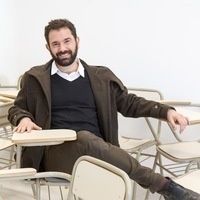
In this talk, Gabriel Vommaro will present his new Elements, "Conservatives Against the Tide. The Rise of the Argentine PRO in Comparative Perspective" (Cambridge University Press, 2023). The volume addresses the success of conservative parties in non-authoritarian contexts in contemporary Latin America. It places the core case of Argentina's Republican Proposal (PRO) party in comparative perspective with Argentina's Recrear and with Colombia's Democratic Center party and the Bolivia's Social Democratic Movement in an effort to understand their differing degrees of success in adverse circumstances. Based on long-term research using a variety of methods, this Element shows that success has been driven by three factors: programmatic innovation by personalistic leaders; organizational mobilization of both core and noncore constituencies; and elite fear of the 'Venezuela model.'
After the talk, Professors at ILR Santiago Anria and Candelaria Garay will briefly reflect on Vommaro’s book in light of the rise of an even more radical right-wing alternative in Argentina.
Gabriel Vommaro is Professor of Political Sociology at the EIDAES, Universidad de San Martín and Researcher at the Argentinian National Research Council, CONICET. He received his PhD from the Ecole des Hautes Etudes en Sciences Sociales. He has published on political activism and political parties, political clientelism and the state, and political communication. His books include Conservatives against the Tide (Cambridge University Press, 2023), Diminished Parties. Democratic Representation in Contemporary Latin America (Cambridge University Press, 2021; with JP Luna, R. Piñeiro & F. Rosenblatt); La larga marcha de Cambiemos (Siglo XXI, 2017) and Sociologie du clientélisme (La découverte, 2015; with H. Combes). His research has been published by Actes de la Recherche en Sciences Sociales, Party Politics, LAPS and JLAS.
Additional Information
Program
Einaudi Center for International Studies
Latin American and Caribbean Studies
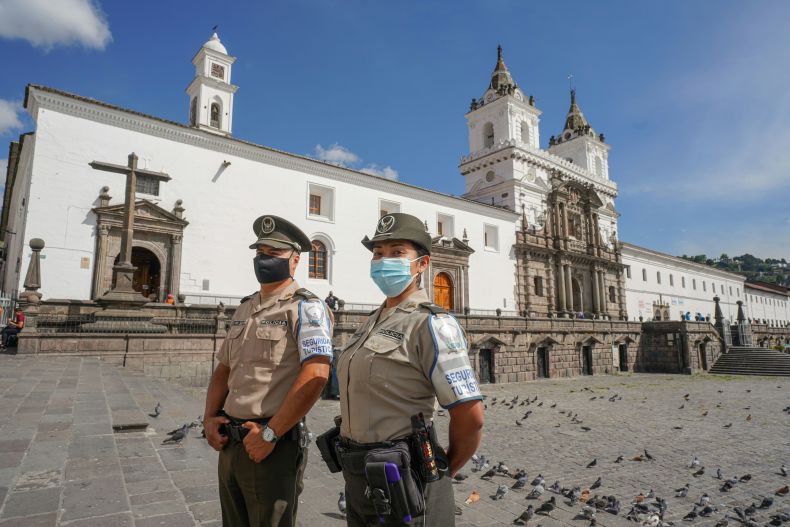
Ecuador’s Attorney General Took on Drug Gangs. Then Chaos Broke Out.
Gustavo Flores-Macías, LACS
“The Metastasis operation is like kicking the hornet’s nest,” says Gustavo Flores-Macías, professor of government.
Additional Information
Rights of Nature in Ecuador
March 26, 2024
12:20 pm
Uris Hall, G08
Latin American and Caribbean Studies Program (LACS) Seminar Series.
In 2008, Ecuador emerged at the forefront of the movement to recognize Nature as a subject of law, becoming the first, and to date the only, country to recognize and protect the rights of Nature at the Constitutional level. At the time of writing, several recent judgements of the Ecuadorian Constitutional Court, the highest body of constitutional interpretation, have significantly developed the content of the rights of Nature provisions recognized within the Constitutional text. However, these cases have not received extensive consideration by English-speaking academia. Pursuant to this, the primary purpose of this talk is to offer a critical evaluation of the main judgements that have developed the content of the rights of nature in Ecuador, focusing in particular on the judgements concerning the violation of the rights of Nature of forests, mangroves, rivers, and wild animals.
Andrés Martínez Moscoso is Associate Professor in Law, Director of the Institute of Legal Research of the College of Jurisprudence and Executive Secretary of ICON•S, International Society of Public Law. His main lines of research are Water Law; Environmental law; and Public Management. He is national and international consultant on issues related to water management and environmental law and participated to international research projects with the PNUD, Cornell University and European universities (such as the Antwerp University and the KULeuven) on topics of circular economy, waters, ecosystem of urban life and food supply chain. He is also a member of the World Commission on Environmental Law (CMDA) of the International Union for Conservation of Nature.
Co. Sponsor by by Dept. Of City & Regional Planning & Dept of Global Dev.
Additional Information
Program
Einaudi Center for International Studies
Latin American and Caribbean Studies
Democratic Decline a Global Phenomenon

"Democracy has to be continually practiced and improved,” says Einaudi director Rachel Riedl in an article recently published in the peer-reviewed journal World Politics. Read coverage of findings from our democratic threats team.
Additional Information
Who Has the Right to Free Speech? Immigration, Civil Liberty, and Freedom of Expression

March 5, 2024
3:00 pm
Biotechnology Building, G10
Free expression is a human right and cornerstone of a democratic society.
The U.S. Constitution enshrines the right to free expression, but not all those who reside within the country’s borders have equal protection. Some migrants to the U.S. are leaving situations where their rights were threatened, and they embrace the principle of free expression. Those same migrants may find their rights circumscribed when they arrive in the United States.
What can be done to counter threats to free expression for immigrants? How can we protect civil liberties and the law while also protecting human rights and building a diverse, inclusive, and safe society? When is it appropriate to deny visa applications because of a person’s political views?
Our panel of experts will explore these questions in a discussion moderated by Stephen Yale-Loehr (Cornell Law School). This event is hosted by Global Cornell and its Migrations initiative. Learn more about how Global Cornell supports global freedom of expression and Scholars Under Threat.
Panelists
Cecillia Wang, Deputy Legal Director, American Civil Liberties Union (ACLU) Austin Kocher, Research Assistant Professor, Syracuse UniversityBeth Lyon, Associate Dean for Experiential Education, Clinical Professor of Law, and Clinical Program Director, Cornell Law School Gautam Hans, Associate Clinical Professor of Law, Cornell Law School
Additional Information
Program
East Asia Program
Southeast Asia Program
Latin American and Caribbean Studies
South Asia Program
Einaudi Center for International Studies
Reppy Institute for Peace and Conflict Studies
Institute for African Development
Institute for European Studies
Fragile coalitions: Anti-populism at work in Ecuador
March 19, 2024
12:20 pm
Latin American and Caribbean Studies Program (LACS) Seminar Series.
Co-sponsored by Einaudi's Democratic Threats and Resilience Initiative
After being governed by left-wing populism for most of the 21st century, Ecuador elected right-wing Guillermo Lasso as its new president in 2021. This presentation explains the juncture that brought Lasso to power, thanks to the formation of an anti-populist coalition that agglomerated various heterogeneous sectors. It also analyzes the strengths and weaknesses of this anti-populist coalition, both in the electoral contest and in the exercise of power.
Paolo Moncagatta is Associate Professor of Political Science at Universidad San Francisco de Quito, in Quito, Ecuador, where he also serves as Dean of the School of Social Sciences and Humanities. He obtained his PhD in Political and Social Sciences from Universitat Pompeu Fabra, in Barcelona. He also collaborates as a Research Fellow at the Research and Expertise Centre for Survey Methodology (RECSM) of Universitat Pompeu Fabra. His research focuses on Latin American politics, citizen attitudes toward democracy, democratization, ideology (and ideological polarization), and electoral behavior.
Additional Information
Program
Einaudi Center for International Studies
Latin American and Caribbean Studies
From North End to Pañatown: How Free Port, Tourism, and Migration, Transformed the Island of San Andrés, Colombia

March 12, 2024
12:20 pm
Uris Hall, G08
Latin American and Caribbean Studies Program (LACS) Seminar Series.
For generations, the Afro-Caribbean islanders from the Archipelago of San Andrés and Providencia had regularly migrated to and from Central America and other islands in the Caribbean Sea. By the middle of the twentieth century, waves of migrants from mostly new locales in mainland Colombia and even as far as the Middle East transformed the tiny Colombian-administered islands' economy, society, and culture. Drawn to newfound opportunities due to the opening of the free port and promotion of tourism in San Andrés, these international and national migrants served as unintentional yet willing partners to state efforts to integrate the islands administratively, economically, and socially within Colombia. Drawing on ethnographic studies from the period, Colombian newspaper articles, and oral histories available in the collections at the Banco de la República Casa Cultura in San Andres Island, I trace how the rise of new aviation technologies and the creation of the free port facilitated an uneven integration of the island into the Colombian nation. While the free port strengthened administrative ties and contact between mainland Colombians and islanders, it failed to integrate the majority of native islanders who retained an oppositional stance against Colombian authorities and national projects. Unlike other studies on this topic, this paper gives equal attention to the experiences of migrants and native islanders.
Dr. Sharika Crawford is the inaugural Speedwell Professor of International Studies and Professor of History at the United States Naval Academy in Annapolis. Her primary research focuses on modern Latin America, specifically, Colombia and the interstitial places in the circum-Caribbean. In 2021, the Association of Caribbean Historians commended her first monograph The Last Turtlemen of the Caribbean: Waterscapes of Labor, Conservation, and Boundary Making, published by the University of North Carolina Press, an Honorable Mention from its Elsa Goveia Prize in the Caribbean History. Additionally, she has published articles and essays in the Global South, Historia Crítica, International Journal of Maritime History, Middle Atlantic Review of Latin American Studies, Latin American Research Review, and the New West Indian Guide/Nieuwe West-Indische Gids. Some of her current projects include a co-edited volume titled Understanding and Teaching Modern Latin American History, which is under contract with the Harvey Goldberg Series at the University of Wisconsin Press, and a second monograph-in-progress examining the social, political, and environmental histories of twentieth-century the Colombian islands of San Andrés and Providencia.
Additional Information
Program
Einaudi Center for International Studies
Latin American and Caribbean Studies
Most of the Land Humans Need to Thrive Is Unprotected
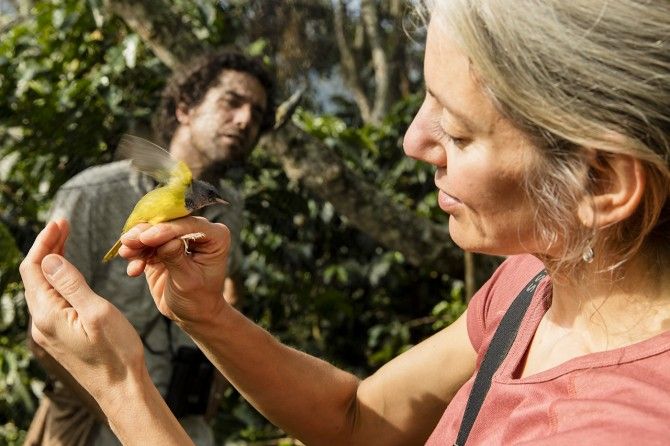
Amanda Rodewald, LACS
“We face enormous challenges,” said senior author Amanda Rodewald, the Garvin Professor and Senior Director of the Center for Avian Population Studies at the Cornell Lab. “With limited resources available to address climate change, biodiversity loss, poverty and water insecurity, we must be strategic and find ways to tackle more than one challenge at a time.”
Additional Information
Call for LACS Graduate Fellows

The Latin American and Caribbean Studies Program (LACS) is pleased to invite graduate students to apply for the LACS Graduate Fellowship.
The Graduate Fellowships are competitive and provide an opportunity for a select number of graduate students to engage with a broad, interdisciplinary community dedicated to the study of Latin America and the Caribbean.
Graduate Fellows will be expected to actively participate in the Latin American and Caribbean Studies Program’s activities. Responsibilities include attending and shaping the seminar series—with an eye toward several themes around which the series might be structured—and organizing at least one event that promotes interactions between undergraduate and graduate students. LACS funding will be available for the organization of Fellow-sponsored events. Applicants are strongly encouraged to attend events this semester organized by the current Graduate Fellows to get a sense of how the program works.
As many as six LACS Graduate Fellows will be selected for a period of one academic year (Fall 2024 and Spring 2025). Each fellow will receive a stipend of $250/semester for research-related activities to be employed at the student’s discretion (e.g., books, field research, survey research, or conference-related travel).
To Apply:
Send the following to lacs@cornell.edu by Tuesday, February 28th, 2024 by 11:59pm.
From the applicant:
1. An updated CV
2. A completed application form, which requires describing how the student envisions contributing to building a vibrant LACS community
From the applicant’s dissertation advisor:
3. A letter of recommendation
Selection Process:
A selection committee appointed by the current LACS director will review applications. Fellows will be selected based on the applicant’s academic merit and the potential for collaborative engagement. The new cohort of fellows will be announced by March 15, 2024 in order to meet and conduct planning for the 2024-2025 academic year.
Questions:
For questions please contact LACS Program Manager (lacs@cornell.edu) with the subject line, “Grad Fellow Application Question.”
Additional Information
Argentina’s Caputo Brokers Deal With the IMF He Once Battled
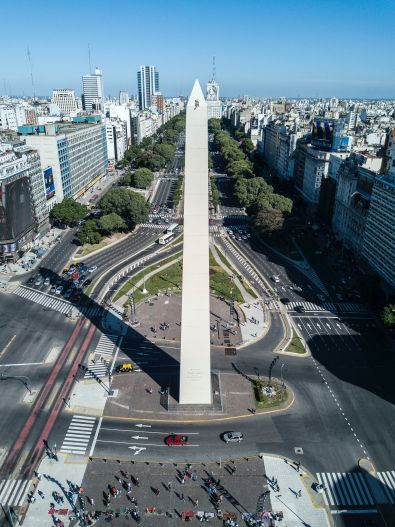
Gustavo Flores Macías, LACS
Gustavo Flores-Macías, professor of government, says the government and IMF “are more aligned now than they were in 2018, and Milei has the advantage of riding this honeymoon in international financial markets.”