
Latin American and Caribbean Studies
Global Grand Challenges Symposium: Frontiers and the Future

November 17, 2022
8:00 am
How will we meet the most pressing demands of our time?
Join us for a two-day symposium that brings together the Cornell community and international partners to discuss the most urgent challenges around the world and how we can work together to address them.
Building on the first Global Grand Challenge, Migrations, symposium participants will help identify the next university-wide research, teaching, and engagement initiative to harness Cornell's global expertise.
The symposium, hosted by Global Cornell, will focus on five interdisciplinary themes, with panelists bringing their research and perspectives to bear:
Knowledge | Water | Health | Space | International Collaboration
Register today!
If you can't attend in person, please join us virtually:
Day 1: Wednesday, Nov. 16Day 2: Thursday, Nov. 17
Wednesday, November 16
Welcome: President Martha Pollack
Panel 1: Knowledge: What Counts, for Whom, and to What Ends?
4:30–6:00 ET, Klarman Hall, Rhodes-Rawlings Auditorium
A panel of Cornell faculty and Global Hubs partners discuss innovations in higher education, social media, and legal frameworks; new forms of knowledge production and inequalities in access; and security, privacy, disinformation, and the role of knowledge in democracies.
Read about the panelists.
Remarks, Provost Michael Kotlikoff
Reception, 6:00 ET, Klarman Hall Atrium
Thursday, November 17
8:00–5:00 ET, Clark Hall, room 700 (7th floor)
Breakfast, 8:00 ET
Panel 2: Water: Worldwide Challenges and Approaches
9:00–10:30 ET
Faculty from Cornell and partner universities explore the most critical challenges related to changing global water conditions, including access to clean drinking water; water governance, norms, and customs; trade-offs between drinking water, irrigation, and hydropower; rising sea levels and water-dependent communities; and new solutions for wastewater, ocean plastics, and pollution.
Read about the panelists.
Panel 3: Health: An Integrated Global Perspective
11:00–12:30 ET
Faculty from Cornell and partner universities explore vital issues related to health, including equity, nutrition, mental health and well-being, disease, communication, new technologies, sociocultural norms, One Health, sustainable agriculture and ecosystems, elder care, and the business of medicine/health.
Read about the panelists.
Lunch, 12:30 ET
Panel 4: Space: In a Galaxy Not So Far Away
1:30–3:00 ET
Faculty from Cornell and partner universities explore urgent topics related to our global engagements with outer space, including intergovernmental collaboration and defining a new space policy; private space travel and exploration; historical lessons for colonization; new technologies, materials, and visualizations; intelligent life; resources and extraglobal markets; and access and inequalities.
Read about the panelists.
Panel 5: International Collaboration:< /b>Taking Action for Our Global Future
3:30–5:00 ET
In this final session, panelists discuss opportunities and challenges for creating truly collaborative and mutually beneficial partnerships in an unequal world. Faculty from partner universities share ideas for collaborating on the four themes introduced earlier in the symposium, and participants explore the tension between respect for local cultures and universalisms implicated in scientific inquiry.
Read about the panelists.
Register in-person or virtually for one or all sessions!
Additional Information
Program
Einaudi Center for International Studies
Reppy Institute for Peace and Conflict Studies
East Asia Program
Southeast Asia Program
Latin American and Caribbean Studies
Institute for African Development
Institute for European Studies
South Asia Program
Language Resource Center Speaker Series - Cori Crane

November 16, 2022
3:30 pm
Stimson Hall, G25
"Creating Pathways of Perspective-Shifting through Structured Critical Reflection"
Cori Crane
Associate Professor and Language Program Director of German, University of Alabama
Providing second language learners with space and guidance to critically reflect on their past and current learning experiences can set them up to better understand and evolve their own worldviews as they learn about and engage with ones different from their own (Crane & Sosulski, 2020; Cranton, 2016; Johnson, 2015). While reflection is often acknowledged as playing an important role in leading language pedagogies such as literacy-based approaches and intercultural language learning, it is rarely theorized from a pedagogical perspective, let alone integrated into formal language assessment. As reflective practice in language instruction has become more mainstream, it is important for educators to understand the diverse outcomes associated with different reflection activities and the learning conditions and instructional scaffolding needed to support students' ability to critically reflect on their learning. As Ash and Clayton (2009) note, "a critical reflection process that generates, deepens, and documents learning does not occur automatically—rather, it must be carefully and intentionally designed" (p. 28).
In this talk, I explore the role of critical reflection in language instruction with an eye toward employing reflection strategically at various points across a curricular pathway. In the first half, I address what we mean by critical reflection and what educators see as the main benefits of integrating reflection activities into their instructional practice. Here, I locate and describe common reflection practices used in language learning contexts. In the second half, I provide examples of critical reflection used in beginning, intermediate, and advanced German language instruction to illustrate how reflective practice can be staged meaningfully across a curriculum to support level-specific learning and cultivate a practice of reflection among learners and teachers.
References
Ash, S., & Clayton, (2009). Generating, deepening, and documenting learning: The power of critical reflection in applied learning. Journal of Applied Learning in Higher Education, 1, 25-48.
Crane, C., & Sosulski, M. J. (2020). Staging transformative learning across collegiate language curricula: Student perceptions of structured reflection for language learning. Foreign Language Annals, 53(1), 69-95.
Cranton, P. (2006). Understanding and promoting transformative learning. Jossey-Bass.
Johnson, S. M. (2015). Adult learning in the language classroom. Multilingual Matters.
Bio: Cori Crane (Ph.D., Georgetown) is Associate Professor and Language Program Director of German at the University of Alabama. Before joining UA, Dr. Crane taught German, applied linguistics, and world language pedagogy, as well as coordinated the lower-division undergraduate German programs at the University of Illinois, University of Texas, and Duke University. Dr. Crane’s research interests closely align to her curriculum development and teacher mentoring work, with recent projects located in the areas of language teacher education, reflective teaching and learning (i.e., exploratory practice; transformative learning), and systemic functional linguistics and literacy-based instruction.
She is co-editor (with Carl Niekerk) of Approaches to Ali and Nino: Love, Identity, and Transcultural Conflict (Camden House, 2017) and co-author (with Heidi Hamilton and Abigail Bartoshesky) of Doing Foreign Language: Bringing Concordia Language Villages to Language Classrooms (Prentice Hall, 2005). Her publications have appeared in Foreign Language Annals, L2 Journal, Die Unterrichtspraxis/Teaching German, System, ADFL Bulletin, Profession, and various AAUSC volumes. She currently serves on ACTFL's Research and Assessment Committee and on the editorial boards for Second Language Research & Practice, Die Unterrichtspraxis/Teaching German, Korean Language in America, and Foreign Languages & the Literary in the Everyday.
In her free time, Dr. Crane enjoys cooking, dancing, walking, and spending time with her husband Mike and their dog Buster.
This event will be held in person in G25 Stimson and will also be streamed live over Zoom. Join us at the LRC or on Zoom.
The event is free and open to the public. Campus visitors and members of the public must adhere to Cornell's public health requirements for events.
Additional Information
Program
Einaudi Center for International Studies
Latin American and Caribbean Studies
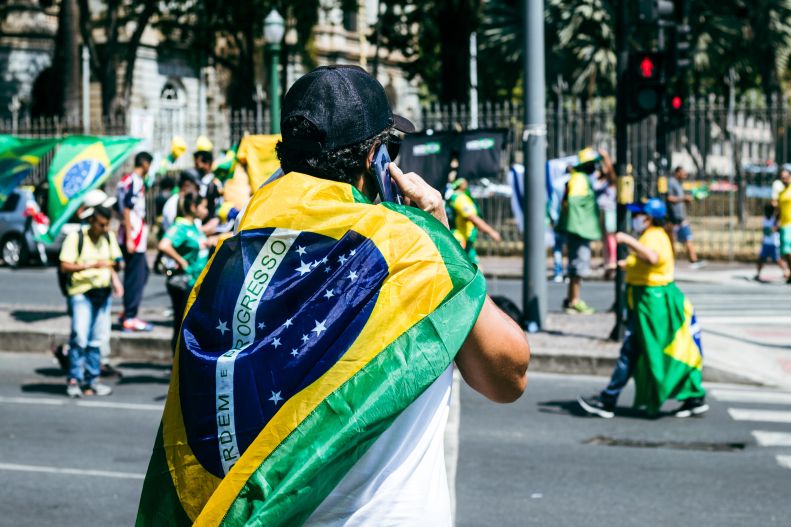
How Did Brazil’s Pollsters Underestimate Support for Bolsonaro?
Gustavo Flores-Macias, LACS
“It gives a sense the polls cannot be trusted, or the integrity of the election is in question,” says Gustavo Flores-Macias, professor of government and public policy.
Additional Information
Spanish Conversation Hour (Advanced)

November 29, 2022
3:00 pm
Stimson Hall, G25
Come to the LRC to practice your language skills and meet new people. Conversation Hours provide an opportunity to use the target language in an informal, low-pressure atmosphere. Have fun practicing a language you are learning! Gain confidence through experience! Just using your new language skills helps you learn more than you might think. Conversation Hours are are open to any learner, including the public. Campus visitors and members of the public must adhere to Cornell's public health requirements for events.
Additional Information
Program
Latin American and Caribbean Studies
International Archives Explainer

Tips for Grad Students from a Global PhD Research Scholar
Government PhD candidate Vincent Mauro shares his strategies for making the most of your time at an international collection of primary materials.
“The scope did not change much, but the methodological approach evolved. This development was ultimately fruitful for my project’s strength and depth.”
Vincent Mauro’s 2021–22 Amit Bhatia ’01 Global PhD Research Award from the Einaudi Center took him to archival collections in Brazil and Colombia to study how Latin American party systems shape social reform and economic inequality. He was new to archival research when he started his fieldwork.
Mauro’s research aligns with Einaudi’s work on Democratic Threats and Resilience. Read about his research experiences in Latin America.
On this page: Mauro shares what he learned when the pandemic forced him to shift from primarily in-person interviews to archival data.
A Conversation with Vincent Mauro
Briefly set the stage for us: What question is at the center of your dissertation?
At its core, my research seeks to understand why certain democracies are able to redistribute income and ameliorate inequality more effectively than others.
Party systems are present in virtually every democracy and are the key set of organizations that link society to formal political systems. The project draws on an eclectic array of cross-national data and two longitudinal case studies—Brazil and Colombia—to test how dynamics within party systems affect the advance of social reforms, income redistribution, and levels of inequality.
What did you find in the archives you explored?
I was able to find extremely rich collections of primary sources that provide significant access to the inner world of political parties, allowing me to trace how dynamics such as elite capture, intraparty factionalism, and party organization contributed to the advance or inhibition of redistributive social reforms.
I primarily analyzed private correspondence among political elites and party members from the major parties in Brazil and Colombia’s traditional party systems (1946–64 and 1930–2002, respectively).
What would you tell a graduate student planning a similar field experience?
I had no formal training or experience in archival methods, so I didn’t have clear expectations going into the field—and I underestimated how much time the analysis of archival materials would take. To make the most of limited time and resources, I have four major pieces of advice to share.
- Stay Nearby
It’s best to find accommodation as close to the archives as possible. Some archives are essentially first come, first served, and there may be fewer spots than people who want to use them. Staying nearby makes it easier to arrive early. More importantly, spending hours in the archives each day is incredibly draining. Adding on a commute wastes unnecessary energy.
- Get Acquainted in Advance
Try to get a strong grasp of the contents of the archives before you arrive. This is not always possible, but depending on the archive, there may be guidebooks that give you some details.
Portions of the archive may also be online. Spending a couple of weeks going through these before you arrive is extremely helpful for getting a feel for other parts of the collection. Lastly, consider contacting the head archivist or librarian to inquire about individual collections.
- Develop Filters for Speed
Archives always contain a large amount of material that is wholly irrelevant to your project. You need a set of heuristics or “filters” that help you zero in on pertinent materials. As you cull through materials, try to limit how much you allow yourself to thoroughly analyze, since this level of attention is the most time-consuming. You may need multiple rounds of applying different sets of filters to reach a manageable set of highly relevant materials to analyze closely.
For example, I found that telegrams rarely, if ever, contained enough substantive information to make it worth the time it took to read or analyze them—which meant I saved a substantial amount of time simply skipping stacks of telegrams and moving on to other documents in the box. Another filter I used was to have a set of keywords in my head—for instance, “parties,” “divisions,” and “factions”—that I would scan for when quickly going through documents.
- Balance Collection and Analysis
Understand that collecting materials is infinitely faster than analyzing them. If you spend too much—or all—of your time each day simply collecting, you will quickly overburden yourself with material that needs to be analyzed.
Make the conscious decision to split your time into separate collection and analysis blocks. There are different ways to do this—blocks of time each day, alternating weeks, or other approaches. Staying on top of analysis as you go along also helps you refine your filters for more efficiency.
Learn more about Einaudi's Latin American and Caribbean Studies Program, including graduate funding opportunities.
Additional Information
What Polls Say about Bolsonaro vs. Lula Just Ahead of Brazil’s Election
Gustavo Flores-Macias, LACS
“Polls suggest Luiz Inacio Lula da Silva enjoys a sizable advantage and might avoid a second round of voting, but President Jair Bolsonaro has discredited the electoral process and blamed the media for an uneven playing field,” says Gustavo Flores-Macias, professor of government and associate professor of public policy.
Additional Information
Book: Policymakers Are Failing ‘Climate Refugees’
María Cristina García, LACS
María Cristina García, professor of history, discusses her new book, “State of Disaster: The Failure of U.S. Migration Policy in an Age of Climate Change” in an interview with the Cornell Chronicle.
Additional Information
"The Guardian of Memory" (El Guardian de la Memoria)
October 18, 2022
4:30 pm
Cornell Cinema, Willard Straight Hall Theater
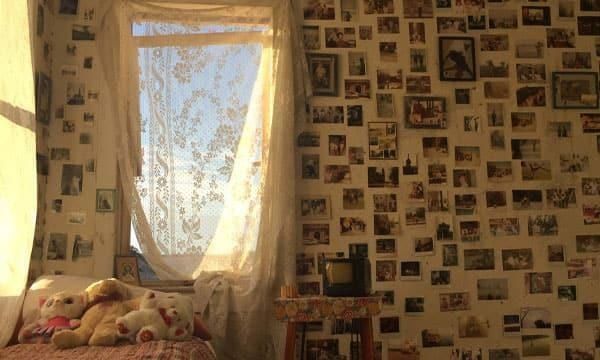
This film event is FREE and the 1hr and 33 minute film will be followed by a panel discussion that includes the Director of the film Marcela Arteaga. Pizza will be served as well.
“According to the International Institute for Strategic Studies, Mexico became one of the deadliest conflict zones in the world in 2017, second only to Syria. In 2008, the Mexican government sent the army to Chihuahua on the Mexico-Texas border to fight drug traffickers. What seemed like an attempt to control the cartels turned into state-sponsored disappearances and the murder of journalists, human rights activists and civilians. The survivors and those threatened by the conflict pushed at the unwelcoming border of the United States, hoping for asylum. With stunning visual poetry, director Marcela Arteaga weaves together a record of their memories told over the backdrop of the once-vibrant landscape of the Juarez Valley. She also highlights the extraordinary work of Carlos Spector, an immigration lawyer born in El Paso, Texas, who fights to obtain political asylum for those Mexicans fleeing violence.” (Heather Haynes, Hot Docs)
Sponsored by the Latin American Studies Program.
website: chickeneggpics.org/grantee/the-guardian-of-memory
Additional Information
Program
Einaudi Center for International Studies
Latin American and Caribbean Studies
Emilio Rojas: GO BACK TO WHERE YOU CAME FROM!
October 3, 2022
5:15 pm
Abby and Howard Milstein Auditorium
Bio:
Emilio Rojas is a multidisciplinary artist working primarily with the body in performance, using video, photography, installation, public interventions, and sculpture. He holds an M.F.A. in Performance from The School of the Art Institute of Chicago and a B.F.A. in Film from Emily Carr University in Vancouver, Canada. As a queer, Latinx immigrant with Indigenous heritage, it is essential to his practice to engage in the postcolonial ethical imperative to uncover, investigate, and make visible and audible undervalued or disparaged sites of knowledge, narratives, and individuals. He utilizes his body in a political and critical way, as an instrument to unearth removed traumas, embodied forms of decolonization, migration, and poetics of space. His research-based practice is heavily influenced by queer and feminist archives, border politics, botanical colonialism, and defaced monuments. Besides his artistic practice, he is also a translator, community activist, yoga teacher, and anti-oppression facilitator with queer, migrant, and refugee youth.
His work has been exhibited in exhibitions and festivals in the U.S., Mexico, Canada, Japan, Austria, England, Greece, France, Germany, Italy, Spain, Holland, Colombia, and Australia, as well as institutions such as The Art Institute and the Museum of Contemporary Art in Chicago, Ex-Teresa Arte Actual Museum and Museo Tamayo in Mexico City, The Vancouver Art Gallery, The Surrey Art Gallery, The DePaul Art Museum, and The Botin Foundation. From 2019-2022 Rojas was a Visiting Artist in Residency in the Theater and Performance Department at Bard College in New York. He is also currently visiting faculty in the M.F.A. programs at Parsons the New School and the low-res M.F.A. programs at PNCA in Portland, Oregon, and University of the Arts, in Philadelphia.
Abstract:
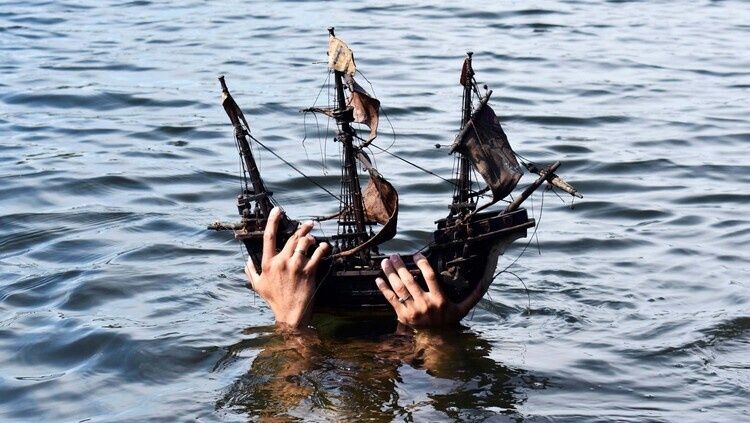
GO BACK TO WHERE YOU CAME FROM! is a lecture/performance by artist Emilio Rojas, departing from this xenophobic phrase to trace histories of colonialism, the open wounds of borders, and the emptiness of monuments. This embodied lecture considers his practice in relation to decolonization, de-linking, archives, queerness, and contaminations into public space. It is not an attempt to re-write history but rather to view it from a different orientation, in a non-linear way which opens spaces of liminality and possibility, remembrance and healing. It urges us to ask ourselves: How are we complicit with the past we inherited? How are we accomplices of the history of what we consume in the present?
Emilio Rojas is the fall 2022 Teiger Mentor in the Arts.
Additional Information
Program
Einaudi Center for International Studies
Latin American and Caribbean Studies
David Cordero-Heredia

Visiting Scholar ’22-’25
David Cordero-Heredia, J.S.D. ’18 is an Associate Professor of Law, at Universidad Católica del Ecuador currently visiting Cornell University as Visiting Fellow of the Latin American and Caribbean Studies Program. He is a Visiting Professor at the Andean University Simón Bolívar (UASB).