
Latin American and Caribbean Studies
Funding for Undergraduate Students
Latin American and Caribbean Studies is sending interns to in-person internships this summer in Ecuador. Ranging from six to eight weeks, these opportunities connect students with our global partners.What is happening in Puerto Rico?
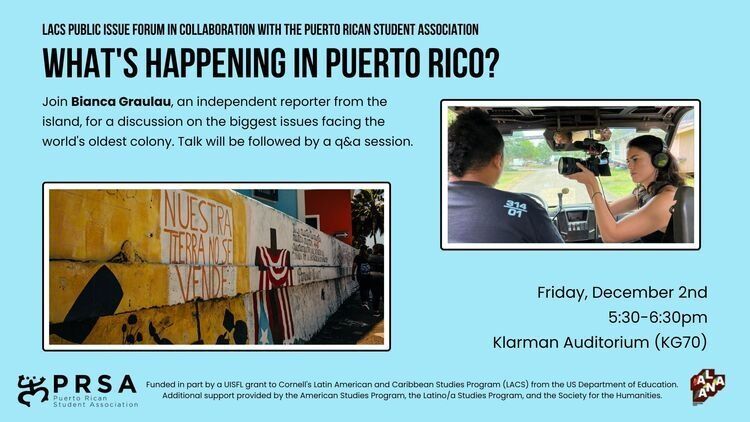
December 2, 2022
5:30 pm
Klarman Hall, KG70
Join Bianca Graulau, an independent reporter from the island, for a discussion on the biggest issues facing the world's oldest colony. The talk will be followed by a Q&A session.
LACS Public Issue Forum in collaboration with the Puerto Rican Student Association
Funded in part by a UISFL grant to Cornell's Latin American and Caribbean Student Program (LACS) from the U.S. Department of Education. Additional support provided by the American Studies Program, the Latina/o Studies Program, and the Society for the Humanities.
Additional Information
Program
Einaudi Center for International Studies
Latin American and Caribbean Studies
Violence against Women in Multi-Violence Contexts: Militarization and Organized Criminal Groups’ Territorial Control
February 2, 2023
11:25 am
With a focus on gang violence in El Salvador, Dr. Córdova’s book examines how organized criminal groups’ operations in the territories they control, and the incursion of the police and military, threaten women’s safety. The main argument establishes that gangs’ territorial control increases women’s daily risk of gender-based violence in the streets of neighborhoods and in the privacy of homes, and that this risk is perpetuated by diminished reporting rates due to widespread distrust in the police, largely resulting from increased police abuse associated with the militarization of public security. The consequences of these dynamics for women’s resistance, particularly implications for international migration, are also explored.
Dr. Córdova’s book project, supported by a 2022 Harry Frank Guggenheim Foundation Distinguished Scholar Award and a grant from the Kellogg Institute at the University of Notre Dame, contributes to the growing literature in political science on criminal violence and militarization by identifying some of the mechanisms that explain women’s increased risk of gender-based violence in territories controlled by organized criminal groups in the midst of state repression.
Dr. Abby Córdova's project builds on and contributes to this research by examining the evidence on the effects of women’s police stations on citizens’ attitudes toward the police and gender-based violence as well as impacts on the incidence of violence against women and reporting rates in the context of Brazil.
Please join us for this virtual conversation. Register here.
About the Speaker
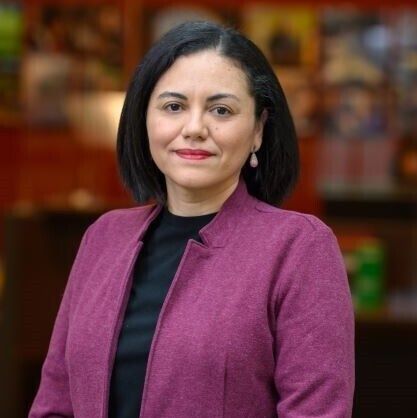
Dr. Abby Córdova is an associate professor of global affairs in the Keough School of Global Affairs at the University of Notre Dame. Córdova’s research examines the consequences of inequality and marginalization for democracy, integrating topics related to violence against women, organized crime, militarization, and international migration in the context of Central America, Mexico, and Brazil. She was awarded the Harry Frank Guggenheim Distinguished Scholar Award in 2022.
Presented by the Reppy Institute for Peace and Conflict Studies. Co-sponsored by the Feminist, Gender & Sexuality Studies Program, and the Gender and Security Sector Lab.
Additional Information
Program
Einaudi Center for International Studies
Reppy Institute for Peace and Conflict Studies
Latin American and Caribbean Studies
Cornell students to work at UN’s COP27 conference in Egypt
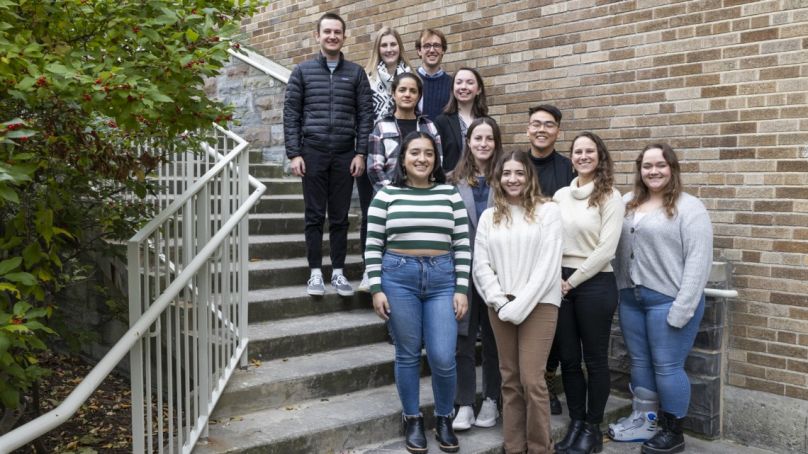
Charlie Tebbutt, LACS Graduate Fellow
At the upcoming Conference of the Parties – best known as COP27 – 11 Cornell students will help delegations from small countries gain a stronger environmental voice.
Additional Information
Election Alert
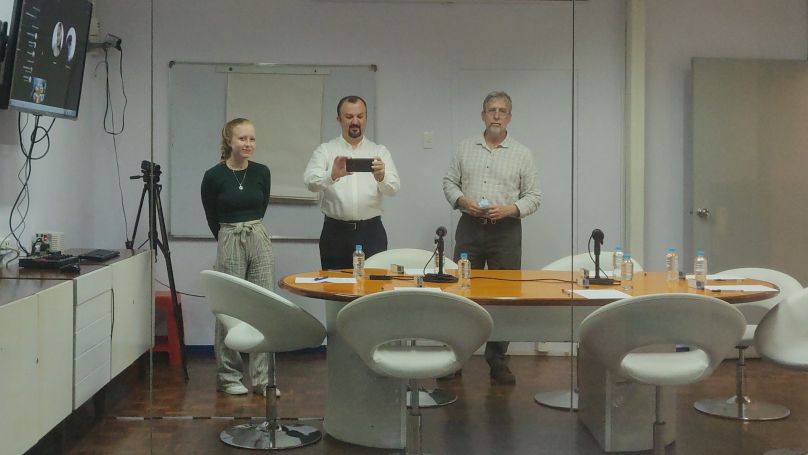
Polarization in Ecuador Highlights Risks for U.S. Democracy
"The basic rules of the electoral process are no longer mutually recognized,” says Kenneth Roberts, based on research at the Ecuador Global Hub.
Additional Information
“Un-Charting Territories” Call for Submissions by December 10th

A LACS 60th Anniversary (1961-2021) Event
“Un-Charting Territories” LACS February 2023 Symposium Call for Submissions -- A territory, understood as a site to be defended, is anchored by parameters of exclusivity and control. Territory is often associated with physical land mass, attributing sovereignty to nations. It can describe sites of knowledge. We can also speak of disciplinary and discursive territories governed by methodologies and subjects of study. Yet, even as colonial powers attempted to delineate Latin America and the Caribbean territories, these sites continue to resist. The Andes and the Amazon, for example, defy human efforts to draw straight lines through natural environments. Indigenous communities that do not recognize colonial separation of their ancestral lands, migrate transnationally, challenging national imaginaries. In celebration of the 60th anniversary of the Latin American and Caribbean Studies (LACS) program, we invite the Cornell community to rethink the disciplinary, environmental, political, and discursive boundaries of Latin America and the Caribbean in our 2023 Research Symposium “Un-Charting Territories.” We invite the Cornell community to submit proposals that explore dismantling territories.
Additional Information
Elizabeth L. Fox

Assistant Professor of Practice
Elizabeth L. Fox is a nutritionist and a social scientist whose work focuses on the intersection of nutrition, food systems, and ethics. Her research and teaching interests revolve around better understanding how food systems interact with individual stakeholders’ lived experiences, emphasizing the complexity of nutrition decisions, including the tradeoffs, value judgments, and risks involved in those decisions.
Additional Information
Expedition Tribuga (Expedición Tribugá) film screening and discussion with filmmaker Felipe Mesa
November 8, 2022
6:30 pm
Uris Hall, G08
Co-sponsored by: Landscape Architecture, Department of Natural Resources
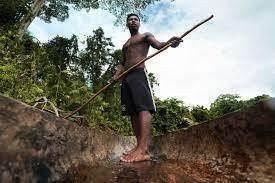
The balance that the Gulf of Tribugá is due to the cosmovision of the peoples that inhabit it, as well as the struggle that the same inhabitants undertake in defense of their territory. The documentary Tribugá Expedition leaves a clear message: if the place is intervened with megaprojects, not only would the ecosystem be put at risk, which is currently one of the few in the world that is preserved in good condition, but it would also attack the beliefs and ways of life of the Afro and Embera peoples.
El equilibrio que tiene el Golfo de Tribugá se debe a la cosmovisión de los pueblos que lo habitan, así como a la lucha que los mismos habitantes emprenden en defensa de su territorio. El documental Expedición Tribugá deja un mensaje claro: si se interviene el lugar con megaproyectos, no solo se pondría en riesgo el ecosistema, que actualmente es de los pocos en el mundo que se conserva en buen estado, sino que también se atentaría contra las creencias y formas de vida de los pueblos afro y Embera.
Additional Information
Program
Einaudi Center for International Studies
Latin American and Caribbean Studies
“De Lo Mio,” film screening with Dominican director Diana Peralta for Q&A

October 20, 2022
7:00 pm
Schwartz Performing Arts Center, Film Forum
“De Lo Mio" --Two “ride or die” sisters raised in NYC reunite with their estranged brother in Dominican Republic to clean out their late father’s childhood home. The siblings laugh, brawl, and face their demons as they come to terms with letting go of their last connection to their motherland.
Schwartz Performing Arts Center, Film Forum
Additional Information
Program
Einaudi Center for International Studies
Latin American and Caribbean Studies
Thinking Historically & Teaching Globally
November 8, 2022
2:00 pm
Historical thinking is one of the most critical skills a college student can acquire. Teaching globally is a vital approach to understanding our contemporary world.
How do we combine the resources available to us from archives, libraries, and online collections to inform our understanding of the past and the present? In this workshop we collaborate across the expertise of librarians and historians to further conversations about teaching, history, and library materials.
Are you a post-secondary educator seeking to build connections across the State of New York? Are you faculty looking for more primary source materials? Are you interested in learning more about how to access materials from libraries at a distance? Are you a graduate student in need of resources and source materials as you construct current and future syllabi? If you have answered "yes" to any of these questions, then please do join us!
This online workshop is sponsored by the Mario Einaudi Center for International Studies, with funding support from the U.S. Department of Education Title VI NRC Program.
Speakers:
Emily Zinger, Southeast Asia Digital Librarian, Cornell University
Dr. Joshua Kueh, Reference Librarian, Asian Division, Library of Congress
Dr. Michitake Aso, Associate Professor, Department of History, SUNY-Albany
Moderator: Dr. William Noseworthy
Additional Information
Program
Einaudi Center for International Studies
Southeast Asia Program
Latin American and Caribbean Studies
Institute for African Development
South Asia Program