
Latin American and Caribbean Studies
“The Family cartographer: Memoir, Remembrance and Identity,” by Marjorie Agosin, LACS Seminar Series
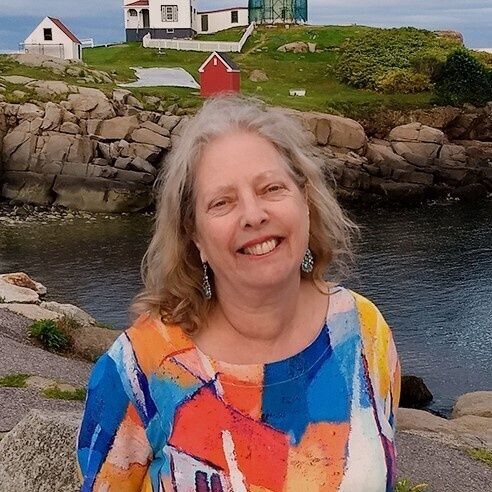
October 17, 2022
1:00 pm
Uris Hall, 153
This event is co-sponsored with LACS by the Cornell University and Ithaca College Jewish Studies.
Marjorie Agosin will speak about the complexities of writing about her own family. Mirroring the history of displacement of Jews across the world and especially in Latin America, she will highlight coexistence with SS who found refuge in Jews south of Chile, a small and vulnerable Jewish community in the region. Marjorie will also discuss some writers in LA that have engaged in memoir writing.
Marjorie Agosin is the Andrew Mellon Professor in the Humanities. She is an award-winning poet, memoirist, and Human Rights activist. Her creative work is inspired by the theme of social justice as well as the pursuit of remembrance and the memorialization of traumatic historical events both in the Americas and in Europe. She has written about the Holocaust through the portrayal of Anne Frank as well as the history of Bosnian women during the siege of Sarajevo. Marjorie is also a literary scholar whose work has focused on major writers such as Pablo Neruda, Maria Luisa Bombal, and Gabriela Mistral. She has done extensive research and written about the role of women in Latin America during authoritarian regimes in the seventies and eighties. One of her works, the Arpilleras of Chile, has been a pioneer work on this subject. In her career, Marjorie has written essays, autobiographical memoirs, and a young adult novel with a unified theme of the pursuit of social justice and human rights.
Marjorie is a recipient of the Pura Belpre award, the Gabriela Mistral award for life achievement issued by the Chilean government, and the United Nations Leadership award.
Zoom link: https://cornell.zoom.us/webinar/register/WN_DygtSQ8YSNKfE1Hwa_FvDQ
Additional Information
Program
Latin American and Caribbean Studies
"Protecting the Andes and Amazon: Rights of Rivers and Forests in Ecuador," by David Cordero, Esq., LACS Seminar Series

September 26, 2022
1:00 pm
Uris Hall, 153
In 2008, the people of Ecuador approved a new constitution that establishes that nature has rights. The rights of nature (RoN) are the product of a biocentric conception defending nature's intrinsic value. The RoN differs from the environmental law because it uses a different approach to the tolerable limits of the impact of human activity. While environmental law is the compromise between business and conservation, RoN creates scientific redlines based on the capability of the ecosystems to self-regenerate. If there is a species extinction risk or permanent damage to the ecosystem cycle, the risky activity should be forbidden.
How are RoN working after ten years? Do legal institutions play the expected role in protecting nature? Does an individual member of a species have rights? Or is the whole specie the right holder? Is it the entire ecosystem? Or is the earth entitled to the rights? The Constitutional Court of Ecuador has been discussing these questions in its jurisprudence for the last three years. We will analyze those decisions that recognize the personhood of rivers and forests and their implications on the broader discussion about sustainability, climate change, and development. Finally, we will discuss the enforceability and impact of the aforementioned jurisprudence in Ecuador.
David Cordero-Heredia is an Associate Professor of Law at the Pontificia Universidad Católica del Ecuador (PUCE). He has been visiting professor at Universidad Andina Simón Bolívar (UASB), Universidad de las Americas (UDLA) and Universidad del Azuay (UDA).
David has represented indigenous peoples and individuals against Mexico, Guatemala, Colombia, Peru, and Ecuador in the Inter-American Commission on Human Rights and the Inter-American Court of Human Rights (I/A Court HR). The cases include a vast number of topics, including forced disappearances, torture, illegal detentions, massacres, migrants' rights, indigenous peoples' rights, access to free health services, force eviction, mass incarceration, oil & mining industries, fair trial, police brutality, and rights of nature.
Professor Cordero has an LL.B. from PUCE, master's degrees from UASB and Universidad de Alcala, and an LL.M. and a JSD from Cornell University. He is a visiting scholar in Cornell's Latin American and Caribbean Studies program (LACS).
Additional Information
Program
Einaudi Center for International Studies
Latin American and Caribbean Studies
"Greening Mexican Cinema" by Carolyn Fornoff, Romance Studies, LACS Seminar Series
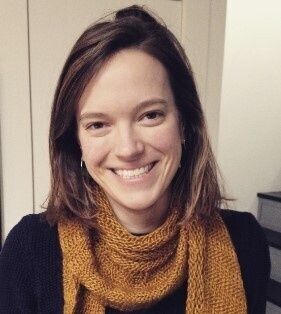
September 19, 2022
1:00 pm
Uris Hall, 153
How can we think about the relationship between cinema and the environment beyond the realm of representation? Building off the "material turn" in media studies, which attends to the substances that compose media, in this talk I explore Mexican cinema through a material lens. As an industry that has long been funded by state oil revenue, what would it mean to decarbonize Mexican cinema? To get at this question, I spotlight recent efforts to disentangle cinema and oil by filmmakers and film distributors.
Carolyn Fornoff is an Assistant Professor of Latin American Studies in the Romance Studies department. She has coedited two books in the environmental humanities: Timescales: Thinking Across Ecological Temporalities (University of Minnesota Press, 2020) and Pushing Past the Human in Latin American Cinema (SUNY Press, 2021).
Cosponsor: Romance Studies Department
Zoom Link Registration:
https://cornell.zoom.us/webinar/register/WN_ydjJblhpSm6vEy09qxoN4A
Additional Information
Program
Einaudi Center for International Studies
Latin American and Caribbean Studies
Language Resource Center Speaker Series - Claudia Holguín Mendoza
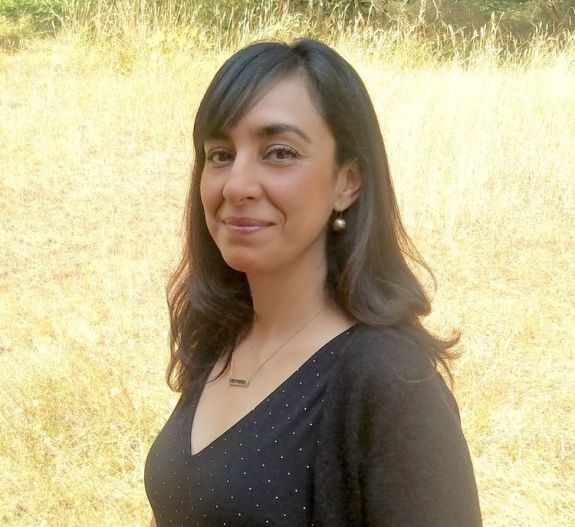
October 28, 2022
4:30 pm
"Antiracist Critical Literacy: Methodologies of the Oppressed for Language Education"
Claudia Holguín Mendoza
Associate Professor of Spanish Linguistics, University of California, Riverside
In this presentation, Dr. Holguín Mendoza describes the design and implementation of a comprehensive critical literacy and Critical Language Awareness (CLA)-oriented Spanish Heritage Language (SHL) program that deconstructs and questions sociopolitical hierarchies, challenges the subordination of SHL students' linguistic practices, and elevates students' voices and agency. She underscores the importance of building critical SHL programs on three interrelated foundations: stakeholder engagement, curriculum, and assessment. A truly comprehensive critical literacy and CLA-oriented program must integrate critical teacher training with a wide stakeholder engagement that serves to build on strengths from across the institution and to position the SHL program as a promoter of Latinx student success. Sociolinguistic justice and antiracist transformation through literacy occur when we critically understand how language and sociocultural access and expertise are socially constructed. Finally, Dr. Holguín Mendoza describes assessment tools that have demonstrated how comprehensive critical literacy programs have proven to be a valuable model for language education and student empowerment.
Bio: Dr. Claudia Holguín Mendoza is an Associate Professor of Spanish linguistics at the University of California, Riverside. She specializes in the sociolinguistics of race in the Mexican borderlands and Greater Mexico as well as critical pedagogies for the teaching of Spanish as a heritage language. She publishes in both English and Spanish and her work has appeared in journals such as International Multilingual Research Journal, Hispania, Studies in Hispanic & Lusophone Linguistics, Identities, and Frontera Norte.
This event will be held in person on campus (Goldwin Smith Hall G76) and will also be streamed live over Zoom (see link for registration details).
The talk is part of the 2022 Consortium for Language Teaching and Learning Fall Workshop titled Connecting Language Teaching and Social Justice: A Call for Diversity, Equity, and Inclusion. The event is free and open to the public. Registration is required. Campus visitors and members of the public must adhere to Cornell's public health requirements for events.
Additional Information
Program
Einaudi Center for International Studies
Latin American and Caribbean Studies
Language Resource Center Speaker Series - Stacey Margarita Johnson
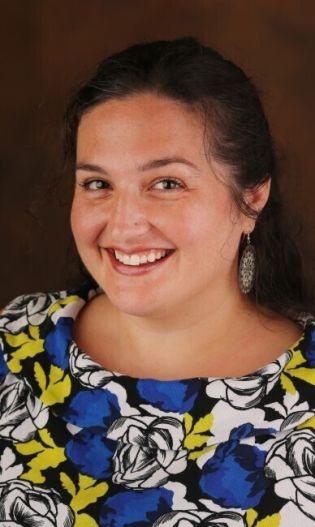
September 20, 2022
4:30 pm
Stimson Hall, G25
"Problem-Based Models for Language and Culture Instruction"
Stacey Margarita Johnson
Assistant Director at the Center for Teaching and Senior Lecturer of Spanish, Vanderbilt University
A problem-based approach to language instruction infuses the communicative classroom with current events, critical thinking, and interdisciplinary connections. Through a process of identifying a problem, gathering resources to understand the problem, and then working with a group to process and report on what they have learned, students acquire language as they learn about the world around them and engage deeply with others' perspectives. Although problem-based language learning can be used as the foundation of an entire course or program of study, this talk will emphasize how and why instructors can implement problem-based language learning right away through intentional, research-informed modifications to their existing plans.
Bio: Dr. Stacey M Johnson is a teacher of Spanish as well as language teaching methods and second language acquisition. Stacey is also a researcher, technology administrator, editor of the journal Spanish and Portuguese Review, and producer of the podcast We Teach Languages. Her academic interests include postsecondary language classroom practices, hybrid/blended instruction, professional development, and adult learning including transformative learning and critical pedagogy. Her first book, Hybrid Language Teaching in Practice: Perceptions, Reactions, and Results, co-authored with Berta Carrasco, was published in March 2015, and her second book, Adult Learning in the Language Classroom, came out later that same year. Stacey’s recent publications include a book chapter and a magazine article about collecting authentic resources and an article about social justice in the language classroom. Currently she is working on projects including: 1) her third book, co-authored with Claire Knowles with expected publication in 2022, about the potential of a problem-based model for language and culture instruction, and 2) an edited collection co-edited with Kelly Davidson and LJ Randolph titled How We Take Action: Social Justice in K-16 Language Classrooms. At Vanderbilt University, in addition to her role as the Assistant Director for Educational Technology in the Center for Teaching, Stacey also holds appointments as a Senior Lecturer of Spanish in the Department of Spanish and Portuguese and as adjunct faculty in the English Language Learners program in Peabody College, and is Affiliated Faculty in the Center for Second Language Studies.
This event will be held in person in G25 Stimson and will also be streamed live over Zoom. Join us at the LRC or on Zoom.
The event is free and open to the public. Campus visitors and members of the public must adhere to Cornell's public health requirements for events.
Additional Information
Program
Einaudi Center for International Studies
Latin American and Caribbean Studies
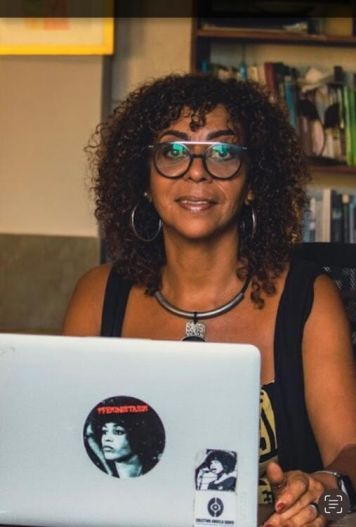
"Do Black Lives Matter in Brazil? Political Mobilization and Black Feminist Protagonism," by Brazilian Scholar Ângela Figueiredo, Universidade Federal do Recôncavo da Bahia
November 3, 2022
6:00 pm
Goldwin Smith Hall, G22
A LACS Public Issues Forum in collaboration with the African Diaspora Knowledge Exchange Project
Two cases have become emblematic for understanding the intensification of racism and sexism in Brazilian society during the pandemic that killed more than 650,000 Brazilians and since the election of Jair Bolsonaro as President of Brazil. The first death recorded in Brazil by Covid-19 was a black woman, 63 years old, a domestic worker, contaminated by her employer; the second was the death of 5-year-old Miguel Otávio when he fell from the 5th floor of the building where his mother worked. Throughout this period, black women's movements carried out various face-to-face activities. They acted strongly through social networks, conducting campaigns to collect resources, clothes, and food and denouncing the violence and the neglect of President Bolsonaro's government concerning public policies to combat the pandemic. They participated in the political campaign of black women in the 2020 elections, such as the Marielle Franco Forum, ENEGRECER a Política, Black Women Decide, Eu Voto em Negra. This presentation considers the political setback and loss of rights in recent years and addresses the Brazilian socio-political context and the political response of black feminist organizations. I focus mainly on processes of knowledge production, institutional political dispute, and the confrontation of political gender violence. The data presented result from effective participation as an activist and researcher and the analysis of social media cards, lives, seminars, and webinars produced in the last two years.
Ângela Figueiredo, PhD. is a professor in the Social Sciences Department of the Federal University of Recôncavo da Bahia in Cachoeira-Bahia, Brazil (CAHL – UFRB); an associate of the Graduate Program in Ethnic and African Studies (POSAFRO) and the Postgraduate Program in Interdisciplinary Gender Studies (PPGNEIM) at the Federal University of Bahia. Dr. Figueiredo is also the coordinator of the research and activist group Collective Angela Davis. Dr. Figueiredo has produced two documentaries - Ebony Goddess (Deusa do Ébano, 2004) e Dialogues with the Secret (Diálogos com o Sagrado, 2013) and curated the Global African Hair exhibition that took place in Salvador, Bahia. She has published the following books: New Black Elites (Novas elites de cor, 2002), Black Middle Class (Classe média negra, 2012), Black Beauty (Beleza Negra, (2016). She has also written several articles on Black Feminism in Brazil, including "Decolonial Black Feminist Epistemology" (2021) and "Letter to Judith Butler from an ex-mulatto woman" (2016).
This LACS Public Issues Forum event was organized by the Latin American and Caribbean Studies Program (LACS) as part of Celebrating it's 60th Anniversary (1961-2021) in collaboration with the African Diaspora Knowledge Exchange Project..
This event was made possible by the generous support of Cornell’s College of Arts and Sciences, the Mario Einaudi Center for International Studies, Romance Studies Department, Africana Studies and Research Center, Feminist Gender and Sexuality Studies (FGSS), the Latin American and Caribbean Studies Program, and the Anthropology Department.
Can't make it in person? Join us through eCornell, register at: https://ecornell.cornell.edu/keynotes/overview/K110322/
Additional Information
Program
Einaudi Center for International Studies
Latin American and Caribbean Studies
Institute for African Development
Language Resource Center Speaker Series - Luana Reis
August 29, 2022
4:00 pm
Stimson Hall, G25
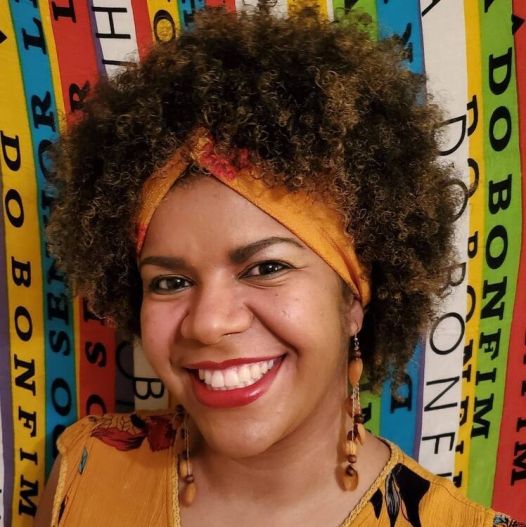
"Black Feminist Poetics and Language Teaching"
Luana Reis
Ph.D. Candidate and Portuguese Instructor, University of Pittsburgh
This talk discusses the inclusion of Black feminist poetic texts in language teaching. The objective is to rethink the roles of students and teachers in the classroom environment and contribute to inspiring new ideas and teaching practices. Black women's voices in poetry may promote the development of pedagogical proposals that encourage a critical reading of the world in educational practices.
Bio: Luana Reis is a poet, educator, and Black feminist scholar. She is currently a Ph.D. candidate in Literature at the University of Pittsburgh, where she teaches Portuguese and conducts research on Contemporary Black Women Literature and Quilombismo/Maroonage. As founder and president of the poetry collective, "ADDverse+Poesia" (@addversepoesia), she brings writers and audiences together across the hemisphere, using the power of poetry for engaging a range of issues – particularly race and gender, freedom and refuge, and language and identity. She is a board member of Mulherio das Letras - USA chapter, a collective of researchers and creative writers whose goal is to unite the voices of women from the Lusophone world who live in the United States. She is also one of the coordinators of the "KilombaCollective," the first collective formed by Black Brazilian women in the United States.
This event will be held in person in G25 Stimson and will also be streamed live over Zoom. Join us at the LRC or on Zoom.
The event is free and open to the public. Campus visitors and members of the public must adhere to Cornell's public health requirements for events.
Co-sponsored by the Language Resource Center, the Latin American and Caribbean Studies Program, and the Institute of African Development through their respective Undergraduate International Studies and Foreign Language (UISFL) grants from the U.S. Department of Education.
Additional Information
Program
Einaudi Center for International Studies
Latin American and Caribbean Studies
ISSI 2022
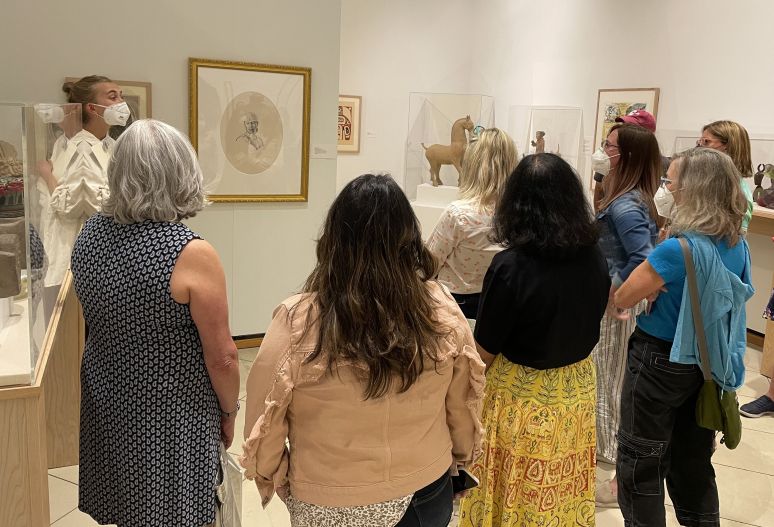
Institute for K–12 Teachers Highlights Global Inequalities
Einaudi's regional programs hosted more than 30 teachers from across central New York for professional development on the Cornell campus.
Additional Information
The Coming Enlightenment: The University Sector and Reparatory Justice for Slavery and Colonialism
September 16, 2022
4:30 pm
Rhodes-Rawlings
Postcolonial discourse has called into question the historic Western Enlightenment by demonstrating its links to violent colonialism, chattel slavery, Indigenous genocide, and persistent institutional and cultural racism.
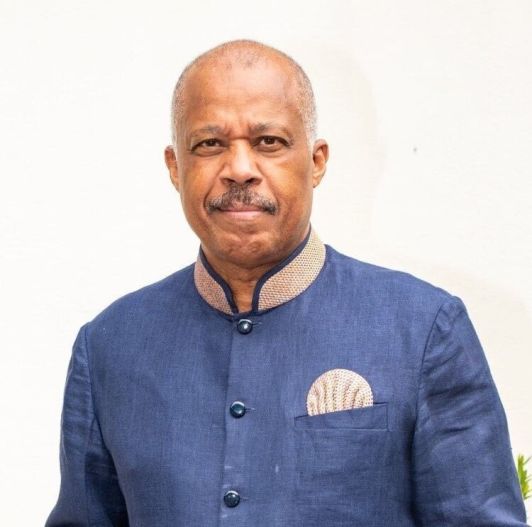
Sir Hilary Beckles suggests that the growing global reparatory justice movement—particularly as it emanates from the higher education sector—may present the best potential for an authentic 21st-century Enlightenment. Universities are now deeply researching their role, functions, and legacies within the Atlantic slave complex and exploring where these discursive discoveries, as crimes against humanity, will lead—back into the future or forward against the past.
Join the lecture live in the Rhodes-Rawlings Auditorium in Klarman Hall! In-person attendees have the chance to enchange ideas with Beckles during a Q&A session following the lecture. Or join the lecture virtually by registering at eCornell.
About the Speaker
Sir Hilary Beckles, eighth vice chancellor of the University of the West Indies, is a distinguished academic, international thought leader, United Nations committee official, and global public activist in the field of social justice and minority empowerment.
He received his higher education in the United Kingdom and is professor of economic history. He has lectured extensively in Europe, the Americas, Africa, and Asia. He has published over 100 peer reviewed essays in scholarly journals and over 13 books on subjects ranging from Atlantic and Caribbean History, to gender relations in the Caribbean, sport development, and popular culture.
Beckles is president of Universities Caribbean, chair of the Caribbean Examinations Council, chair of the CARICOM Reparations Commission, and advisor on sustainable development to former United Nations secretary-general Ban Ki-moon. He was knighted by the government of Barbados. He has received numerous honorary doctorates from around the world and recently received the Martin Luther King Jr. Peace and Freedom Award.
Hosts and Sponsors
Beckles' lecture and campus visit are part of the Mario Einaudi Center for International Studies' Distinguished Speaker series and ongoing work on Inequalities, Identities, and Justice. The lecture is the closing event in the 60th anniversary Public Issues Forum series of the Einaudi Center's Latin American and Caribbean Studies Program.
The event is funded in part by the A.D. White Professor-At-Large Program, the Migrations initiative, and a LACS Undergraduate International Studies and Foreign Language (UISFL) grant from the U.S. Department of Education.
Additional Information
Program
Einaudi Center for International Studies
Latin American and Caribbean Studies
Institute for European Studies
Chile Will Vote on Free Tuition

Kenneth Roberts, LACS
Constitutional changes will face significant opposition from the more conservative elements of Chilean society, says Kenneth Roberts, professor of government, but the polls are likely to narrow as the date of the vote approaches.