
Latin American and Caribbean Studies
“Welcome and Opening of the course LATA 4000/6000," Latin American and Caribbean Studies (LACS) Program Weekly Seminar Series

August 22, 2022
1:00 pm
Uris Hall, 204
Welcome, opening, and requirementd for the course LATA 4000/6000 the Latin American and Caribbean Studies (LACS) Program Weekly Seminar Series
Additional Information
Program
Einaudi Center for International Studies
Latin American and Caribbean Studies
Bienvenidos BBQ
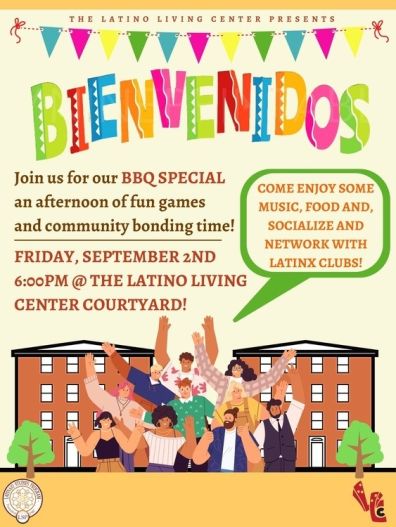
September 2, 2022
6:00 pm
Anna Comstock Hall (Latino Living Center)
Come meet students, faculty, and staff and learn about the organizations that are part of the Latinx community at Cornell.
OPEN TO THE CORNELL COMMUNITY!
Hosted by the Latino Living Center, Latina/o Studies Program, Latinx Student Success Office.
Additional Information
Program
Latin American and Caribbean Studies
LACS Intern Researches at Global Hub
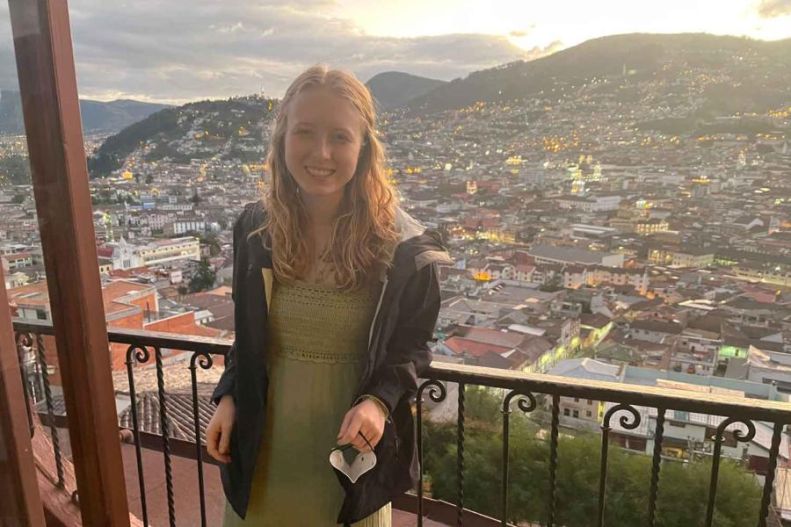
Hannah Drexler '24 in Quito, Ecuador
Drexler conducted focus groups on political polarization. “As a student studying politics, it’s been an interesting time for me to be here.”
Additional Information
Race for Semiconductors Influences Taiwan Conflict
Lourdes Casanova, Global Public Voices and LACS
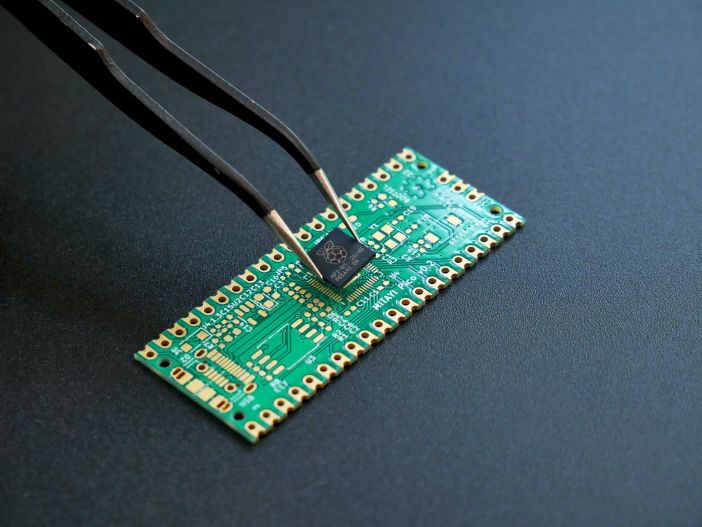
Lourdes Casanova, director of the Emerging Markets Institute and senior lecturer of management, says "Taiwan-based TSMC is the biggest world producer of chips, and China and the rest of the world need TSMC semiconductors. Hence, I don’t expect China to target electronic exports.”
Additional Information
The Myth of the Libertarian Exit
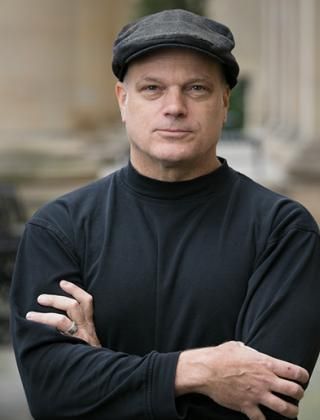
Raymond Craib, LACS
This piece features the new book Adventure Capitalism by Raymond Craib, professor of American history.
Additional Information
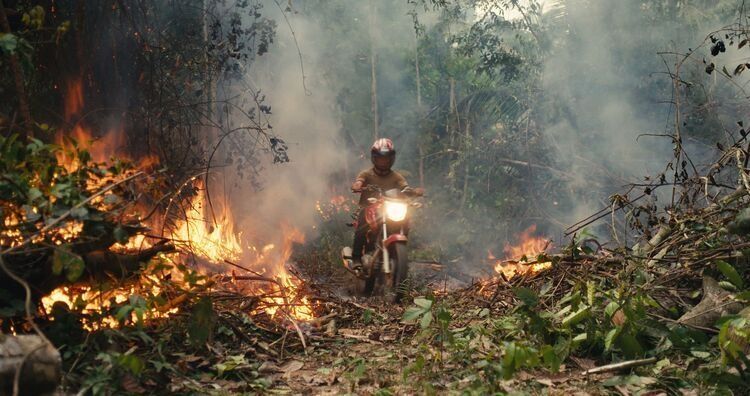
"The Territory" Film about indigenous rights and settler dreams in the Amazon forests of Brazil | Free Admission
November 29, 2022
4:45 pm
Willard Straight Theatre, Willard Straight Hall Theater
Featuring a post-screening panel discussion panel discussing indigenous rights in the Brazil US and will follow the film and includes Wendy Wolford (Global Development), Renata Marques Leitao (College of Human Ecology), and Eric T. Cheyfitz (American Indian and Indigenous Studies Program).
Check out the trailer below.
Pizza will be served. Showing will begin right away.
Co-sponsored by the Latin American and Caribbean Studies Program (LACS) and the American Indian and Indigenous Studies Program (AIIS) along with collaboration by Cornell Cinema and the Office of the Vice Provost for International Affairs.
The feature documentary debut of director Alex Pritz (“My Dear Kyrgyzstan”), THE TERRITORY follows the vital, inspiring fight of the Indigenous Uru-eu-wau-wau people of Brazil to defend their land from non-Indigenous farmers intent on colonizing their protected territory in the Amazon rainforest. Co-produced by the Uru-eu-wau-wau community, the film draws on intimate access to both the Indigenous perspective and the farmers who want their land to chronicle a conflict that has profound implications for the survival of a people and the planet.
Partially shot by the Uru-eu-wau-wau people and filmed over the course of several years, THE TERRITORY offers an authentic portrait of an Indigenous community’s daily life and struggles. With its breathtaking cinematography showcasing the dramatic landscape and richly textured sound design, the film brings audiences deep into the precious ecosystem they are fighting to protect.
Since the Uru-eu-wau-wau were first contacted by the Brazilian government in 1981, their territory has become an island of green rainforest surrounded by denuded farms and ranches — the results of four decades of unchecked deforestation. The community has faced environmentally destructive and often violent incursions into their sovereign territory by nonnatives seeking to exploit the land. Illegal logging and land clearing incursions have become more frequent and more brazen over the years.
Inside Uru-eu-wau-wau territory, there are fewer than 200 people, including elders and children, to defend nearly 7,000 square miles of rainforest. On the edges of the protected lands, a network of farmers organizes to stake their claims through official channels, while individual land-grabbers begin clear-cutting swaths of rainforest for themselves. With the community’s survival at stake, Bitaté Uru-eu-wau-wau and Neidinha Bandeira — a young Indigenous leader and his female mentor — must find new ways to protect the rainforest from encroaching invaders. But rather than rely on others to tell their story, the Uru-eu-wau-wau take control of the narrative and create their own news media team to bring the world the truth.
More on the film at:
https://films.nationalgeographic.com/the-territory
The Territory Trailer (2022)
Additional Information
Program
Einaudi Center for International Studies
Latin American and Caribbean Studies
“Permanence and Ephemerality in Inca Architecture,” by Stella Nair, LACS Seminar Series 60th Anniversary, Reception follows
November 14, 2022
4:30 pm
Goldwin Smith Hall, G30
Co-sponsored by: History of Art Department
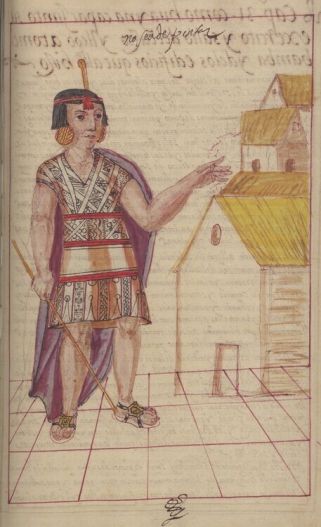
With its striking stonework, dramatically sited buildings, and impressive terraces cascading down steep mountainsides, Inca architecture has fascinated visitors to the Andes for centuries. Yet, this lithic architecture was only one part of the complex built environment of the Inca. In this talk, Nair explores how issues of permanence and ephemerality were crucial to Inca building practices and reveal the critical role gender played in creating and giving meaning to place.
Stella Nair’s scholarship focuses on the built environment of indigenous communities in the Americas. Trained as an architect and architectural historian, Nair has conducted fieldwork in Bolivia, Mexico, Peru, and the United States, with ongoing projects in the South Central Andes. Nair’s book, At Home with the Sapa Inca: Architecture, Space, and Legacy at Chinchero (University of Texas Press, 2015), examines the sophisticated ways in which the Inca manipulated space and architecture to impose their authority. She has also published (with Jean-Pierre Protzen), The Stones of Tiahuanaco: A Study of Architecture and Construction (Cotsen Institute of Archaeology Press, 2013), which explores one of the world’s most artful and sophisticated carving traditions.
Nair has received numerous research grants and fellowships from the American Philosophical Association, the Center for the Study of the Visual Arts (National Gallery of Art), Dumbarton Oaks, the Fulbright Institute, the Getty Foundation, and the John Carter Brown Library. More recently, Nair was awarded a Rome Prize by the American Academy of Rome and a John Simon Guggenheim Memorial Fellowship from the Guggenheim Foundation. Currently, Nair directs the Andean Laboratory and the Architecture laboratory at the Cotsen Institute of Archaeology.
Additional Information
Program
Einaudi Center for International Studies
Latin American and Caribbean Studies
“Art and Migration: To and From Latin America,” by Violette Bule , LACS Seminar Series

October 3, 2022
4:30 pm
A.D. White House, Guerlac Room
In this talk, conceptual artist Violette Bule in conversation with Irina R. Troconis (Department of Romance Studies) will discuss a series of Bule’s works that engage with the political, social, and cultural dimensions of migration, both in the context of Venezuela’s current migration crisis and in the broader context of Latin American migration. Reflecting on issues such as identity anxiety, jurisdiction, territoriality, nationality, identification, bureaucratic performance, concentric borders, bi-dimensionality, and transitoriality, the talk will analyze the intersections of identity and territory that materialize as shared experiences of living and belonging through art practices.
Violette Bule is a Venezuelan-Lebanese conceptual artist and an MFA candidate at the University of Houston. Her work engages with a wide variety of topics—migration, identity, memory, violence, community engagement, digital technologies, the politics of space, and the social and political reality of contemporary Venezuela—and has been exhibited nationally and internationally. She was selected for the 11 Installations Artist Project founded by MOCA, Art League, and HAA, Houston, Texas. She was also the recipient of a SOMA SUMMER - MEXICO CITY grant awarded by the Colección Patricia Phelps de Cisneros, and of the first artist residency awarded by Cornell’s Romance Studies Department.
Co-Sponsor: Romance Studies Department
Additional Information
Program
Einaudi Center for International Studies
Latin American and Caribbean Studies
“Theatre of the Oppressed in Praxis: from Latin America to the US,” by Alexander Santiago-Jirau, CRP'02, LACS Seminar Series
October 31, 2022
1:00 pm
Uris Hall, Go8
This interactive talk will serve as an introduction to the activist forms that make up the arsenal of the Theatre of the Oppressed (TO): a collection of games, techniques, and exercises using theatre as a vehicle for personal, political, and social change. Originally developed in Brazil by theatre innovator Augusto Boal, TO was inspired in part by the educational theories of Paulo Freire, and employed with peasants and workers throughout Latin America. Today, the techniques are used internationally and have been adapted by countless companies and practitioners. Join us to learn about TO’s foundational theories, its growth in Latin America and its practice in the United States, along with some of TO’s most well-known exercises.
In celebration of Halloween: Coffee, Cider, and Donuts served.
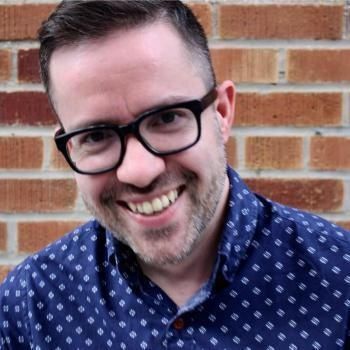
Alexander Santiago-Jirau (he/him/his) is Director of Education at New York Theatre Workshop (NYTW). In this role, he oversees all of NYTW’s education and engagement initiatives, including the Mind the Gap (MTG) intergenerational theatre program, student matinees, in-school teaching artist residencies, after-school programs, master classes, administrative fellowships, and community-based programs. A Theatre of the Oppressed (TO) practitioner who studied and worked with Augusto Boal, Alex has facilitated many workshops throughout his career, particularly with youth, educators and immigrant communities. He is Past-President of the Board of Directors of Pedagogy and Theatre of the Oppressed, Inc., a national organization devoted to the work of liberatory educators, activists, artists, and community organizers, and a current board member for the NYC Arts in Education Roundtable, a service organization for arts education practitioners.
Alex has presented his work at numerous conferences and his writing has appeared in The Indypendent, TYA Today, The Cross Border Project Blog (Spain), “Come Closer”: Critical Perspectives on Theatre of the Oppressed, The Routledge Companion to Theatre of the Oppressed, and Applied Theatre with Youth: Education, Engagement, Activism. He has taught Latin American and Latinx Theatre at Drew University and currently teaches TO for the Department of Drama at NYU’s Tisch School of the Arts and the Educational Theatre program at NYU’s Steinhardt School of Culture, Education, and Human Development. He holds a BS in Urban and Regional Studies from Cornell University and an MA in Educational Theatre from NYU Steinhardt.
Additional Information
Program
Einaudi Center for International Studies
Latin American and Caribbean Studies
“Number and Non-Conceptual Identity in the Andean World: The Case of the Quechua -ntin/-nintin," by Vanessa Gubbins, LACS Seminar Series

December 5, 2022
4:30 pm
Uris Hall, 312
Change in Time to 4:30pm and room to 312 Uris Hall.
This talk discusses identity formation in the Andean world through a study of the Quechua suffix -ntin/ -nintin. It also raises the suffix’s broader philosophical and political ramifications for questions of unity, collectivity, and the relationship between part and whole.
Vanessa Gubbins is Assistant Professor of Latin American Studies in the Department of Romance Studies at Cornell.
Additional Information
Program
Einaudi Center for International Studies
Latin American and Caribbean Studies