
Latin American and Caribbean Studies
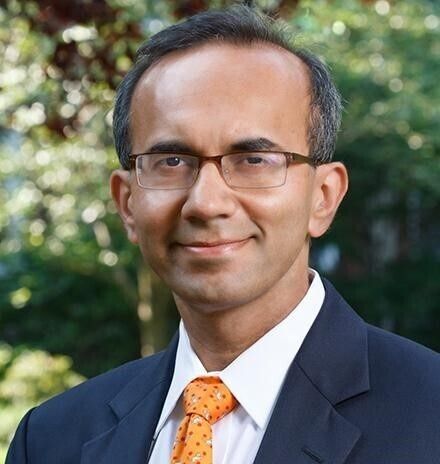
Emerging Markets Theme Research Seminar: Tarun Khanna
May 5, 2022
11:30 am
Sage Hall, B08
Registration Link: https://cglink.me/2cm/r1538464
Lancet Citizens’ Commission
Pathways to Universal HealthCare for India’s 1.3 billion
The Lancet Citizens’ Commission on Reimagining India’s Health System is a cross- sectoral research endeavor to lay out a policy roadmap to achieving universal health coverage (UHC) for India’s 1.3 billion, after 75 years of failed efforts. A guiding principle for the Commission is that structural change towards UHC can only be attained through consultative and participatory engagement with the diverse sectors involved in health care and, most importantly, with India’s citizenry.
The Commission’s ‘big tent’ approach transcends traditional boundaries of expertise to actively engage stakeholders whose voices have rarely been heard in previous reports: those who deliver healthcare and those who receive it. It is thus a Citizens’ Commission in as complete a sense as we can envisage.
A consequence of this framing is that the Commission is explicitly confronting several hitherto-ignored schisms in the provision of Indian healthcare: between the public and private sectors in the delivery of care; between allopathic medicine and traditional medicine; between aficionados and sceptics of the role of technology in attaining UHC.
Our working hypothesis half-way through is that a (dramatic) shift in mental models at all levels is needed for India to be on a path towards UHC. Two overarching mindset changes include (a) Citizens shifting from being passive consumers of healthcare to an active and more informed participatory role, demanding access but also sharing responsibility and (b) Recognizing the role of the private sector in the health system and holding it accountable, rather than only relying on the state.
Tarun Khanna is the Jorge Paulo Lemann Professor at the Harvard Business School. For over two decades, he has studied entrepreneurship as a means to social and economic development in emerging markets. At HBS since 1993, after obtaining degrees from Princeton and Harvard, he has taught courses on strategy, corporate governance and international business to MBA and Ph.D. students and senior executives.
Additional Information
Program
Einaudi Center for International Studies
Latin American and Caribbean Studies
Edward E. Baptist

Professor, History
Additional Information
Discusion: Tarjeta del Trabador Fronterizo en Mexico

March 11, 2022
1:00 pm
Este seminario tiene como ambito de mejor entender como funciona el programa de la Tarjeta del Trabajador Fronterizo (TTF) en Mexico, su desarollo y sus efectos sobre los trabajadores, la industria y la sociedad.
Los apresentadores incluyen Dra. Martha Rojas Wiesner (El Colegio de la Frontera Sur), Dra. Antonieta Barron (Universidad Nacional Autonoma de Mexico), Dra. Martha Garcia (El Colegio de la Frontera Sur) y Dr. Manuel Angel Castillo (El Colegio de Mexico).
La discusion tendra lugar en espanol y sera traducido en ingles.
La Migration Initiative, la Farmworker Legal Assistance Clinic y The Center for the Study of Inequality apoyan a este evento.
This workshop seeks to understand working mechanism of the agricultural temporary foreign workers program entitled 'Tarjeta del Trabajador Fronterizo' in Mexico, its development and effects on workers, the industry and society.
Speakers include Dra. Martha Rojas Wiesner (El Colegio de la Frontera Sur), Dra. Antonieta Barron (Universidad Nacional Autonoma de Mexico), Dra. Martha Garcia (El Colegio de la Frontera Sur) y Dr. Manuel Angel Castillo (El Colegio de Mexico).
The event will take place in Spanish and will be translated into English.
The event is supported by the Migration Initiative, the Farmworker Legal Assistance Clinic and the Center for the Study of Inequality.
Additional Information
Program
Einaudi Center for International Studies
Latin American and Caribbean Studies
Emerging Markets Theme Research Seminar: Subrina Shen

April 22, 2022
1:00 pm
Sage Hall, B06
Registration Link: https://cglink.me/2cm/r1538417
Subrina Shen is an assistant professor at the Department of Management at the McCombs School of Business, the University of Texas at Austin.
When having a higher-status follower promotes exploration: Hierarchical inconsistency, goal alignment, and exploration in product development teams
A burgeoning stream of work views organizational internal inconsistency as an impetus for innovation and strategic change. Building on this literature, this paper examines an important yet under-studied aspect of internal misfit/inconsistency: global-local hierarchical inconsistency in product development teams, or the situation in which team members have misaligned rank orderings in the global (organizational) and local (within-team) hierarchies. In contrast to prior research which shows hierarchical inconsistency to increase conflict and thus hurt performance, we argue that the conflict induced by global-local hierarchical inconsistency could spark explorative search–an important antecedent for innovation and strategic change–when team members have aligned goals. We propose a novel mechanism–goal-aligned social rank enhancing behavior–to explain the positive effect of global-local hierarchical inconsistency. We empirically tested these arguments with data on A/B testing experiments around a social networking app product in a Chinese internet company between 2019 and 2021. The results show that hierarchical inconsistency encourages search and exploration when departmental goals are aligned in a team. Our study contributes to the burgeoning discussion around the impact of organizational internal misfit on innovation and strategic change as well as the literature on consequences of status inconsistency.
Subrina's research examines the creation, evaluation, and commercialization of innovative ideas in emerging technology sectors, with a contextual focus on artificial intelligence technologies. It is informed by both organizational sociology and strategy research.
Subrina's work has been published in Organization Science and Strategic Management Journal. Subrina's research has won a number of awards, including the 2021 Conference Theme Best Paper Award from the International Association of Chinese Management Research and the Best Paper Award from the 2018 International Conference on Innovation Studies.
Additional Information
Program
Einaudi Center for International Studies
Latin American and Caribbean Studies
Statement from President Martha E. Pollack regarding the war in Ukraine
March 2, 2022
Over the last week, the world has watched Russia’s deplorable and unprovoked invasion of the sovereign nation of Ukraine, an attack that is both devastating for the people of Ukraine and has deeply impacted countless others, including members of our own community. My heart goes out to each of them.
We have reached out directly to our students from Ukraine and Russia to offer support and resources. We have confirmed that no Cornell students, faculty, or staff are registered to be in Ukraine or Russia at this time. Nor do we have any academic programs currently operating in Ukraine or Russia.
The Presidents' Alliance on Higher Education and Immigration, of which I am a member, has taken the lead in pushing for protections and work permits for Ukrainian students. And I assure you that Cornell will work to offer safe harbor and refuge to scholars and students displaced by the unrest, as we have after other international tragedies.
Cornell’s rich diversity of lived experience, knowledge, and understanding positions us to convene thoughtful conversations about an extraordinarily difficult moment in history. Professor Emeritus and Nobel Laureate Roald Hoffmann coordinated a statement signed by 163 Nobel Laureates, which I urge you to read. Numerous Cornell faculty members have spoken to the crisis and its implications in national and global media. And on Friday afternoon, the university is hosting a faculty panel that is open to the public.
As is always true during times of crisis, our community must, and I know will, rise to support one another. I hope fervently for a rapid, peaceful, and just resolution to this terrible situation.
Martha E. Pollack, President
Additional Information
Language Resource Center Speaker Series - Corrine Occhino

April 13, 2022
4:00 pm
Stimson Hall, G25
"What Everyone Should Know about ASL and American Deaf Culture"
Corrine Occhino
Assistant Professor of Languages, Literatures, and Linguistics, Syracuse University
ASL (American Sign Language) is experiencing a pop-culture moment. In the past few years, ASL has been visible in TV-shows, movies, commercials, and in sports and news broadcasts. ASL programs are popping up in schools and colleges all over the U.S. Despite dips in enrollment for many college programs, student enrollment in ASL classes is at an all-time high, as it has quickly become one of the most popular languages to take on college campuses. But despite its growing popularity, the hearing world knows little about ASL, its role in Deaf culture, its status as a real, human language, or the daily frustrations many Deaf ASL signers experience as they fight for access and inclusion in a hearing world.
In this talk I will take you on a whirlwind tour of ASL and the signing communities who use it. In the first half of my talk, I will discuss ASL's roots in Deaf Education and the role segregation played in the creation of ASL varieties. I will talk about the communities of signers who use ASL, why ASL is a Deaf language, and why language deprivation is still a very real problem for deaf children in the U.S.
In the second half of my talk, I will talk about some interesting linguistic properties of ASL and what research on ASL has taught us about language, and language learning. I will end with a discussion of how learning ASL opens the door to understanding Deaf culture, but also invites us to interrogate the ways we can disrupt the hegemony of hearingness, making way for a more inclusive and equitable society.
Bio: Dr. Corrine Occhino is an Assistant Professor in the Department of Languages, Literatures, and Linguistics and in the Department of Teaching and Leadership at Syracuse University. Dr. Occhino received her Ph.D. in Linguistics from the University of New Mexico in 2016. In 2017, she joined the Center on Culture and Language at the National Technical Institute for the Deaf at Rochester Institute of Technology where she ran the ASL Assessment Project. She now runs the Multimodal Language Lab at Syracuse University, where she uses a combination of corpus-based, psycholinguistic, and sociolinguistic approaches to study language in the visual modality. Most recently, Dr. Occhino has published articles on the phonological organization and structure of ASL, sociolinguistic variation in ASL, and on the role of experience and construal in ASL-English bilingual language processing. Dr. Occhino also works on issues related to language access and social justice, equity, and inclusion in deaf communities, collaborating on research projects aimed at improving reproductive health outcomes for deaf women and increasing the representation of minoritized dialects of ASL and their signers in the documentation and study of ASL.
This event will be held in person in G25 Stimson and will also be streamed live over Zoom. Join us at the LRC or on Zoom.
The event is free and open to the public. Campus visitors and members of the public must adhere to Cornell's public health requirements for events, which include wearing masks while indoors and providing proof of vaccination or a recent negative COVID-19 test.
Additional Information
Program
Einaudi Center for International Studies
Latin American and Caribbean Studies
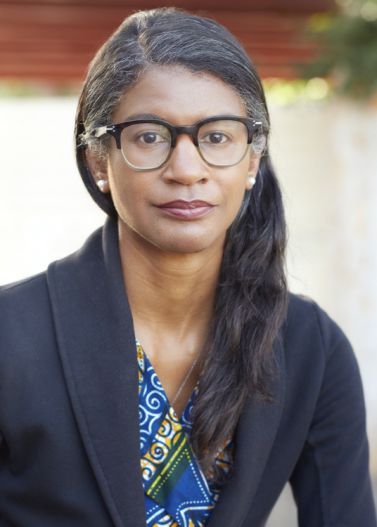
Anthropology Colloquium: Reighan Gillam
March 4, 2022
3:00 pm
McGraw Hall, 165
"Visualizing Black Lives: Representing Racism in Afro-Brazilian Media"
Reighan Gillam is an Assistant Professor of Anthropology at University of Southern California.
Reighan Gillam researches the ways in which subjects experience, negotiate, and challenge stereotypical and controlling images. She examines these issues through the lens of Afro-Brazilian media producers in southeastern Brazil. She is currently working on a book manuscript, entitled Visualizing Black Lives, to understand how Afro-Brazilians turn to their racialized experiences as a source for visual content and the kinds of images they generate. In the Fall 2018, Harvard University’s David Rockefeller Center named her the Peggy Rockefeller Scholar.
Education
Ph.D. Anthropology, Cornell UniversityB.A. Anthropology, University of VirginiaThis talk is co-sponsored by Africana Studies and Research Center. Thank you.
Additional Information
Program
Latin American and Caribbean Studies
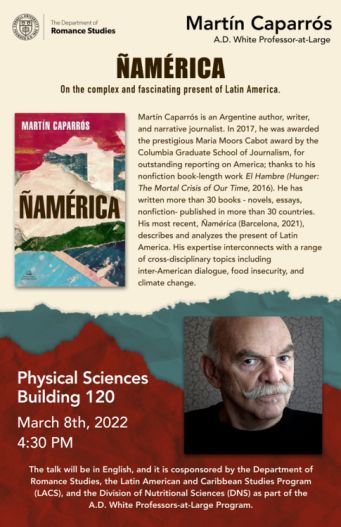
Martín Caparrós (A.D. White Professor-at-Large): "Ñamérica"
March 8, 2022
4:30 pm
PSB 120
MartÍn Caparrós is a distinguished Argentine author, writer, and narrative journalist, and one of the fundamental Latin American voices of our time. In 2017, he was awarded the prestigious Maria Moors Cabot award by the Columbia Graduate School of Journalism, for outstanding reporting on America; specifying work on his nonfiction book-length work El Hambre (Hunger: The Mortal Crisis of Our Time, 2016), in which the author visits both the richest and poorest people of the earth in order to explore why hunger is one of today’s big unresolved issues. The book has been translated into 14 languages.
He was the recipient of the prestigious Herralde Prize (2011) for his novel, Living; the Planeta Prize (2004) for his novel, Valfierno; and the Guggenheim Fellowship (1994). He also writes biweekly columns for The New York Times and Spain’s El País. His expertise interconnects with a range of cross-disciplinary topics including inter-American dialogue, food insecurity, and climate change.
This event is part of Caparrós’s first visit as an A.D. White Professor-at-Large (ADW-PAL) to Cornell. His on-campus residency runs March 7-11, 2022. He was elected as an ADW-PAL in 2019. His appointment runs through 2025.
The talk will be in English.
Additional Information
Program
Einaudi Center for International Studies
Latin American and Caribbean Studies
Engaged Speaker Series: Conversation with Dr. Agustín Cano Menoni
March 16, 2022
3:00 pm
Engaged Cornell Hub, 3rd floor Kennedy Hall
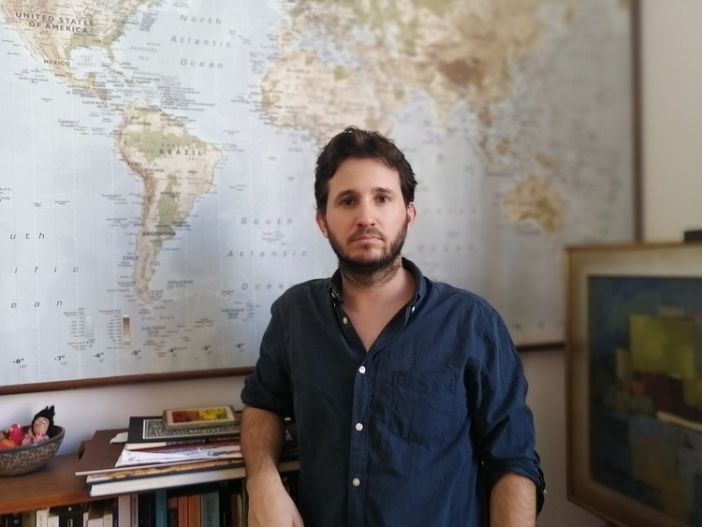
Join the staff and students from the David M. Einhorn Center for Community Engagement for a conversation with Dr. Agustín Cano Menoni, professor, extensionist and researcher at the Universidad de la República de Uruguay.
Dr. Menoni is visiting Cornell so we can learn from and with one another about Extension systems in the United States and Latin American tradition. We're excited to discuss how universities should engage with the community; what are the roles of faculty, students and staff; and what possible lessons and collaborations can emerge from a South-North dialogue.
RSVP by emailing Amy Somchanhmavong at ayk3@cornell.edu.
Co-sponsored by the David M. Einhorn Center for Community Engagement, Polson Institute and Latin American and Caribbean Studies
See other events with Dr. Menoni
University-Extension in Dispute: Between the Market, the Public, and the Commons
Culture, Nation and the People: a Century of University Extension in Latin America
About Dr. Agustín Cano Menoni
Agustín Cano Menoni received his BA in Psicology from Universidad de la República (Uruguay), his Master in Social Project Management from LUMSA-Università (Rome, Italy) and his Ph.D. in Pedagogy from Universidad Nacional Autónoma de México (UNAM). He is currently a professor, extensionist, and researcher at the Universidad de la República de Uruguay (UDELAR), where he coordinates the Núcleo de Intervención e Investigación en Educación y Territorio of the Programa Integral Metropolitano of UDELAR. He is a graduate and postgraduate professor at the Institute of Education of the Faculty of Humanities and Education Sciences of UDELAR, and a member of the National System and Researchers of Uruguay. He is the author of the book "Cultura, Nación y Pueblo: la extensión universitaria en la UNAM (1910-2015)", published in 2019 in Mexico by the UNAM, as well as numerous articles and chapters of books on topics of university extension and Latin American University.
Additional Information
Program
Latin American and Caribbean Studies
Emerging Markets Theme Research Seminar: Valentina Assenova
March 25, 2022
1:00 pm
Poised for Growth: Cohort Learning and Its Effects on Accelerated Startups’ Growth
Registration Link: https://cglink.me/2cm/r1538392
Startup accelerators have emerged as important loci for organizational learning among early-stage startups. These organizations use a cohort structure from which a focal startup can draw new knowledge, assimilate it, and apply it to commercial ends. We suggest that the quality and geographic diversity of a startup’s peers in the same cohort affect the value that entrepreneurs derive from accelerators and enable higher rates of post-acceleration startup growth. We use applicant-level data from 23,364 early-stage startups that applied to 408 accelerators in 177 emerging and developing economies across Latin America and the Caribbean, South Asia, and Sub-Saharan Africa between 2013 and 2019 and a matched case-control design to evaluate these cohort effects. Our results show that the quality and geographic diversity of peers in the same cohort were associated with higher perceived value among applicants from being in a cohort of like-minded entrepreneurs and higher rates of post-acceleration growth in equity funding, revenue, full-time employment, and wages paid among accelerated startups, compared to similar non-accelerated startups. These benefits varied widely across regions and programs and were greater for startups that had more traction and innovation coming into an accelerator.
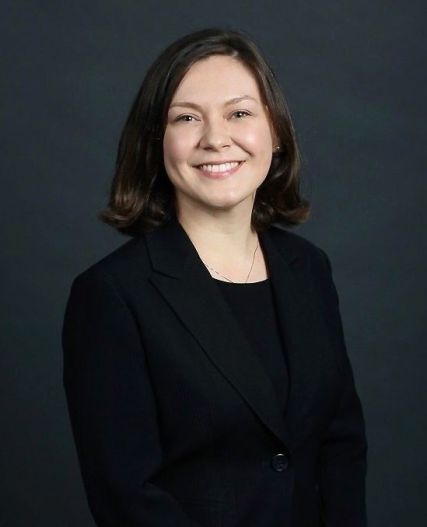
Valentina A. Assenova is the Edward B. and Shirley R. Shils Assistant Professor of Management at the Wharton School, University of Pennsylvania. Her research centers on the formation, growth, and funding of early-stage firms, with a focus on emerging and developing economies. She has collaborated with organizations such as FINCA International and the U.S. International Development Finance Corporation on projects and initiatives that advance entrepreneurship and economic development in Sub-Saharan Africa and Southeast Asia. She holds a Ph.D., M.Phil., and M.A. from Yale University, an M.B.A. from the University of Cambridge, and a B.Sc. in Economics from the Wharton School.
Additional Information
Program
Einaudi Center for International Studies
Latin American and Caribbean Studies