
Latin American and Caribbean Studies
Lorraine Francis

Associate Professor of Practice, Public & Ecosystem Health
Lorraine Francis is a public health professional with extensive knowledge of Caribbean health systems from over eighteen years of regional experience in several public health areas including epidemiology, surveillance, emergency and outbreak response, laboratory systems, environmental health and research. In her current role as Lecturer with the Master in Public Health Program at Cornell, she brings her interest in Infectious Disease Epidemiology and Environmental Health research given the challenges with climate change especially on Small Island Developing States.
Additional Information
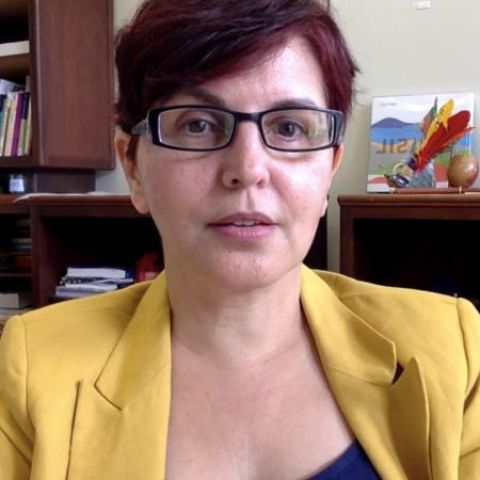
Denise Osborne
Senior Lecturer, Romance Studies
Denise M. Osborne is a lecturer in Portuguese in the Department of Romance Studies. She earned her Ph.D. in Second Language Acquisition and Teaching from the University of Arizona (Tucson, AZ), and her M.A. in Applied Linguistics from Teachers College Columbia University (New York, NY). Her main area of interest is second language acquisition, especially second language phonetics, both perception and production.
Additional Information
University-Extension in Dispute: Between the Market, the Public, and the Commons
March 10, 2022
4:45 pm
Polson Institute for Global Development Seminar
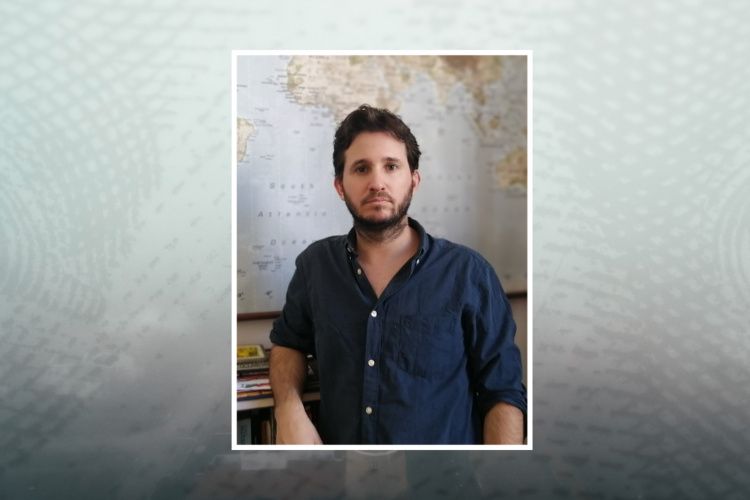
A lecture by Agustín Cano Menoni
What is the relationship between universities and extension programs? How has this relationship, and the types of knowledge and practice traditionally conveyed by them, shifted under the pressures of globalization? Drawing on a range of experiences from Latin America, Professor Agustin Cano Menoni argues for the need to go beyond conventional views of the university as a neutral site of knowledge production, and extension programs as disinterested instruments for the dissemination of experimental knowledge. He calls for a critical rethinking and re-imagination of their interconnections at the interface between communities, the market, and the commons.
About the speaker:
Professor Agustín Cano Menoni received his BA in Psychology from the Universidad de la República in Uruguay, his MA in Social Project Management from LUMSA University in Italy, and his PhD in Pedagogy from the National Autonomous University of Mexico (UNAM). He is currently a professor and researcher at the Universidad de la República de Uruguay (UDELAR), where he coordinates the Núcleo de Intervención e Investigación en Educación y Territorio. He is the author of Cultura, Nación y Pueblo: La Extensión Universitaria en la UNAM, 1910-2015 (2019), as well as numerous articles and book chapters on Latin American universities and extension programs.
About the Polson Institute
The Robert A. and Ruth E. Polson Institute for Global Development supports theoretical and applied social science research. We fund projects and working groups that address issues ranging from economic inequality to discursive politics, contributing to Cornell’s leadership in global development.
Additional Information
Program
Latin American and Caribbean Studies
Emerging Markets Theme Research Seminar: Julia Zhu
April 29, 2022
1:00 pm
Sage Hall, B11
Registration Link: https://cglink.me/2cm/r1537912
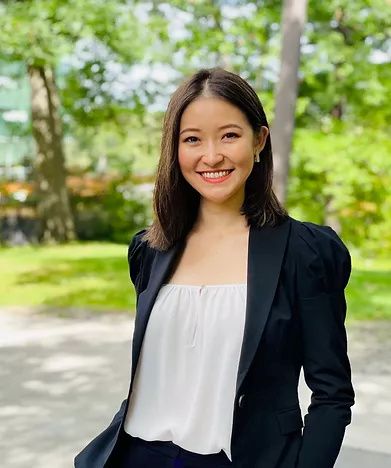
Julia Zhu is a PhD candidate in Policy Analysis and Management at Cornell University.
On the move: How comparative immigration policies shape migration decisions in a globalized world
How high-skilled immigrants make migration decisions in the context of globalization? In these two papers, I demonstrate the importance of studying immigration policies in a comparative framework. In the first paper, I focus on the comparative immigration policies for international students in the U.K. and the U.S. I examine the causal effect of international student enrollment on college completion of U.S. domestic students by leveraging a restrictive immigration policy change in the U.K. that induced more international students from former British colonies to enroll in U.S. universities. Using newly obtained administrative data on all international students in the U.S. between 2003 and 2015, I find that an additional international student per program leads to 0.7 more domestic students to obtain a college degree four years later. The effect is concentrated in public four-year institutions. Additionally, I find positive cross-degree-level effect of international students in master's degree programs on U.S. domestic students in bachelor's degree programs. The positive impact is most likely through cross-subsidization of tuition, serving as evidence of resource effects. In the second paper, I focus on the comparative immigration policies for high-skilled immigrants in the U.S. and Canada. The current U.S. immigration quota system that imposes limits on the number of green cards based on nationalities has not changed since 1991, while demand has increased exponentially. This results in long wait times for individuals from high demand countries. For employment-based green cards, in recent years, college-educated workers from India need to wait for over a decade before submitting applications. In contrast, Canada has implemented several favorable immigration policies to attract high-skilled immigrants. I examine the effect of this immigration policy gap on immigrant inflows and labor market outcomes in Canada. I first show that the adoption of Express Entry, Canada's point-based immigration program, significantly increases new economic immigrants from India. I then estimate the labor market impact of new immigrants using an instrumental variable strategy. Preliminary results show that the surge of new immigrants does not negatively affect employment in local labor markets.
Julia Zhu is an applied microeconomist. Her research interests are in labor economics, economics of migration, and economics of education.
Julia have several lines of active research that investigate the causes and effects of high-skilled immigration, local impacts of immigration enforcement policies, consequences of climate change and environmental shocks, attitude formation towards immigrants and racial minorities, and population estimation using demographic techniques.
Additional Information
Program
Einaudi Center for International Studies
Latin American and Caribbean Studies
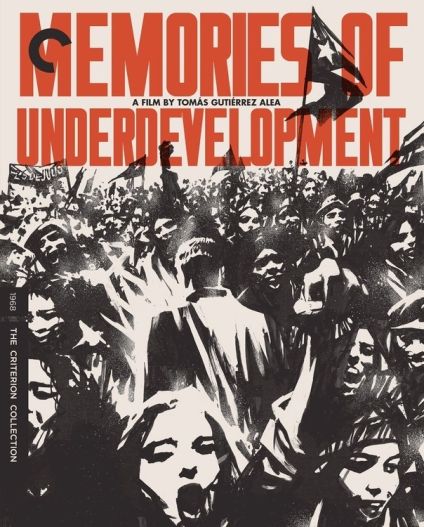
Memories of Underdevelopment (Cuba), LACS Film Series
April 28, 2022
6:00 pm
G64 Goldwin Smith Hall, Kaufmann Auditorium
Open to members of the Cornell community only.
In the aftermath of the Bay of Pigs Invasion, Sergio (Sergio Corrieri), an affluent writer, chooses to stay behind in Cuba while his wife and family escape to neighboring Miami. Sergio is pessimistic about the revolution's promise to bring sweeping change to his country, and he squanders his days prowling the streets of Havana looking for female companionship. Trouble erupts when his fling with chaste Elena (Daysi Granados) nearly ruins him after her family accuses Sergio of rape.
Additional Information
Program
Einaudi Center for International Studies
Latin American and Caribbean Studies
Peacebuilding, Climate Change, and Migration: Expanding the Lens
March 24, 2022
11:25 am
This is the second day of a two-day virtual workshop on peacebuilding, climate change, and migration. The first day of the workshop is March 22, 2022; participants are welcome to attend for just one or both days.
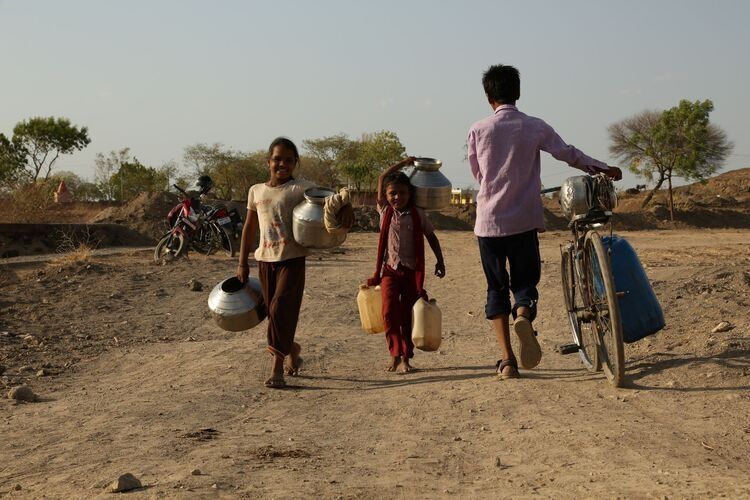
On this second day, we will examine understudied regions which are at substantial risk of climate change impacts, including Latin America, Southeast Asia, and South Asia. What resources, methods, and approaches can help us better understand the relationship between peacebuilding, climate change, and migration in these understudied regions? How can we achieve environmental justice in these areas?
The first day of the workshop is March 22, 2022.
WORKSHOP AGENDA
Introductory reflection
Karim-Aly Kassam
International Professor of Environmental and Indigenous Studies, Department of Natural Resources and the Environment & the American Indian and Indigenous Studies Program, College of Agriculture and Life Sciences, Cornell University
Dr. George Wilkes
Director, Religion and Ethics in the Making of War and Peace Project
Research Fellow, School of Divinity, University of Edinburgh
Presenters
Alpa Shah
Professor, Department of Anthropology, The London School of Economics and Political Science
Jonathan Padwe
Associate Professor and Undergraduate Chair, Department of Anthropology, University of Hawaiʻi at Mānoa.
Fábio Zuker
Journalist, Anthropologist, and Amazon Rainforest Journalism Fund Grantee
This workshop is being organized by Cornell University’s Reppy Institute for Peace and Conflict Studies, with support from the Migrations Initiative, and co-sponsorship from the Institute for African Development, the Latin American and Caribbean Studies Program, the South Asia Program, the Southeast Asia Program, and the College of Agriculture and Life Sciences.
Additional Information
Program
Einaudi Center for International Studies
Reppy Institute for Peace and Conflict Studies
Southeast Asia Program
Latin American and Caribbean Studies
Institute for African Development
South Asia Program
Peacebuilding, Climate Change, and Migration: Conceptualizing Environmental Peacebuilding
March 22, 2022
11:25 am
This is the first day of a two-day virtual workshop which takes a novel approach to peacebuilding, climate change and migration. The first day of the workshop is March 22, 2022; participants are welcome to attend for just one or both days.
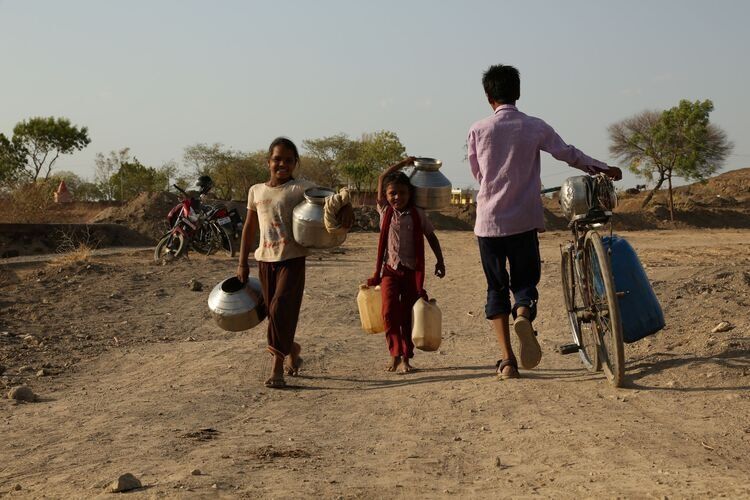
On this first day we will explore the following questions: What do we know about the relationship between peacebuilding, migration, and climate change? How can we develop a socio-environmental conception of positive peace, which entails developing means of peacefully resolving conflict, and which centers Indigenous perspectives and environmental justice?
The second day is March 24, 2022
WORKSHOP AGENDA
Introduction
Rebecca Slayton, Director, Reppy Institute for Peace and Conflict Studies, Cornell University
Associate Professor, Department of Science and Technology Studies
Rachel Beatty Riedl, Director and John S. Knight Professor of International Studies, Mario Einaudi Center for International Studies
Professor, Department of Government, Cornell University
Presenters
Marieme Lo, Director, African Studies Program
Associate Professor, Women and Gender Studies, University of Toronto.
Päivi Lujala, Professor of Geography and Academy of Finland Research Fellow
Geography Research Unit, University of Oulu, Finland
Noor Ahmad Akhundzadah, Dean and Professor of Environmental Science, University of Kabul, Afghanistan
Visiting Professor, Department of Natural Resources and the Environment & the South Asia Program, Cornell University
This workshop is being organized by Cornell University’s Reppy Institute for Peace and Conflict Studies, with support from the Migrations Initiative, and co-sponsorship from the Institute for African Development, the Latin American and Caribbean Studies Program, the South Asia Program, the Southeast Asia Program, and the College of Agriculture and Life Sciences.
Additional Information
Program
Einaudi Center for International Studies
Reppy Institute for Peace and Conflict Studies
Southeast Asia Program
Latin American and Caribbean Studies
Institute for African Development
South Asia Program
La Ciénaga, Latin American & Caribbean Studies Program Film Series

March 24, 2022
6:00 pm
G64 Goldwin Smith Hall, Kaufmann Auditorium
LACS Film Series Spring 2022
Mecha, a woman in her 50s with several teenage children and a husband, Gregorio, wants to remain looking young. In order to avoid the hot and humid weather of the city, the family spends the summers in their decaying country estate named La Mandrágora. After Mecha falls and injures herself, she is confined to her bed, and takes to drinking. She resents her gloomy Amerindian servants, whom she accuses of theft and laziness. Mecha's cousin Tali, who lives in a modest house in town with her husband Rafael, makes repeated visits with her brood of young, noisy children to escape from her claustrophobic home. Before long, the crowded domestic situation in both homes strains the families' nerves, exposing repressed family mysteries and tensions that threaten to erupt into violence.
Additional Information
Program
Einaudi Center for International Studies
Latin American and Caribbean Studies
Lingua Mater Student Competition Deadline

November 6, 2022
12:00 am
The Lingua Mater competition invites students to translate Cornell's Alma Mater into a different language and submit a video of the performed translation. The inaugural Lingua Mater student competition took place in 2018 as part of Cornell's Global Grand Challenges Symposium. The top three videos received cash prizes.
2022 competition details
Can you translate Cornell’s Alma Mater into your mother tongue (or a language you are learning/have learned at Cornell) and sing it? We invite you to translate “Far Above Cayuga’s Waters” and submit a video of you (and your friends!) performing it somewhere on any of Cornell’s campuses.
Translations do not need to be exact or perfectly in meter but should capture the feel and tune of our university’s Alma Mater. As is customary, include the first verse, refrain, second verse, and refrain in your video submission (for guidance, listen to a performance and read the lyrics).
Video submissions need to be MP4 files at 1920 x 1080 (1080p), in landscape mode with an aspect ratio of 16:9. Please ensure that you have copyright permission for any images/videos you use.
Entries will be reviewed by a panel of judges. Submissions will be judged equally on the translation, the musical quality, and the creativity in visual presentation.
The top three entries will win cash prizes.
Winners will be announced during International Education Week (November 14-18, 2022) and the top three videos will be posted online that week.
Entries may be submitted by any registered Cornell student or group of students.
Submission deadline: Sunday, November 6, 2022
SUBMIT YOUR VIDEO AND LYRICS HERE
Please contact Angelika Kraemer, Director of the Language Resource Center, if you have any questions.
The Lingua Mater competition is co-sponsored by the Language Resource Center and the Office of the Vice Provost for International Affairs.
Additional Information
Program
Einaudi Center for International Studies
East Asia Program
Southeast Asia Program
Latin American and Caribbean Studies
South Asia Program
Institute for European Studies
Lingua Mater Alumni Competition Deadline

October 30, 2022
12:00 am
The Lingua Mater competition invites alumni to translate Cornell's Alma Mater into a different language and submit a video of the performed translation. The inaugural Lingua Mater alumni competition took place in 2018 as part of Cornell's Global Grand Challenges Symposium. Winners included the Cornell Club of Thailand in 2018, Cornell Club of Gaeta, Italy in 2019, and alumni in Argentina in 2021. They received financial support for a local alumni event.
2022 competition details
Can you translate Cornell’s Alma Mater into your mother tongue (or a language you learned at Cornell) and sing it? We invite you to translate “Far Above Cayuga’s Waters” and submit a video of you (and your friends!) performing it, wherever you may be!
Translations do not need to be exact or perfectly in meter but should capture the feel and tune of our university’s Alma Mater. As is customary, include the first verse, refrain, second verse, and refrain in your video submission (for guidance, listen to a performance and read the lyrics).
Video submissions need to be MP4 files at 1920 x 1080 (1080p), in landscape mode with an aspect ratio of 16:9. Please ensure that you have copyright permission for any images/videos you use.
Entries will be reviewed by a panel of judges. Submissions will be judged equally on the translation, the musical quality, and the creativity in visual presentation.
The top entry will receive financial support and Cornell swag for a local alumni event.
Winners will be announced during International Education Week (November 14-18, 2022) via Noteworthy, and the top video will be posted online that week. Be sure to subscribe to our weekly newsletter to stay in the know of this competition and international alumni activities.
Entries may be submitted by any Cornell alumni groups outside of the United States and Canada.
Submission deadline: Sunday, October 30, 2022
SUBMIT YOUR VIDEO AND LYRICS HERE
Please contact the International Alumni Relations team if you have any questions.
The Lingua Mater competition is co-sponsored by the Office of International Alumni Relations, the Language Resource Center, and the Office of the Vice Provost for International Affairs.
Additional Information
Program
Einaudi Center for International Studies
East Asia Program
Southeast Asia Program
Latin American and Caribbean Studies
South Asia Program