
Latin American and Caribbean Studies
Info Session: Einaudi Center International Research Travel Grants
February 9, 2021
4:30 pm
The Einaudi Center International Research Travel Grants provide travel support for Cornell graduate students conducting short-term research and/or fieldwork outside the United States. They also provide travel support for professional students engaged in various academic experiences in the international arena.
Contact: einaudi_center@einaudi.cornell.edu; https://einaudi.cornell.edu/funding/travel-grants
Additional Information
Program
Einaudi Center for International Studies
Reppy Institute for Peace and Conflict Studies
East Asia Program
Southeast Asia Program
Latin American and Caribbean Studies
Institute for African Development
Institute for European Studies
South Asia Program
CCCI: From Compradors to Hacendados
February 22, 2021
9:30 am
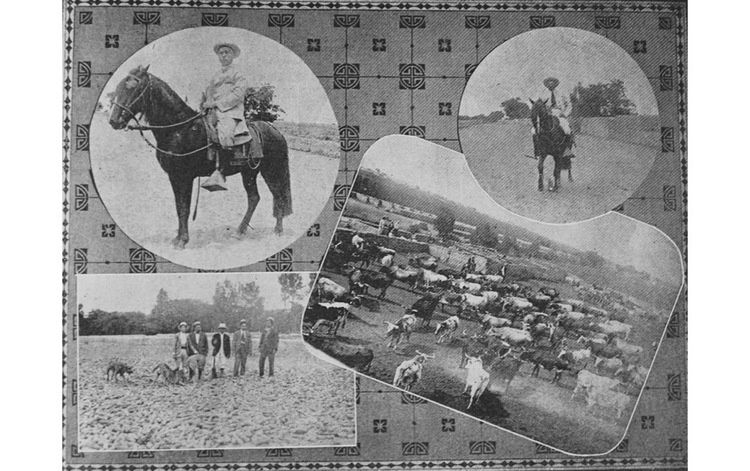
The Cornell Contemporary China Initiative (CCCI) welcomes Ana Candela, Assistant Professor of Sociology at Binghamton University to speak and discuss her extensive research on
From Compradors to Hacendados:
Cantonese Merchants In Peru and the Expanding Settler Colonial Frontiers of the Cantonese Pacific
Embracing the gendered and racialized settler colonial imaginaries that animated Peruvian nation-making, Cantonese merchants deployed new ideas about nature, labor, and technology to position themselves as ideal colonos chinos (Chinese settlers) and overseas Chinese pioneers (xianqiao). Through these activities and imaginaries, Cantonese merchants brought greater coherence to a broader Cantonese Pacific world that linked South China and northern coastal Peru through migration and commerce during an era of expanding industrial capitalism.
Eli Friedman, Chair, ILR School and Director of the CCCI for Spring '21 hosts and moderates. Professor Friedman teaches the course that is linked to this lecture series, ILRIC 4395, Empire of Migrants.
CCCI was established to create a forum for scholars, researchers, and students with contemporary China interests in any aspect of contemporary China. CCCI is a collaborative effort of the East Asia Program, CAPS, and Asian Studies.
Additional Information
Program
Einaudi Center for International Studies
East Asia Program
Latin American and Caribbean Studies
Courses
LACS offers a variety of courses that explore issues and topics pertaining to Latin America and the Caribbean. Courses range from various fields of study including music, politics, economics, feminist studies, archaeology, theater, art history, language, literature, architecture, agriculture, science and literature.
LRC JAM session - Advancing online language teaching and learning
February 3, 2021
11:00 am
In need of some inspiration for another semester in the virtual classroom? Just A Minute! The LRC has your back with the JAM, our winter video series investigating quick ways to spruce up the online language teaching and learning experience.
Short videos drop twice a week on YouTube and our live jam sessions provide the opportunity to debrief with us and address any questions sparked by watching our LRC JAM series.
Join us to talk about all things online language teaching and learning.
More details and link posted on our website: https://lrc.cornell.edu/learning-communities
Additional Information
Program
Southeast Asia Program
Latin American and Caribbean Studies
South Asia Program
LRC Happy Hour

May 11, 2021
12:00 pm
Join us on Zoom throughout the spring for LRC Happy Hour. Every second Tuesday of the month (third Tuesday in April). We'd love to hear how it’s going! All of it.
Bring your (language instruction) stories whether they be good, bad, amazing, or unusual. It takes all kinds of stories to make a Happy Hour great!Bring your own coffee, tea, or mystery beverage.While we can't serve lunch, the LRC will provide fun, jokes, and laughs free of charge.Also, we just want to see your smiling faces, because we miss you.
More details and link posted on our website: https://lrc.cornell.edu/live-help-sessions
Additional Information
Program
Southeast Asia Program
Latin American and Caribbean Studies
South Asia Program
The Trump Administration Misses an Opportunity to Protect the Air

Amanda Rodewald, LASP
Amanda Rodewald, professor and senior director of conservation science at the Cornell Lab of Ornithology, writes this opinion piece about the Trump administration’s missed opportunity to protect the air.
Additional Information
Sculpture "S.1200—99th Congress" Inspired by the LASP Seminar Series Course

aka "Cage Luggage"
Undergraduate art student Sabrina Haertig was inspired to create a migrations sculpture after participating in this semester’s Contemporary Issues in Latin-Latino America fall seminar series (LATA 4000/6000).
The sculpture entitled S.1200—99th Congress., takes its name from “the 1986 immigration reform act that was passed by the Reagan administration that essentially criminalized migration,” she said. Using steel and other mixed materials, the work depicts variously sized pieces of luggage that mimic cages as a commentary on migration and immigrant detainment.
The seminar, led by the Latin American Studies Program’s director Kenneth Roberts, featured a series of lectures from speakers on migration, borders, and racial justice issues. Some of these speakers include Beth Jorgensen and Abby Cordova.
“This course has been transformative towards my research [as a Rawlings Cornell Presidential Research Scholar] and now I am sure to have picked up the habit of attending LATA lectures out of curiosity for my remaining semesters at Cornell,” she said.
LASP will hold the seminar series again in spring 2021 for students of any level and discipline. Sign up now!
Additional Information
Seed Grants

Details
The Einaudi Center's faculty seed grants launch international studies research and activities that show promise to grow and secure external follow-on funding.
Tenured and tenure-track Cornell faculty are eligible to apply. All disciplines and topics are welcome. Read about recent research Einaudi seeded.
Building International Studies Capacity
Einaudi Center seed grants support international studies research and collaborations that reach across world regions and bring together researchers who have deep knowledge in different regions and disciplines. The awards launch early-stage interdisciplinary research projects with clear plans for scaling up and securing external funding support.
The Einaudi Center is dedicated to international studies. Our seed grants focus on complex global and regional issues and community-engaged methodologies across the social sciences, hard sciences, and humanities. Some research conducted abroad and international collaborations—while valuable—do not qualify for the awards.
Proposals must align with the mission and interests of at least one of our international studies programs. The application requires only your own thoughtful assessment of how your project might contribute to the work of one or more programs.
Proposals that engage with two or more geographical regions are eligible for larger awards of up to $25,000.
Eligibility
Tenured and tenure-track Cornell faculty in all colleges and schools are eligible to apply as individuals or teams. The Einaudi Center will not accept proposals from past awardees who failed to submit the required final report by the deadline stated in the award letter.
- Funding-eligible activities: Data collection, research assistance, travel, meetings
- Not eligible for funding: Salary offset, summer salary, computers and equipment, student stipends/tuition
Requirements
- All funds must be used within one year of the award date.
- You must submit a final report to the Einaudi Center director within one year of the award date. The report must include:
- A summary and assessment of the research and activities you accomplished.
- An update on your external follow-on funding proposal.
- A promotional paragraph written for nonspecialists (100 words maximum) describing the outcome and value of your project.
- The Einaudi Center must be acknowledged in all publications, promotion, and media coverage related to your funded research and activities. Please inform the Einaudi Center in advance of publications and other project outcomes.
How to Apply
Complete the seed grant funding application and submit a proposal including the following:
- Curricula vitae (CVs) for principal faculty
- Statement including objectives, activities, work plan, expected outputs, beneficiaries, and impact
- Human subjects approval, if relevant
- Detailed budget with justification of expenses
- Plans for pursuing future research and external funding support
Evaluation
All successful proposals will meet these criteria. The proposal:
- Shows a high likelihood of generating new knowledge of key economic, environmental, social, cultural, or political problems in the world.
- Includes clearly articulated deliverables.
- Includes a budget appropriate for planned activities.
- Includes a plan for obtaining full project funding to sustain and expand the research.
Questions?
Please email our academic programming staff if you have questions about the seed grant program or your application.
Additional Information
Funding Type
- Award
Role
- Faculty
Program
New Volume on Migrant Care Work

Einaudi Faculty Speak Out on Global Care Industry
From Anindita Banerjee (SAP) and Debra Castillo (LASP/PACS): South of the Future: Marketing Care ... in South Asia and the Americas.
Additional Information
"The War on Cuba" - Film & Discussion | LASP & CUSLAR Public Issues Forum
December 11, 2020
4:00 pm
Friday, December 11, 2020 | 4:00 - 5:30 PM ET | LASP-CUSLAR Public Issues Forum
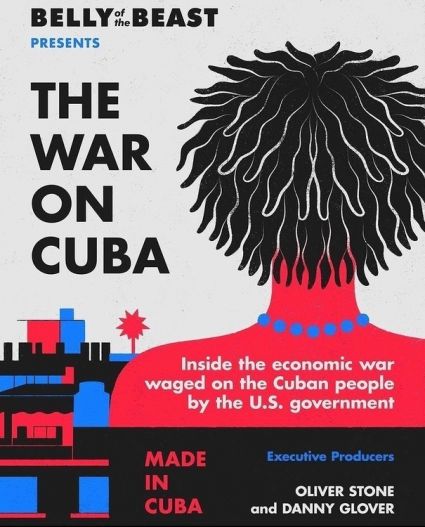
“The War on Cuba” is a brand-new film, released in three (short) parts in Fall 2020 by the Havana-based Belly of the Beast Collective.
The film is in English and Spanish with English subtitles. It looks primarily at U.S. foreign policy toward Cuba and also shows Cuba under the pandemic, which is particularly relevant given the United States’ inability to contain or manage the virus.
Find more information about the film here: https://bellyofthebeastcuba.com/war-on-cuba
The film is 60 minutes in length, and we will hold 30 minutes of questions and answers afterward.
Guest Speaker: Luna OG (she/her) is a CUSLAR alumna (2014-15) and the impact producer for Belly of the Beast. She is a multimedia producer and journalist whose work centers how a dying internet affects worldwide culture.
Register/RSVP for the Zoom link here: https://tinyurl.com/waroncuba-cuslar
Co-sponsors: Committee on U.S.-Latin American Relations (CUSLAR), Cornell University Latin American Studies Program (LASP).
Additional Information
Program
Einaudi Center for International Studies
Latin American and Caribbean Studies