
Migrations Program
Creative Competition Winners Share Stories of Migration

How does migration shape life in your community? Our students and staff responded with their art and writing in this year's creative competition.
Table of Contents
- “Naturalization Test” and “Immigrant React” by Aishvarya Arora
- Itha-Kaoua by Shirley Le Penne
- "Coexistence: A Reflection on Migration" by Wanlu Liu
- "Of the Fruit Tree" by Yazmin Muniz
- "A Place to Roost" by Audrey Pinard
- "En Comunidad” by Liz Radman
Naturalization Test and Immigrant React
By Aishvarya Arora, MFA candidate in poetry
Read the poems in their original format: “Naturalization Test” and “Immigrant React.”
Itha-Kaoua
By Shirley Le Penne, PhD candidate in government
Coexistence: A Reflection on Migration

By Wanlu Liu, MA student in architecture
Migration is a cycle of survival, transformation, and adaptation. Coexistence explores this continuous movement through the interplay of predator and prey, human and nature, struggle and resilience. The piece blurs these boundaries, illustrating how migration is not just a human experience but a fundamental force that shapes all life.
The tension between predator and prey mirrors the challenges faced by those who migrate—some driven by necessity, others by pursuit, all caught within a larger system of displacement and renewal. The intricate patterns weaving through the composition represent the unseen forces that connect and divide us—borders, histories, and the shifting landscapes of identity.
In my community, migration shapes not only who we are but how we coexist. This piece invites reflection on the ways we navigate spaces of belonging, conflict, and transformation, all within a cycle that extends beyond humanity into the broader rhythms of the natural world.
Of the Fruit Tree
By Yazmin Muñiz ’27, English and government
Read “Of the Fruit Tree” in its original format.
Artist's Statement
Like all things, there's always a root—cause, action, belief. There's always a bigger picture, and in turn a bigger story to be told. Migration is just that. It's a root for many of us, including myself. I wanted to tell the story of migrations past through language, which is often associated with the word "root."
Language tells the story of migration without needing to actually story tell by the books. A person does not need to understand a foreign language to grasp a story of change, a person can look towards the structures that compose something or even someone. My poem tells migration through a tree-shaped poem and the following languages: Spanish (Puerto Rican, Colombian, and Spanish dialects), English, Portuguese, Arabic (Moroccan Darija Dialect), Yoruba, and Borinken Taino.
The left side of the tree details the migration of my maternal family tree, where three Portuguese brothers sailed to Brazil and then to the Colombian northern coast to live there. It then follows the Spanish migration, and the unions in my maternal side to become mixed with the dialects, languages, and different races in the area.
On the right-hand side I discuss my paternal lineage, which hails from Puerto Rico. I decided to write in the Taino language which is still very limited as most was lost to the colonial era. That particular segment details the self-perception of the Tainos and their perceptions of the Spanish conquistadors. No migration happens on the part of the Tainos, but they do witness it—and like everyone they have their beliefs on it.
The next part follows a Puerto Rican, who again does not physically migrate. Instead, they have to migrate through the different shifts of power from the Spanish to the Americans. The shift in language towards the end of that segment contains English words, amplifying the language shift as the government migrated.
The end of the poem is in English, it represents where my immediate family have immigrated to, and where I am as a first-generation American. I'm now surrounded by English and by a constant search for my roots even though I know them already. This idea was actually born that way. It might seem a bit funny, but ever since I was a kid I was always searching up the names of grandparents in the Colombian or Spanish military archives to see who came before them.
I just did not want to pay for Ancestry DNA. Now, over a decade later I decided to bite the bullet and do that DNA test. I found I'm Portuguese, Western African, Moroccan, Palestinian, European Jewish, Indigenous Colombian, and Puerto Rican, Spanish from the Canary Islands, Basque—you name it. I thought I would be satisfied seeing the numbers, but I was in fact NOT satisfied. I realized I was more interested in the stories of how my ancestors got to this point in the United States. I knew I couldn't get the answers anymore, as these stories die with our loved ones. However, it was left to the imagination and so this piece was born. So, I think of migration as a transitory measure that connects me to my ancestors, people that don't know me and I don't know. It's the vector for my storytelling and imagination, and it's a reminder there is always a 'root' or a beginning.
Just like the fruit tree, it symbolizes the beginning of life, of a story, and of transition—through seasons distant or near.
A Place to Roost
By Audrey Pinard ’25, Earth and atmospheric sciences
Before I ever thought of marriage, I had to be a father.
I used to think mine was selfish—leaving me at eighteen with a mother and two sisters to care for. It wasn’t his fault he died, but at that age, it felt that way.
Most kids I knew ended up where their parents did—in the Army or the Navy. That’s what happens when you grow up on a U.S. military base. Life happens in cycles. People eat, live, and die, all in the same place. Families packed up and left, replaced by new ones before the dust even settled. But we never moved. My father’s death secured us a home.
But I couldn’t stay.
I was old enough to be drafted, and South Korean policy meant twenty months in service. If I enlisted, my mother would be alone, raising my sisters without a degree or a job. Sure, we had a death gratuity check, but it wasn’t enough. And I wasn’t enough—not yet. So, I left for America.
San Francisco wasn’t kind at first. Even with a belt, my pants sagged under the weight of quarters from my laundromat job. The scent of lavender detergent clung to me like secondhand smoke. By day, I took classes. By night, I cleaned lint traps, folded strangers’ clothes, and counted my coins, all while living on my friend’s couch, waiting for California residency to kick in.
One afternoon, a few of us—Daniel, Oliver, Jamie, and Chris, all guys from Yongsan—found ourselves hungry and broke. Jamie had a solution. His family owned a chicken farm in Petaluma. He said we could have two birds for free—if we caught and cooked them ourselves.
It was exciting at first.
The chickens hopelessly flapped their wings and clucked as Oliver and I chased them with our eager hands stretched out. They nipped our palms as we attempted to lure them with feed. Then one chicken fell victim. Daniel grabbed its feet, flipped it upside down, and handed it to me enthusiastically. I smiled back nervously.
He and Chris went to find some booze, leaving me alone in an ash-marked house. A feeble light flickered overhead, casting misshapen shadows across the tainted cedar walls.
I knew what to do.
Jamie said it was a simple twist and snap. The instructions were comprehensible and easy to follow, yet seemed unnatural. The chicken wouldn’t feel a thing.
I tried to convince myself of that as it began to thrash violently.
I clenched my teeth, pressing my fingers harder into its scaly legs. Its frantic squawking filled the room, clawing at the silence like a child screaming in rebellion. My grip tightened around its neck, my thumb tracing the fragile dip in its throat. The moment stretched longer than I expected—longer than I could bear.
I twisted.
A sharp crack rang out. Its wings convulsed, slamming against my chest. Its claws, still slick from the dirt outside, raked my wrist, desperate to find something solid in a world that had just betrayed it. I held firm, but my stomach churned. Its body trembled in short, uneven spasms, every nerve firing its last protest.
Then, finally, it stilled.
I swallowed hard and carried it to the boiling pot of water in the corner of the room. When I submerged it, the stench hit me all at once.
Wet feathers. Damp flesh. Singed rubber.
The steam curled against my face, pushing into my nostrils and coating my tongue. I gagged, searching for a window, but they were nailed shut. The air thickened around me, suffocating.
I yanked the chicken out, laid it on the wooden block in the center of the room, and hesitated before touching it again. My eyes were welling with tears, and I told myself it was from the searing sting of sulfur.
I plucked its matted wet feathers—cautiously at first, like I was afraid I’d somehow still hurt it. They fell in clumps to the floor, unsettling the dust-covered ones beneath them. I picked faster, more vigorously, until I was practically ripping them off, my fingers raw from the effort.
The bloated, goosebump-covered skin started to show.
It was naked. Vulnerable. Diminishing with every pluck into something unrecognizable.
If anyone else had seen it, they would have thought it was store-bought, neatly prepped to enjoy. All that was missing was air-tight plastic wrap and a brand name slapped on the front so that it’d appear desirable.
Once clean of the remaining dirt, I sliced off the head, liquid crimson splattering across my Converse All Stars. I squeezed my hand through the gaping hole between its shoulders and separated its organs from its heart.
I hesitated, reluctant to toss its feet aside, but Americans do not eat that part.
Splayed out in front of me, the mangled carcass lay paralyzed: broken, stolen from its kind, and stripped of its voice.
Plucked of its characteristics, it was left to be a hollowed-out shell, consisting of only parts of value.
I never went back to the farm.
But I carried it with me.
Forty years later, I’ve almost forgotten that night. Almost.
I built a life here. I got my degree at Berkeley. I sent my sisters to Washington Middle School so they could get the education they deserved. They did well, but they also learned what it meant to be foreign, to be seen as something other.
We assimilated the best we could. Dressed like them, spoke like them, ate like them. Yet, in the end, it didn’t matter.
I had an appetite for the American dream and let it consume me, even as I knew it was empty.
Every now and then, when I make chicken noodle soup for my loved ones, the sickening stench of wet feathers drifts through the air, and I remember that night in a language I’ve nearly lost.
They say that home is where you make it, but sometimes, I wonder—if you leave too much behind, do you ever truly find a place to roost?
En Comunidad
By Liz Radman, Assistant director of engineering advising in the College of Engineering
This wood carving is not just art, it’s a reflection of how migration shapes my very own life and community. I grew up in a household shaped by creativity and adaptation. My father immigrated to the U.S. as a child from the former Yugoslavia (now Croatia), while my mother was born and raised in the U.S. My spouse also came to the U.S. as a child from Mexico. Our stories, like so many others, are woven together by migration, resilience, and reinvention which is mirrored in this piece.

The wood I used was reclaimed from another project. It was an opportunity to give it a new life—similar to the story told in my house growing up, hearing about my father’s family having to make and imagine a new life and new possibilities. Growing up in an immigrant home means seeing the potential everywhere, not just in objects, but people, places, concepts, and futures. Planting seeds and nurturing them takes patience, especially when the garden must be reimagined over and over again, or when those who planted the seeds never get to see what takes root.
Within the actual image is an outline of Mexico, my spouse's homeland before coming to the U.S. Above it is a butterfly—a universal symbol of transformation and migration. The embodiment of immigration hovers. Surrounding the edges of the wood are plants of all types scattered sporadically along with seeds. This represents that no matter how we grow or where we land, as long as we tend and support one another, we can grow. This piece showcases that migration is not just about movement across the globe, it is about the movement of shaping the world around us. It is both art and a part of our lives.
The medium for this was wood burning—a skill I taught myself. Beyond the crude technique, this process holds meaning. As the wood burns, it releases scent, and smoke rises—an undeniable transformation. The immigrant story is often oversimplified or romanticized, but working with heat as a medium reminded me that the reality for those who travel here is that they are forged. Burning is unforgivable. One mistake can erase hours of careful work. This felt a fitting parallel to the unfairly high standards placed on immigrants in the U.S., where travelers are expected to embody the “perfect immigrant” stereotype, despite the incredibly different treatment they will experience based on background, skin color, language, and other intersectional parts of themselves.
If I had used paint—my typical medium—I would have been able to cover or hide any mistakes I made and have multiple chances to fix errors in the design. But wood burning felt like the right choice for this particular prompt and project. This piece carries intention and time, and is a raw, unfiltered reflection of that deliberate existence that some may not understand. It is the result of teaching oneself a skill when no teacher is around. The immigrants who have crossed my path have always served as both teachers and students in every space I have ever been in, and I am eager to learn from their stories and listen.
What I love most about this piece is that it has lived many lives already. It holds both a functional and symbolic place in our home—holding warm mugs of cafecito, supporting fresh palachinka from a hot pan, or acting as a plate for galletas between bites. At times this artwork rests on our mantel, reflecting changing seasons. During Día de los Muertos, it always finds a place on our ofrenda, honoring loved ones near and far from all roots of our family tree—or better yet, our family garden that has grown and now spreads across the globe. It is a quiet yet sturdy display of how we as a family create, adapt, and take pride in our cultures and one another as it not only decorates our home, but is actively a part of our everyday lives. My family, my community, has only ever been shaped and continued to grow out of migration.
Additional Information
Program
Information Session: Undergraduate Global Scholars

September 4, 2025
5:00 pm
Uris Hall, G08
Undergraduate Global Scholars are student leaders in the campus community. This competitive fellowship program is open to students from all colleges and majors with a passion for big global questions and speaking across differences. The Global Scholars program provides a toolkit of resources for weighing challenging questions and builds your practical skills in public debates. For the 2025-26 school year, scholars will bring their skills as writers, scholars, activists and artists, poets, hands-on practitioners, and more to study and promote the impacts of international aid. By the end of the program, you'll be an active global citizen and champion for social impact.
Applications are due Sunday, September 14.
Can’t attend? Contact programs@einaudi.cornell.edu.
***
The Mario Einaudi Center for International Studies hosts info sessions for graduate and for undergraduate students to learn more about funding opportunities, international travel, research, and internships. View the full calendar of fall semester sessions.
Additional Information
Program
Einaudi Center for International Studies
Reppy Institute for Peace and Conflict Studies
East Asia Program
Southeast Asia Program
Latin American and Caribbean Studies
Institute for African Development
Institute for European Studies
South Asia Program
Migrations Program
Southwest Asia and North Africa Program
Queen Mary and Cornell Hold Global Migration Spring School in Malta
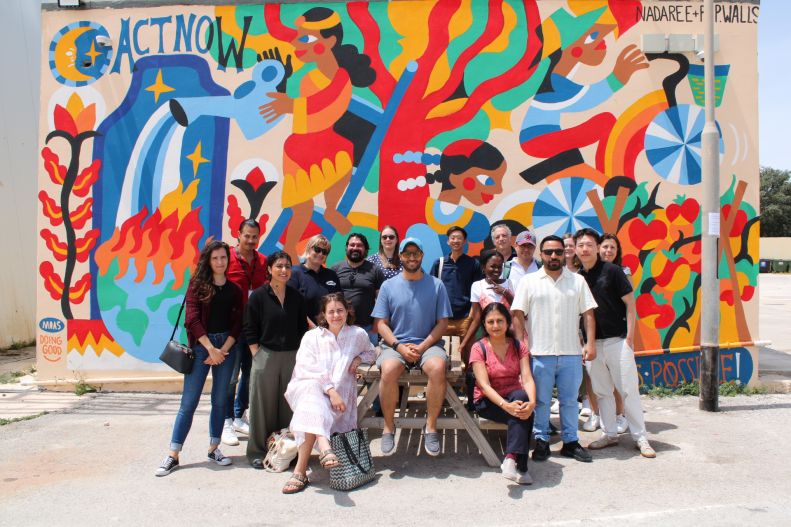
Katie Fiorella, Migrations Director
Queen Mary University of London and Cornell University have co-delivered the first joint Global Migration Spring School, held from 4 to 9 May at the Queen Mary Malta Campus in Gozo. The School marks a new chapter in the growing academic partnership between the two institutions, following their earlier collaboration on a transnational migration workshop.
Additional Information
International Research Matters for the U.S.

How Cornell Research Makes People's Lives Better
This digital magazine features research led by numerous Einaudi faculty. Their groundbreaking international work turns bold ideas into solutions and improves lives at home and abroad.
Additional Information
Topic
- World in Focus
Program
How Falsehoods Drove Trump’s Immigration Crackdown in his First 100 Days

María Cristina García, Migrations/LACS
“I don’t think we have a full understanding yet of the many ways the Trump administration is changing our immigration system,” says María Cristina García, professor of history.
Additional Information
Indian and Pakistani Troops Exchange Fire

Natasha Raheja, SAP/Migrations
Natasha Raheja, assistant professor of anthropology, joins Deutsche Welle to discuss violence in the Kashmir region.
Additional Information
"Corporeal Power"

Migrations postdoctoral fellow Sabrina Axster coauthors a chapter in The Oxford Handbook of International Political Sociology called “Corporeal Power.”
Other
Additional Information
Program
Type
- Other
Publication Details
Publication Year: 2025
ISBN: 9780198854708
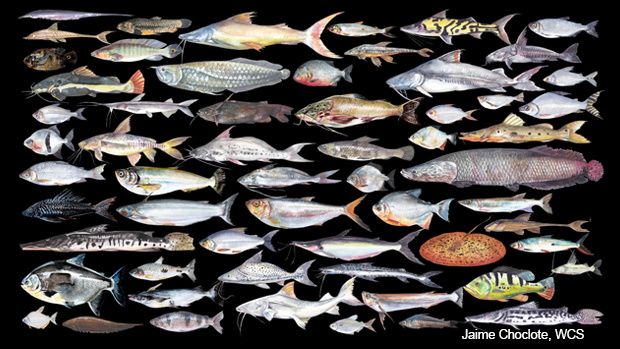
One Health, Fish Edition: Biodiversity, Health and Nutrition through an Aquatic Lens
May 14, 2025
1:00 pm
Through programs around the globe, the Cornell K. Lisa Yang Center for Wildlife Health strives to sustain a healthier world by developing and implementing proactive, science-based solutions to challenges at the interface of wildlife health, domestic animal health, human health and livelihoods, and the environment that supports us all.
The Fiorella Research Group, with projects spanning East Africa, Latin America, and Southeast Asia, aims to safeguard the health of aquatic ecosystems and promote the sustainable development of capture fisheries and aquaculture. The expansion of aquatic food systems is pivotal for reducing global malnutrition and achieving economic development. This growth, however, must be balanced with formidable challenges in protecting biodiversity, ensuring food safety, and maintaining fish health.
Join Katie Fiorella, Sebastian Heilpern, and Eric Teplitz as they use case studies from rapidly emerging aquatic food sectors in Cambodia, the Amazon, and Kenya to underscore the critical importance of aquatic environments and biodiversity to our own health. They will also highlight the One Health approaches required to address these challenges in aquatic systems.
Register for the event.
Art credit: Jaime Choclote, WCS
Additional Information
Program
Migrations Program
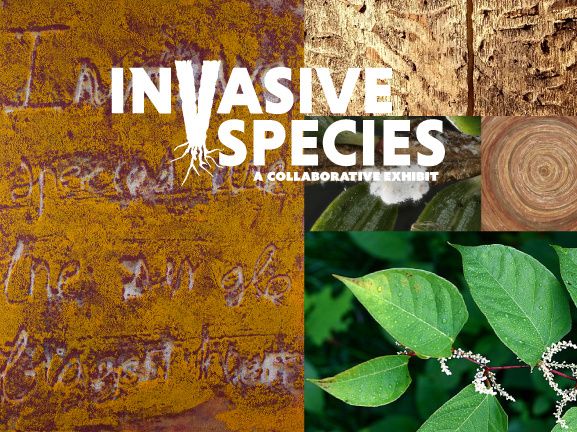
Invasive Species: A Collaborative Exhibit
August 15, 2025
12:00 am
Mann Library, Gallery, Second Floor
Invasive Species: A Collaborative Exhibit is a meeting between art and science on the impacts of invasive species in New York State, and a call to every-day action.
The contributing partners to this show are visual artist Hovey Brock, the New York State Hemlock Initiative (NYSHI) and students from the interdisciplinary field class Earth Projects.
Hovey Brock is a visual artist and writer whose work focuses on the impacts of climate change in the Catskill ecosystem where he lives. www.hoveybrock.com/
NYSHI, launched by Mark Whitmore in 2017, researches the Integrated Pest Management and Biological Control of hemlock woolly adelgid (HWA). Biological control is a method of pest control using predators or parasitoids. In addition to biocontrol, NYSHI conducts research on Integrated Pest Management, an approach that seeks to combine strategies to find the most effective and environmentally friendly way to address pest issues. Learn more about this work and how to get involved here: blogs.cornell.edu/nyshemlockinitiative/
Earth Projects, ENVS/NTRES 3020, taught by artist and scientist Dr. Anna Davidson in the Department of Natural Resources and the Environment, is a seven-week immersive field course in art & ecology. Learn more here: cornellecoarts.org/envs-3200/course-description-syllabus/
The opening will take place on February 27, 2025: https://events.cornell.edu/event/Invasive-Species-opening
This exhibit is the result of a partnership between the Department of Natural Resources and the Environment, the NYS Hemlock Initiative, and Mann Library, and is made possible by funding from the Elizabeth E. (Betty) Rowley Fund for Mann Library.
This exhibiit is free and open to all during the open hours of Mann Library: https://mann.library.cornell.edu/full-hours . It will be on display in the Mann Library Gallery through August 15, 2025.
Additional Information
Program
Migrations Program
Caribbean Graduate Research Grants

Details
A rare opportunity has emerged for graduate students conducting research on Caribbean topics. As part of ongoing efforts to promote Caribbean Studies at Cornell, the Latin American and Caribbean Studies Program is offering funding to conduct research that requires students to travel to the Caribbean or to libraries, archives, or other sites outside the Caribbean that hold collections or resources for the study of the Caribbean and its diasporas. Cornell graduate students in all disciplines are eligible to apply. The research should be conducted during Summer 2025 or Academic Year 2025-2026 and grantees are expected to submit a brief report (500 words) of what they accomplished with the funding.
Applications must include a brief description of the research topic, including information about the proposed research sites, a budget, and a research schedule. This description should not exceed 500 words. Requested funds should not exceed $2,000.
Please submit applications as a Word or PDF file to Ernesto Bassi (eb577@cornell.edu) and Judith Byfield (jab632@cornell.edu). If you have any questions, please email professors Bassi and Byfield.
Additional Information
Funding Type
- Travel Grant
Role
- Student