
Migrations Program
Spotted on the Road: Migrations Scholar Shares Stories of Salamander Crossings

In Spotted on the Road Trisha Bhujle ’26 educates readers about spotted salamander migration. She began working on the children’s book as an Undergraduate Migrations Scholar last year.
Trisha studies environment and sustainability in the College of Agriculture and Life Sciences, with interests in wildlife conservation, climate change, and food systems. We interviewed Trisha about her work, her new book, and how we can all play a part in safer salamander migration.
How did you first get interested in salamanders and their migration?
I learned about spotted salamander migrations when I took “Wildlife Corridor Conservation and Crossing Design” in spring 2024 as my capstone class for the environment and sustainability major.
Laura Heady, the founder of the Amphibian Migrations and Road Crossings (AM&RC) Project, was one of the course’s many guest lecturers and offered critical insights on the importance of conservation planning for amphibians throughout the Hudson Valley. Instantly, I was captivated as she shared photos of spotted salamanders—so much so, that I soon decided to write a children’s book on their migration and ask Laura for her feedback!


Since that initial lecture, I’ve been fortunate to witness spotted salamanders up close. I recently joined Stephen Bredin, a graduate student studying amphibian road mortality and founder of the Tompkins County Amphibian Migration Patrol (TCAMP), to assist in monitoring amphibians on a stretch of road in Ithaca.
By disseminating information and recruiting volunteers to assist with amphibian migrations, TCAMP aims to raise awareness of local amphibians among residents of Tompkins and neighboring counties. TCAMP volunteers have already recorded over 4000 amphibians across three counties this spring.
It was eye-opening to witness firsthand the large number of amphibians killed by speeding cars, whose drivers were likely (and understandably) unaware of the hundreds of critters slowly migrating across the pavement. Two other students and I helped around 70 spring peepers, newts, and wood frogs safely cross the road, and we also learned how to monitor spotted salamander movements!
Every spring, spotted salamanders migrate from forests to vernal pools (also called woodland pools) to mate and lay their eggs. The pools also dry out during the summer, keeping out hungry fish that would otherwise eat salamander larvae.
-Spotted on the Road
What do you want people to know about salamanders and other amphibians on the move?
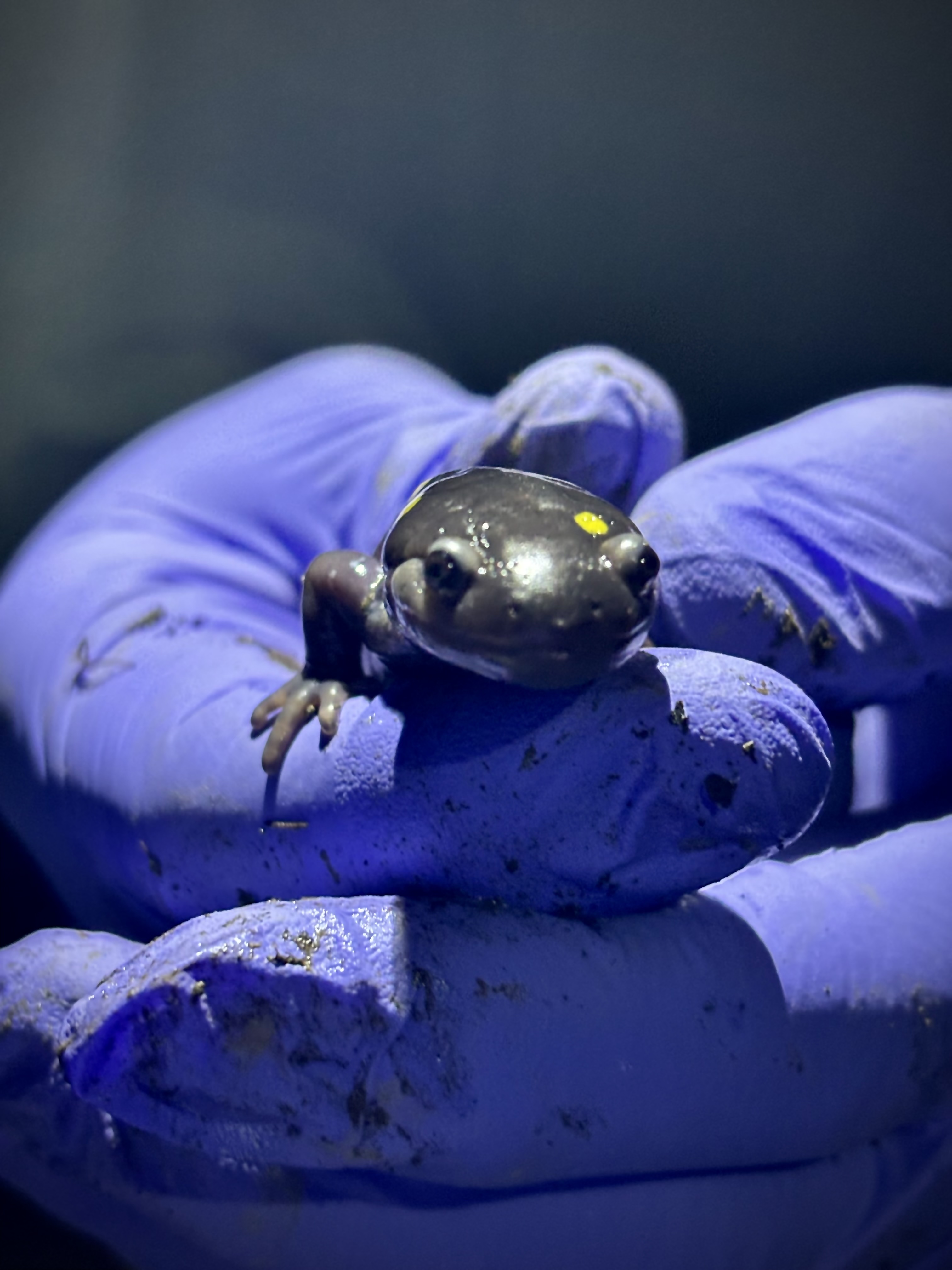
Amphibians are typically active when it is warm, dark, and wet outside. If you’re volunteering with TCAMP or AM&RC to help amphibians cross the road, remember to use a flashlight or headlamp and wear a neon vest that makes you more noticeable to drivers. Drivers may not see you or slow down for you. If you see a car, be sure to move off the road early!
While anyone can read and benefit from this book, I was specifically aiming to target elementary school kids through colorful illustrations and storytelling. I think it is incredibly important to teach kids about their surrounding environment starting from a young age.
How did being an undergraduate Migrations scholar shape you and your work?
The Migrations scholars program was so rewarding because of the diversity of thought that it welcomed. It is a rare privilege to be surrounded by students who share an interest in something but whose creative juices send each of them down differing paths.
My peers studied topics ranging from xenophobia to Southeast Asian refugees, and for my part, I was excited to offer an environmental lens to migration challenges. I learned so much about the world from my fellow scholars and their advice was invaluable as I furthered my own outputs.
How can others get involved?
If you’re interested in getting involved with the AM&RC Project, its website is a great place to start! It has detailed volunteer materials, forms to record data, and amphibian identification guides to enable volunteers to move amphibians across the road safely and appropriately.
To volunteer with TCAMP, join the Listserv or Facebook group. Volunteers will be provided with training videos, headlamps, high visibility vests, and other resources. Residents across other parts of the Finger Lakes region and beyond are also welcome to contact TCAMP for guidance on patrolling for amphibians!
Additional Information
Program
Society for the Humanities: Spring Fellows' Conference on the theme of "Silence"

April 25, 2025
9:30 am
A. D. White House, Guerlac Room
Join this year's cohort of Fellows at the Society for the Humanities for presentations on work-in-progress on the 2024-25 focal theme of Silence. Each presentation will be followed by a Q&A. Open to the public.
Friday, April 25
Coffee and light refreshments: 9:30am
10:00am-11:30pm Panel 1
Migration to the Moon, and Other Theories of Avian Absence
Julia Laurel Mueller Society Fellow
Silent, Silenced, and Silencing: Black Deaf and Blind Education in the Jim Crow South
Jenifer Barclay Society Fellow
Transnational Historical Novels and Human Rights History
Cassie Falke Society Fellow
15-minute break
11:45am-12:45pm Panel 2
The Cold War, Capitalism, and the Color Line: Reading Silence in The Human Condition
Patchen Markell Faculty Fellow
Sounding Khmerican Life in Straight Thru Cambotown
Brian V. Sengdala Mellon Graduate Fellow
12:45pm-2:00pm Lunch
2:00-3:00pm Panel 3
C'Est Si Bon: The Queer Pas de Trois of Lorraine Hansberry’s “Chanson du Konallis”
Sara Warner Faculty Fellow
Is Yeshaya Silent-?-The Presence of the Jewish Dead
Jonathan Boyarin Faculty Fellow
15-minute break
3:15pm-4:45pm Keynote
Re-storying Silence: Mad, Deaf, and Disability Histories
Susan Burch
Professor of American Studies, Middlebury College
In this talk, Susan Burch traces some of the multivalent relationships silence has to institutionalization, institutionalized people, and to their kin on the outside. Centering on life stories and drawing on critical disability, Mad, and deaf history, she reveals wide-ranging meanings and functions of silences that cross generations and reach into the present day.
5:00pm Reception
This event will feature American Sign Language (ASL) interpretation.
Please contact adwhitehouse@cornell.edu for accommodations.
---
The Elephants of Dzanga Bai - Photo and Sound Installation
Thursday, April 24 5-7pm
A.D. White House
“The Elephants of Dzanga Bai.” Photo and sound installation by Ivonne Kienast (K Lisa Yang Center for Conservation Bioacoustics) and Annie Lewandowski (Department of Music), in collaboration with the Society for the Humanities 2025-26 focal theme of "Silence" and the Annual Spring Fellows' Conference.
For more information visit: https://events.cornell.edu/event/the-elephants-of-dzanga-bai-photo-and-…
Additional Information
Program
Einaudi Center for International Studies
Southeast Asia Program
Migrations Program
UndocuAlly Faculty & Staff Workshop: How to Navigate Recent Immigrant Developments
April 23, 2025
3:30 pm
Students with vulnerable immigration status are increasingly facing distinct obstacles as a result of a shifting immigration landscape. These developments present unique challenges to all aspects of students’ experience as well as their futures.
This virtual webinar will discuss new and emerging immigration policy updates affecting students with vulnerable immigration status at Cornell and provide guidance on how faculty and staff can best navigate these challenges to support students. Speakers from Cornell Law School, Undocumented & DACA Student Support, and CUPD will discuss important developments, highlight institutional policies, and outline the best ways to support students with vulnerable immigration status. Registration is required to attend, open to the Cornell community.
Register using the following link: https://cornell.zoom.us/webinar/register/WN_nlFn0c2HRXamz6MLbsD5wQ
Additional Information
Program
Migrations Program
International Fair

August 27, 2025
11:00 am
Uris Hall, Terrace
International Fair showcases Cornell's global opportunities for undergraduate and graduate students. Explore the fair and find out about international majors and minors, language study, study abroad, funding opportunities, global internships, Cornell Global Hubs, and more.
The International Fair is sponsored by the Mario Einaudi Center for International Studies and Office of Global Learning (both part of Global Cornell) in partnership with the Language Resource Center.
Register on CampusGroups to receive a reminder. Registration is not required.
Additional Information
Program
Einaudi Center for International Studies
Reppy Institute for Peace and Conflict Studies
East Asia Program
Southeast Asia Program
Latin American and Caribbean Studies
Institute for African Development
Institute for European Studies
South Asia Program
Migrations Program
Southwest Asia and North Africa Program
New TodoSomos Archive

Venezuelan Migrant Testimonies Available to Researchers at Cornell
A campus symposium brings together stakeholders and launches the new collection, with support from LACS and Migrations.
Additional Information
Migrations Virtual Interns Contribute to Megacity Migration Project

Emily McGrath ’22 and Dea Fackovic Volcanjk ’23 spent part of their summer giving Cornell migrations researchers a leg up on their fall research.
The undergraduates’ work evaluating media and scholarly conversations helped to shape the trajectory of Megacity Migration, a climate migration collaboration led by Holger Klinck in the Cornell Lab of Ornithology. Funded by Migrations: A Global Grand Challenge, part of Global Cornell, the multidisciplinary project explores how moving Indonesia’s capital from the flood-prone island of Java to biodiverse Borneo will change communities, forests, and ecosystems.
McGrath and Volcanjk joined the international team to identify populations with a stake in the relocation and study the media’s impact, working under the direction of Wendy Erb, Lab of Ornithology postdoc, and Walker DePuy, doctoral candidate in conservation and anthropology at the University of Georgia. Expanding the contextual framework of the project in two specific areas – soundscape research and media coverage of the capital relocation – were the researchers’ top priorities for the internships, said Erb.
Soundscapes and Indigenous Voices
The Lab of Ornithology is a world leader in bioacoustics research. McGrath, a nutritional science major, evaluated soundscape research – an innovative way of reframing “noise” as how particular people and communities interpret their acoustic environment. She assessed materials written by or focusing on indigenous and marginalized communities, for a more diverse view of the capital city relocation and the changing soundscapes of all communities in its path.
“Instead of a purely computerized soundscape study, this project takes an anthropological approach and bridges the gap into the social sciences,” McGrath said. The experience provided invaluable practice in ethnographic and social science research, which is common in her major field.
McGrath’s analysis revealed a shortage of local and indigenous voices – and a “familiar overrepresentation of authors from the global north,” said DePuy. “Her review helped us improve our research design as we work with East Kalimantan scholars and area communities to integrate bioacoustics with local expertise.”
The lack of scholarly research integrating local ecological knowledge and soundscapes that McGrath discovered inspired Erb to develop a Fulbright ASEAN proposal to conduct ethno-bioacoustics research with traditional communities across Borneo, from Malaysia to Indonesia.
The spin-off project will show how collaborative soundscape monitoring can help local communities understand and adapt to the impacts of climate migration while protecting indigenous livelihoods and knowledge systems. The work is part of a collaboration with Shorna Allred, associate professor in the Department of Natural Resources, who leads community-led research on cultural resilience with a Penan community in Sarawak.
Perceptions of the Capital City Relocation
Volcanjk, a chemistry major and the second intern, conducted a media analysis of the capital city relocation that helped the team understand who is driving the relocation, how the decision is being framed, and what impacts are highlighted. In her findings, she noticed discrepancies between the government’s focus and that of NGOs.
“The government tends to emphasize the economy and job opportunities,” she said. “They are mostly focusing on the logistics of the relocation – not on finding solutions for the current capital city. NGOs are concerned about environmental impacts and indigenous rights.”
For Erb, the finding highlighted the role of national politics in the decision. For these powerful stakeholders, economic benefits essentially trump other concerns, such as risks to endangered species and effects on local and indigenous communities.
DePuy and Victoria Beard, professor in the Department of City and Regional Planning, are building on Volcanjk’s research findings by conducting remote interviews this fall and winter with government, civil society, and academic actors in Indonesia and the United States. These interviews will provide valuable in-depth description and analysis of the capital city relocation’s political context and potential social and ecological impacts from a diverse range of experts, as well as stakeholders directly involved in the relocation process.
As the formal conclusion of the interns’ projects, McGrath and Volcanjk presented their work virtually to the Lab of Ornithology’s Center for Conservation Bioacoustics in August 2020.
By Megan DeMint, communications specialist for Migrations: A Global Grand Challenge
Additional Information
Program
Navigating Scale and Interdisciplinary Dynamics in Conservation Social Science
By Our Faculty
To better understand and address global human–environment crises, interdisciplinary collaborations across the natural and social sciences have become increasingly common in conservation. Within such collaborations, the question of scale can cause tensions: how to agree on the unit of measurement and analysis? Drawing on two research projects in Indonesia that integrate cultural anthropology and conservation biology, this Migrations-funded project focused on how these collaborations navigated questions of scale.
Article
Additional Information
Program
Type
- Article
Publication Details
Publication Year: 2025
Journal: Conservation Biology
From Colony to Diaspora: Enduring Legacies of U.S. Territorial Rule in Puerto Rico & the Philippines

April 22, 2025
4:30 pm
Mann Library, 160
Join us for a conversation discussing the historical and contemporary relationship between the United States, Puerto Rico, and the Philippines, beginning with their acquisition in 1898 following the Spanish-American War. As sites of U.S. territorial expansion, both were governed through military rule and colonial policies justified by racial and economic ideologies.
While Puerto Ricans were granted U.S. citizenship in 1917, the Philippines moved toward independence by 1946, creating divergent but interconnected paths shaped by migration, labor extraction, and strategic military interests. The discussion moves from this shared colonial foundation to contemporary issues—including large-scale migration, economic dependency, grassroots resistance, and debates over political status. It highlights how diasporic communities engage with questions of identity and belonging and how movements for self-determination continue to challenge the legacy of the U.S. empire today.
Panelists
Christine Bacareza Balance is an associate professor of performing and media arts and Asian American studies at Cornell University. Her work as a scholar and cultural worker bridges performance, popular culture, and Asian American studies, with a particular focus on Filipino and Filipino-American experiences. Her research and teaching explore how music, media, and performance shape diasporic identity, memory, and political life. She is also engaged in community-based and public humanities work that connects academia to broader conversations around race, empire, and cultural expression.
Rebeca L. Hey-Colón is an associate professor with a joint appointment in the Department of Literatures in English and the Latina/o Studies Program at Cornell University. She is a scholar of Afro-Latinx and Caribbean cultures whose work explores how race, migration, and religion shape identity and resistance across the Americas. Her research and teaching center on Afro-diasporic spiritual practices, visual and literary cultures, and the everyday experiences of Latinx communities. She engages questions of colonialism, borders, and belonging through a focus on cultural expression and community knowledge.
Host
This event is organized by the Migrations Program's undergraduate Migrations scholars and co-sponsored by Latina/o Studies Program and Asian American Studies
Don't miss our first event hosted by the Migrations scholars on April 21: Margins and Mobilization: Migrant Worker Precarity and Power in the Trump-era Economy.
Additional Information
Program
Einaudi Center for International Studies
Migrations Program
Southeast Asia Program
Margins and Mobilization: Migrant Worker Precarity and Power in the Trump-era Economy
April 21, 2025
5:00 pm
Mann Library, 160
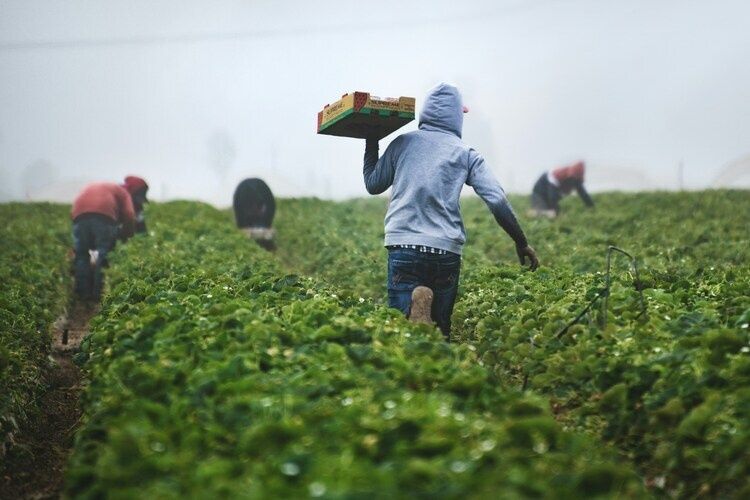
Join us for a conversation on the role of migrant workers in the U.S. economy. Bringing together scholars and activists, the panel will examine how immigration laws and border enforcement function as tools of labor control, shape markets, and produce systemic vulnerability. The discussion will trace how these dynamics have intensified under the Trump administration amid the rise of ethnonationalism and increasingly punitive immigration policy, as well as how migrant workers have been pushing back and what forms of resistance have emerged.
This event is of interest to all those studying labor, immigration, human rights, and social justice to better understand the intersection of migration policy, politics, and the everyday lives of migrant workers.
Panelists
Aly Wane is a human rights organizer based in Syracuse, New York. Originally from Senegal, he has worked on anti-war, economic, racial, and immigrant justice. He has been involved with the American Friends Service Committee, the Workers' Center of Central NY, and has been on the Board of the Alliance of Communities Transforming Syracuse, a politically progressive interfaith organization. He is a member of the Syracuse Peace Council and the Black Immigration Network, the Black Alliance for Just Immigration, and the UndocuBlack Network. He is currently on the advisory boards of the Immigrant Justice Network and Freedom University out of Georgia.
Shannon Gleeson is professor of labor relations, law, and history in the School of Industrial and Labor Relations. Her research focuses on the labor rights of migrant workers and the enforcement of those rights, the vulnerabilities migrant workers face, migrant organizing and anti-capitalist currents within the immigrant rights movement, and the policing of migrant workers.
M. Cornejo is an assistant professor in communication. Trained as an interpersonal communication researcher, Cornejo examines how legally stigmatized migrants’ communication strategies to obtain humanization and access to essential resources (e.g., education, health care access) alter their self-view, psychosocial health, general well-being, and social mobility in the U.S.
Host
This event is organized by the Migrations Program's undergraduate Migrations scholars.
Don't miss our second event hosted by the Migrations scholars on April 22: From Colony to Diaspora: Enduring Legacies of U.S. Territorial Rule in Puerto Rico & the Philippines.
Additional Information
Program
Einaudi Center for International Studies
Migrations Program
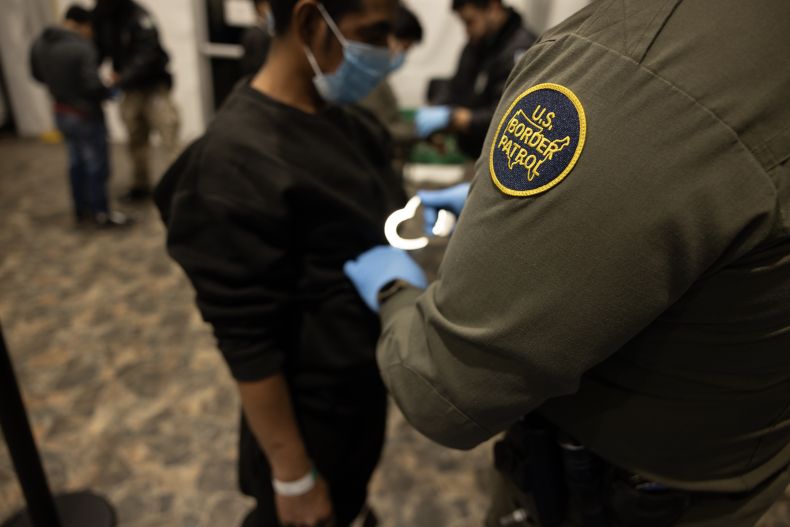
What Evidence Does the U.S. Government Need to Deport Green Card Holders?
Jaclyn Kelley-Widmer, Migrations
Jaclyn Kelley-Widmer, clinical professor of law, discusses the evidence the government must provide to deport a lawful permanent resident.