
Migrations Program
A Judge’s ‘Battle Royale’ with Trump and the Supreme Court
Stephen Yale-Loehr, Migrations
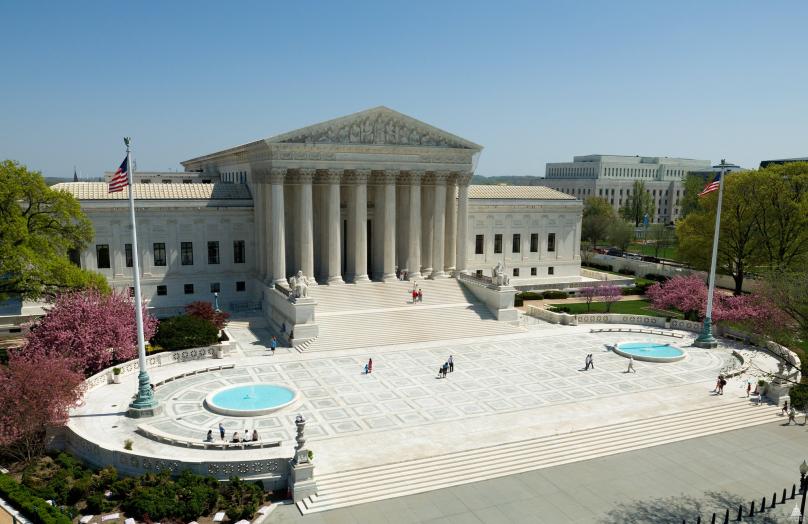
Stephen Yale-Loehr, immigration attorney and scholar at Cornell Law School, comments on the significance of the judicial battle over immigration policy and the Supreme Court’s emergency orders.
Additional Information
North American Birds Are Dying Off Faster. It Signals a Crisis for Humans, Too

Amanda Rodewald, Migrations
Amanda Rodewald, director of the Center for Avian Population Studies at the Cornell Lab of Ornithology, comments on the broader implications of declining bird populations.
Additional Information
Conference: Migration in Contentious Political Times
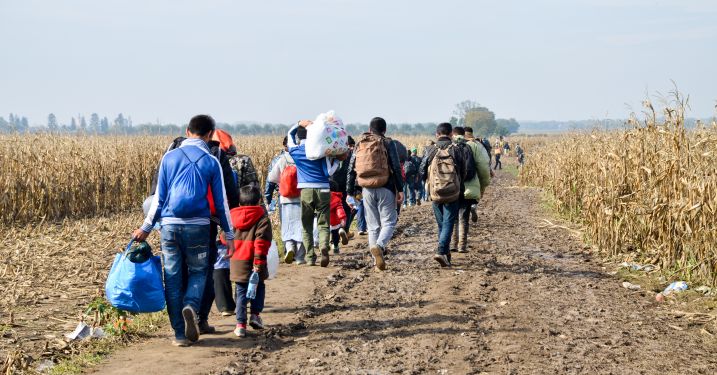
Join us on Sept. 18 to learn about migration, sustainability, and belonging in the contemporary moment.
Botswana Shows How Smarter Cattle Herding Can Save Lions, Reopen Ancient Wildlife Pathways
Steven Osofsky, Migrations
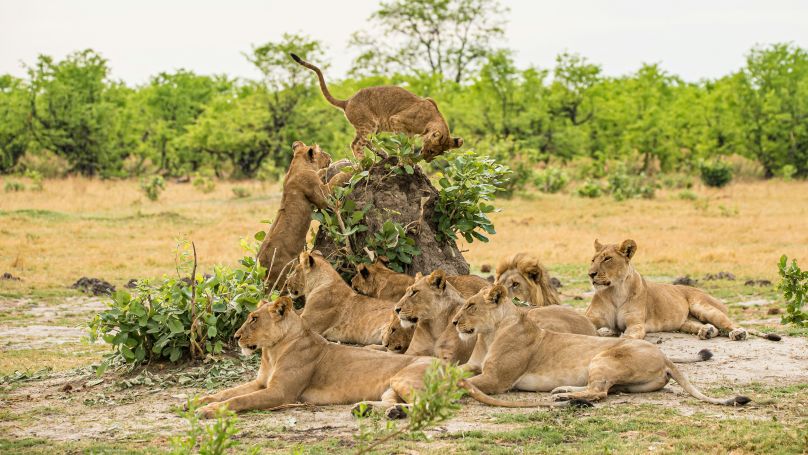
Steven Osofsky, a Cornell University professor of wildlife health and health policy, contributed research supporting fence removal and strategic herding in Botswana.
Additional Information
The Demography of Staying: Probing the Decline of Domestic Migration in the United States
March 13, 2026
1:25 pm
Martha Van Rensselaer Hall, 2250
Cornell Population Center Innovations in Population Science Speaker Series presents "The Demography of Staying: Probing the Decline of Domestic Migration in the United States" with Peng Huang, University of Georgia. This seminar is hosted by MigLab.
Additional Information
Program
Migrations Program
Detection Description Experiments for Migration and Xenophobia

March 10, 2026
10:00 am
Mann Library, 103
How can we identify and interpret xenophobia in online spaces? What can digital data tell us about real world enforcement and lived experiences of migrants, and where are its limits? And how can we use computational tools to study and respond to objectionable speech online?
This hands-on workshop introduces digital methods for studying xenophobia, combining legal and social context with practical tools. We will hear from Professor Beth Lyon on xenophobia and timely case examples (including recent ICE related hotspots), Alfonso Indurain on machine learning approaches to detecting xenophobic speech and supporting moderation, Dr. Han Li on interpreting large scale online hate speech data, and Inhwan Bae on designing online experiments to strengthen causal inference. We will close by discussing applications, ethics, and key limitations of digital data and tools in this area.
Speakers
Beth Lyon, Associate Dean for Experiential Education, Clinical Professor of Law, and Clinical Program Director, Cornell UniversityAlfonso Indurain, PhD candidate, Department of Statistics, Computer Science and Mathematics, Public University of NavarreHan Li, Postdoctoral Associate, Department of Communication, Cornell UniversityInhwan Bae, PhD candidate, Department of Communication, Cornell University
This event is hosted by the Migrations Program's graduate fellows, part of the Einaudi Center for International Studies. For questions, please contact Yichen Wang (yw2674@cornell.edu).
Additional Information
Program
Einaudi Center for International Studies
Migrations Program
Travel Grants Send Grad Students Abroad
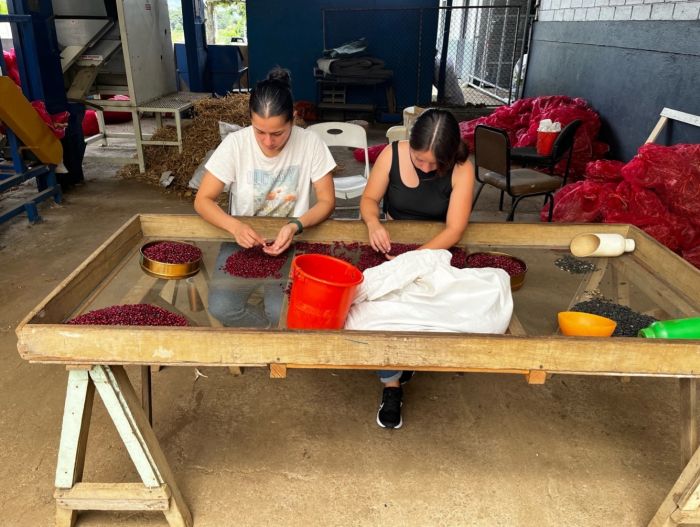
Eighty-three graduate students traveled internationally for fieldwork last summer with Einaudi Center support.
Additional Information
Venezuelan Perspectives on U.S. Interventionism
March 13, 2026
12:00 pm
Virtual
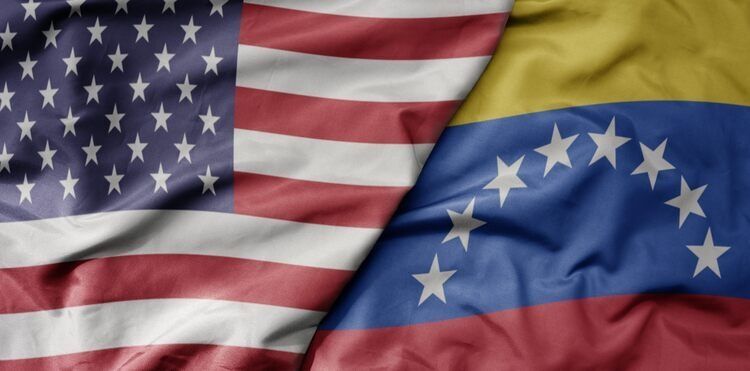
Recent U.S. military actions in Venezuela—including strikes on civilian boats, the seizure of oil tankers, and the abduction of President Nicolas Maduro—have raised questions about U.S. ambitions in Latin America and their implications for peace and international order. This panel brings together five prominent experts on Venezuelan history and politics, with the aim of deepening understanding of Venezuelan perspectives on recent events and their broader implications.
How are Venezuela’s political parties responding to shifting U.S. foreign policies? What are the likely effects of recent military actions on prospects for peace and stability in Venezuela and Latin America? Can the U.S. play a meaningful and legitimate role in helping Venezuelans restore democratic governance, and if so what policies might contribute to that goal?
Panelists
Irina Troconis, Professor, Cornell University (moderator)David Smilde, Professor, Tulane UniversityVeronica Zubillaga, Professor, Universidad Simón Bolívar, Caracas; Visiting Scholar, University of Illinois, ChicagoMargarita López Maya, Professor, Universidad Central de Venezuela
Register
Register here to join the virtual conversation.
***
Event Hosts
This virtual event is hosted by the Reppy Institute for Peace and Conflict Studies and cosponsored by the Latin American and Caribbean Studies Program. Both are part of the Einaudi Center for International Studies.
Additional Information
Program
Einaudi Center for International Studies
Reppy Institute for Peace and Conflict Studies
Latin American and Caribbean Studies
Migrations Program
Conference on Myanmar's Borderlands
July 12, 2026
12:00 am
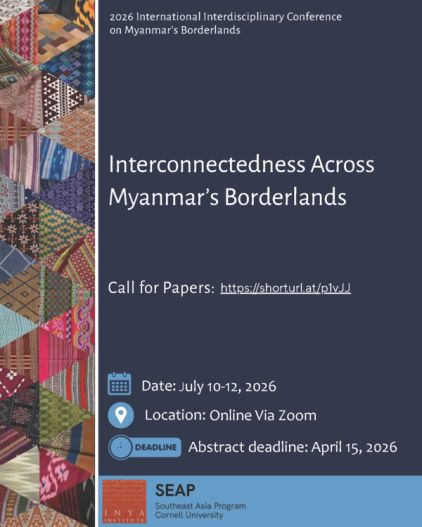
2026 International Interdisciplinary Conference on Myanmar's Borderlands (2026 IICMB)
A virtual conference hosted by the Inya Institute (Yangon), Cornell University's Southeast Asia Program (SEAP), and their Southeast Asia-based partners.
Myanmar’s multilayered crisis is profoundly reshaping the socio-economic and geo-political dynamics of the country’s borderlands—regions that have evolved into spaces of exchange, negotiation, and collaboration across geographical, cultural, and linguistic boundaries. The emergence of these spaces has been uneven, unfolding under stringent administrative control and persistent insecurity and marked by fluctuating intensity and periodic pushback from central authorities. Yet, the potential of borderlands to provide local and trans-local communities and networks with opportunities to shape the country’s future remains tremendous.
The conference’s focus on interconnectedness will highlight how inclusive learning and dialogue, local and trans-local community engagement, and recognition of our interdependence with the natural environment can further strengthen borderland dynamics across all markers. It will broaden the conversation on borderland issues that may only be addressed through the prism of ethnicity or framed as issues specific to group identities. It will also encourage dialogue across communities, inviting them to discuss the challenges they face and the aspirations they hold.
invite scholars and students to submit original research papers and/or panels covering any area of Myanmar borders with China, Laos, Thailand, Bangladesh, and India and addressing any of the following topics:
• borderland dynamics and their local and trans-local communities
• networks and partnerships emerging across ethnic, religious, cultural and linguistic boundaries
• communities, networks, and trade across borders
• natural resources and challenges to environmental protection in borderlands
• legal and illegal border migration
• humanitarian relief to refugees and public health in borderlands
• border regimes and governance
• infrastructure(s) and illicit economies and activities
• non-human mobility in borderlands
• formal and non-formal education in borderlands
• other themes related to Myanmar’s borderlands.
In order to preserve the confidentiality of presenters, the conference program will not be available for circulation beyond the group of conference presenters. Conference presenters will also be expected to follow the Chatham House Rule.
The conference will be held entirely online. Due to the time difference between Myanmar and the U.S., panels will be held in the evening for presenters based in Myanmar, Thailand, and elsewhere in Southeast Asia, and the morning for those located in the U.S.
Additional Information
Program
Einaudi Center for International Studies
Southeast Asia Program
Migrations Program
Information Session: Fulbright U.S. Student Program

May 18, 2026
5:00 pm
The Fulbright U.S. Student Program supports U.S. citizens to study, conduct research in any field, or teach English in more than 150 countries. The program is open to graduate students, recent graduates, and young professionals. Undergraduate students who wish to begin the program immediately after graduation are encouraged to start the process in their junior year. Recent graduates are welcome to apply through Cornell.
The Fulbright program at Cornell is administered by the Mario Einaudi Center for International studies. Applicants are supported through all stages of the application and are encouraged to start early by contacting fulbright@einaudi.cornell.edu.
Register for the virtual session.
Can’t attend? Contact fulbright@einaudi.cornell.edu.
Additional Information
Program
Einaudi Center for International Studies
Reppy Institute for Peace and Conflict Studies
East Asia Program
Southeast Asia Program
Latin American and Caribbean Studies
Institute for African Development
Institute for European Studies
South Asia Program
Migrations Program