
Migrations Program
International Research Showcase
November 19, 2025
4:30 pm
Atkinson Hall, Ground Floor
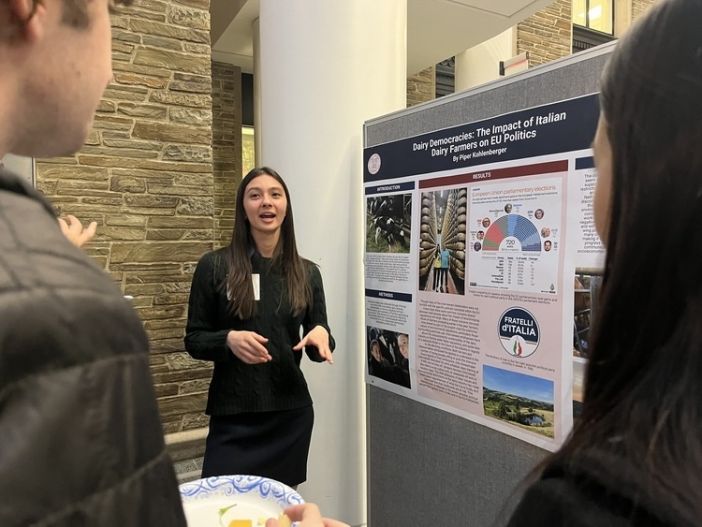
Come and explore the wide range of international work being done at Cornell! This annual showcase features a concurrent student poster session and speed talks by Einaudi Center graduate students and visiting scholars. Refreshments will be served.
Student Experience Poster Session
Over 70 undergraduates will present their international summer experiences. They conducted research, worked in Global Internships, and put leadership into action as Laidlaw scholars.
Applications are open now for Global Internships and the Laidlaw Leadership and Research Program.
Global Research Speed Talks
Graduate students and visiting scholars from the Mario Einaudi Center for International Studies will present three-minute speed talks on their interdisciplinary and international research. Speakers will address topics such as fascism in 20th century Spain, regenerative agriculture in England, migrant labor in India, and more.
***
The International Research Showcase is hosted by the Einaudi Center for International Studies and cosponsored by the Office of Global Learning. Both are part of Global Cornell.
Additional Information
Program
Einaudi Center for International Studies
Reppy Institute for Peace and Conflict Studies
East Asia Program
Southeast Asia Program
Latin American and Caribbean Studies
Institute for African Development
Institute for European Studies
South Asia Program
Migrations Program
Southwest Asia and North Africa Program
Book Examines Immigration and Race in the Low-Wage Workplace

Shannon Gleeson and Patricia Campos Medina, Migrations
Some of the most pressing issues facing low-wage immigrant workers of color in the U.S. include persistent forms of disrespect and abuses of power, according to a new book co-authored by ILR School researchers.
Additional Information
Axster Wins Early Career Researcher First Book Prize
Sabrina Axster, Migrations
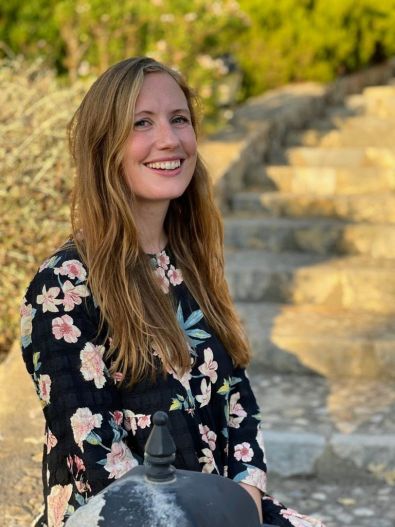
Migrations postdoctoral fellow Sabrina Axster is one of the winners of Oxford University Press' is First Book Prize 2025.
Additional Information
World in Focus: Drone Threats in Europe

October 28, 2025
4:00 pm
Uris Hall, G08
Join Einaudi Center experts for World in Focus Talks on global events in the news and on your mind. Our faculty's research and policy insights put the world in focus.
This year we’re hosting informal campus discussions on many Tuesday afternoons. This week’s topic:
Hostile drone activity has risen sharply in Europe this fall. The incidents have shut down airports, heightened military alertness, and triggered diplomatic responses from NATO and EU countries. Many analysts believe the incursions are part of a Russian-led hybrid warfare campaign designed to disrupt aviation and critical infrastructure, probe defenses, and test NATO’s resolve.
How will different parts of Europe react to drone threats? What could be the impacts on international relations and the conflict in Ukraine?
***
Featured Faculty
James Rogers | Brooks Tech Policy InstituteBryn Rosenfeld (IES) | GovernmentMagnus Fiskesjö (EAP, PACS, SEAP) | AnthropologyAgnieszka Nimark (PACS) | Affiliated ScholarChris Way (IES, PACS) | GovernmentDavid Cortright (PACS) | Visiting Scholar
***
Conversations Matter at Einaudi
This conversation is hosted by the Mario Einaudi Center for International Studies and its regional and thematic programs. Find out what's in store for students at Einaudi!
Additional Information
Program
Einaudi Center for International Studies
Reppy Institute for Peace and Conflict Studies
East Asia Program
Southeast Asia Program
Latin American and Caribbean Studies
Institute for African Development
Institute for European Studies
South Asia Program
Migrations Program
Southwest Asia and North Africa Program
Vietnamerica: The Story of the Nation's Largest Refugee Group
November 18, 2025
5:00 pm
Rockefeller Hall, 374
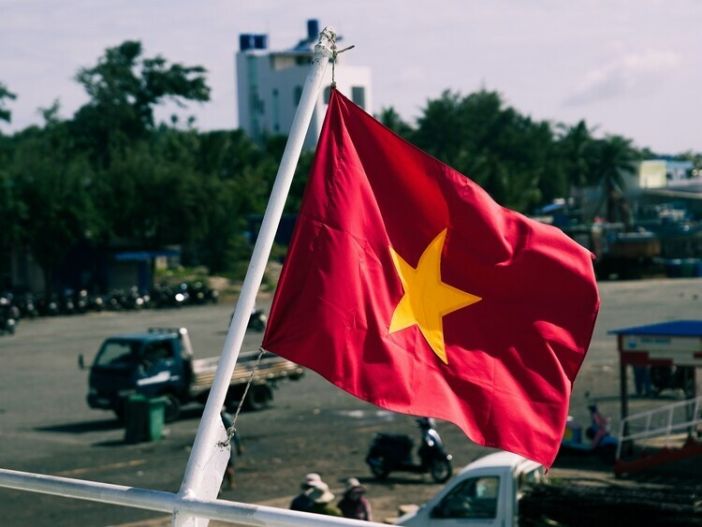
Join SEAP and GETSEA for a simulcast film screening of Vietnamerica.
We will watch the film on the Cornell campus, then join an online discussion with audiences at universities across the US for a Q&A with the filmmakers.
Following the wars in Vietnam, over two million people fled to country with the collapse of the Republic of Vietnam. That exodus, referred to by many as “the boat people” resulted in nearly half dying while in flight, battling the elements, starvation, and pirates.
Vietnamerica follows Master Nguyen Hoa as he returns to former refugee camps in Southeast Asia after three decades abroad to search for the graves of his wife and two children. Having fled Vietnam in 1981 on a boat with his family and friends, Hoa was the only survivor.
Executive Producer Nancy Bui of the Vietnamese Heritage Foundation joins GETSEA and over 20 universities across North America to watch Vietnamerica together simultaneously and connect via Zoom for a discussion with the filmmaker about the Vietnamese diaspora, their struggle, and how Master Hoa’s story is a prism to see the larger group.
Additional Information
Program
Einaudi Center for International Studies
Southeast Asia Program
Migrations Program
Information Session: Global Internships
November 3, 2025
1:00 pm
Go global in summer 2026! Global Internships give you valuable international work experience in fields spanning global development, climate and sustainability, international relations, communication, business, governance, and more.
Applications are open now.
Register here. Can’t attend? Contact programs@einaudi.cornell.edu.
***
The Mario Einaudi Center for International Studies hosts info sessions for graduate and for undergraduate students to learn more about funding opportunities, international travel, research, and internships. View the full calendar of fall semester sessions.
Additional Information
Program
Einaudi Center for International Studies
Reppy Institute for Peace and Conflict Studies
East Asia Program
Southeast Asia Program
Latin American and Caribbean Studies
Institute for African Development
Institute for European Studies
South Asia Program
Migrations Program
Southwest Asia and North Africa Program
Io Capitano
October 29, 2025
6:00 pm
Cornell Cinema
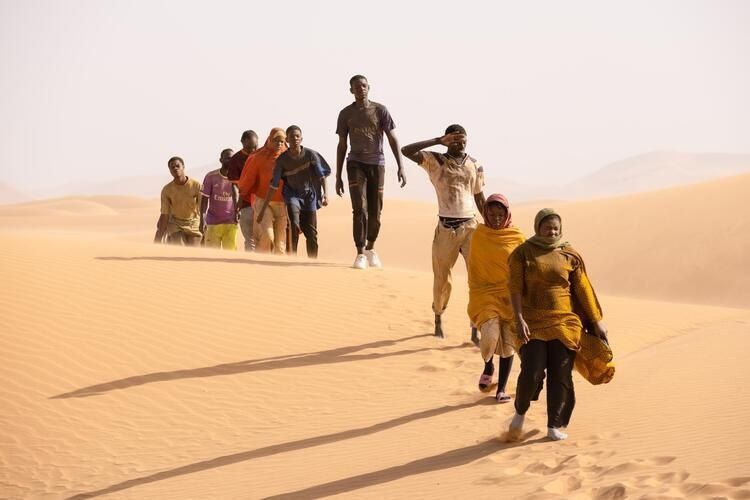
Io Capitano (translated as "I’m the Captain") is a contemporary drama capturing the journey of two young Senegalese men seeking a brighter future in Europe. Between their dreams and reality lies a treacherous journey through a labyrinth of checkpoints, the scorched Saharan desert, a fetid North African prison, and the vast waters of the Mediterranean where thousands have died packed inside vessels barely fit for passage. As they navigate dangerous sea crossings and uncertain borders, the film highlights the courage, desperation, and hope that drive migrants in search of safety and a better life.
Combining intimate storytelling with broader political context, Io Capitano offers a compelling look at modern migration challenges and the human stories behind the headlines.
Following the film, we will be joined by Tristan Ivory (assistant professor, global labor and work) and Gehad Madi (United Nations Special Rapporteur on the human rights of migrants).
Free admission! This event is part of the Migrations Program's film series at Cornell Cinema. Cosponsors include the Institute for African Development and the Institute for European Studies. All all are part of the Mario Einaudi Center for International Studies.
Additional Information
Program
Einaudi Center for International Studies
Institute for African Development
Institute for European Studies
Migrations Program
Information Session: Laidlaw Scholars Leadership & Research Program
October 29, 2025
5:00 pm
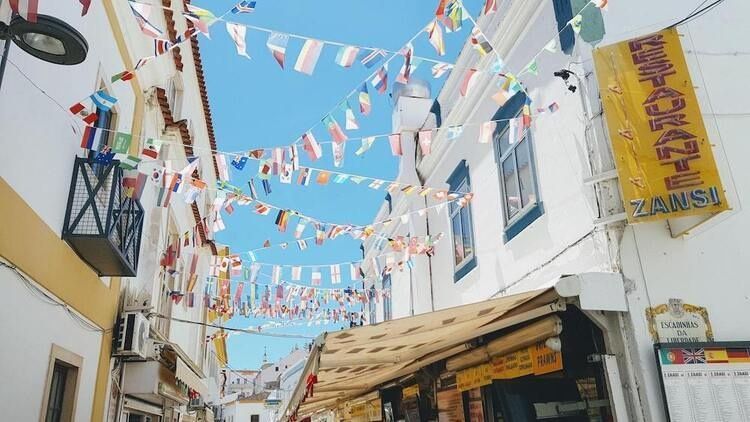
The Laidlaw Scholars Leadership and Research Program promotes ethical leadership and international research around the world—starting with the passionate leaders and learners found on campuses like Cornell. Open to first- and second-year students, the two-year Laidlaw program provides generous support to carry out internationally focused research, develop leadership skills, engage with community projects overseas, and become part of a global network of like-minded scholars from twenty universities worldwide.
At this session, we'll share more information about the program, including Cornell's cohort-based intercultural community-engaged learning summer experience in Ecuador, and tips for writing a successful application. Applications are due January 12, 2026.
Applicants are also strongly encouraged to attend a Q+A webinar about the summer experience in Ecuador. Q+A webinars are scheduled for November 5 and November 6.
Register here. Can’t attend? Contact programs@einaudi.cornell.edu.
***
The Mario Einaudi Center for International Studies hosts info sessions for graduate and for undergraduate students to learn more about funding opportunities, international travel, research, and internships. View the full calendar of fall semester sessions.
Additional Information
Program
Einaudi Center for International Studies
Reppy Institute for Peace and Conflict Studies
East Asia Program
Southeast Asia Program
Latin American and Caribbean Studies
Institute for African Development
Institute for European Studies
South Asia Program
Migrations Program
ICE Detention in NY: Immigrants Held in 'Legal Black Holes' for Days

Jaclyn Kelley-Widmer, Migrations
Jaclyn Kelley-Widmer, professor of law and director of the immigration law and advocacy clinic, and her team work to locate and represent migrants detained in New York’s ICE facilities despite legal and logistical obstacles.
Additional Information
Remembering Debra Castillo
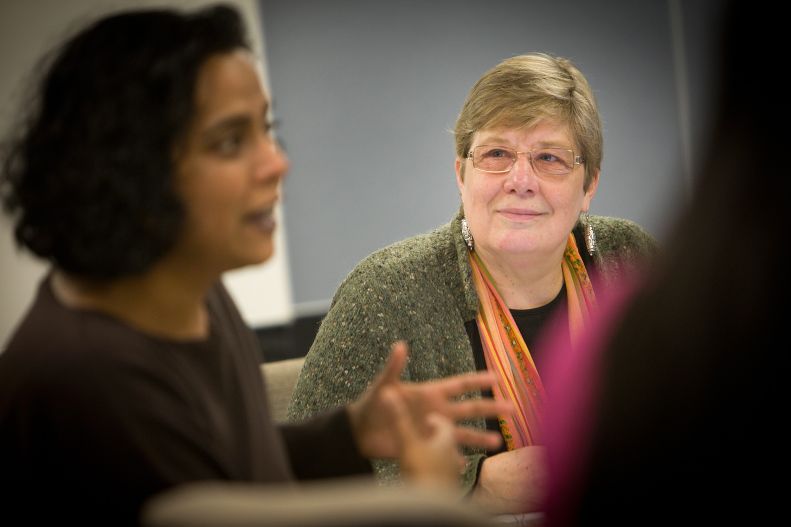
Scholar and Champion of Latinx Students
Debra Castillo (1953–2025) was director of Einaudi's migration studies minor and active in several regional and thematic programs.