
Reppy Institute for Peace and Conflict Studies
Information Session: Laidlaw Scholars Leadership & Research Program
October 29, 2025
5:00 pm
The Laidlaw Scholars Leadership and Research Program promotes ethical leadership and international research around the world—starting with the passionate leaders and learners found on campuses like Cornell. Open to first- and second-year students, the two-year Laidlaw program provides generous support to carry out internationally focused research, develop leadership skills, engage with community projects overseas, and become part of a global network of like-minded scholars from twenty universities worldwide.
At this session, we'll share more information about the program, including Cornell's cohort-based intercultural community-engaged learning summer experience in Ecuador, and tips for writing a successful application. Applications are due January 12, 2026.
Applicants are also strongly encouraged to attend a Q+A webinar about the summer experience in Ecuador. Q+A webinars are scheduled for November 5 and November 6.
Register here. Can’t attend? Contact programs@einaudi.cornell.edu.
***
The Mario Einaudi Center for International Studies hosts info sessions for graduate and for undergraduate students to learn more about funding opportunities, international travel, research, and internships. View the full calendar of fall semester sessions.
Additional Information
Program
Einaudi Center for International Studies
Reppy Institute for Peace and Conflict Studies
East Asia Program
Southeast Asia Program
Latin American and Caribbean Studies
Institute for African Development
Institute for European Studies
South Asia Program
Migrations Program
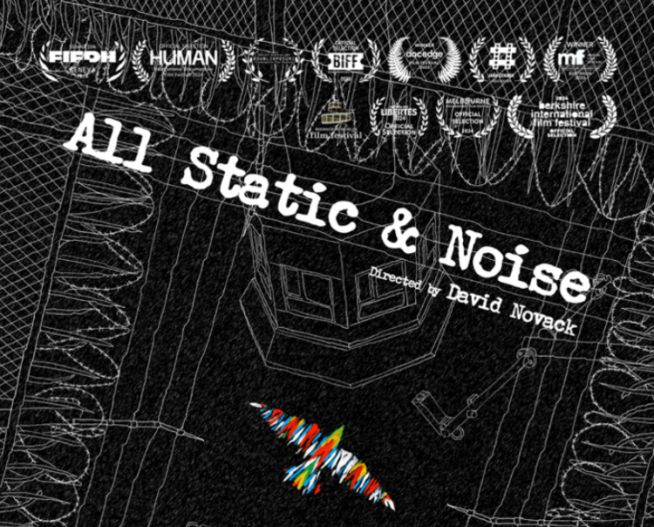
Film Screening: All Static & Noise
November 11, 2025
7:30 pm
Ives Hall, 115
Screen time:
November 10, 7:30pm in 115 Ives Hall.
Followed by a Q&A with the Associate Producer, Jewher Ilham
Story:
Jewher, a Uyghur teen from China with little English, lands in the U.S. after she is violently separated from her father at the Beijing airport as he is detained. Abduweli, a linguist and poet, imprisoned and tortured for teaching Uyghur language to 6-year-olds, makes his way to Istanbul upon his release. Testimony and action from survivors of China’s network of “re-education camps" and their families, in Turkey, Kazakhstan, Europe and the United States, infuse All Static & Noise with an urgency that exposes the mass brutality of state-sponsored oppression in Western China. Together these voices highlight the moral dilemma between risking the safety of families back home by speaking out and the necessity of exposing atrocities in the hope that global awareness will bring change. With each voice we are brought closer to one of the most egregious human rights disasters of our moment. All Static & Noise honors those willing to speak out and poses difficult questions that are imperatives in our inter-connected global economy of the 21st century.
Director David Novack and Producer Janice Englehart bring together collaborators from around the world in a film, born of tragedy and infused with an inspired sense of hope, that reminds us that in the darkest of times, the human spirit shines brightest in the company of others.
Additional Information
Program
Einaudi Center for International Studies
Reppy Institute for Peace and Conflict Studies
East Asia Program
Remembering Debra Castillo
Scholar and Champion of Latinx Students
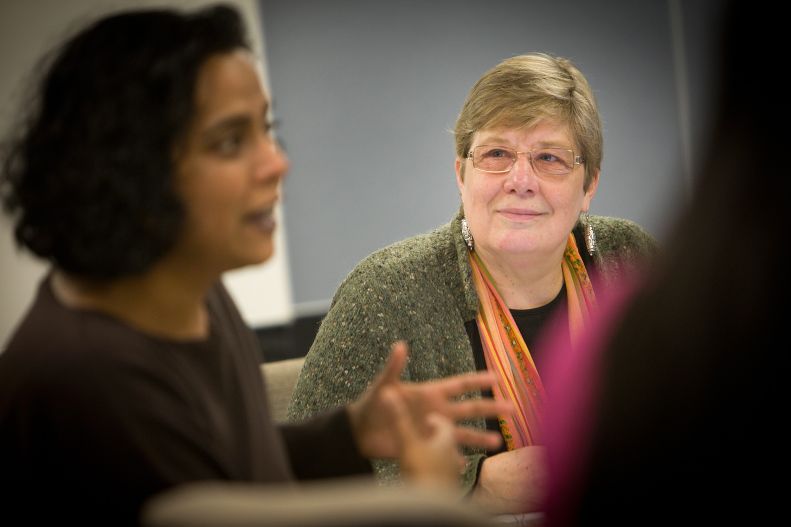
Debra Castillo (1953–2025) was director of Einaudi's migration studies minor and active in several regional and thematic programs.
Additional Information
Laidlaw Scholars Q+A Webinar with Pachaysana
November 6, 2025
5:00 pm
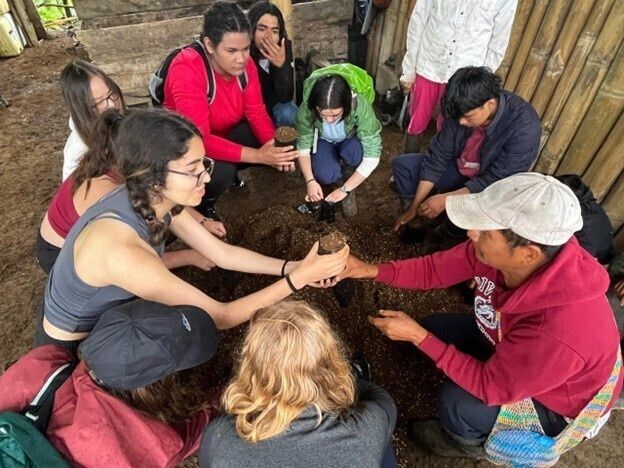
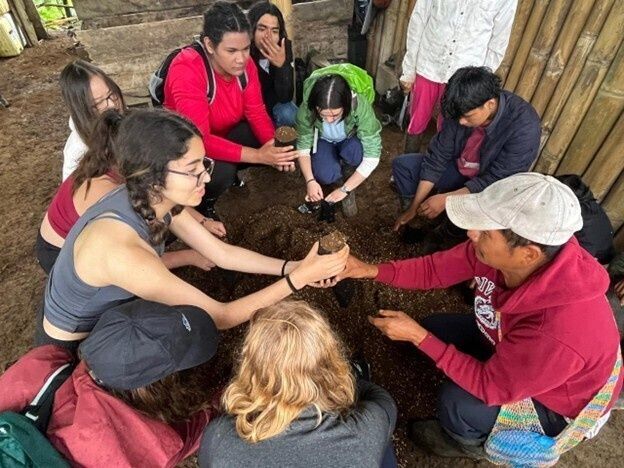
For the summer 2026 Leadership in Action experience, students will be placed with the Pachaysana Foundation exploring what it means to be an intercultural leader in today’s complex, fractured world. Please attend this Q+A webinar with Pachaysana Foundation to learn more about their work and how the Laidlaw Scholars explore leadership as something we live—grown in relationship and rooted in the wisdom of agrarian, Indigenous, and activist communities.
Attendance and participation in the Q+A are highly recommended for Laidlaw Scholars applicants. Applications are due January 12, 2026.
Register here. Can’t attend? Another Q+A webinar is scheduled for November 5.
Contact programs@einaudi.cornell.edu with questions.
***
The Mario Einaudi Center for International Studies hosts info sessions for graduate and for undergraduate students to learn more about funding opportunities, international travel, research, and internships. View the full calendar of fall semester sessions.
Additional Information
Program
Einaudi Center for International Studies
Reppy Institute for Peace and Conflict Studies
East Asia Program
Southeast Asia Program
Latin American and Caribbean Studies
Institute for African Development
Institute for European Studies
South Asia Program
Migrations Program
Laidlaw Scholars Q+A Webinar with Pachaysana
November 5, 2025
12:00 pm
For the summer 2026 Leadership in Action experience, students will be placed with the Pachaysana Foundation exploring what it means to be an intercultural leader in today’s complex, fractured world. Please attend this Q+A webinar with Pachaysana Foundation to learn more about their work and how the Laidlaw Scholars explore leadership as something we live—grown in relationship and rooted in the wisdom of agrarian, Indigenous, and activist communities.
Attendance and participation in the Q+A are highly recommended for Laidlaw Scholars applicants. Applications are due January 12, 2026.
Register here. Can’t attend? Another Q+A webinar is scheduled for November 6.
Contact programs@einaudi.cornell.edu with questions.
***
The Mario Einaudi Center for International Studies hosts info sessions for graduate and for undergraduate students to learn more about funding opportunities, international travel, research, and internships. View the full calendar of fall semester sessions.
Additional Information
Program
Einaudi Center for International Studies
Reppy Institute for Peace and Conflict Studies
East Asia Program
Southeast Asia Program
Latin American and Caribbean Studies
Institute for African Development
Institute for European Studies
South Asia Program
Migrations Program
Ruth Lawlor

Assistant Professor, Department of History
Ruth Lawlor teaches U.S. and global diplomatic and military history. Much of her work concerns the global history of World War II, but she also writes broadly about the laws of war, geopolitics and sexual violence. She is currently working on a history of Arctic imperialism.
Additional Information
World in Focus: Venezuelan Drug Boat Strikes

October 7, 2025
4:00 pm
Uris Hall, G08
Join Einaudi Center experts for World in Focus Talks on global events in the news and on your mind. Our faculty's research and policy insights put the world in focus.
This year we’re hosting informal campus discussions on many Tuesday afternoons. This week’s topic:
Following a military buildup in the Caribbean, the U.S. government has confirmed multiple airstrikes on Venezuelan boats suspected of drug smuggling—killing at least 17 in September. The U.S. claims these actions are “armed conflict” against narcoterrorist organizations. The Venezuelan government condemns the attacks as illegal.
Is the U.S. violating international law? What may happen if tensions continue to escalate?
***
Featured Faculty
Oumar Ba (PACS) | Government Pedro M. R. Barbosa (LACS) | Visiting ScholarKen Roberts (LACS) | GovernmentDavid Bateman | GovernmentAleida Sandoval | Visiting Scholar
***
Conversations Matter at Einaudi
This conversation is hosted by the Mario Einaudi Center for International Studies and its regional and thematic programs. Find out what's in store for students at Einaudi!
Additional Information
Program
Einaudi Center for International Studies
Reppy Institute for Peace and Conflict Studies
East Asia Program
Southeast Asia Program
Latin American and Caribbean Studies
Institute for African Development
Institute for European Studies
South Asia Program
Migrations Program
Southwest Asia and North Africa Program
Warming Climate is Biggest Threat to Rangelands
Lund Debater Chris Barrett in World in Focus
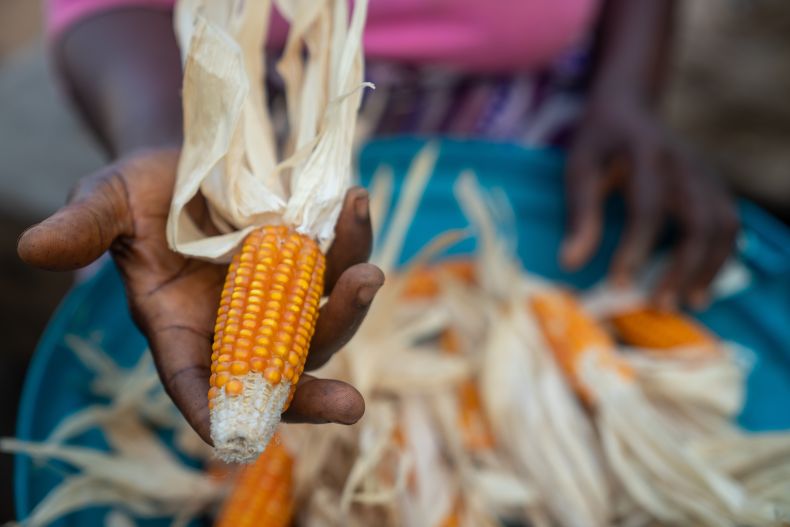
Chris Barrett (Dyson/Brooks) analyzes climate impacts on Mongolian rangeland this month in Science. He joins Muna Ndulo (Law) on October 22 to debate the future of international aid.
Is (Cutting) International Aid Good?
This year's Lund Critical Debate explores the impact of aid on global communities, what makes aid effective—and how to move forward.
“It’s always struck me as puzzling, why people in suits and ties in capital cities seem to think that the pastoralists don’t understand very well how to manage these lands. And yet, there’s this common belief that you have to get them to reduce their herd sizes. That just hurts the herders.”
Overgrazing is commonly blamed as a key cause of rangeland degradation—yet policy measures designed to limit grazing damage, like herd-size restrictions and livestock taxes, can have devastating consequences on herders' livelihoods.
In Mongolia—where 70 percent of the land area is rangeland—the government revived a national livestock head tax in 2021 in response to perceived overgrazing impacts.
New research from Chris Barrett (IAD/SEAP) identifies a more significant factor: climate change.
Barrett's team analyzed longitudinal data on vegetation conditions and livestock population, collected annually by the Mongolian government across 40 years. They found that larger herds can slightly reduce rangeland productivity over the short term, but climate and weather have a much larger effect. The team published the findings on September 18 in Science.
“When we look really carefully at the equivalent of county scale over the whole country, over 41 years, we find that the longer-run changes in rangeland conditions are entirely attributable to changes in the climate,” said Barrett.
“Mongolian rangelands are affected more by the collective greenhouse gas–emitting behaviors around the globe than by local herders,” he wrote in the Science article. “Policymakers might therefore usefully focus attention on global mitigation and on international compensation for climate damages and less on taxing herders who … appear responsible for little if any of the change in Mongolia’s rangeland primary productivity over the past 40 years.”
The project began among Barrett's graduate students, including one who grew up on the Mongolian rangelands. Coauthors include two alumni from Mongolia—Tumenkhusel Avirmed ’21, MS ’23, now a research data analyst at Stanford University, and Avralt-Od Purevjav, PhD ’20, a consultant at the World Bank.
Chris Barrett is the Stephen B. and Janice G. Ashley Professor of Applied Economics and Management in the Dyson School of Applied Economics and Management and a professor in the Cornell Brooks School of Public Policy. He is a frequent commentator and policy advisor on food security and agricultural economics.
Featured in World in Focus Briefs
Additional Information
Opinion: How to Toughen Russia Sanctions
David Cortright, PACS
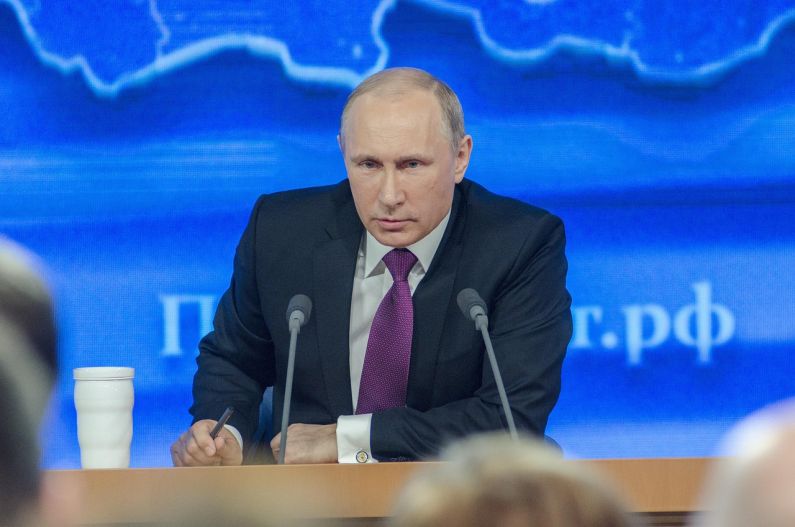
“Tightening the energy sanctions regime is the only way to force Russia to take peace negotiations seriously,” says PACS Visiting Scholar David Cortright.
Additional Information
US, China Reach Framework Deal to Keep TikTok Operating

Sarah Kreps, PACS
Sarah Kreps, professor of government and policy, discusses TikTok’s future in the U.S.