
Reppy Institute for Peace and Conflict Studies
Information Session: Undergraduate Opportunities at the Einaudi Center

September 9, 2025
4:30 pm
Uris Hall, G08
Join us to learn about opportunities for undergraduate students with the Einaudi Center for International Studies. This session will discuss how to discover or strengthen global interests, including academic minors, guest lectures, summer research and travel experiences, and more!
Can't attend? Email programs@einaudi.cornell.edu for more information.
Additional Information
Program
Einaudi Center for International Studies
Reppy Institute for Peace and Conflict Studies
East Asia Program
Southeast Asia Program
Latin American and Caribbean Studies
Institute for European Studies
South Asia Program
Migrations Program
Institute for African Development
Southwest Asia and North Africa Program
How Great-Power Competition Threatens Peace and Weakens Democracy

October 2, 2025
12:00 pm
Uris Hall, G08
For close to a decade, the U.S. government has been preoccupied with the threat of China, fearing that the country will “eat our lunch,” in the words of President Joe Biden. The United States has crafted its foreign and domestic policy to help constrain China’s military power and economic growth. This talk will argue that great-power competition with China is misguided and vastly underestimates the costs and risks that geopolitical rivalry poses to economic prosperity, the quality of democracy, and, ultimately, global stability. Great-power competition exacerbates inequality, leads to xenophobia, and increases the likelihood of violence around the world. In addition, it distracts from the priority of addressing such issues as climate change while at the same time undercutting democratic pluralism and sacrificing liberty in the name of prevailing against an enemy “other.” A better, saner, more democratically accountable grand strategy of easing tension and achieving effective diplomacy is possible.
About the speaker
Michael Brenes is Co-Director of the Brady-Johnson Program in Grand Strategy and Senior Lecturer in Global Affairs at Yale University. He is the author of For Might and Right: Cold War Defense Spending and the Remaking of American Democracy (University of Massachusetts Press, 2020), the co-author with Van Jackson of The Rivalry Peril: How Great-Power Competition Threatens Peace and Weakens Democracy (Yale University Press, 2025), and co-editor with Daniel Bessner of Rethinking US Power: Domestic Histories of US Foreign Relations (Palgrave MacMillan, 2024) and Cold War Liberalism: Power in a Time of Emergency (Cambridge University Press, 2026). He is currently writing a history of the War and Terror from the 1990s to the present, to be published by Grove Atlantic.
Host
Reppy Institute for Peace and Conflict Studies, part of the Einaudi Center for International Studies
Co-host
Cornell Brooks School Tech Policy Institute
Additional Information
Program
Einaudi Center for International Studies
Reppy Institute for Peace and Conflict Studies
The New Arms Race and How to Stop It
September 25, 2025
12:00 pm
Uris Hall, G08
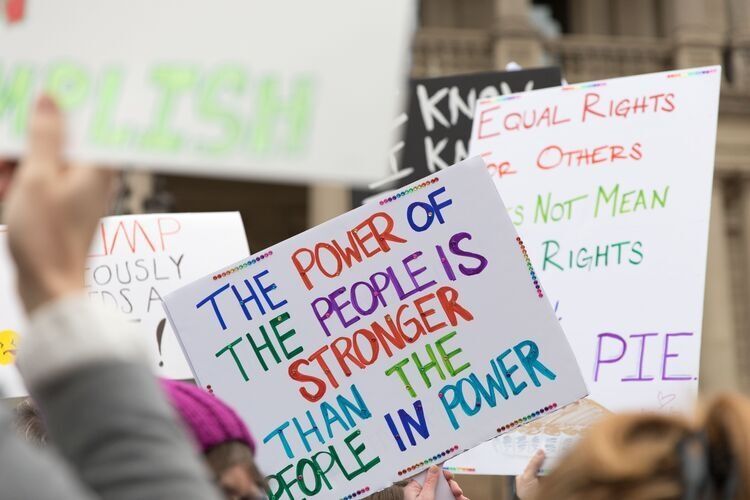
In this 80th year of the atomic age, the catastrophic risks posed by nuclear weapons are growing. The US and Russia are developing new nuclear bombs and missiles and upgrading weapons delivery systems. China is rapidly expanding its nuclear weapons capabilities.
In the history of the atomic age, progress toward arms limitation has usually been the result of social protest and organized political advocacy. The initiative for halting the new arms race will have to come from the bottom up, through grass roots mobilization.
Drawing from his new book, Protest and Policy in the Iraq, Nuclear Freeze and Vietnam Peace Movements, Cortright will identify lessons for effective advocacy. He will share principles of strategies and tactics and will emphasize the importance of mass public support, compelling narratives and combining non-institutional and institutional politics.
Cortright will recount organizing experiences to identify how movements influenced nuclear policy in the 1980s and helped to end the cold war. He will suggest new strategies for today, describing the new Appeal to Halt and Reverse the Arms Race and suggesting coalitional alliances with religious communities and today’s movement to save democracy.
About the speaker
David Cortright is a Visiting Scholar at Cornell University’s Reppy Institute for Peace and Conflict Studies and Professor Emeritus at the University of Notre Dame’s Kroc Institute for International Peace Studies. He is the author or editor of 23 books and has written widely on peace policy, nonviolent social change, soldier dissent, nuclear disarmament, and the use of multilateral sanctions and incentives as tools of international peacemaking.
In 2002 Cortright was a co-founder of Win Without War, which opposed the US invasion of Iraq and remains an active voice today in promoting progressive foreign policy issues. He continues to serve on the group’s board of directors.
As director of policy studies for Notre Dame’s Kroc Institute for International Peace Studies, Cortright initiated policy advocacy campaigns to reduce and eliminate nuclear weapons; refine the utilization of economic sanctions as instruments of diplomacy; reduce the adverse humanitarian impacts of sanctions; develop effective nonmilitary means of countering violent extremism; and support the UN Women, Peace and Security agenda in Afghanistan and Iraq.
Cortright helped to create and for four years directed the Kroc Institute’s Peace Accords Matrix Barometer project monitoring implementation of the Columbia Peace Agreement.
Host
Reppy Institute for Peace and Conflict Studies, part of the Einaudi Center for International Studies
Additional Information
Program
Einaudi Center for International Studies
Reppy Institute for Peace and Conflict Studies
WRFI Talks to Magnus Fiskesjö about Chinese Students Studying in the U.S.

Magnus Fiskesjö, EAP/PACS/SEAP
Magnus Fiskesjö talks about Chinese students studying in the United States who continue to be under surveillance of their own home government, punished if they try to speak against it, and sometimes even forced to spy for it.
Additional Information
Peace, Security, and U.S. Presence in the World
September 4, 2025
12:00 pm
Clark Hall, 700
Please RSVP for the panel on Eventbrite.
Lunch will be served starting at 11:30 am.
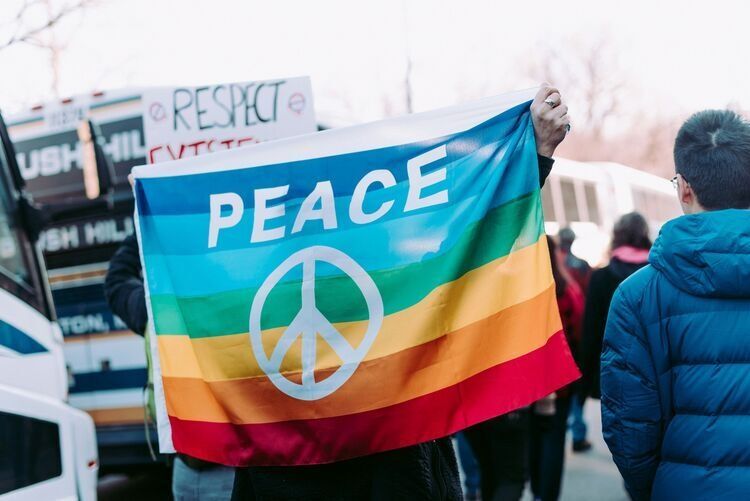
U.S. foreign policies are changing dramatically, with profound implications for peace and security throughout the world. The administration of Donald J. Trump has broken with many decades of precedent by expressing sharp criticism of NATO and historical allies, while expressing admiration for historic adversaries such as Russia. U.S. support for Ukraine’s defense against Russia’s invasion has wavered, with Trump even suggesting that Ukraine rather than Russia is to blame for the conflict. U.S. humanitarian aid to many of the world’s most needy people has ended or been sharply reduced. Changes in migration policy are also placing many groups at heightened risk of political violence. The administration has bombed Iran’s nuclear facilities, acting in violation of international law and suggesting a preference for military action over diplomacy. And changes in trade policy, particularly with China, have the potential to reshape military capabilities and alliances around the world.
These changes raise several questions. Is the re-arming of Europe a necessary bulwark against an expansionist Russia, or a new arms race that encourages nuclear proliferation and increases the risk of war? Will the cancellation of humanitarian aid encourage other nations to increase their capacity, or simply leave the world’s most vulnerable people without hope? What other nations might step in to fill the vacuum left by the loss of such aid, and will these nations be more or less exploitative than the United States? How will changing U.S. policies affect regional security alliances, for example between Russia and China? This panel will provide perspectives on how recent changes to foreign policy are likely to affect issues of peace and security in several regions around the world.
Panelists
Jok Madut Jok, Professor of Anthropology, Syracuse University
Jok’s areas of specialization include security, governance, democracy and development in South Sudan and Sudan. He has also written extensively about gender, sexuality and reproductive health, humanitarian aid, ethnography of political violence, gender-based violence, and war and slavery and the politics of identity in South Sudan and Sudan. He is the author of Breaking Sudan: The Search for Peace (Oneworld Publications, 2017), Sudan: Race, Religion and Violence (One World Publication, 2007), War and Slavery in Sudan (University of Pennsylvania Press, 2001), and Militarization, Gender and Reproductive Health in South Sudan (Edwin Mellen Press, 1998). He also co-edited The Sudan Handbook (with J. Willis, J. Ryle and S. Baldo, James Currey, 2011). Before joining Maxwell he was visiting professor of anthropology at the University of Oxford and a Fellow of Linacre College. He also served in the government of South Sudan as undersecretary in the Ministry of Culture and Heritage, 2010-13. He is the founding director of the Sudd Institute, a public policy research center.
Kaija E. Schilde, Associate Professor of International Studies, Pardee School of Global Studies, Boston University
Professor Schilde’s research focuses on the political economy of security, with a particular emphasis on defense industry politics and the political development of the European Union. In July 2021 she was named Acting Director of BU’s Center for the Study of Europe and in January 2022 she received the Jean Monnet Chair in European Security and Defense. Her book, The Political Economy of European Security (Cambridge University Press, 2017) investigates the state-society relations between the EU and interest groups, with a particular focus on security and defense institutions, industries, and markets. Her research interests span multiple dimensions of the historical institutionalism of security organizations, including the causes and consequences of military spending; the relationship between spending, innovation, and capabilities; defense reform and force transformation; the politics of defense protectionism; and the international diffusion of internal and border security practices.
Zheng Wang, Professor at the School of Diplomacy and International Relations, Seton Hall University
Professor Wang’s research interests lie in three closely connected areas: (1) identity-based conflicts, nationalism, and the politics of historical memory; (2) peace and conflict management in East Asia, with a special focus on China’s rise and its impact on regional peace and security; (3) foreign-domestic linkages in Chinese politics and foreign relations. He is the author of Never Forget National Humiliation: Historical Memory in Chinese Politics and Foreign Relations (Columbia University Press, 2012), which received the International Studies Association’s Yale H. Ferguson Award in 2013. He is also author of Memory Politics, Identity and Conflict: Historical Memory as a Variable (Palgrave Macmillan, 2018) and editor of COVID-19 and U.S.-China Relations (Palgrave Macmillan, 2024). He is currently under contract with the Oxford University Press to write a book about the rise of nationalism and populism and the crises in the US-China relations. He is Director of the Center for Peace and Conflict Studies (CPCS) at Seton Hall University.
Diego Chaves-González, Senior Manager for Latin America and Caribbean Initiative, Migration Policy Institute
Chaves-González’s research focuses on forced displacement, legal pathways, integration, migration and development, and regional cooperation in migration management. He previously worked for the World Bank and the United Nations. While at the World Bank, he helped expand the scope of the Global Concessional Financing Facility (GCFF). He also co-authored the 2019, 2020, and 2021 GCFF annual reports, and helped coordinate the Secretary of the Multilateral Development Bank platform. While working for the United Nations, Mr. Chaves-González initiated a platform in Colombia to coordinate the work of UN agencies, NGOs, and their partners in response to migrant and refugee situations. He also helped develop a strategy to involve victims of conflict and internally displaced persons in the peace deal negotiations that ended Colombia’s civil war. Chaves-González also played an essential role as a presidential advisor in the registration and regularization of 500,000 migrants in Colombia and helped provide advice on how to structure similar initiatives in Costa Rica, Ecuador, and Peru. Since the start of the Venezuelan crisis, he has assisted Latin American governments in developing policies to integrate arriving migrants and refugees into receiving communities, accommodating both newcomer and local needs.
Host
Reppy Institute for Peace and Conflict Studies, part of the Einaudi Center for International Studies
Co-sponsors
Institute for European Studies, part of the Einaudi Center for International Studies
Migrations Program, part of the Mario Einaudi Center for International Studies, and the Mellon Foundation’s Just Futures Initiative
Additional Information
Program
Einaudi Center for International Studies
Reppy Institute for Peace and Conflict Studies
East Asia Program
Southeast Asia Program
Latin American and Caribbean Studies
Institute for African Development
Institute for European Studies
South Asia Program
Migrations Program
Southwest Asia and North Africa Program
Did You Know That the Risk of Nuclear War Is Greater Now Than in Decades?
David Cortright, PACS
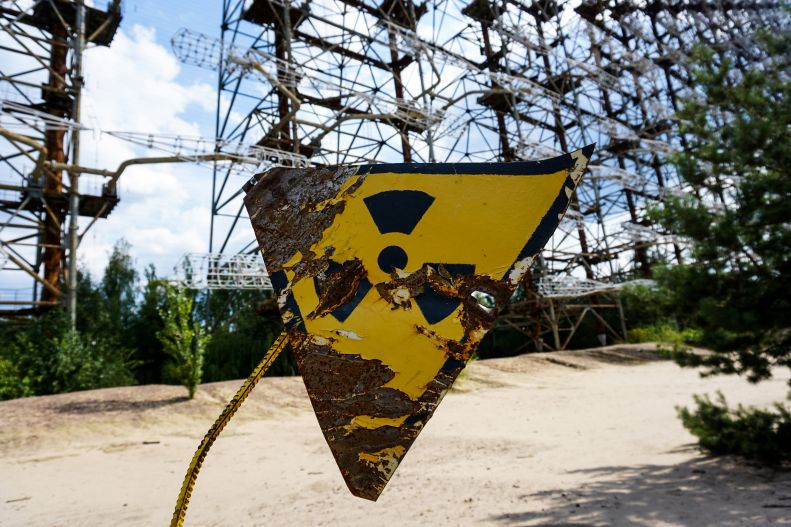
“The arms limitation treaties that previously guarded against unconstrained nuclear competition between the US and Russia have been discarded. The remaining agreement, New START, expires in February with no negotiations underway for renewal, as Washington and Moscow dither and delay talks that could reduce nuclear risks…” says Visiting Scholar David Cortright.
Additional Information
Crucibles of Power

September 11, 2025
12:00 pm
Clark Hall, 700
During the Cold War, the Smolensk Archive held the only collection of Communist Party documents available to Western scholars, becoming the foundation for generations of scholarship on Soviet history. Crucibles of Power returns to the Smolensk Region with fresh eyes and fresh sources. Prizewinning historian Michael David-Fox traces the experiences of Smolensk residents between the interwar years and the end of World War II, a period during which the city and region passed from Stalinist rule to Nazi occupation and back. The result is a revelatory examination of choice and power under dueling forms of murderous totalitarianism.
Author Michael David-Fox joins us for a talk about his book. Followed by a book signing.
About the Book
Exploring the life-and-death decisions of a fascinating cast of characters—from young women in the Communist Youth League to a defense lawyer during Stalin’s Great Terror who became Smolensk’s collaborationist mayor during the German occupation—David-Fox shows how deeply the Stalinist and Nazi regimes relied on the cooptation of average citizens motivated by greed and need, but always within the orbit of ideology. Challenging today’s Russian nationalist narrative of heroic WWII resistance, he finds that large numbers of Russians aided the Nazi occupation of Smolensk in order to protect themselves, secure their own self-interest, or pursue vendettas against a Soviet state they found no less corrupt or oppressive than its German foe.
At a time when much of the world is tilting away from liberal democracy and toward authoritarianism, Crucibles of Power masterfully unravels the threads of dictatorial rule. Smolensk emerges as a laboratory for understanding the mechanics of both outright coercion and subtler forms of power, as well as the enabling behavior of ordinary citizens acquiescing to extraordinary crimes.
About the Speaker
Michael David-Fox is the author or editor of fifteen books, including Crossing Borders: Modernity, Ideology, and Culture in Russia and the Soviet Union and Showcasing the Great Experiment: Cultural Diplomacy and Western Visitors to the Soviet Union, 1921–1941. He is Director of the Center for Eurasian, Russian, and East European Studies and Professor of History at Georgetown University.
Host
Reppy Institute for Peace and Conflict Studies, part of the Einaudi Center for International Studies
Co-sponsors
Department of History
Jewish Studies Program
Please RSVP on Eventbrite.
Order a copy of the book from the Cornell Store.
Additional Information
Program
Einaudi Center for International Studies
Reppy Institute for Peace and Conflict Studies
Institute for European Studies
Peace Studies and Peace Science Graduate Minor

The minor graduate field of peace studies and peace science allows graduate students to deepen their knowledge of international security, the structure and function of multinational systems, and the general areas of conflict analysis, conflict management, and conflict resolution.
The peace studies concentration emphasizes historical, institutional, and policy-oriented approaches, while the peace science concentration emphasizes mathematical modeling and game-theoretic models.
The minor concentrations are intended to complement basic study in such fields as government, history, anthropology, public affairs, industrial and labor relations, agricultural economics, city and regional planning, civil and environmental engineering, economics, operations research, psychology, sociology, and science and technology studies.
Additional Information
Opinion: The Danger of "Preventative" War in Iran
David Cortright, PACS
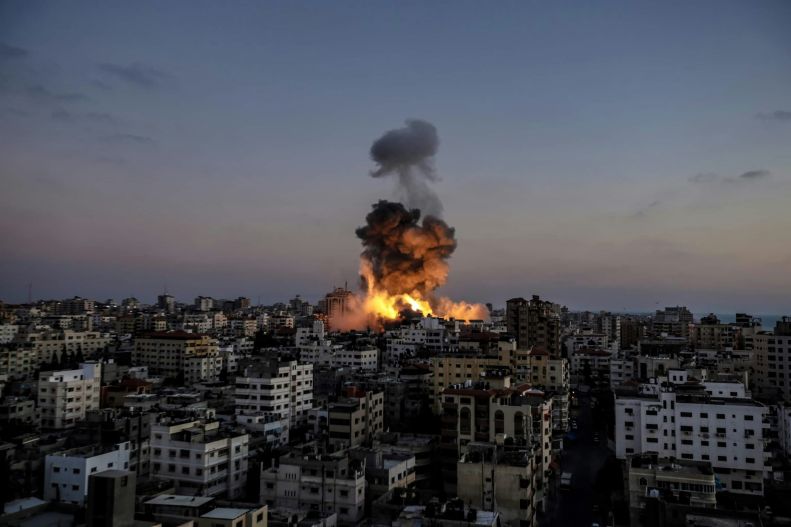
“White House claims about the supposed success of US bombing in Iran are highly uncertain, but there is no doubt that unprovoked US and Israeli military strikes against Iran are a direct violation of international law,” says PACS visiting scholar David Cortright.
Additional Information
Brume Dezembro Iazzetti

Reppy Fellow 2025-26
Brume Dezembro Iazzetti is a PhD student in the Department of Science and Technology Studies. She is currently working on a proposal on early trans medicine in Brazil, amid the Military Dictatorship period, crossing discussions on futurity, ethnographies of (and beyond) violence, and paths to reparative justice. Her Ph.D. research moves into present-day controversies on emerging medical and digital technologies, and questions on body plasticity and extraordinary body transformations, including in right-wing movements.