
Reppy Institute for Peace and Conflict Studies
Let Activists Protest and Speak: How Peaceful Actors Curb Militant Support
October 30, 2025
12:00 pm
Uris Hall, G08
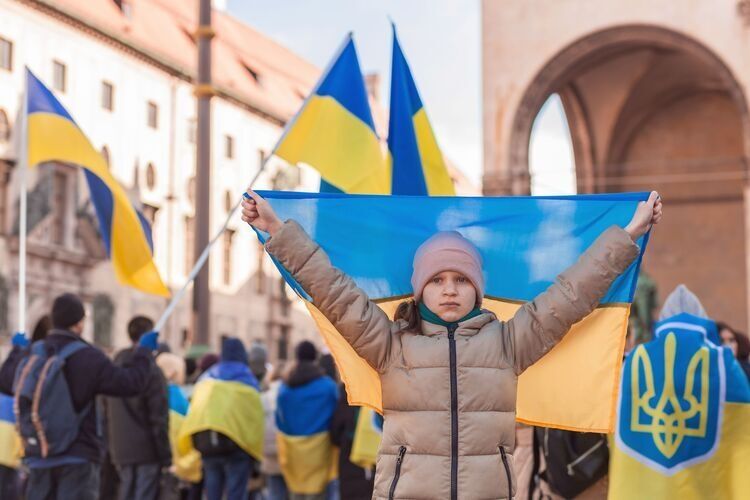
Armed militant organizations and affiliated peaceful activist groups often co-exist within dissident movements. Although states tend to identify and repress activists within these movements as fronts for their militant counterparts, there is little research on how activist actions or the repression they face affect support for militant organizations. In this paper, I argue that state repression of peaceful activism boosts support for militant organizations, whilst activist mobilizing propaganda promoting peaceful means diminishes support for them. To test these expectations, I conducted a list experiment in Southeast Turkey, where the militant organization PKK and the activist political party HDP garner significant support. My research design presents sympathizer individuals with treatment videos that vary in the degrees of state repression of activists, and activist mobilizing propaganda. Results demonstrate that the state repression of peaceful activists leads to an immediate increase in support for the militant organization. Conversely, when activists advocate for peaceful mobilization, support for the militant organization diminishes. These findings demonstrate that the immediate attitudinal influence of powerful activist rhetoric is the opposite of what the state justification for its repression rests upon: if activists can convey their calls for peaceful mobilization without state repression, they can diminish support for their militant counterparts.
About the speaker
Ipek Sener studies international relations, conflict and security, great power politics, and quantitative political methodology. Her projects explore the relationship between illegal militant organizations and legal activist organizations within dissident movements, investigating how activist actions influence support for militancy and how militant propaganda can radicalize activists. Another set of projects analyzes how international actors, institutions, and great power competition influence the likelihood and microdynamics of civil war. She uses experimental, quasi-experimental, and observational designs, as well as text-as-data methods in her work. Ipek is a College Fellow at Harvard University, and she earned her Ph.D. in Political Science from Washington University in St. Louis.
Host
Reppy Institute for Peace and Conflict Studies, part of the Einaudi Center for International Studies
Additional Information
Program
Einaudi Center for International Studies
Reppy Institute for Peace and Conflict Studies
Southwest Asia and North Africa Program
A Separate Peace? Withdrawal Bargains and Civil War Intervention
October 16, 2025
12:00 pm
Uris Hall, G08
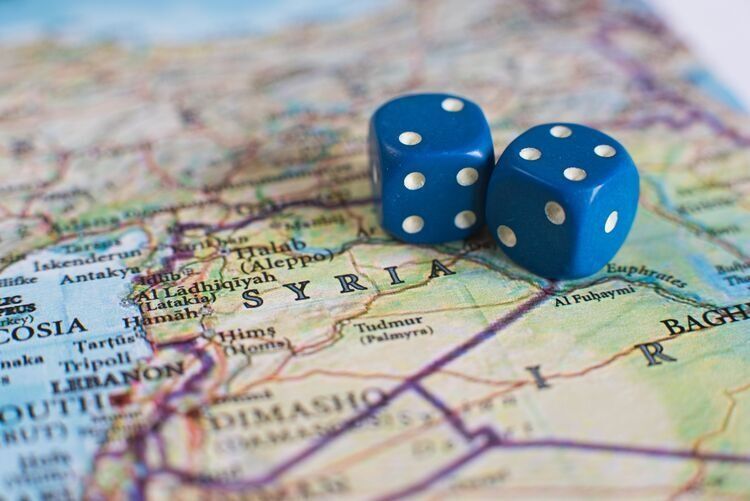
Civil wars become international conflicts when outside states provide support to rebel groups. Sometimes, external intervention is driven by affinity for the rebel group and a desire to achieve the rebel group’s goals. Sometimes, however, external intervention is driven by tensions on other issues, for example, international rivalry, territorial disputes, or regional leadership. We develop a game-theoretic model to understand the conditions under which a government may break a rebel-external state coalition through bargaining on an international issue. We provide evidence of the empirical relevance of our theory through statistical analysis of civil conflicts, along with an examination of early Libyan intervention in the Chadian civil war. Our argument provides new insight on the connections between domestic and international conflict and the outcomes of internationalized civil wars
About the speaker
Brett Ashley Leeds is Radoslav Tsanoff Professor of Political Science at Rice University. She is currently co-Editor-in-Chief of International Organization. Leeds’s research focuses on the design and effects of international agreements (particularly military alliances), and also on connections between domestic politics and foreign policy. She is the co-author of Domestic Interests, Democracy, and Foreign Policy Change (with Michaela Mattes, Cambridge Elements in International Relations series, 2022). In 2008, Leeds received the Karl Deutsch Award from the International Studies Association, which is presented annually to a scholar in International Relations within ten years of Ph.D. who is judged to have made the most significant contribution to the study of International Relations and Peace Research. In 2019, Leeds won the Lifetime Achievement Award from the Conflict Processes Section of APSA in recognition of scholarly contributions that have fundamentally improved the study of conflict processes. She served as President of the International Studies Association during 2017-18, President of the Peace Science Society during 2018-19, and as Chair of the Rice University Department of Political Science from 2015-2025.
Host
Reppy Institute for Peace and Conflict Studies, part of the Einaudi Center for International Studies
Additional Information
Program
Einaudi Center for International Studies
Reppy Institute for Peace and Conflict Studies
Information Session: Laidlaw Scholars Leadership & Research Program

October 15, 2025
5:00 pm
The Laidlaw Scholars Leadership and Research Program promotes ethical leadership and international research around the world—starting with the passionate leaders and learners found on campuses like Cornell. Open to first- and second-year students, the two-year Laidlaw program provides generous support to carry out internationally focused research, develop leadership skills, engage with community projects overseas, and become part of a global network of like-minded scholars from twenty universities worldwide.
At this session, we'll share more information about the program, including Cornell's cohort-based intercultural community-engaged learning summer experience in Ecuador, and tips for writing a successful application. Applications are due January 12, 2026.
Applicants are also strongly encouraged to attend a Q+A webinar about the summer experience in Ecuador. Q+A webinars are scheduled for November 5 and November 6.
Register here. Can’t attend? Contact programs@einaudi.cornell.edu.
***
The Mario Einaudi Center for International Studies hosts info sessions for graduate and for undergraduate students to learn more about funding opportunities, international travel, research, and internships. View the full calendar of fall semester sessions.
Additional Information
Program
Einaudi Center for International Studies
Reppy Institute for Peace and Conflict Studies
East Asia Program
Southeast Asia Program
Latin American and Caribbean Studies
Institute for African Development
Institute for European Studies
South Asia Program
Migrations Program
Information Session: Laidlaw Scholars Leadership & Research Program

October 7, 2025
5:00 pm
Uris Hall, G02
The Laidlaw Scholars Leadership and Research Program promotes ethical leadership and international research around the world—starting with the passionate leaders and learners found on campuses like Cornell. Open to first- and second-year students, the two-year Laidlaw program provides generous support to carry out internationally focused research, develop leadership skills, engage with community projects overseas, and become part of a global network of like-minded scholars from twenty universities worldwide.
At this session, we'll share more information about the program, including Cornell's cohort-based intercultural community-engaged learning summer experience in Ecuador, and tips for writing a successful application. Applications are due January 12, 2026.
Applicants are also strongly encouraged to attend a Q+A webinar about the summer experience in Ecuador. Q+A webinars are scheduled for November 5 and November 6.
Can’t attend? Contact programs@einaudi.cornell.edu.
***
The Mario Einaudi Center for International Studies hosts info sessions for graduate and for undergraduate students to learn more about funding opportunities, international travel, research, and internships. View the full calendar of fall semester sessions.
Additional Information
Program
Einaudi Center for International Studies
Reppy Institute for Peace and Conflict Studies
East Asia Program
Southeast Asia Program
Latin American and Caribbean Studies
Institute for African Development
Institute for European Studies
South Asia Program
Migrations Program
CANCELED - AI and the Nuclear Enterprise

September 18, 2025
12:00 pm
Uris Hall, G08
How AI might be used in nuclear command and control is the subject of much discussion in national security circles. But this debate—important though it has been—obscures many other ways that AI could be used or should not be used across the entire nuclear weapons enterprise. (In this talk, the nuclear weapons enterprise also encompasses nuclear weapons, their delivery systems, the associated command and control and the links of these entities to AI in systems not usually associated with nuclear weapons.) Key attributes of AI and the nuclear weapons enterprise will be reviewed, principles for thinking about AI in the nuclear weapons enterprise discussed, and specific guidelines for assessing the wisdom of AI in any given nuclear application proposed.
About the speaker
Herbert Lin is a senior research scholar at Stanford University's Center for International Security and Cooperation and a research fellow at the Hoover Institution. His work focuses on the national security impact of emerging technologies, especially digital technologies such as cyber, artificial intelligence, and influence operations. He directs and serves as editor-in-chief of the Stanford Emerging Technology Review (setr.stanford.edu). Lin is Chief Scientist, Emeritus for the Computer Science and Telecommunications Board of the National Research Council, leading key studies on public policy and information technology from 1990 to 2014. He served on President Obama’s Commission on Enhancing National Cybersecurity in 2016, was named a fellow of the American Association for the Advancement of Science in 2019, participated in the Aspen Commission on Information Disorder in 2020, and was on the Bulletin of Atomic Scientists’ Science and Security Board from 2016 to 2025. Previously, he was a professional staff member for the House Armed Services Committee, focusing on defense policy and arms control. Lin holds a doctorate in physics from MIT.
Avocationally, he is a longtime folk and swing dancer (and sometimes dance teacher), a very mediocre magician (https://www.youtube.com/watch?v=zqgpaiK1xh8), and a connoisseur of dim sum.
Host
Reppy Institute for Peace and Conflict Studies, part of the Eianudi Center for International Studies
Co-host
Cornell Brooks School Tech Policy Institute
Additional Information
Program
Einaudi Center for International Studies
Reppy Institute for Peace and Conflict Studies
Information Session: Global Internships
December 3, 2025
4:30 pm
Uris Hall, G02
Go global in summer 2026! Global Internships give you valuable international work experience in fields spanning global development, climate and sustainability, international relations, communication, business, governance, and more.
Applications are open now.
Can’t attend? Contact programs@einaudi.cornell.edu.
***
The Mario Einaudi Center for International Studies hosts info sessions for graduate and for undergraduate students to learn more about funding opportunities, international travel, research, and internships. View the full calendar of fall semester sessions.
Additional Information
Program
Einaudi Center for International Studies
Reppy Institute for Peace and Conflict Studies
East Asia Program
Southeast Asia Program
Latin American and Caribbean Studies
Institute for African Development
Institute for European Studies
South Asia Program
Migrations Program
Southwest Asia and North Africa Program
Information Session: Global Internships
November 13, 2025
4:30 pm
Uris Hall, G08
Go global in summer 2026! Global Internships give you valuable international work experience in fields spanning global development, climate and sustainability, international relations, communication, business, governance, and more.
Applications are open now.
Can’t attend? Contact programs@einaudi.cornell.edu.
***
The Mario Einaudi Center for International Studies hosts info sessions for graduate and for undergraduate students to learn more about funding opportunities, international travel, research, and internships. View the full calendar of fall semester sessions.
Additional Information
Program
Einaudi Center for International Studies
Reppy Institute for Peace and Conflict Studies
East Asia Program
Southeast Asia Program
Latin American and Caribbean Studies
Institute for African Development
Institute for European Studies
South Asia Program
Migrations Program
Southwest Asia and North Africa Program
Information Session: Global Internships
October 23, 2025
4:30 pm
Uris Hall, G08
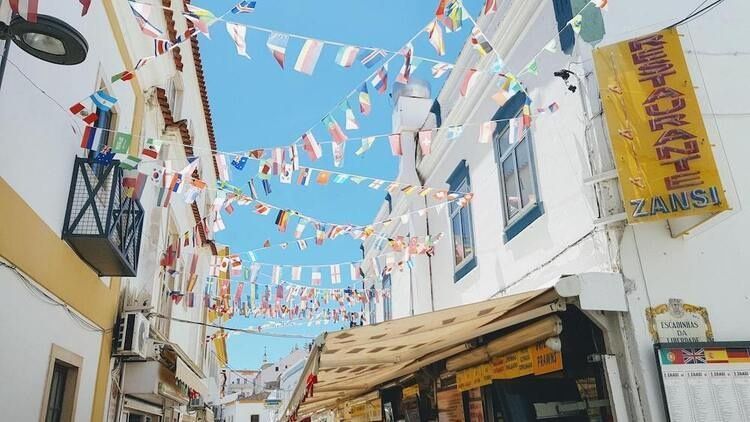
Go global in summer 2026! Global Internships give you valuable international work experience in fields spanning global development, climate and sustainability, international relations, communication, business, governance, and more.
Applications are open now.
Can’t attend? Contact programs@einaudi.cornell.edu.
***
The Mario Einaudi Center for International Studies hosts info sessions for graduate and for undergraduate students to learn more about funding opportunities, international travel, research, and internships. View the full calendar of fall semester sessions.
Additional Information
Program
Einaudi Center for International Studies
Reppy Institute for Peace and Conflict Studies
East Asia Program
Southeast Asia Program
Latin American and Caribbean Studies
Institute for African Development
Institute for European Studies
South Asia Program
Migrations Program
Southwest Asia and North Africa Program
Information Session: Global Internships
October 2, 2025
4:30 pm
Uris Hall, G08
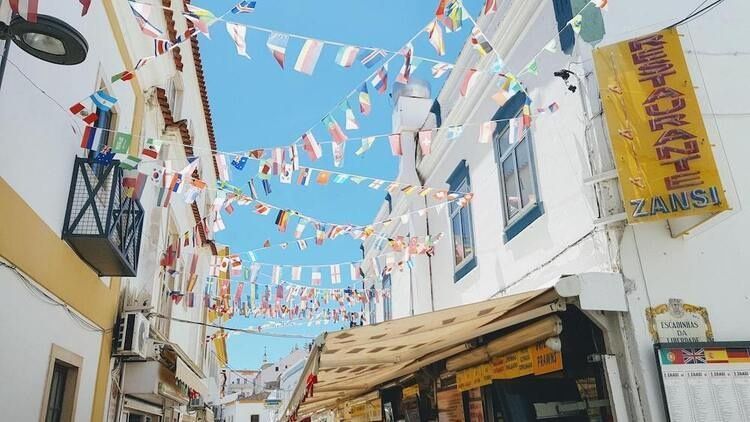
Go global in summer 2026! Global Internships give you valuable international work experience in fields spanning global development, climate and sustainability, international relations, communication, business, governance, and more.
Applications will open in the fall.
Can’t attend? Contact programs@einaudi.cornell.edu.
***
The Mario Einaudi Center for International Studies hosts info sessions for graduate and for undergraduate students to learn more about funding opportunities, international travel, research, and internships. View the full calendar of fall semester sessions.
Additional Information
Program
Einaudi Center for International Studies
Reppy Institute for Peace and Conflict Studies
East Asia Program
Southeast Asia Program
Latin American and Caribbean Studies
Institute for African Development
Institute for European Studies
South Asia Program
Migrations Program
Information Session: Graduate Student Opportunities at the Einaudi Center
September 18, 2025
4:30 pm
Uris Hall, G08
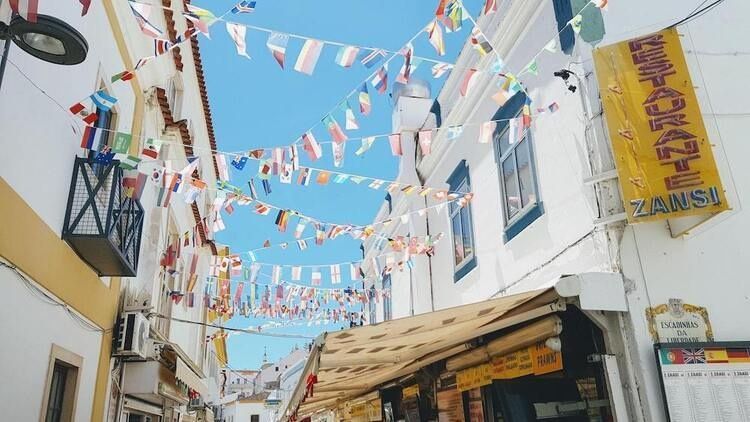
Join us to learn about opportunities for graduate students with the Einaudi Center for International Studies. This session will discuss how to discover or strengthen global interests, including research and travel grants, guest lectures, fellowships, and more!
Can't attend? Email programs@einaudi.cornell.edu for more information.
Additional Information
Program
Einaudi Center for International Studies
Reppy Institute for Peace and Conflict Studies
East Asia Program
Southeast Asia Program
Latin American and Caribbean Studies
Institute for European Studies
South Asia Program
Migrations Program
Institute for African Development
Southwest Asia and North Africa Program