
Reppy Institute for Peace and Conflict Studies
The 1968 Tet Offensive and South Vietnam’s Second Republic

March 30, 2023
11:25 am
In many accounts of the Vietnam War, the 1968 Tet Offensive – a sweeping series of communist attacks against military bases, provincial capitals and even the United States Embassy in Saigon – is recalled as a defining moment when American public opinion turned against the war. Long overlooked, however, is the equally significant political impact of Tet in South Vietnam itself.
Far from evincing public sympathy as Communist strategists had intended, the attacks saw a wave of anti-Communist solidarity sweep through South Vietnam’s cities and provincial towns. Partisan rivals set aside their differences, while the South Vietnamese military seized the opportunity to expand into Communist-dominated rural areas.
The post-Tet period arguably marked the zenith of anti-Communist cohesion in Vietnam. For a time, it appeared plausible that the balance might be tipping in Saigon’s favour. But the military government squandered this uniquely poised opportunity by monopolizing political power at the expense of civilian parties and institutions. This betrayed the constitutional order on which the state’s legitimacy was based, deflating post-Tet resolve, accelerating American funding cuts, and precipitating the state’s abrupt collapse from within in 1975.
Drawing on American and Vietnamese-language sources, Sean Fear explores the aftermath of the 1968 Tet Offensive in South Vietnam. Challenging conventional views of the Vietnam War as a clash between Cold War superpowers and their proxies, it also asserts the centrality of overlooked Vietnamese political actors in determining the outcome of the war.
Please join us for this virtual conversation. Register here.
About the Speaker
Sean Fear is a lecturer in international history at the University of Leeds. His research focuses on South Vietnamese domestic politics and diplomacy during the Second Republic (1967-1975). He is a 2022-23 Visiting Professor of History and Vietnam Studies at Fulbright University in Ho Chi Minh City, Vietnam.
Presented by the Reppy Institute for Peace and Conflict Studies. Co-sponsored by the Southeast Asia Program and the Gender and Security Sector Lab.
Additional Information
Program
Einaudi Center for International Studies
Reppy Institute for Peace and Conflict Studies
Southeast Asia Program
Counterterrorism Between the Wars: An International History, 1919-1937

March 9, 2023
11:25 am
What happened to the tens of millions of guns left over from World War I? Mary Barton discusses how the Great Powers’ failure to secure these weapons contributed to the rise of state-sponsored terrorism during the 1920s and 1930s. Barton tells a global story of the demise of empires, the rise of communism, and the cooperation between the United Kingdom and United States that would evolve into the Five Eyes intelligence alliance.
The Five Eyes remains a vital intelligence alliance today. The Five Eyes justice chiefs recently strongly supported Ukraine's efforts to prosecute war crimes arising from Russia's invasion.
Please join us for this virtual conversation. Register here.
About the Speaker
Mary Barton is an analyst with the U.S. government. She received her Ph.D. from the University of Virginia in 2016. She completed postdoctoral fellowships at the Henry A. Kissinger Center for Global Affairs, SAIS, and Dartmouth College, and previously served as a historian and wargaming analyst supporting the Office of the Secretary of Defense, Department of Defense.
Presented by the Reppy Institute for Peace and Conflict Studies. Co-sponsored by the Institute for European Studies and the Gender and Security Sector Lab.
Additional Information
Program
Einaudi Center for International Studies
Reppy Institute for Peace and Conflict Studies
Institute for European Studies
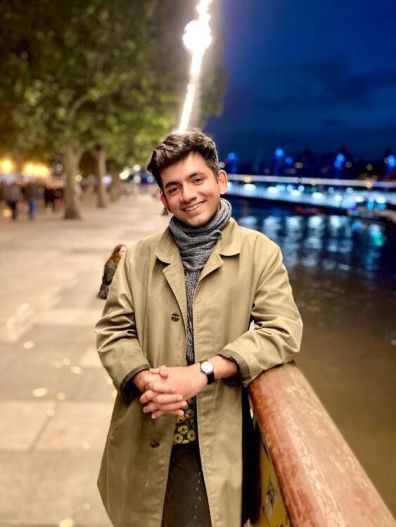
Masculinities and Everyday Gendered Violences in Urban India
February 16, 2023
11:25 am
Shannon Philip explores the gendering of everyday urban spaces and the social production of gendered violence. Through ethnographic data collected by ‘hanging out’ with young Indian men in New Delhi, he discusses the ways masculinities are constructed and performed, and how these in turn produce hostility, fear, and violence for women and girls accessing the same urban spaces.
Through weaving together material from myriad urban sites like gyms, bars, trains, street corners, night clubs, gay cruising parks as well as shopping malls, Philip explores how there is an attempt to make the city a masculine space, with a hypersexualization of women in the same spaces. However, this process is not even or uniform, with several masculine anxieties and vulnerabilities also emerging in men’s claims on the city from queer and non-masculine bodies. In this way, the urban space becomes an interesting palimpsest to explore the politics of gender, class, sexualities, and violences on an everyday level.
Please join us for this virtual conversation. Register here.
About the Speaker
Dr Shannon Philip is an Assistant Professor of Sociology at the University of East Anglia, UK and a Research Associate at the University of Cambridge, UK, and the University of Johannesburg, South Africa. His first monograph has recently been published with Cambridge University Press (2022) titled Becoming Young Men in a New India: Masculinities, Gender Relations and Violence in the Postcolony. Shannon’s new research project comparatively explores youth, sexualities, urban transformations, and gender in South Africa and India.
Presented by the Reppy Institute for Peace and Conflict Studies. Co-sponsored by the South Asia Program, and the Gender and Security Sector Lab.
Additional Information
Program
Einaudi Center for International Studies
Reppy Institute for Peace and Conflict Studies
South Asia Program
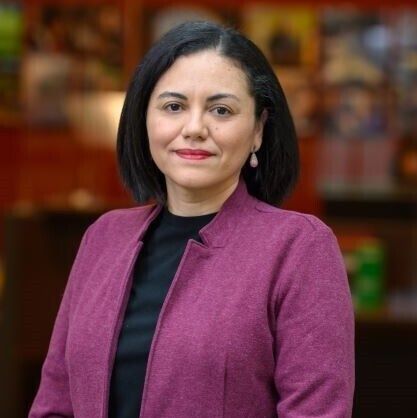
Violence against Women in Multi-Violence Contexts: Militarization and Organized Criminal Groups’ Territorial Control
February 2, 2023
11:25 am
With a focus on gang violence in El Salvador, Dr. Córdova’s book examines how organized criminal groups’ operations in the territories they control, and the incursion of the police and military, threaten women’s safety. The main argument establishes that gangs’ territorial control increases women’s daily risk of gender-based violence in the streets of neighborhoods and in the privacy of homes, and that this risk is perpetuated by diminished reporting rates due to widespread distrust in the police, largely resulting from increased police abuse associated with the militarization of public security. The consequences of these dynamics for women’s resistance, particularly implications for international migration, are also explored.
Dr. Córdova’s book project, supported by a 2022 Harry Frank Guggenheim Foundation Distinguished Scholar Award and a grant from the Kellogg Institute at the University of Notre Dame, contributes to the growing literature in political science on criminal violence and militarization by identifying some of the mechanisms that explain women’s increased risk of gender-based violence in territories controlled by organized criminal groups in the midst of state repression.
Dr. Abby Córdova's project builds on and contributes to this research by examining the evidence on the effects of women’s police stations on citizens’ attitudes toward the police and gender-based violence as well as impacts on the incidence of violence against women and reporting rates in the context of Brazil.
Please join us for this virtual conversation. Register here.
About the Speaker
Dr. Abby Córdova is an associate professor of global affairs in the Keough School of Global Affairs at the University of Notre Dame. Córdova’s research examines the consequences of inequality and marginalization for democracy, integrating topics related to violence against women, organized crime, militarization, and international migration in the context of Central America, Mexico, and Brazil. She was awarded the Harry Frank Guggenheim Distinguished Scholar Award in 2022.
Presented by the Reppy Institute for Peace and Conflict Studies. Co-sponsored by the Feminist, Gender & Sexuality Studies Program, and the Gender and Security Sector Lab.
Additional Information
Program
Einaudi Center for International Studies
Reppy Institute for Peace and Conflict Studies
Latin American and Caribbean Studies
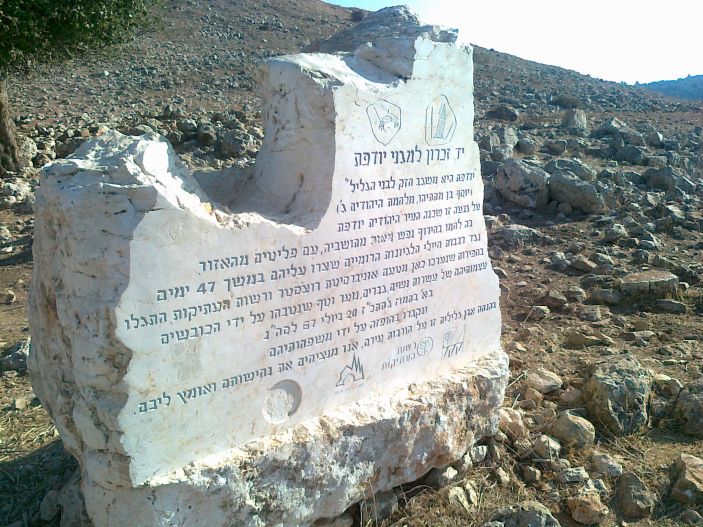
Noted Archaeologist to Speak on New Discoveries in Israel in Cornell Lecture
Barry Strauss, PACS
“Yodefat is one of the great sites in the history of freedom struggles. Prof. Aviam, who directed the excavations there, tells a gripping story,” says Barry Strauss, professor in humanistic studies. Israeli archaeologist Mordechai Aviam will speak about new discoveries in a lecture on campus on November 10.
Additional Information
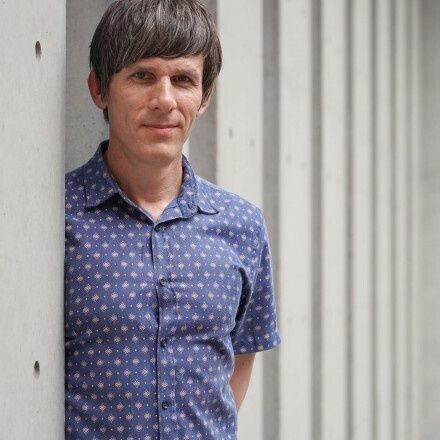
How Thai (and Burmese) Torturers Talk
December 1, 2022
12:30 pm
Kahin Center
Nick Cheesman
In 2021, a group of anti-narcotics cops in Nakhon Sawan, Thailand suffocated a man to death with plastic bags. The torture and killing would have gone unreported but that it was captured on a video, which a lawyer posted online. News reports circled around the lead protagonist, a superintendent living a playboy lifestyle, and questions about how the lawyer got hold of the video.
In this lecture, I take a different tack. The video serves as a starting point for me to revisit Elaine Scarry’s (1985) thesis that torture is characterized by the interplay between the physical torment of the captive and the verbal domination of their torturers. Put another way, torturers’ attacks on their captives’ bodies are given meaning by how they talk.
How do Thai torturers talk? And how do answers to this question present opportunities for rethinking the relation between law, violence and political order in Thailand, and elsewhere, today? I respond to these questions by describing research on torture in Thailand conducted during 2018-19 and 2022, supplemented by data from Myanmar prior to the 2021 coup there. I attend to how torturers in both countries use pronouns, other parts of speech and profanity; and, pursue recurrent tropes that give voice to the political dynamic of violent degradation in torture. I reassess Scarry’s claim that interrogation is not external to torture but internal to it, and find that critics who reject her claim as empirically unsupportable overstate their case. This leads me to speculate on whether the logic of brutality that the torturers in Nakhon Sawan performed for the world to see, far from being exceptional, might yet be coextensive with state practice. If so, then maybe in torture the category of the human is brokered so that the existence of the state is justified.
Nick Cheesman is an associate professor in the Department of Political and Social Change, Australian National University; and, in Fall 2022, a visiting professor at the Baldy Center for Law and Social Policy, University at Buffalo. His “Torture in Thailand at the limits of law” is online with Law and Social Inquiry.
Lunch will be served.
Co-sponsored by the Reppy Institute for Peace and Conflict Studies.
Additional Information
Program
Einaudi Center for International Studies
Southeast Asia Program
Reppy Institute for Peace and Conflict Studies
China‐US Relations: Is There Light at the End of the Tunnel?

November 3, 2022
4:45 pm
White Hall, 106
Levinson China & Asia‐Pacific Studies Program Guest Seminar
China and the United States are heading toward a cold war. How should we explain this development? What is likely to happen in the foreseeable future? What needs to be done to avoid a disastrous confrontation? The talk will try to address these questions.
Co-sponsored by the Brittany and Adam J. Levinson China and Asia-Pacific Studies Program (CAPS), the Cornell Government Department, East Asian Studies, and the Cornell China Center.
Jia Qingguo is professor and former dean of the School of International Studies of Peking University, a longtime partner and host institution for the CAPS-in-Beijing program. Currently, he is a Payne Distinguished Fellow at the Freeman Spogli Institute for International Studies at Stanford University. He received his Ph.D. from Cornell University in 1988. He is a member of the Standing Committee of the National Committee of the Chinese People’s Political Consultative Conference. He is vice president of the China American Studies Association, vice president of the China Association for International Studies, and vice president of the China Japanese Studies Association. He has published extensively on China-U.S. relations, relations between the Chinese mainland and Taiwan, and Chinese foreign policy.
You can find the flyer here.
Additional Information
Program
Reppy Institute for Peace and Conflict Studies
East Asia Program
Ukraine ‘Increasingly Successful’ at Destroying Shahed-136 Drones: U.K.

Sarah Kreps, PACS
“I think these are operating on a different model, which is kind of the law of large numbers,” says Sarah Kreps, professor of government and public policy. “If we deploy 30 of these, if five get through, they could do some damage to the Ukrainian energy infrastructure.”
Additional Information
The Russian Invasion of Ukraine

November 17, 2022
2:00 pm
Kendal of Ithaca Auditorium
Valerie Jane Bunce, Aaron Binenkorb Professor of International Studies Emerita
Why did Putin invade Ukraine in February, 2022? Why has the Russian military performed so badly and Ukraine’s military so effectively? Was the Western alliance right to provide military support to Ukraine? How can and should the war end?
Please click the link below to join the webinar:
https://cornell.zoom.us/j/99636638188?pwd=WXBOczFVOVJVWHhocGE1c0JXd0xod…
[come anytime after 1:30 for refreshments]
Additional Information
Program
Einaudi Center for International Studies
Reppy Institute for Peace and Conflict Studies
Russia’s Deadly ‘Kamikaze’ Drones Compared to Ukraine’s Unmanned Arsenal

Sarah Kreps, PACS
Sarah Kreps, professor of government and public policy, weighs the pros and cons of various drone types.