
Reppy Institute for Peace and Conflict Studies
Refugee Cities: How Afghans Transformed Pakistan

November 21, 2022
11:00 am
Talk by Sanaa Alimia in conversation with Aziz Hakimi
In this talk, Sanaa Alimia will discuss her new manuscript, Refugee Cities: How Afghans Transformed Pakistan (University of Pennsylvania Press, 2022). The book is a people's history of displacement across Afghanistan and Pakistan. Weaving together microhistories of neighbourhoods in Peshawar and Karachi, Alimia shows how Afghans have claimed and accessed rights and resources in these cities. Their struggles, which are a crucial, neglected dimension of Pakistan's urban history, reflect how Pakistan's longer-term Afghan population is not an alien cohort waiting to go home but rather an essential part of Pakistani society.
Sanaa Alimia is an Assistant Professor of Political Science at the Aga Khan University, Institute for the Study of Muslim Civilisations. She is a recipient of the British Academy/ Leverhulme Small Grants Award for her research project, 'Digital Borders, Bodies, and Mobility in South Asia.' Alimia’ s manuscript, Refugee Cities: How Afghans Transformed Pakistan, is out in 2022 (University of Pennsylvania Press). Alimia has previously held positions at the Leibniz Zentrum Moderner Orient, Berlin (2014-2019), Department of Political Science, University of Peshawar (2013-2017), and SOAS, London (2011-2014).
Aziz Hakimi holds a PhD in Development Studies from SOAS-University of London. His research and publications have addressed subjects including war and state formation, policing and local militias, and the intersections between gender, legal reform, marriage practices and migration in Afghanistan and among Afghan diaspora in Turkey.
Between 2016-2019, Dr. Hakimi was co-director of the New Afghan Men? Marriage, Masculinities and Gender Politics in Afghanistan research project. It was a collaborative initiative between Chr. Michelsen Institute (Norway), University of Sussex (UK) and Peace Training and Research Organization (Afghanistan). The project was funded by the Research Council of Norway (RCN) and explored the changing notions of masculinity and marriage practices in contemporary Afghanistan.
Additional Information
Program
Einaudi Center for International Studies
South Asia Program
Reppy Institute for Peace and Conflict Studies
Global Grand Challenges Symposium: Frontiers and the Future

November 17, 2022
8:00 am
How will we meet the most pressing demands of our time?
Join us for a two-day symposium that brings together the Cornell community and international partners to discuss the most urgent challenges around the world and how we can work together to address them.
Building on the first Global Grand Challenge, Migrations, symposium participants will help identify the next university-wide research, teaching, and engagement initiative to harness Cornell's global expertise.
The symposium, hosted by Global Cornell, will focus on five interdisciplinary themes, with panelists bringing their research and perspectives to bear:
Knowledge | Water | Health | Space | International Collaboration
Register today!
If you can't attend in person, please join us virtually:
Day 1: Wednesday, Nov. 16Day 2: Thursday, Nov. 17
Wednesday, November 16
Welcome: President Martha Pollack
Panel 1: Knowledge: What Counts, for Whom, and to What Ends?
4:30–6:00 ET, Klarman Hall, Rhodes-Rawlings Auditorium
A panel of Cornell faculty and Global Hubs partners discuss innovations in higher education, social media, and legal frameworks; new forms of knowledge production and inequalities in access; and security, privacy, disinformation, and the role of knowledge in democracies.
Read about the panelists.
Remarks, Provost Michael Kotlikoff
Reception, 6:00 ET, Klarman Hall Atrium
Thursday, November 17
8:00–5:00 ET, Clark Hall, room 700 (7th floor)
Breakfast, 8:00 ET
Panel 2: Water: Worldwide Challenges and Approaches
9:00–10:30 ET
Faculty from Cornell and partner universities explore the most critical challenges related to changing global water conditions, including access to clean drinking water; water governance, norms, and customs; trade-offs between drinking water, irrigation, and hydropower; rising sea levels and water-dependent communities; and new solutions for wastewater, ocean plastics, and pollution.
Read about the panelists.
Panel 3: Health: An Integrated Global Perspective
11:00–12:30 ET
Faculty from Cornell and partner universities explore vital issues related to health, including equity, nutrition, mental health and well-being, disease, communication, new technologies, sociocultural norms, One Health, sustainable agriculture and ecosystems, elder care, and the business of medicine/health.
Read about the panelists.
Lunch, 12:30 ET
Panel 4: Space: In a Galaxy Not So Far Away
1:30–3:00 ET
Faculty from Cornell and partner universities explore urgent topics related to our global engagements with outer space, including intergovernmental collaboration and defining a new space policy; private space travel and exploration; historical lessons for colonization; new technologies, materials, and visualizations; intelligent life; resources and extraglobal markets; and access and inequalities.
Read about the panelists.
Panel 5: International Collaboration:< /b>Taking Action for Our Global Future
3:30–5:00 ET
In this final session, panelists discuss opportunities and challenges for creating truly collaborative and mutually beneficial partnerships in an unequal world. Faculty from partner universities share ideas for collaborating on the four themes introduced earlier in the symposium, and participants explore the tension between respect for local cultures and universalisms implicated in scientific inquiry.
Read about the panelists.
Register in-person or virtually for one or all sessions!
Additional Information
Program
Einaudi Center for International Studies
Reppy Institute for Peace and Conflict Studies
East Asia Program
Southeast Asia Program
Latin American and Caribbean Studies
Institute for African Development
Institute for European Studies
South Asia Program
President of Iceland: Can Small States Make a Difference?

November 10, 2022
4:30 pm
Klarman Hall, Rhodes-Rawlings Auditorium
With a population of 376,000—less than half the size of Cyprus—and land area of 40,000 square miles (103,000 square km), lceland is one of Europe's smallest states.
In his lecture "Can Small States Make a Difference? The Case of Iceland on the International Scene," President of Iceland Guðni Th. Jóhannesson shares his perspective as the leader of a small country that was a founding member of North Atlantic Treaty Organization (NATO).
According to the Institute for Economics and Peace's Global Peace Index, Iceland is the world's most peaceful nation—for the 14th consecutive year. Iceland has consistently held the top position since the index launched in 2008.
Jóhannesson argues that Iceland's national commitment to peace; disarmament, arms control, and nonproliferation; and the shared values of the NATO alliance, including respect for democracy and human rights, are part of how his small state makes an outsized impact on international relations.
Hosted by the Mario Einaudi Center for International Studies, this Distinguished Speakers series event is part of Einaudi's work on Democratic Threats and Resilience.
The event will be moderated by Peter Katzenstein, the Einaudi's Center Walter S. Carpenter Jr. Professor of International Studies and Professor of Government in the College of Arts and Sciences.
***
Livestream
Don't miss this important lecture!
Join the livestream.Or view the event as it happens on the large screen in the Groos Family Atrium in Klarman Hall.***
In-Person: SOLD OUT
Please bring your Eventbrite ticket to the lecture. Doors open at 4:05pm.
Note: Due to security precautions, attendees may be searched, and bags will not be allowed in the auditorium. Free and secure bag storage will be available at the venue.
***
About the Speaker
Guðni Th. Jóhannesson took office as Iceland's president in 2016. Previously, he was professor of history at the University of Iceland. He also taught at Reykjavik University, Bifröst University, and the University of London.
Jóhannesson has written numerous books on modern Icelandic history—including works about the Cod Wars, the Icelandic presidency, late Prime Minister Gunnar Thoroddsen, spying in Iceland, and the 2008 banking collapse—as well as dozens of scholarly articles and newspaper articles. In 2017 he was awarded an honorary degree by Queen Mary University of London, where he earned his PhD in history in 2003.
Additional Information
Program
Einaudi Center for International Studies
Institute for European Studies
Reppy Institute for Peace and Conflict Studies
The U.S. Has to Think About How Its Chip Export Curbs Could Affect Its Allies, Says Professor

Sarah Kreps, PACS
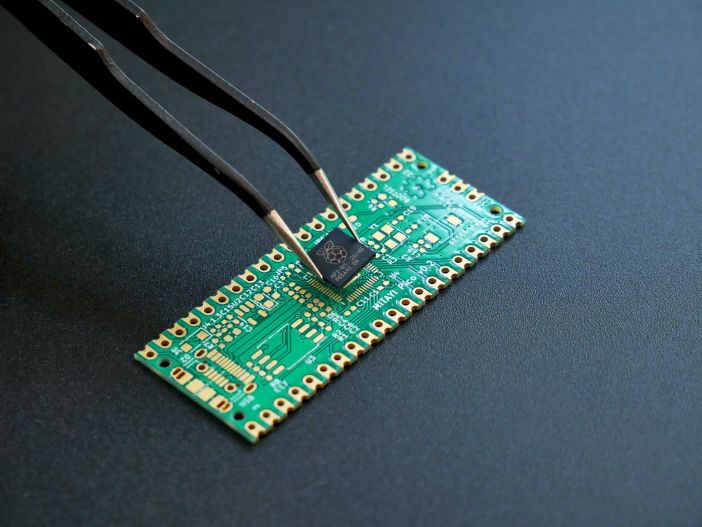
Sarah Kreps, professor of government, joins Squawk Box to discuss the Chips Act and notes the U.S. should keep the “bigger picture” in mind when dealing with China.
Additional Information
Chip Companies Are Already Slumping. Joe Biden’s New China Export Bans Add to Their Woes

Sarah Kreps, PACS
This piece references comments from Sarah Kreps, professor of government, on how the U.S.’s efforts to slow China’s advances in military development will be for nothing unless other nations follow suit.
Additional Information
U.S. Restricts Semiconductor Exports in Bid to Slow China’s Military Advance
Sarah Kreps, PACS
Sarah Kreps, professor of government, says the U.S.’s efforts to slow China’s advances in military development will be for nothing unless other nations follow suit. Similar mention can be found in South China Morning Post.
Additional Information
China President Xi Jinping Is Still in Power, Despite Coup Rumors

Magnus Fiskesjö, EAP/SEAP/PACS
Magnus Fiskesjö, associate professor of anthropology, says, “we have not heard of any sudden changes in the Chinese ruling elite. That should have come out by now.”
Additional Information
Why African Nations Are Mostly Silent on China’s Rights Record

Magnus Fiskesjö, PACS/EAP/SEAP
“South Africa, with its proud tradition as a shining example for human rights, struggles now, saying nothing about China’s apartheid,” says Magnus Fiskesjo, associate professor of anthropology.
Additional Information
Aftershocks

War in Ukraine Reshapes World Order
Einaudi panelists appeared with Ann Simmons, the Wall Street Journal’s Moscow bureau chief, in a Sept. 22 event. Watch the video at eCornell.