
Reppy Institute for Peace and Conflict Studies
PACS faculty on Ukraine

Sarah Kreps speaks to the Washington Post about the war in Ukraine
Sarah Kreps, the John L. Wetherill Professor at the Department of Government, said, "We would need some real leadership to help the public understand what the issue is, and explain the consequences of inaction."
Additional Information
Einaudi, IES, and PACS Directors Condemn Russian Attack

Statement of Solidarity from the Einaudi Center
The invasion violates international law, the principles of national sovereignty, and basic human rights.
Cornell University's Mario Einaudi Center for International Studies and its programs, the Institute for European Studies (IES) and Judith Reppy Institute for Peace and Conflict Studies (PACS), stand in solidarity with the people of Ukraine as they resist Russia’s invasion of their sovereign nation.
The invasion violates international law, the principles of national sovereignty, and basic human rights. The indiscriminate air and missile attacks against Ukrainian cities constitute grave war crimes, and the flight of refugees portends a humanitarian crisis of enormous scale. We extend our sympathies to Ukrainian victims and defenders and to the brave Russians who have spoken out against Putin’s unjustified aggression.
Given the diversity of our intellectual community’s experiences and perspectives, it is even more striking that we are unanimous here: the Russian invasion of Ukraine must be condemned in the strongest terms. We stand for democratic values, tolerance, and human dignity. Our collective missions align to support rights and respect for humanity, as we work together with our students, colleagues, and partners across the world to move ever closer toward justice and peace.
- Rachel Beatty Riedl, Einaudi Center Director | John S. Knight Professor of International Studies | Professor, Government and Cornell Jeb E. Brooks School of Public Policy
- Mabel Berezin, IES Director | Professor of Sociology
- Rebecca Slayton, PACS Director | Associate Professor of Science and Technology Studies
Additional Information
Russia’s War on Ukraine

Mar. 4 at 4:30: Register now!
Don't miss this virtual panel on the global consequences of the Russian invasion, featuring Einaudi faculty and IES visiting critic Dmitry Bykov.
Additional Information
Russia’s War on Ukraine: A New Attack on Peace, Rights, and Sovereignty

March 4, 2022
4:30 pm
The Russian invasion of Ukraine constitutes the first major land war in Europe in decades. It threatens lives across the region, the post–Cold War international order—and the stability of the global economy, as the United States, European allies, and countries around the world have imposed severe sanctions on Russia and supplied varying levels of aid to Ukraine.
In cooperation with the Cornell Jeb E. Brooks School of Public Policy and College of Arts and Sciences, the Mario Einaudi Center for International Studies has convened this expert panel to respond to the injustice and massive violation of sovereignty, human rights, and peace.
Join us for a wide-ranging discussion of Russian domestic and foreign policy, Ukrainian nationhood and security response, human rights and migration, economic sanctions’ impact, and international and European consequences of Russia’s invasion of Ukraine. The panel includes Dmitry Bykov, a Russian dissident and Open Society University Network threatened scholar sponsored by Global Cornell and hosted by the Einaudi Center's Institute for European Studies (IES), in partnership with Ithaca City of Asylum.
***
Panelists:
Mabel Berezin (IES Director; Professor, Department of Sociology/A&S)Dmitry Bykov (Russian writer and dissident; scholar at risk hosted by IES)Cristina Florea (Assistant Professor, Department of History/A&S)Nicholas Mulder (Assistant Professor, Department of History/A&S)Bryn Rosenfeld (Assistant Professor, Department of Government/A&S)Stephen Yale-Loehr (Migrations faculty fellow; Professor of Immigration Law Practice, Cornell Law School)Moderator:
Rachel Beatty Riedl (Einaudi Center Director; Professor, Department of Government/A&S and Cornell Brooks School)
Introduction:
Wendy Wolford (Vice Provost of International Affairs; Professor, Department of Global Development, College of Agriculture and Life Sciences)
***
Live Screening: Statler 196
Students: Join the campus community in Statler 196 at 4:30 to watch the panel live. Sponsored by the Einaudi Center, A&S, and Cornell Brooks School.
***
About the Series
The new Einaudi Center Critical Conversations Series brings together world-class regional, historical, and comparative experts to promote deeper understanding of global current events and emerging crises on the world stage. The stakes for our shared future have never been higher—so please join us for these critical conversations.
Additional Information
Program
Einaudi Center for International Studies
Reppy Institute for Peace and Conflict Studies
Institute for European Studies
Drones and Global Order: Implications of Remote Warfare for International Society
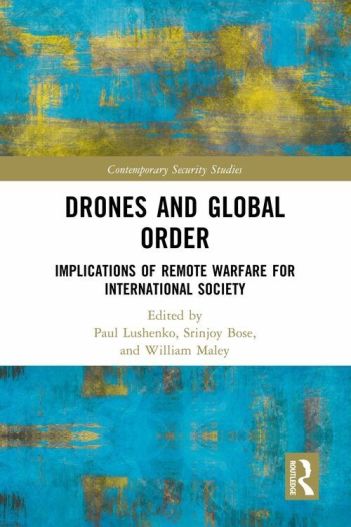
April 14, 2022
11:25 am
Uris Hall, G08
This is a hybrid event. Registration information is below.
This panel discussion, based on the book Drones and Global Order: Implications of Remote Warfare for International Society (Routledge, 2022), will explore the implications of drone warfare for the legitimacy of the global order. Since 2002, when the first use of an armed drone for the targeted killing of a terrorist was authorized in Yemen, the literature for drone warfare has evolved from studying the proliferation of drones, measuring their effectiveness, and exploring their legal, moral, and ethical impacts. However, these "three waves" of scholarship do not address its implications for the global order. The panelists argue that drone warfare imposes contradictions on the structural and normative pillars of global order. The panel discussion will point to the emergence of a "fourth wave" of scholarship to better contend with the social and political implications of drones.
About the speakers
Paul Lushenko is a U.S. Army Lieutenant Colonel and General Andrew Jackson Goodpaster Scholar at Cornell University, where he is pursuing a PhD in International Relations.
Keith Carter is U.S. Army Lieutenant Colonel and Director of the Defense and Strategic Studies Program at the United States Military Academy.
William Maley is an Emeritus Professor at The Australian National University, where he was Professor of Diplomacy from 2003-2021.
This seminar is part of the spring seminar series with the Reppy Institute for Peace and Conflict Studies (PACS).
Cosponsored by the Department of Government, and the Department of Science & Technology Studies, Cornell University.
Register here
In accordance with university event guidance, all campus visitors who are 12 years old or older must also present a photo ID, as well as proof of vaccination for COVID-19 or results of a recent negative COVID-19 test. If you are not currently participating in the Cornell campus vaccination/testing program, please bring proof of vaccination or the results of a recent negative test.
Additional Information
Program
Einaudi Center for International Studies
Reppy Institute for Peace and Conflict Studies
Cristina Florea
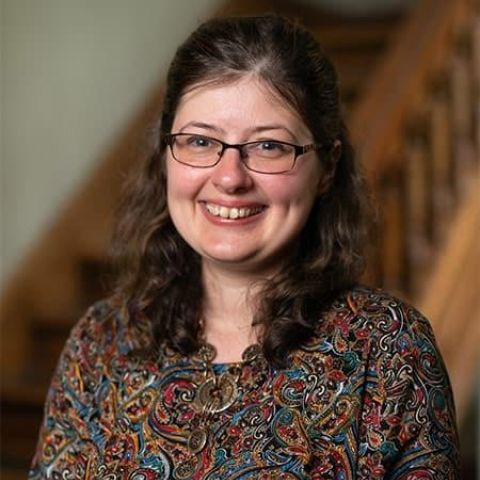
Associate Professor, History
Additional Information
Program
Role
- Faculty
- IES Core Faculty
- IES Steering Committee
- PACS Steering Committee
- Global Public Voices Fellow 2022-23
Contact
Email: cf476@cornell.edu
Political Elites Matter: An Inside-out Approach explaining the Peace, Conflict and Foreign Policy of Afghanistan
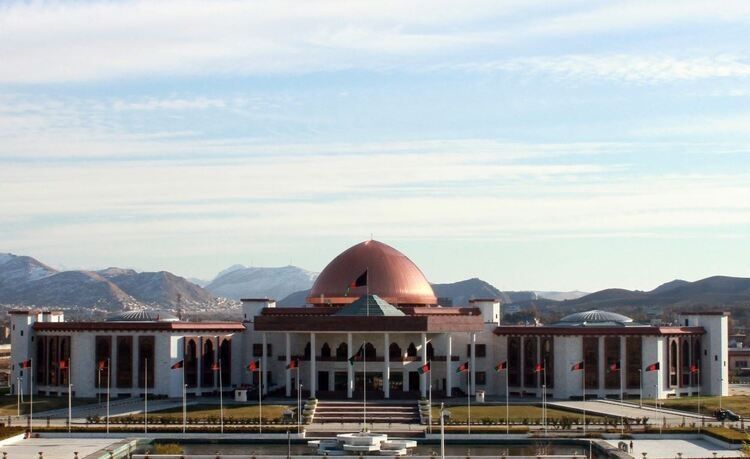
March 14, 2022
12:15 pm
Uris Hall, G08
Talk by Sharif Hozoori
Analyzing the situation of Afghanistan, its past struggle and instability, war and displacement, peace and conflict, scholars would argue that the external forces and power politics are influential and effective in articulation of events but the current research highlights a different scenario by proposing the role of political elites in bringing changes to the political environment. However, such change has a profound effect on domestic and foreign policy transformation as well. This study deals with the role of political elites in the changing domestic politics and transformation of foreign policy of Afghanistan from 1996 to 2014. It deals with two concepts: the political elite disunity and the political elite consensus. Accordingly, it tries to explain the two regimes: the Taliban’s first theocratic regime (1996-2001) and the democratic establishment after 2001. This study looks to answer that how political elite disunity contributed to the instability of Afghanistan from 1996 to 2001 which led to civil war and Islamization of foreign policy and how elite settlement and elite consensus led to democratic political establishment, domestic stability and caused for inclusionary foreign policy initiative post 9/11 in Afghanistan.
Sharif Hozoori is originally from Afghanistan. He holds PhD in International Relations from Centre for International Politics, Organization and Disarmament (CIPOD), School of International Studies, Jawaharlal Nehru University, New Delhi. His PhD thesis entitled Role of Political Elites in Foreign Policy Transformation: A Case Study of Afghanistan from 2001-2014. Mr Hozoori has earned his Master degree in International Relations from Department of International Relations, South Asian University in New Delhi. His dissertation was Radicalization of Muslims in South Asia: Implication for regional security. Upon his return to Afghanistan in 2019, He started teaching both in undergraduate and post graduates. At the same time, he has done administrative works as he was Vice Chancellor for Academic Affairs of Afghanistan University until recently before leaving the country in August 2021. Currently Mr. Hozoori is the IIE-SRF fellow and visiting scholar at South Asia Program, Mario Einaudi Center for International Studies, Cornell University. His area of research is Afghanistan politics and foreign policy, ethnic identity, South Asia politics, cultural studies and conflict resolution and peace.
Additional Information
Program
Einaudi Center for International Studies
South Asia Program
Reppy Institute for Peace and Conflict Studies
"No Sign of Backing Down"

Former Ambassador Speaks on Ukraine Conflict at Feb. 22 Event
Former U.S. Ambassador to Ukraine Bill Taylor said Russian President Vladimir Putin appears intent on provoking a “horrific conflict.”
Additional Information
American Anarchism in the Late 20th Century:
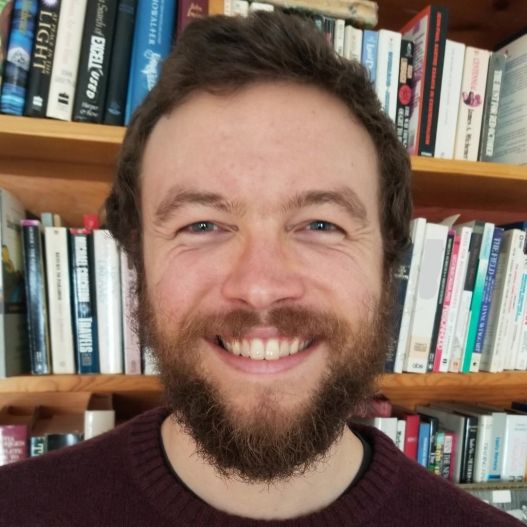
Spencer Beswick. PACS Graduate Fellow
Spencer Beswick, a doctoral student in the History Department, received the Jesse F. and Dora H. Bluestone Peace Studies Fellowship from the Judith Reppy Institute for Peace and Conflict Studies in the fall of 2021.
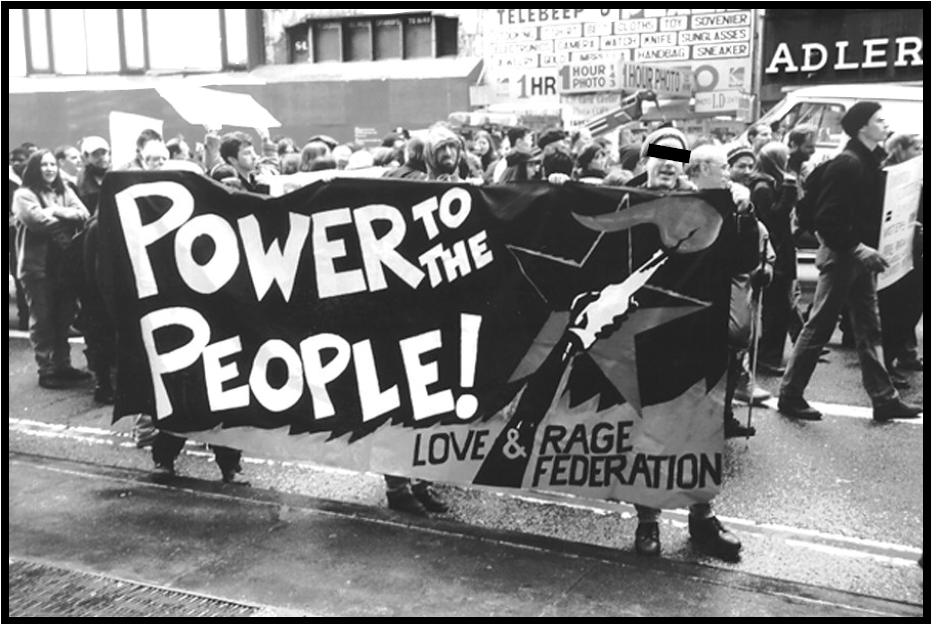
The fellowship supported Spencer’s research and writing for his dissertation, entitled “Love and Rage: American Anarchism in the Late Twentieth Century.” The dissertation explores how anarchists have articulated (and put into practice) an expansive, intersectional vision of peace, justice, democracy, and freedom that necessitates building a new society without hierarchy and domination. This history offers lessons for those committed to peace and justice today, particularly in the face of the contemporary global spread of fascism.
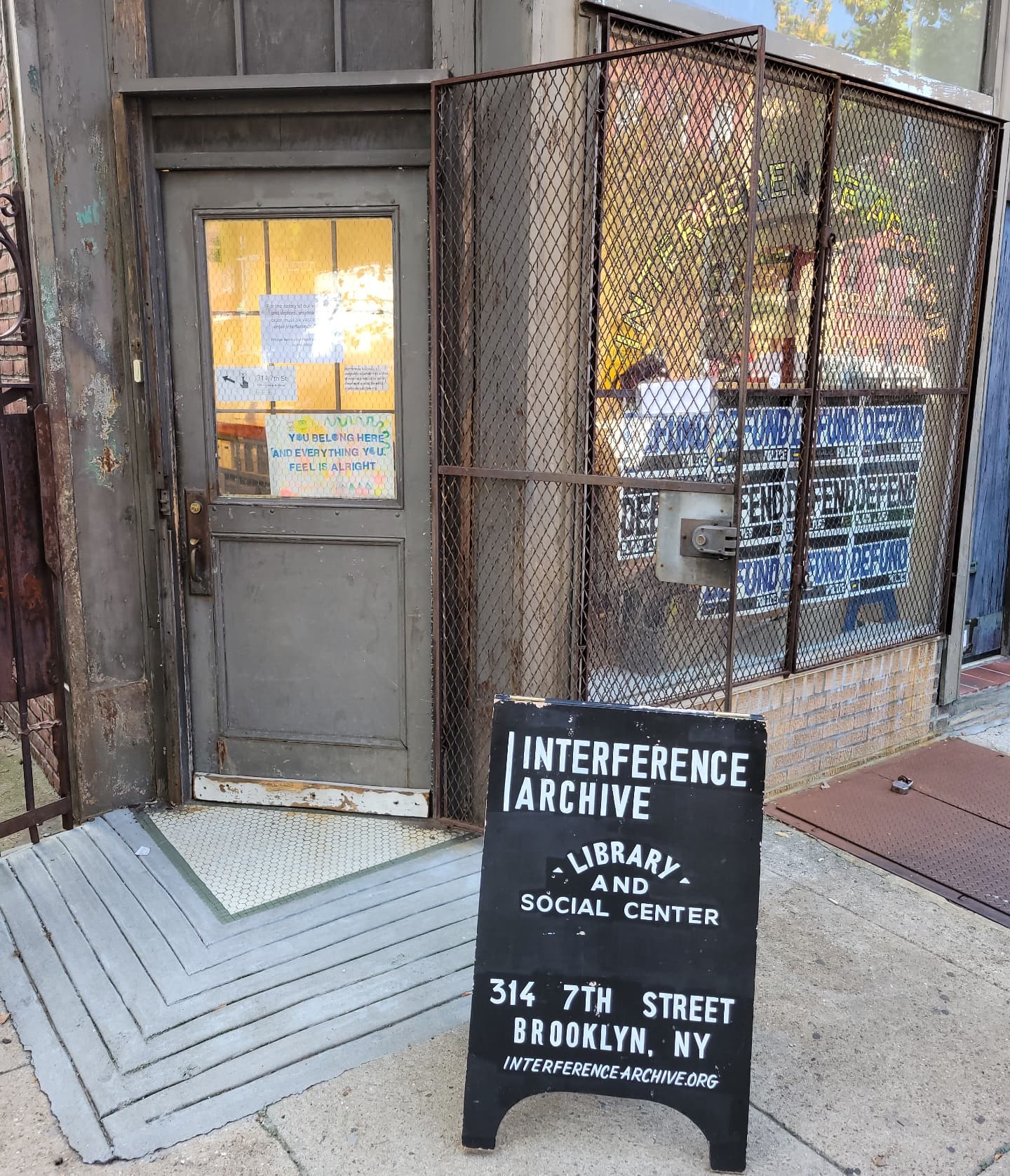
The Bluestone Fellowship enabled Spencer to conduct research at the Brooklyn Interference Archive, a volunteer-run archive of social movements. He also conducted thirty interviews which will be included in the Anarchist Oral History Project housed at the University of Michigan’s Labadie Collection.
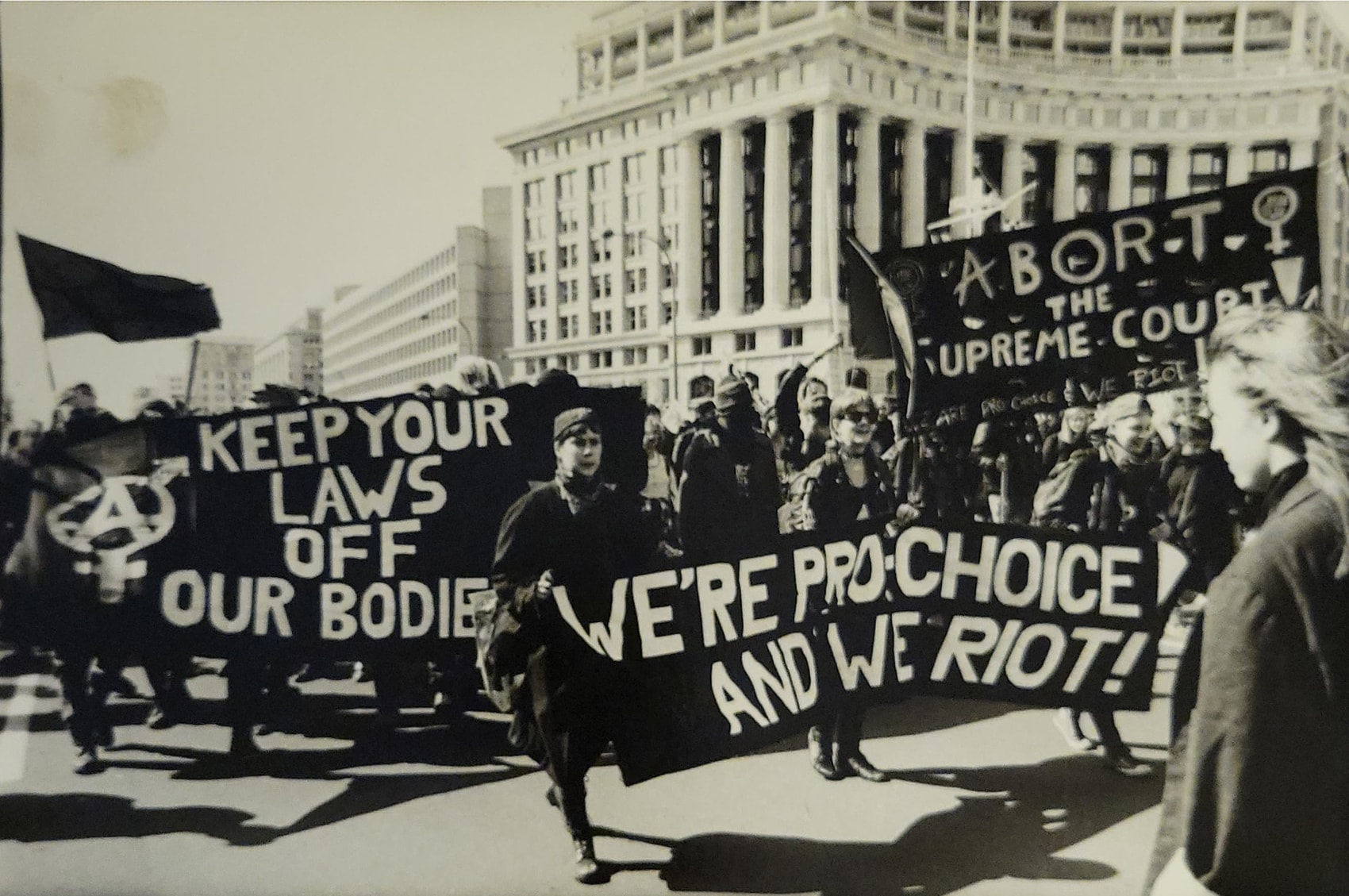
In addition to his archival and oral history research, Spencer worked on publishing his research for both scholarly and public audiences. His article “From the Ashes of the Old: Anarchism Reborn in a Counterrevolutionary Age (1970s-90s)” was recently accepted for publication by the Anarchist Studies journal. Another article, “‘We’re Pro-Choice and We Riot’: Anarcha-Feminism in Love and Rage (1989-98),” was accepted to the Coils of the Serpent journal’s upcoming special issue on Anarchism and Feminism.
Spencer also submitted an article “Radical Americas: A Hemispheric History of the Left” to the Left History journal, and he is writing an article on anarcha-feminism, violence, and the state to submit to the Radical History Review. Finally, Spencer writes regularly for his blog Empty Hands History on a range of topics including the revitalization of American anarchism in the 1980s, anarcha-feminist defense of abortion clinics, and the role of white workers and race treason in revolutionary struggle.
During the fall of 2021, Spencer also organized a number of public history events and staffed weekly open hours at the archive. He organized and spoke on an online panel at the Boston Anarchist Bookfair called ‘Feminism Practices What Anarchism Preaches’: Anarcha-Feminism in the 20th Century. In addition, he ran a monthly virtual “Socialist Night School” series with the Ithaca Democratic Socialists of America, which included an event on the history of Ithaca’s socialist mayor in the 1990s and a talk that Spencer gave called “The Zapatistas: Democracy and Autonomy in Chiapas, Mexico.” As he continues writing his dissertation in the coming semester, Spencer is also planning a forthcoming online series called “Reimagining Anarchism” with the Institute for Anarchist Studies, organizing a panel on post-war fascism and anti-fascism for next year’s American Historical Association conference, and launching an oral history project on Ithaca’s radical history.
Additional Information
Season 4 of Antiquitas podcast features love and war

Barry Strauss, PACS
Barry Strauss, history and classics professor, hosts the podcast “Antiquitas: Leaders and Legends of the Ancient World.”