
Reppy Institute for Peace and Conflict Studies
Peacebuilding, Climate Change, and Migration: Expanding the Lens
March 24, 2022
11:25 am
This is the second day of a two-day virtual workshop on peacebuilding, climate change, and migration. The first day of the workshop is March 22, 2022; participants are welcome to attend for just one or both days.
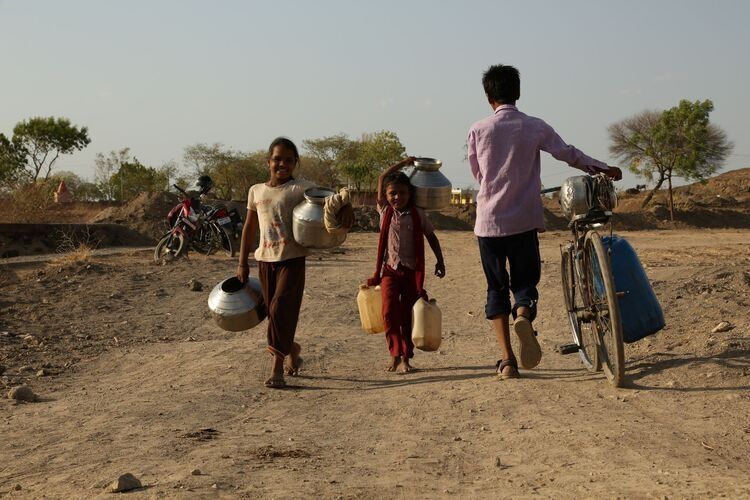
On this second day, we will examine understudied regions which are at substantial risk of climate change impacts, including Latin America, Southeast Asia, and South Asia. What resources, methods, and approaches can help us better understand the relationship between peacebuilding, climate change, and migration in these understudied regions? How can we achieve environmental justice in these areas?
The first day of the workshop is March 22, 2022.
WORKSHOP AGENDA
Introductory reflection
Karim-Aly Kassam
International Professor of Environmental and Indigenous Studies, Department of Natural Resources and the Environment & the American Indian and Indigenous Studies Program, College of Agriculture and Life Sciences, Cornell University
Dr. George Wilkes
Director, Religion and Ethics in the Making of War and Peace Project
Research Fellow, School of Divinity, University of Edinburgh
Presenters
Alpa Shah
Professor, Department of Anthropology, The London School of Economics and Political Science
Jonathan Padwe
Associate Professor and Undergraduate Chair, Department of Anthropology, University of Hawaiʻi at Mānoa.
Fábio Zuker
Journalist, Anthropologist, and Amazon Rainforest Journalism Fund Grantee
This workshop is being organized by Cornell University’s Reppy Institute for Peace and Conflict Studies, with support from the Migrations Initiative, and co-sponsorship from the Institute for African Development, the Latin American and Caribbean Studies Program, the South Asia Program, the Southeast Asia Program, and the College of Agriculture and Life Sciences.
Additional Information
Program
Einaudi Center for International Studies
Reppy Institute for Peace and Conflict Studies
Southeast Asia Program
Latin American and Caribbean Studies
Institute for African Development
South Asia Program
Peacebuilding, Climate Change, and Migration: Conceptualizing Environmental Peacebuilding
March 22, 2022
11:25 am
This is the first day of a two-day virtual workshop which takes a novel approach to peacebuilding, climate change and migration. The first day of the workshop is March 22, 2022; participants are welcome to attend for just one or both days.
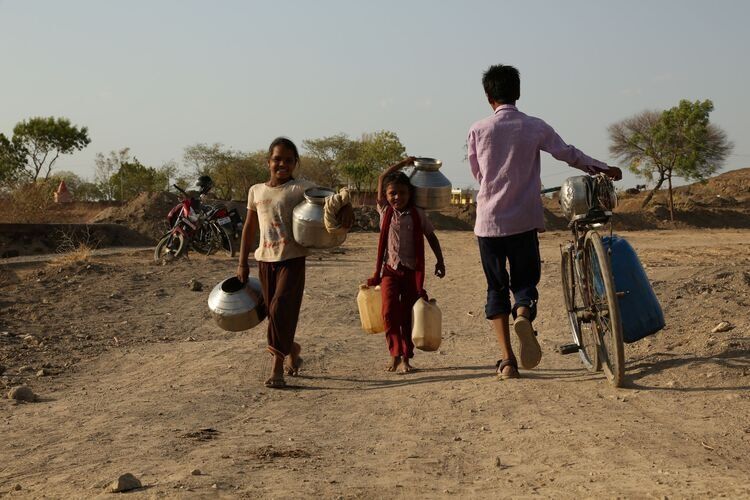
On this first day we will explore the following questions: What do we know about the relationship between peacebuilding, migration, and climate change? How can we develop a socio-environmental conception of positive peace, which entails developing means of peacefully resolving conflict, and which centers Indigenous perspectives and environmental justice?
The second day is March 24, 2022
WORKSHOP AGENDA
Introduction
Rebecca Slayton, Director, Reppy Institute for Peace and Conflict Studies, Cornell University
Associate Professor, Department of Science and Technology Studies
Rachel Beatty Riedl, Director and John S. Knight Professor of International Studies, Mario Einaudi Center for International Studies
Professor, Department of Government, Cornell University
Presenters
Marieme Lo, Director, African Studies Program
Associate Professor, Women and Gender Studies, University of Toronto.
Päivi Lujala, Professor of Geography and Academy of Finland Research Fellow
Geography Research Unit, University of Oulu, Finland
Noor Ahmad Akhundzadah, Dean and Professor of Environmental Science, University of Kabul, Afghanistan
Visiting Professor, Department of Natural Resources and the Environment & the South Asia Program, Cornell University
This workshop is being organized by Cornell University’s Reppy Institute for Peace and Conflict Studies, with support from the Migrations Initiative, and co-sponsorship from the Institute for African Development, the Latin American and Caribbean Studies Program, the South Asia Program, the Southeast Asia Program, and the College of Agriculture and Life Sciences.
Additional Information
Program
Einaudi Center for International Studies
Reppy Institute for Peace and Conflict Studies
Southeast Asia Program
Latin American and Caribbean Studies
Institute for African Development
South Asia Program
Dispatch from Ukraine: Human Rights and Conflict in the Eastern Regions

March 2, 2022
4:00 pm
Just before the coronavirus pandemic, Bernard-Henri Lévy’s reporting took him to eastern Ukraine, as part of an eight-part journey to cast light upon human rights abuses in global hotspots that have escaped international attention or active response.
Now, with the Ukraine crisis making global news headlines, Lévy recounts his experience in a dispatch from eastern Ukraine, as reported in his new book The Will To See: Dispatches from a World of Misery and Hope (Yale University Press, 2021). In a chapter he calls, “Donbass: Trench Warfare Lives on in Europe,” Lévy shares what he witnessed in 2020. And he will connect how that period foreshadowed what the world is paying close attention to today.
Bernard-Henri Lévy will be in conversation with Representative Chris Smith (R-NJ), co-chair of the bipartisan Tom Lantos Human Rights Commission (formerly known as the Congressional Human Rights Caucus) and former Representative Steve Israel, director of the Institute of Politics and Global Affairs at the Cornell Jeb E. Brooks School of Public Policy.
Speaker
Bernard-Henri Lévy, French philosopher, filmmaker, activist, and author
Moderators
Rep. Chris Smith, Senior Member on the Foreign Affairs Committee and Ranking Member of its Africa, Global Health, Global Human Rights, and International Organizations Subcommittee (R-NJ)
Steve Israel, Director, Institute of Politics and Global Affairs at Cornell University and former U.S. Representative (D-NY)
About the book
The Will To See: Dispatches from a World of Misery and Hope
Blurb: An unflinching look at the most urgent humanitarian crises around the globe, from one of the world’s most daring philosopher-reporters. Over the past fifty years, renowned public intellectual Bernard-Henri Lévy has reported extensively on human rights abuses around the world. This new book follows the intrepid Lévy into eight international hotspots—in Nigeria; Syrian and Iraqi Kurdistan; Ukraine; Somalia; Bangladesh; Lesbos, Greece; Libya; and Afghanistan—that have escaped global attention or active response.
In a deeply personal introduction, Lévy recounts the intellectual journey that led him to advocacy, arguing that a truly humanist philosophy must necessarily lead to action in defense of the most vulnerable. In the second section, he reports on the eight investigative trips he undertook just before or during the coronavirus pandemic, from the massacred Christian villages in Nigeria to a dangerously fragile Afghanistan on the eve of the Taliban talks, from an anti-Semitic ambush in Libya to the overrun refugee camp on the island of Lesbos. Part manifesto, part missives from the field, this new book is a stirring rebuke to indifference and an exhortation to level our gaze at those most hidden from us.
Additional Information
Program
Institute for European Studies
Reppy Institute for Peace and Conflict Studies
Former ambassador to discuss crisis in Ukraine
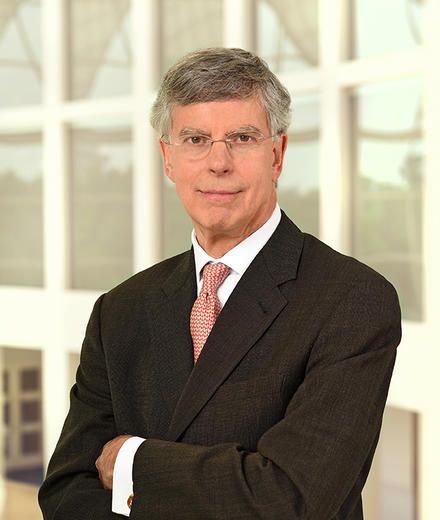
First in a planned series to discuss the crisis in Ukraine.
Additional Information
Nuclear Freeze Archive Digitized
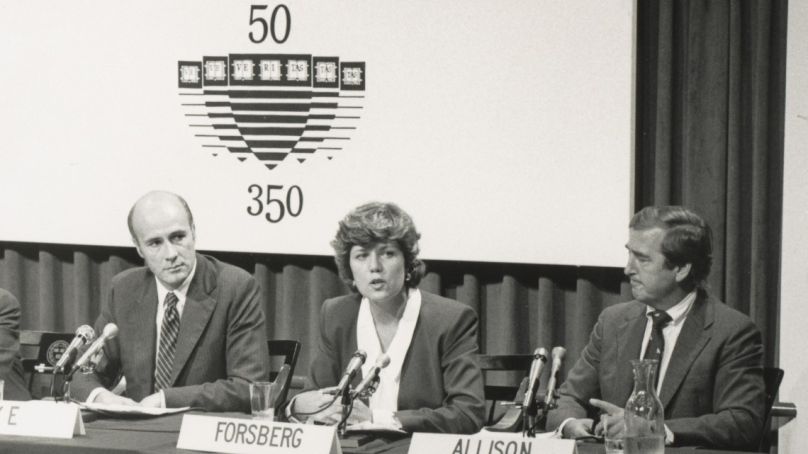
Randall Forsberg Project Led by Reppy Institute
Judith Reppy, Matt Evangelista, and Agnes Nimark (PACS) led work to preserve papers of international Nuclear Freeze movement leader.
Additional Information
Armed Drones: Limited War in Strategic and Global Contexts
March 14, 2022
1:00 pm
Since 9/11, the U.S. has used armed drones to combat terrorists. Bush initiated the use of strikes; Obama accelerated the practice, especially in Pakistan; and, Trump institutionalized it further. Biden’s “over-the-horizon” counterterrorism strategy suggests he will also continue to rely on strikes. At the same time, other states and stateless actors, including France and the Islamic State, have acquired drones indicating the emergence of a “second drone age.”
What are the implications of the evolving proliferation of drones for international security and global order? How do these consequences, in turn, shape policies to manage the emergence of automated and autonomous remote-warfare technologies? This panel discussion draws on the insights of three experts to answer these and related questions, including:
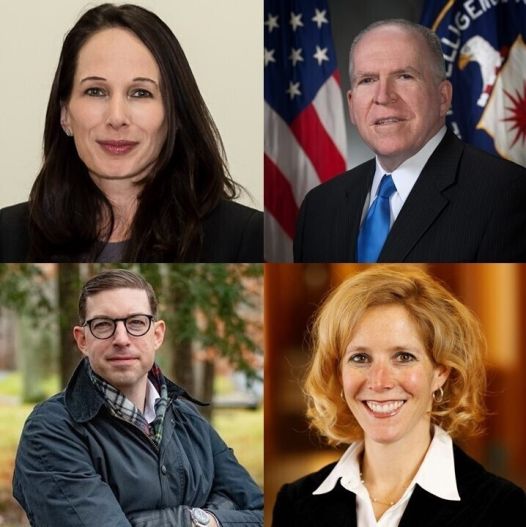
Mr. John Brennan, former Director of the Central Intelligence Agency;Professor Amy Zegart from the Hoover Institute at Stanford University; and,U.S. Army Lieutenant Colonel Paul Lushenko, a General Andrew Jackson Goodpaster Scholar at Cornell University.This discussion will be moderated by Professor Sarah E. Kreps, the John L. Wetherill Professor at the Department of Government, and hosted by Congressman Steve Israel, Director of the Institute of Politics and Global Affairs at the Brooks School of Public Policy.
This event is a collaboration between the Brooks School of Public Policy, Cornell Tech Policy Lab, the Institute of Politics and Global Affairs, and the Judith Reppy Institute for Peace and Conflict Studies.
Additional Information
Program
Reppy Institute for Peace and Conflict Studies
Einaudi Center for International Studies
The Crisis in Ukraine: A Conversation with Amb. Bill Taylor

February 23, 2022
7:00 pm
Ambassador William B. Taylor served as the U.S. ambassador to Ukraine from 2006 to 2009. In 2019, he served as chargé d’affaires at the U.S. embassy in Kyiv. Currently, he is the Vice President for Russia and Europe at the United States Institute of Peace (USIP). Taylor visits the Cornell community to discuss diplomacy and the latest developments in the Ukraine-Russia crisis.
Speaker
Amb. Bill Taylor, Vice President, Russia and Europe at the U.S. Institute of Peace
Moderators
Prof. Nicholas Rostow, Visiting Professor of Law at Cornell Law School
Steve Israel, Director, Institute of Politics and Global Affairs at Cornell University and former U.S. Representative (D-NY)
Organizers
This event is co-sponsored by the Institute of Politics and Global Affairs at the Cornell Jeb E. Brooks School of Public Policy and the Mario Einaudi Center for International Studies.
Additional Information
Program
Einaudi Center for International Studies
Reppy Institute for Peace and Conflict Studies
Institute for European Studies
Greetings from Uncle Sam: Manpower Policy as Cipher in American History
March 10, 2022
11:25 am
Uris Hall, G08
This is a hybrid event. Registration information is below.
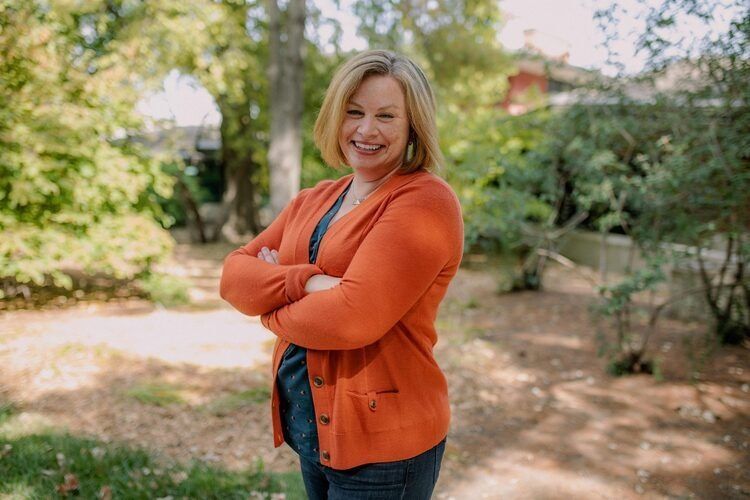
Professor Amy Rutenberg will discuss the idea that debates over U.S. manpower policy -because they rest on questions of personal liberty, collective responsibility, and competing visions of national security – end up substituting for much larger debates over the meaning of “America.” In this way, policy proposals end up acting as a cipher. The same basic program idea symbolizes very different things depending on the lens through which individuals decode it. This seminar will use debates over universal military training and selective service in the twentieth century as case studies.
About the speaker
Amy J. Rutenberg is an Associate Professor of History at Iowa State University. Her works focus on the intersection of war, gender, militarization, and American society in the second half of the twentieth century. Cornell University Press published her first book, Rough Draft: Cold War Military Manpower Policy and the Origins of Vietnam-Era Draft Resistance, in 2019, and she is working on a book tentatively titled In the Service of Peace: Peace Activism and Military Service in Post-Vietnam War America.
This seminar is part of the spring seminar series with the Reppy Institute for Peace and Conflict Studies (PACS).
Cosponsored by the American Studies Program.
Register here
In accordance with university event guidance, all campus visitors who are 12 years old or older must also present a photo ID, as well as proof of vaccination for COVID-19 or results of a recent negative COVID-19 test. If you are not currently participating in the Cornell campus vaccination/testing program, please bring proof of vaccination or the results of a recent negative test.
Additional Information
Program
Einaudi Center for International Studies
Reppy Institute for Peace and Conflict Studies
China's Coronavirus Missteps Open Door for US, But It Fails to Capitalize: Report

Sarah Kreps, PACS
“What does the off-ramp of a zero-Covid strategy look like in a world where we’re going to have variants bouncing around for years?” asked Sarah Kreps, a Cornell University professor of government. “Can the government keep up with the lockdowns for three to five years?”
Additional Information
Reppy Institute Welcomes New Program Manager
Priyanka Chakravarty, PACS
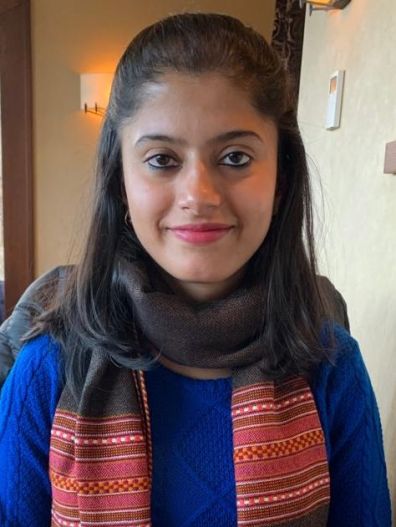
Priyanka Chakravarty is the new full-time Program Manager for the Reppy Institute for Peace and Conflict Studies. She joined the Einaudi Center and the Office of the Vice Provost for International Affairs in September 2020, where she has managed a diverse portfolio of projects, including the Einaudi Center’s Global Racial Justice research priority and its work with threatened scholars, undergraduate internships, graduate and postdoctoral fellowships, and the Global Public Voices faculty fellowship.
In the past, she has worked with ASER Centre / Pratham, one of India’s largest NGOs working in the field of primary education, and she interned with UNAIDS as well as CNN-News18 (the sister channel of CNN in India) and Business Standard (a leading financial newspaper in India). Over the years, she has gained experience in areas of governance, policy analysis, policy advocacy, and communications. As part of her research, she has conducted extensive fieldwork in rural India, in addition to interacting with a broad spectrum of stakeholders, from policymakers to senior bureaucrats.
Priyanka grew up in India, where she received a multidisciplinary education. She has an MPhil (Master of Philosophy) in Law and Governance and a Masters in Political Science from Jawaharlal Nehru University (JNU) in Delhi. She also has a Bachelor’s in Journalism from Delhi University. She is currently completing a Ph.D. in Political Science from the University of Oslo, Norway.
When not working, she loves traveling to new destinations and trying out new cuisines.