
Reppy Institute for Peace and Conflict Studies
Paradigm Lost: From Two-State Solution to One-State Reality

November 5, 2020
11:30 am
Peace and Conflict Studies Institute Reading Group for November 5. Ian Lustick, Professor and Bess W. Heyman Chair, Political Science Department, University of Pennsylvania, will join us for a discussion of Paradigm Lost: From Two-State Solution to One-State Reality (University of Pennsylvania Press, 2019), Chapter 5, “The One State Reality and Its Future.” Please note that the author will not give a formal presentation of their work, so it is best to read in advance.
Please pre-register at https://cornell.zoom.us/meeting/register/tJEudemhrTkoGtFSable5i_dq5Yhuc…, and a link to the reading will be sent to you with the registration confirmation. Please contact pacs@cornell.edu with any questions.
Additional Information
Program
Einaudi Center for International Studies
Reppy Institute for Peace and Conflict Studies
The Dilemma of Cybersecurity
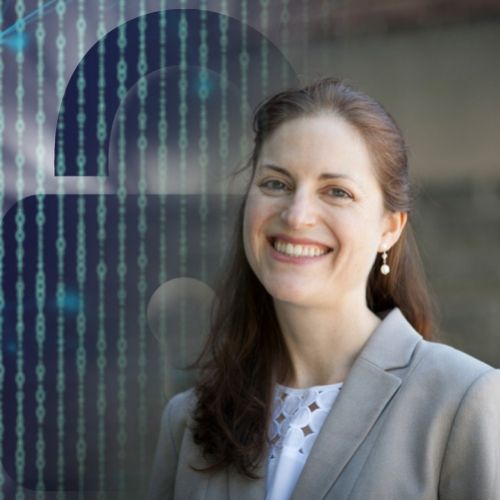
What does cybersecurity mean when computer systems remain vulnerable to hacking? Rebecca Slayton, Director of the Reppy Institute, investigates.
Additional Information
Book Talk: Worldbuilding After Empire

October 1, 2020
11:30 am
Join author Adom Getachew for a discussion on her new book, Worldbuilding After Empire: The Rise and Fall of Self-Determination. This event is sponsored by Buffalo Street Books in downtown Ithaca.
The event also serves as the Peace and Conflict Studies Institute Reading Group for October 1.
Register at https://www.buffalostreetbooks.com/event/adom-getachew.
Additional Information
Program
Einaudi Center for International Studies
Reppy Institute for Peace and Conflict Studies
Experts: Acknowledge uncertainty in COVID communication

Sarah Kreps and Doug Kriner, professors of government, found that different presentations of scientific uncertainty influence attitudes about policy preferences. Prof Kreps is a faculty fellow with the Reppy Institute.
Additional Information
Destroying or Deploying the "Deep State" (video)

Democracy 20/20 webinar (September 18, 2020): President Donald Trump came into office vowing to disrupt the “deep state” and to “drain the swamp” of the federal bureaucracy. This panel examines how the capacity and professionalism of the federal government has fared over the past four years, assessing the extent to which it has been weakened or deployed for political purposes.
Additional Information
Laidlaw Leadership and Research Program
Details
The Laidlaw Leadership and Research Program for undergraduates promotes ethical leadership and international research around the world—starting with the passionate leaders and learners found on campuses like Cornell.
With generous support for your leadership development, a summer abroad putting your skills into action, and research, this two-year cohort program for emerging leaders lays out a path for you to invest your skills, knowledge, and experience to make global change. Learn more about the program and its global reach on the Laidlaw Foundation website.
The Program
Research
Build your research skills on an internationally focused research project with the support of a faculty mentor and/or an experienced research team during your first summer. We'll help you find a project and a faculty mentor or you may propose your own.

Leadership Training
Learn about your unique leadership strengths, further develop your skills through critical reflection, and explore how to be an ethical and values-driven leader. You'll receive an Oxford certificate in ethical leadership at the end of the program.
Leadership-in-Action
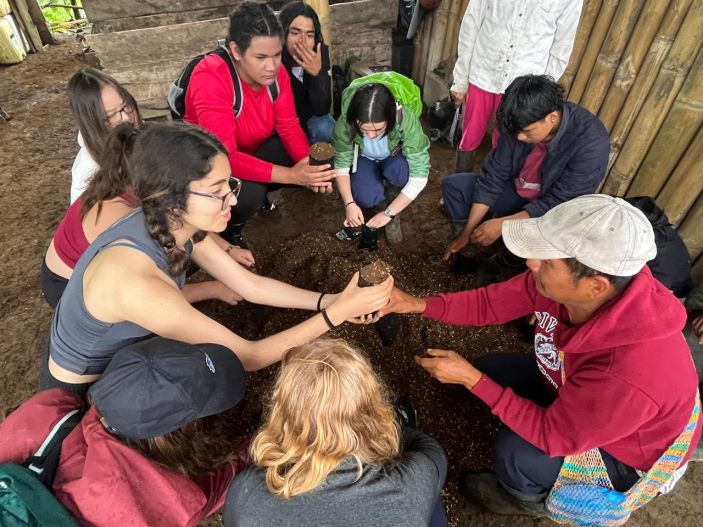
Work internationally on a hands-on, community-based project. You can develop your own leadership-in-action project, or we'll help you identify an international organization to work with. You'll learn from real-world leaders enacting change in their communities.
Networking
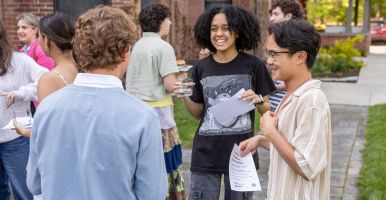
Connect with like-minded scholars who are passionate about Laidlaw's shared values—ethical leadership, global perspective, and research with a real-world impact. The international network of Laidlaw scholars extends beyond Cornell.
Faculty Fellows
Our Laidlaw faculty fellows support and mentor scholars throughout the experience. Meet our faculty fellows: Beth Lyon, clinical professor of law in the Cornell Law School, and Johannes Haushofer, professor of economics in the Brooks School of Public Policy.
Award
Summer 1: Up to $3,900 stipend while you conduct full-time research in Ithaca.
Summer 2: Up to $3,900 stipend for living expenses during your leadership-in-action experience, plus up to $1,950 stipend for international travel expenses.
Eligibility
First- and second-year students from any college or major may apply. You should have a strong academic background and must be able to commit to full participation in the program. U.S. citizenship is not required.
In order to be eligible for program funding, scholars must commit to all components of the program. Expectations are outlined below. If you have any questions about what full commitment to the program entails, please contact us at laidlaw.scholars@cornell.edu
Scholar Stories
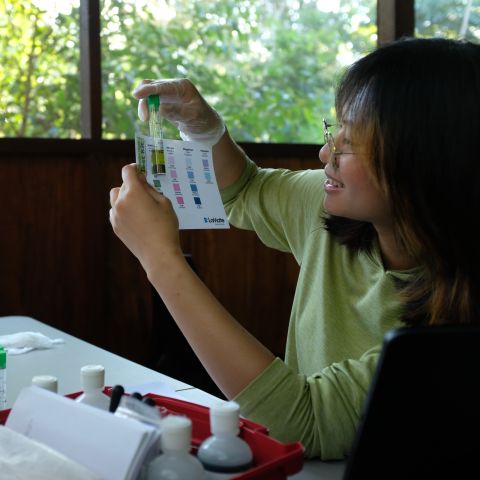
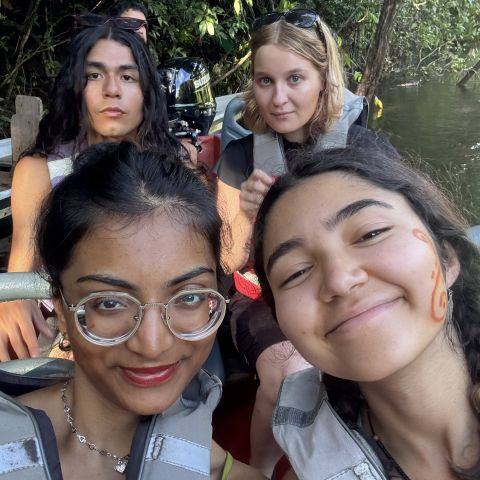
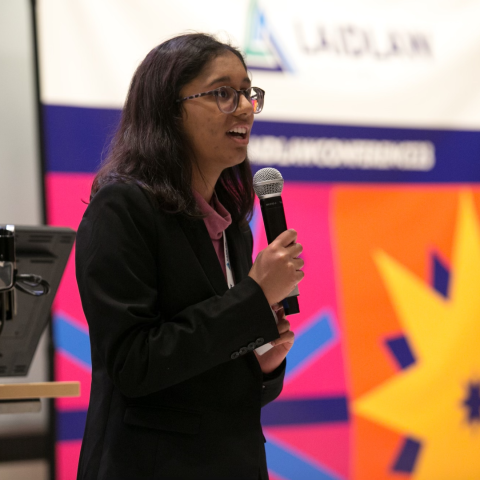
Meet Our Current Laidlaw Scholars
How to Apply
Apply by January 6, 2027 using the link below. Students who are selected to become Laidlaw scholars are notified by March 1.
Documents to Submit with Your Application
- Statement of Interest (2 page maximum, upload as PDF)
- Research Application (apply to 3 faculty-proposed projects or submit an independent proposal)
- Resume/CV (2 page maximum, upload as PDF)
- At least one reference who can submit a letter of recommendation
Important Dates
- October: Applications open
- January: Applications due
- February: Applicant interviews
- March: Decisions announced
As a part of the next cohort of Laidlaw scholars, you'll be active in the program from March 2027 to March 2029.
Questions? Join us for an upcoming information session, meet the current Scholars at the International Research Showcase, or contact our Laidlaw coordinator.
Additional Information
Funding Type
- Scholarship
Role
- Student
Program
How Finland Got 20% of Its Population to Download a Contact Tracing App in One Day

Peace and Conflict Studies Faculty Sarah Kreps says the two key factors driving improved numbers of contact tracing app downloads in Finland can be attributed to the fact that people are less likely to view the apps as scary, more as an essential tool, and European apps have prioritized privacy by housing the data in third-party data centers, not the government.
Additional Information
Comparing National Power in an Age of Transition

September 10, 2020
11:30 am
Peace and Conflict Studies Institute Reading Group for September 10. Jennifer Lind, Associate Professor, Department of Government, Dartmouth College, will join us for a discussion of her working paper, “Comparing National Power in an Age of Transition.” Please note that the author will not give a formal presentation of their work, so it is best to read in advance.
Please pre-register at https://cornell.zoom.us/meeting/register/tJEvcuCvqDsrE9DXibREd-fOndLvbv…, and a link to the reading will be sent to you with the registration confirmation. Please contact pacs@cornell.edu with any questions.
Additional Information
Program
Einaudi Center for International Studies
Reppy Institute for Peace and Conflict Studies
Already Authoritarian? Violence, Policing, and Democracy (video)

Democracy 20/20 webinar (August 27, 2020): Federal authorities responded to this summer’s protests with force. The protests, while spurred by recent killings of African Americans by police, have highlighted long-established patterns of intensive and often violent policing of communities of color. This webinar examines these developments in the context of American history.
Additional Information
Badges without Borders: How Global Counterinsurgency Transformed American Policing
October 29, 2020
11:30 am
Peace and Conflict Studies Institute Reading Group for October 29. Stuart Schrader, Associate Director of the Program in Racism, Immigration; and Citizenship and Lecturer/Assistant Research Scientist, Department of Sociology, Johns Hopkins University, will join us for a discussion of Badges without Borders: How Global Counterinsurgency Transformed American Policing (University of California Press, 2019), Introduction and Chapter 1. Please note that the author will not give a formal presentation of their work, so it is best to read in advance.
Please pre-register at https://cornell.zoom.us/meeting/register/tJMpce6rqz4iH9wGwby_PUjGIrxKeM…, and a link to the reading will be sent to you with the registration confirmation. Please contact pacs@cornell.edu with any questions.
Additional Information
Program
Einaudi Center for International Studies
Reppy Institute for Peace and Conflict Studies