
South Asia Program
Finding South Asia in the Library: Library Orientation for Graduate Students
September 3, 2025
4:30 pm
Olin Library, 108
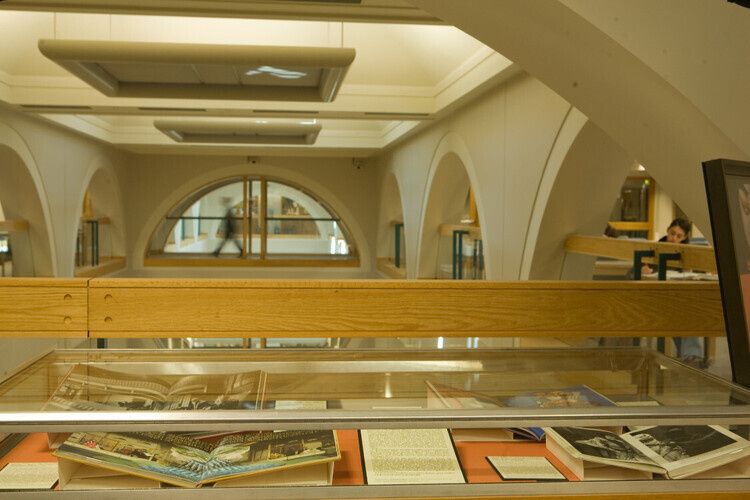
South Asia Librarian Kelsey Utne will introduce graduate students to resources available through the Cornell University Library for doing research on South Asia.
Additional Information
Program
South Asia Program
Global Internships
Details
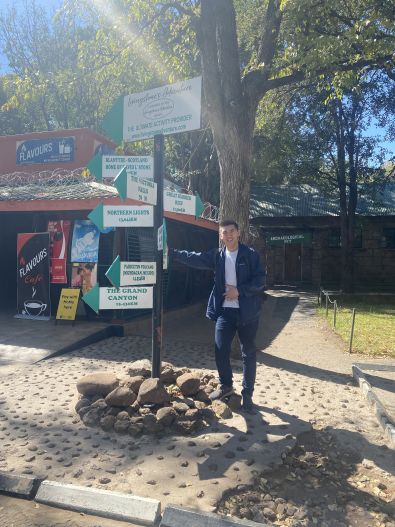
Gain valuable international experience with a Global Internship! As an intern, you'll meet mentors and colleagues working in the international arena and advance your career goals.
Our Global Internships span the globe with placements at Cornell Global Hubs partner universities, community nonprofits and NGOs, and global practitioners partnering with Einaudi's regional and thematic programs. We offer internships specializing in global development, climate and sustainability, international relations, communication, business, governance, and more.
Many opportunities have several openings, giving you a chance to intern abroad next summer with fellow Cornellians.
What You'll Learn
How to Be a Global Citizen
"My internship helped me to strengthen my sense of cultural awareness, intercultural communication, and empathy."—Haruna Floate '26
How to Think Internationally
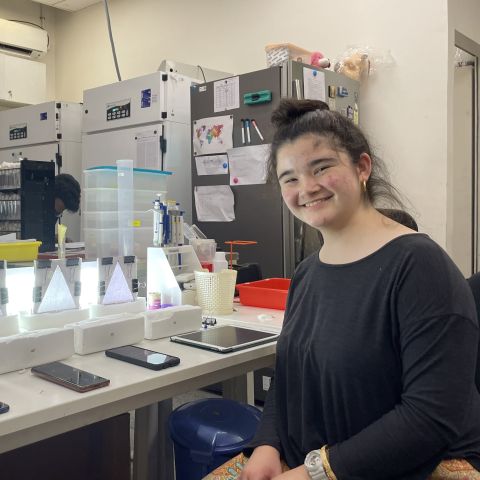
"In university, we are often taught U.S.-centric views, which can be limiting as environmental problems are global."—Hadley Flanagan '26
How to Adapt in New Places
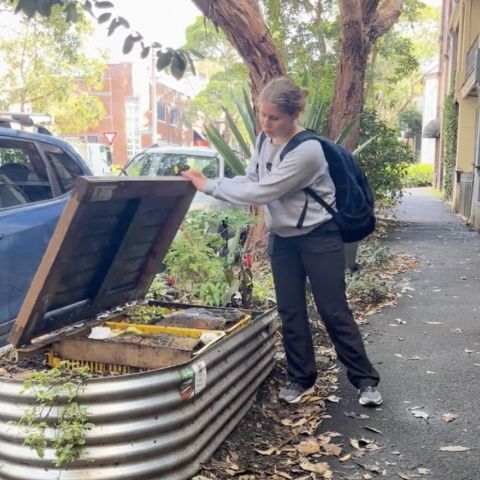
"The number one lesson I got from the experience was the importance of being teachable. I had to go outside of my comfort zone."—Eliana Amoh '26
Funding Amount
All Global Interns receive an award to cover the estimated costs for airfare, transportation, and living expenses. A portion of the stipend may be paid directly to the in-country host to support housing, food, and local transportation. Find specific funding information under the "cost" tab on each internship’s Experience page.
How to Apply
Find out how to apply then continue exploring internship options and start your application on Experience.
Deadline and Decision
The application deadline for this opportunity has passed.
Questions?
Joshua Kennedy is the Global Internships advisor. Select "Global Internships" in Cornell Chatter to schedule an appointment. You can also reach out by email with questions.
Meet Past Global Interns
Hear from our past interns on the Global Cornell YouTube channel.
Additional Information
Funding Type
- Internship
Role
- Student
Program
The Day with Phil Gayle

Natasha Suresh Raheja, SAP
Natasha Suresh Raheja (SAP) discusses the relationship between Christians and Hindus in South Asia in this interview with Phil Gayle.
Additional Information
India Need Not Panic Over Tariffs
Rohit Lamba, SAP
“The response to US weaponization of trade should be mature statecraft” says Rohit Lamba, Assistant Professor of Economics.
Additional Information
Information Session: Critical Language Scholarship (CLS) Program

September 30, 2025
4:30 pm
Uris Hall, G08
The Critical Language Scholarship (CLS) Program provides fully funded immersive summer programs for U.S. undergraduate and graduate students to learn languages of strategic importance to the United States’ national security, economic prosperity, and engagement with the world. Each summer, over 500 American students enrolled at colleges and universities across the United States spend approximately eight weeks studying one of a dozen languages either overseas or virtually. Participants gain the equivalent of one year of language study, as the CLS Program maximizes language and cultural instruction in an intensive environment.
Can't attend? Email programs@einaudi.cornell.edu for more information.
Additional Information
Program
Einaudi Center for International Studies
Reppy Institute for Peace and Conflict Studies
East Asia Program
Southeast Asia Program
Latin American and Caribbean Studies
Institute for European Studies
South Asia Program
Migrations Program
Institute for African Development
Southwest Asia and North Africa Program
Peasant History and the Accumulation of Difference in Colonial Panjab
November 10, 2025
12:15 pm
Uris Hall, G08
Peasant History and the Accumulation of Difference in Colonial Panjab
Talk by Navyug Gill, History, William Paterson University
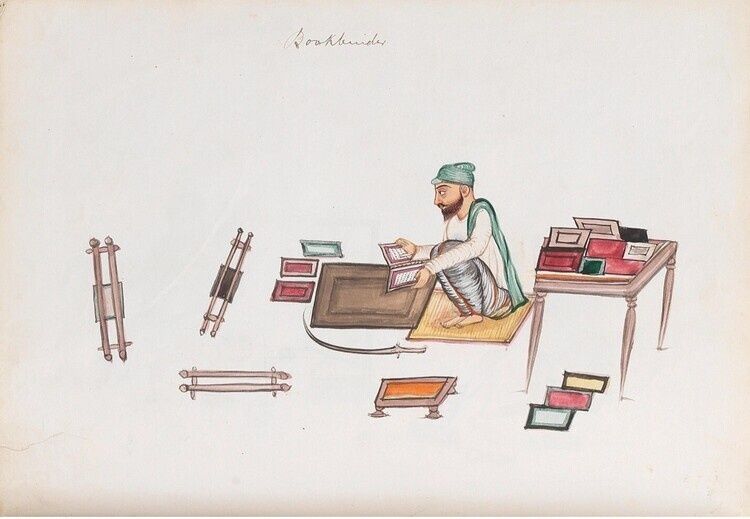
One of the most durable figures in modern history, the peasant has long been a site of intense intellectual and political debate. Yet underlying much of this literature is the assumption that the peasantry simply existed everywhere, a general if not generic group, traced backward from the present to antiquity. Within the British empire, Panjab has been regarded as the quintessential agrarian province inhabited by a diligent, prosperous and “martial race” of peasants. Against such essentialist depictions, I explore the landowning peasant and landless laborer as novel political subjects forged in the encounter between colonialism and struggles over culture and capital within Panjabi society. Colonial officials and ascendant Panjabis together disrupted existing forms of identity and activity to generate a new kind of rural hierarchy in the late nineteenth and early twentieth centuries. Through an interrogation of a disparate archive – settlement reports and legal judgments to labor contracts, vernacular poetry, and family budgets – I challenge the givenness of the peasant by explicating the ideological and material divisions that transformed the equation of power in the countryside, and thus reconfigured global capitalism. Weaving together economic logic with cultural difference, this presentation offers a way to rethink the itinerary of comparative political economy alongside alternative possibilities for emancipatory futures.
Navyug Gill is a historian of modern South Asia and global history. He is an Associate Professor in the Department of History, Philosophy, and Liberal Studies at William Paterson University. His research explores questions of agrarian change, labor politics, caste hierarchy, postcolonial critique, and histories of capitalism. His first book, Labors of Division: Global Capitalism and the Emergence of the Peasant in Colonial Panjab, was published by Stanford University Press in 2024. A South Asa edition was released by Navayana in 2025. The book won the “Henry A. Wallace Award” for the best book on agricultural history outside the US from the Agricultural History Society. Gill’s scholarly and public writings have appeared in venues such as Past and Present, the Journal of Asian Studies, Economic and Political Weekly, Al Jazeera, the Law and Political Economy Project, and Trolley Times.
Additional Information
Program
Einaudi Center for International Studies
South Asia Program
CANCELED - Crafting the Empire’s Echo: Design, Labor, and Politics in Contemporary India

November 3, 2025
12:15 pm
Uris Hall, G08
Talk by Llerena Guiu Searle (Anthropology, University of Rochester)
In order to build a more just world order, philosopher Olúfémi Táíwo argues that we must contend with the fact that our current social order builds on relations of colonialism that did not end with colonial independence in the 1940s-1960s. Slavery, colonialism, and racial capitalism have created what he calls the “Global Racial Empire” which accumulates advantages and disadvantages, harms and capabilities unevenly (2022). How might we understand “design” as a set of practices that operates within such a world system? Drawing on eight months of ethnographic fieldwork with furniture and interior designers in India, this talk examines the ways in which designers navigate capitalist markets that continue to be haunted by colonialism. On the one hand, creative experts shaping elite Indian homes describe design as an anti-colonial project, poised to free India from tastes, fashions, and products from abroad. On the other, designers navigate hierarchies of values set by global markets, including demand for exotic, uniquely “Indian” products. Furniture and interior production also relies on production methods still defined through neocolonial discourses of “crafts difference” (McGowan 2009) and on caste and class dynamics that legitimize labor exploitation. By investigating how these unseen forces – histories, values, and ideologies – structure design practice in India, this paper contributes to our understanding of the politics of the creative industries and their imbrication in “Global Racial Empire.”
Llerena Guiu Searle is an Associate Professor of Anthropology and of Visual & Cultural Studies at the University of Rochester, where she also co-edits the Lewis Henry Morgan Lecture Series. She is the author of Landscapes of Accumulation: Real Estate and the Neoliberal Imagination in Contemporary India (University of Chicago Press, 2016). Her research examines capitalism and the production of the built environment in urban India.
This presentation is supported by the Central New York Humanities Corridor
Additional Information
Program
Einaudi Center for International Studies
South Asia Program
Information Session: Laidlaw Scholars Leadership & Research Program

October 15, 2025
5:00 pm
The Laidlaw Scholars Leadership and Research Program promotes ethical leadership and international research around the world—starting with the passionate leaders and learners found on campuses like Cornell. Open to first- and second-year students, the two-year Laidlaw program provides generous support to carry out internationally focused research, develop leadership skills, engage with community projects overseas, and become part of a global network of like-minded scholars from twenty universities worldwide.
At this session, we'll share more information about the program, including Cornell's cohort-based intercultural community-engaged learning summer experience in Ecuador, and tips for writing a successful application. Applications are due January 12, 2026.
Applicants are also strongly encouraged to attend a Q+A webinar about the summer experience in Ecuador. Q+A webinars are scheduled for November 5 and November 6.
Register here. Can’t attend? Contact programs@einaudi.cornell.edu.
***
The Mario Einaudi Center for International Studies hosts info sessions for graduate and for undergraduate students to learn more about funding opportunities, international travel, research, and internships. View the full calendar of fall semester sessions.
Additional Information
Program
Einaudi Center for International Studies
Reppy Institute for Peace and Conflict Studies
East Asia Program
Southeast Asia Program
Latin American and Caribbean Studies
Institute for African Development
Institute for European Studies
South Asia Program
Migrations Program
Information Session: Laidlaw Scholars Leadership & Research Program

October 7, 2025
5:00 pm
Uris Hall, G02
The Laidlaw Scholars Leadership and Research Program promotes ethical leadership and international research around the world—starting with the passionate leaders and learners found on campuses like Cornell. Open to first- and second-year students, the two-year Laidlaw program provides generous support to carry out internationally focused research, develop leadership skills, engage with community projects overseas, and become part of a global network of like-minded scholars from twenty universities worldwide.
At this session, we'll share more information about the program, including Cornell's cohort-based intercultural community-engaged learning summer experience in Ecuador, and tips for writing a successful application. Applications are due January 12, 2026.
Applicants are also strongly encouraged to attend a Q+A webinar about the summer experience in Ecuador. Q+A webinars are scheduled for November 5 and November 6.
Can’t attend? Contact programs@einaudi.cornell.edu.
***
The Mario Einaudi Center for International Studies hosts info sessions for graduate and for undergraduate students to learn more about funding opportunities, international travel, research, and internships. View the full calendar of fall semester sessions.
Additional Information
Program
Einaudi Center for International Studies
Reppy Institute for Peace and Conflict Studies
East Asia Program
Southeast Asia Program
Latin American and Caribbean Studies
Institute for African Development
Institute for European Studies
South Asia Program
Migrations Program
On Being Bengali: Abul Mansur Ahmed’s Politics of Language
September 29, 2025
12:15 pm
Uris Hall, G08
Talk by Ahona Panda (History, Claremont McKenna College)
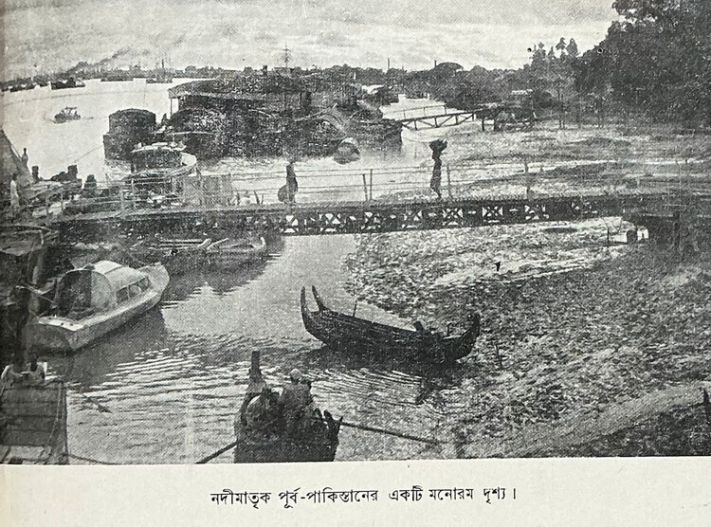
The talk explores the entwined political and literary lives of the Bengali politician and writer, Abul Mansur Ahmed (1898-1979), and studies him as a person who lived through the political articulations of three nationalisms: Indian, Pakistani, and Bangladeshi. From his early involvement in the Indian National Congress, to his shift to the Muslim League and formation of Pakistan, and later his role in shaping the Awami League and modern Bangladesh, Ahmed’s life reflects the deep contradictions of his time. In this talk, I explore how, for Ahmed, “Muslim” was not merely a religious category, but a social class formation produced through colonial agrarian structures and shaped by Hindu cultural and linguistic hegemony. Language, then, became both a site of resistance and a battleground for Muslims and Hindus: who controlled Bengali? Who spoke for its future? Ahmed’s suspicion of Hindu-Muslim unity stemmed from a trenchant critique of elite Hindu appropriation of language and culture. And yet, Bengali–– and language itself–– remained a terrain of unresolved tension and closeness between the two communities.
I situate Ahmed alongside literary friends like Kazi Nazrul Islam, political figures like Chittaranjan Das, A.K. Fazlul Huq and H.S. Suhrawardy, as well as humanists like Ahmed Sharif and Anisuzzaman, who held out hope that the Bengali language could transcend nation-state divisions. As India-Bangladesh relations continue to worsen, the talk rethinks whether language is the site of irreconcilable difference, or the elusive site of what binds us beyond the injustices of class, race, and history.
Ahona Panda is a historian of South Asia and Assistant Professor of History at Claremont McKenna College. In 2025-2026, she is a Visiting Scholar of South Asian History at Cornell University. Her research focuses on the intersections of language, land, and politics in Bengal from the colonial period to the postcolonial present. She is currently completing a book titled Language and its Communitas: The Life of Bengali, 1793–1971, which explores the political and emotional life of the Bengali language, and the material, national, and literary histories that shaped it. Her broader scholarly interests include philology, economic and environmental history of the Bengal delta, and the long history of Hindu–Muslim relations in South Asia.
Additional Information
Program
Einaudi Center for International Studies
South Asia Program