South Asia Program
Nepal Day Celebration
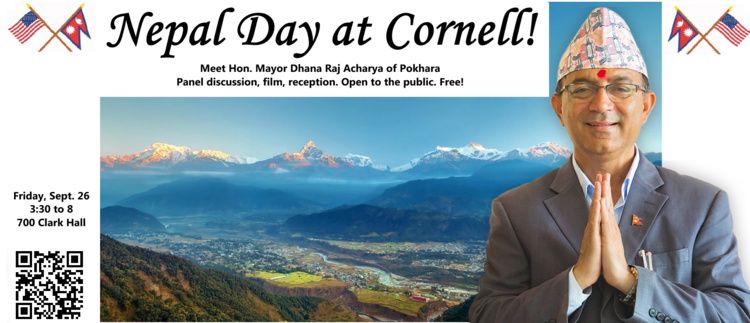
September 26, 2024
3:30 pm
Clark Hall, 700
The Nepali Language Program at Cornell, the Nepalese Student Association at Cornell, And the lthaca-Pokhara Sister Cities Committee present our first Nepal Day Celebration.
Featuring a colloquium on Ithaca-Nepal Partnership: Opportunities for Grassroots Diplomatic, Educational and Entrepreneurial Initiatives
(SHARE YOUR VIEWS!)
And the screening of the award-winning new documentary:
Dancing in Fire: Khalikhane Fire-Walking and Ritual Healing in the Kathmandu Valley of Nepal (2024)
Introduced by filmmaker Dr. Alfred Pach
With reception: networking, food, music!
Special Guest
The Honorable Dhana Raj Acharya, Mayor of the Metropolitan City of Pokhara Tourism Capital of Nepal
Ithaca's Newest Sister City
Additional Information
Program
South Asia Program
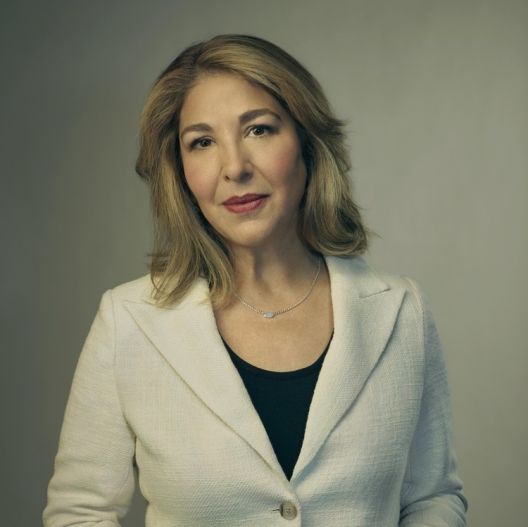
Naomi Klein: Doppelganger Politics
October 23, 2024
5:00 pm
Biotechnology Building, G10
Bartels World Affairs Lecture
The bestselling author of Doppelganger: A Trip into the Mirror World joins us for a personal journey down the conspiracy rabbit hole to explore why our political sphere has become dangerously warped.
When author and social activist Naomi Klein discovered a writer with the same first name but radically different political views was chronically mistaken for her, it seemed too ridiculous to take seriously—until suddenly it wasn’t. As the pandemic took hold, she absorbed a barrage of insults from her doppelganger’s followers.
Klein’s 2023 book Doppelganger follows Other Naomi into a digital underworld of conspiracies, anti-vaxxers, and right-wing paranoia. Klein’s journey reveals mirrored concerns and unlikely connections between well-meaning liberals and the right-wing voices that relish “owning” them.
After a talk sharing her insights, Klein joins distinguished global democracy experts from Cornell to lift the lid on this surreal election moment and examine how our politics have become so twisted and polarized. What can we do to escape our collective vertigo and get back to fighting for what really matters?
***
Panelists
Read election remarks from the panelists in Chronicle coverage of global democracy activities on campus.
Thomas Garrett, Einaudi Center Lund Practitioner in Residence, Distinguished Global Democracy Lecturer (Jeb E. Brooks School of Public Policy)Suzanne Mettler, John L. Senior Professor of American Institutions, Department of Government (College of Arts and Sciences)Kenneth Roberts (moderator), Einaudi Center Democratic Threats and Resilience faculty fellow, Richard J. Schwartz Professor, Department of Government (A&S)
***
This event is sold out.
All free tickets are reserved. If you don’t have a ticket but would like to attend, please arrive 15 minutes early to be put on our wait list.
A reception with refreshments will follow the lecture and panel.
Lecture and Panel: 5:00 | G10 Biotechology BuildingReception: 6:30-7:30 | Biotechnology Building Atrium
***
About Naomi Klein
Naomi Klein is an award-winning journalist and international bestselling author of nine books published in over 35 languages, including No Logo, The Shock Doctrine, and her most recent book Doppelganger: A Trip into the Mirror World (2023). A columnist for The Guardian, her writing has appeared in leading media around the world. She is a tenured professor of climate justice at the University of British Columbia, founding codirector of UBC’s Centre for Climate Justice, and honorary professor of media and climate at Rutgers University.
About the Bartels World Affairs Lecture
The Bartels World Affairs Lecture is a signature event of the Mario Einaudi Center for International Studies. This flagship event brings distinguished international figures to campus each academic year to speak on global topics and meet with Cornell faculty and students, particularly undergraduates. The lecture and related events are made possible by the generosity of Henry E. Bartels ’48 and Nancy Horton Bartels ’48.
Additional Information
Program
Einaudi Center for International Studies
Reppy Institute for Peace and Conflict Studies
East Asia Program
Southeast Asia Program
Latin American and Caribbean Studies
Institute for African Development
Institute for European Studies
South Asia Program
Migrations Program
Sinhala Conversation Hour

December 6, 2024
2:45 pm
Stimson Hall, G25
Come to the LRC to practice your language skills and meet new people. Conversation Hours provide an opportunity to use the target language in an informal, low-pressure atmosphere. Have fun practicing a language you are learning! Gain confidence through experience! Just using your new language skills helps you learn more than you might think. Conversation Hours are open to any learner, including the public.
Additional Information
Program
South Asia Program
Bangla Conversation Hour
December 3, 2024
1:50 pm
Stimson Hall, G25
Come to the LRC to practice your language skills and meet new people. Conversation Hours provide an opportunity to use the target language in an informal, low-pressure atmosphere. Have fun practicing a language you are learning! Gain confidence through experience! Just using your new language skills helps you learn more than you might think. Conversation Hours are open to any learner, including the public.
Additional Information
Program
South Asia Program
Information Session: Fulbright Opportunities for Undergraduate Students

November 11, 2024
4:45 pm
The Fulbright U.S. Student Program supports U.S. citizens to study, conduct research in any field, or teach English in more than 150 countries. Students who wish to begin the program immediately after graduation are encouraged to start the process in their junior year. Recent graduates are welcome to apply through Cornell.
The Fulbright program at Cornell is administered by the Mario Einaudi Center for International studies. Applicants are supported through all stages of the application and are encouraged to start early by contacting fulbright@einaudi.cornell.edu.
Register for the virtual session.
Can’t attend? Contact fulbright@einaudi.cornell.edu.
Additional Information
Program
Einaudi Center for International Studies
Reppy Institute for Peace and Conflict Studies
East Asia Program
Southeast Asia Program
Latin American and Caribbean Studies
Institute for African Development
Institute for European Studies
South Asia Program
Migrations Program
Aleia Manning

Graduate Student
Aleia Manning is an MHA candidate in Cornell’s Sloan Program in Health Administration and a Foreign Language and Area Studies (FLAS) Fellow with the South Asia Program. Her academic and professional interests focus on health equity, maternal and reproductive health, and solving challenges facing large health systems. Through her FLAS fellowship, she studies South Asian language and culture to deepen her understanding of how cultural context shapes care delivery and patient experience.
Additional Information
Information Session: Fulbright Opportunities for Graduate Students

November 6, 2024
4:45 pm
The Fulbright U.S. Student Program provides full funding for graduate and professional students conducting research in any field or teaching in more than 150 countries. Open to U.S. citizens only. The Fulbright-Hays Doctoral Dissertation Research Abroad program supports doctoral students conducting research in modern languages or area studies for six to 12 months.
Open to U.S. citizens and permanent residents of the United States. Travel to Western European countries is not eligible.
Register for the virtual session.
Can’t attend? Contact fulbright@einaudi.cornell.edu.
Additional Information
Program
Einaudi Center for International Studies
Reppy Institute for Peace and Conflict Studies
East Asia Program
Southeast Asia Program
Latin American and Caribbean Studies
Institute for African Development
Institute for European Studies
South Asia Program
Migrations Program
CANCELED: BME7900 Seminar Series - Saurabh Mehta, PhD

November 1, 2024
2:55 pm
Weill Hall, 226
CANCELED: This seminar will be rescheduled for the spring semester.
Technology Ecosystem to Support Precision Nutrition and Health
Bio: Dr. Mehta is a physician with training and expertise in nutrition, epidemiology, infectious disease, and diagnostics. He is currently the Janet and Gordon Lankton Professor in the Division of Nutritional Sciences at Cornell University. He is also the Founding Director of the Cornell Center for Precision Nutrition and Health and co-director of the NIH-funded Center for Point of Care Diagnostics for Nutrition, Infection, and Cancer (U54) as part of the POCTRN+ network. Dr. Mehta is the program director of the NIH-supported training program (T32) on artificial intelligence and precision nutrition. He also co-leads the Research Coordinating Center for the NIH’s Nutrition for Precision Health Initiative (U24), and directs the Program in International Nutrition at Cornell. The central theme of his research is the interplay between nutrition and disease, including facilitating field-friendly assessment for both and elucidating how nutrition can be used as a modifiable risk factor to improve health and associated outcomes, often in the context of pregnancy and early childhood. This is achieved through a combination of active surveillance programs, the invention of point-of-care diagnostics, and randomized controlled trials primarily in India, Sub-Saharan Africa, and Latin America.
Dr. Mehta received his medical degree from the All India Institute of Medical Sciences in New Delhi, India and followed it up with doctoral degree in Epidemiology and Nutrition from Harvard University in Cambridge, Massachusetts, US. His work has been recognized with multiple awards including a NIH technology accelerator challenge prize for innovative global health diagnostics, the Norman Kretchmer memorial award for nutrition and development, the Rainer Gross Prize for innovations in nutrition and health, and the SUNY Chancellor award for scholarship and creative activities.
Additional Information
Program
Einaudi Center for International Studies
South Asia Program
Global Hubs Grant Launches AI Collaboration

Call for Proposals Open Now
Isabel Perera (IES) and international partners are investigating AI's impact on workplaces. Apply now for the next round of Hubs seed grants.
Additional Information
Anthropology Colloquium: Akhil Kang

October 25, 2024
3:00 pm
McGraw Hall, 165
Reinventing Anthropology of Caste
The abjection of dalits/low caste has been studied extensively by anthropologists, as a way to understand caste inequality in India. Instead of focusing on dalits as a site of caste’s production, I reverse the gaze to consider the deployment of ‘woundedness’ by non-dalit or upper castes. I look at how upper castes take hold of the language and performance of subalternity as a means of situating themselves favorably in Indian democratic politics and ask - in what ways do upper castes construct their personhood and identity through victimhood and woundedness? In interweaving cultural analysis and ethnography, I engage the complex relationship between regimes of affect, power, and caste as they implicate the production of a twisted, weaponized form of vulnerability.
By ‘studying up’ caste, I re-create modes of citation and knowledge production using a language which doesn’t imagine the marginalized body to hold the burden of doing the work of pain, trauma, and violence. Through upper caste victimhood and woundedness, I make sense of simultaneous humanity and inhumanity of those who inflict violence onto the disenfranchised while purporting to the world that their own communities are under siege. My work draws on ethnographic research with two upper caste communities – jats and brahmins – in north India.
Akhil Kang is a PhD candidate in Socio-cultural Anthropology at Cornell University. Akhil is academically and politically invested in shifting the anthropological gaze away from the marginalized and towards the elite. Their PhD project builds an anthropology of the elite and they study upper caste victimhood and woundedness in parts of North India. With a focus on questions related to affect and body politics, Akhil is ethnographically exploring what makes an upper caste - an upper caste. They are an interdisciplinary scholar working at the intersection of several fields including critical caste and dalit studies; feminist and queer studies; affect and media studies; biopolitics and postcoloniality. Their project has received support from the Wenner Gren Dissertation Fieldwork Grant.
Prior to enrolling at Cornell, Akhil received their B.A. LLB (Hons.) from NALSAR University of Law, Hyderabad and is a registered Advocate with Bar Council of Delhi. They worked as a human rights lawyer in Delhi before pursuing their PhD. Born and raised in Jalandhar (Punjab, India), they have been involved in queer and anti-caste activism. They have worked on several projects including, role of men and masculinity in child marriages in India, feminist law archiving, and understanding gender and sexuality in institutional student movements & political formations in India. They write about sex, politics and desire at their blog Desi Underground Gay. Their academic works can be found on their Academia profile.
Recent Publications -
Savarna Citations of Desire: Queer Impossibilities of Inter-Caste Love
Brahmin Men who love to Eat A**
Additional Information
Program
South Asia Program