
South Asia Program
Transgressions of Gender in an Early Modern Epistolary Rant

April 26, 2024
12:15 pm
Uris Hall, G08
Talk by Kathryn Babayan (History, University of Michigan)
This talk spotlights a rant ascribed to a woman from the Bakhtiari tribal group of Lurs living in the vicinity of Isfahan in southwestern Iran. The letter is undated. It finds its way to Isfahan as a collector’s item recorded in several late seventeenth-century anthologies. The vernacular language deployed in the letter ascribed to a Bakhtiari woman uses sexual insults to publicize the infidelity of her husband. I will read this rant to project the female voice otherwise excluded from epistolary collections of seventeenth century anthologies.
Kathryn Babayan (History, University of Michigan) is a social and cultural historian of the early-modern Persianate world with a particular focus on gender studies, and the history of sexuality. Babayan is the author of two award-winning books: The City as Anthology: Urbanity and Eroticism in Early Modern Isfahan (SUP, 2021) and Mystics, Monarchs and Messiahs: Cultural Landscapes of Early Modern Iran (Harvard University Press, 2003). She has also co-authored Slaves of the Shah: New Elites of Safavi Iran, with Sussan Babaie, Ina Baghdiantz-McCabe, and Massumeh Farhad (I.B. Tauris, 2004), and co-edited two books Islamicate Sexualities: Translations Across Temporal Geographies of Desire with Afsaneh Najmabadi (Harvard University Press, 2008), and An Armenian Mediterranean: Words and Worlds in Motion with Michael Pifer (Palgarve Macmillan, 2018).
Lunch provided, please RSVP
Cosponsored by the Andrew W. Mellon Society of Fellows in Critical Bibliography at Rare Book School, the Department of History, the Department of Near Eastern Studies, the South Asia Program, and the Comparative Muslim Societies Program.
Additional Information
Program
Einaudi Center for International Studies
South Asia Program
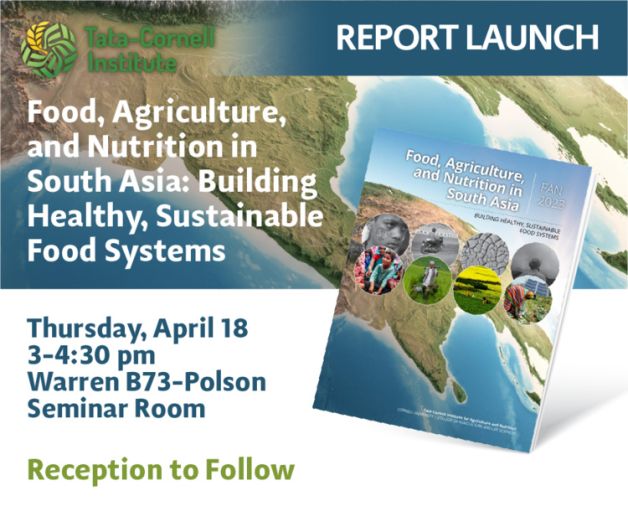
Report Launch: Food, Agriculture, and Nutrition in South Asia
April 18, 2024
3:00 pm
Warren Hall, B73
The latest in the Tata-Cornell Institute's FAN series, "Food, Agriculture, and Nutrition in South Asia: Building Health, Sustainable Food Systems" provides a snapshot of malnutrition in countries across South Asia, offering a range of policy instruments for improving nutrition outcomes across the region.
At this launch event, report author Milorad Plavsic will present the overall findings of the report. TCI Director Prabhu Pingali will lead a panel discussion on food systems in South Asia featuring Cornell faculty members:
Andrew McDonald, School of Integrative Plant ScienceArnab Basu, Dyson School of Applied Economics and ManagementRamya Ambikapathi, Department of Global DevelopmentAttendees are invited to enjoy refreshments at a post-event reception.
You can download the FAN-South Asia report from the TCI website.
Additional Information
Program
Einaudi Center for International Studies
South Asia Program
IIE-SRF Fellow Tawab Danish Speaks at SAP Event

Afghan Scholar Proposes Tactics to Address Minority Persecution
"We should use sanctions to force the Taliban to sit at the negotiation table. Otherwise, they have the power," said Tawab Danish at a March 25 event, Hazaras and Shias: Violence, Discrimination, and Exclusion Under Taliban Rule.
Tawab Danish is an Institute of International Education Scholar Rescue Fund (IIE-SRF) fellow and a second-year visiting scholar at Cornell Law School. His research focuses on constitutional law and human rights law.
At the event, Danish began by delving into Afghanistan's demographics, characterized by a diverse mix of ethnicities and religions. Hazaras are the third largest ethnic group in Afghanistan after Pashtuns and Tajiks, and Shia Muslims are the second largest religious community. Both communities have endured discrimination and violence under the Taliban, Danish said.
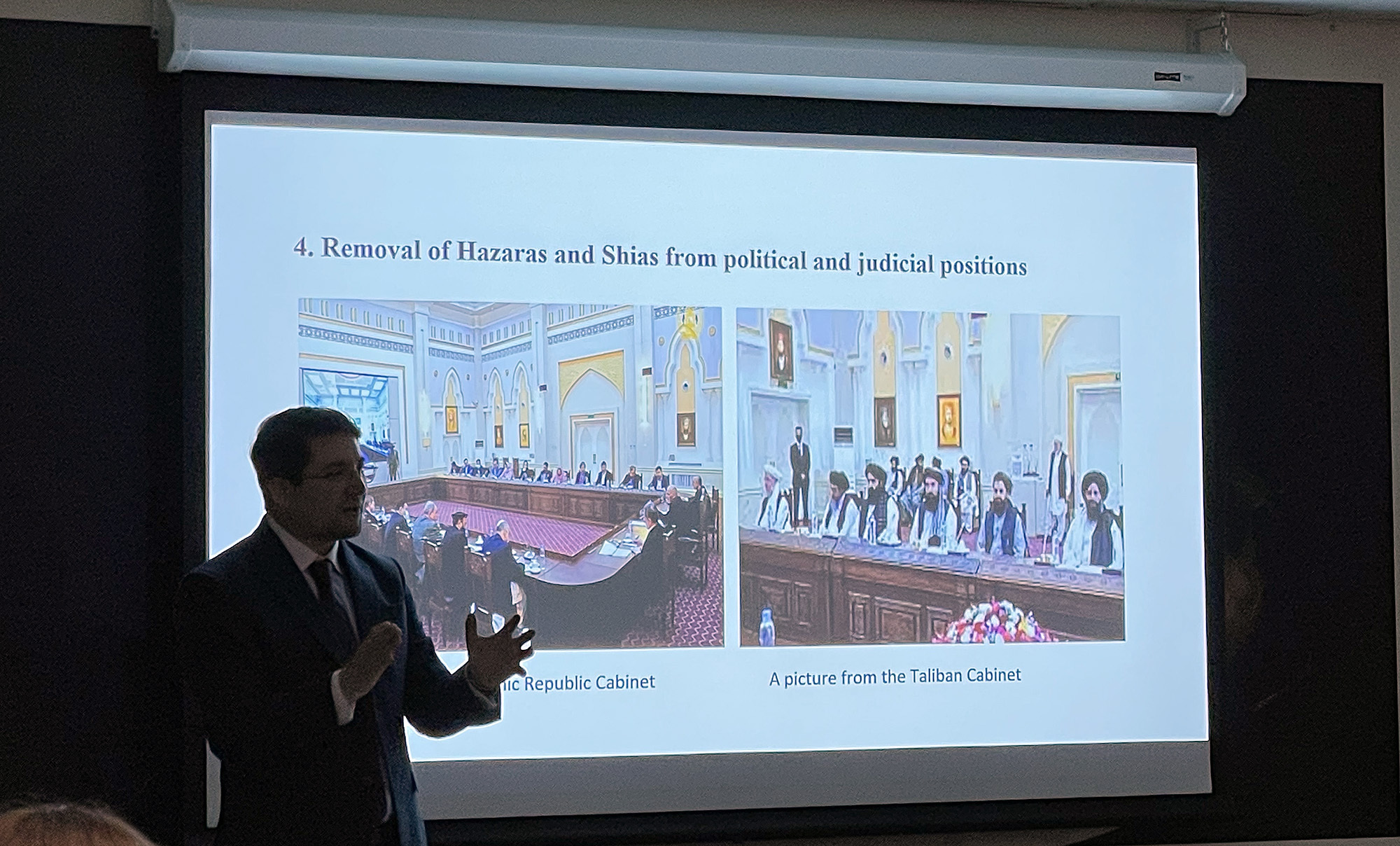
Danish described the period between the U.S. intervention and eventual withdrawal from Afghanistan (2001–21) as a golden age for Hazaras and Shias. For two decades, the nation shifted toward more inclusive governance, and Hazaras, Shias, and women increased their participation in the political, judicial, and ministerial spheres.
The Taliban's resurgence in 2021 saw a return to persecution for Hazaras and Shias.
"The Taliban's refusal to acknowledge sectarian differences and enforcement of Hanafi jurisprudence present serious dangers to religious and ethnic minority groups," Danish said. "This constitutes a breach of international human rights standards and fundamental Islamic tenets, potentially leading Afghanistan into ethnoreligious strife and undermining its stability and legal structure."
Looking forward, Danish underscored the necessity of combating the Taliban's extremist ideology on the global stage. He proposed a pragmatic initial approach for addressing the plight of Afghan minorities: initiating meaningful discussions with the Taliban while applying pressure to negotiate by imposing sanctions on travel and financial assets of Taliban leaders. He believes advocacy on social media platforms can help support the right to life and work for Hazaras, Shias, and other Afghan minority communities, including women.
The event was hosted by by the South Asia Program, part of the Mario Einaudi Center for International Studies. Learn more about how Cornell supports scholars under threat.
Manju Smriti, MPA ’23, is global operations program coordinator for Global Cornell.
Additional Information
Gilbert Levine (1927–2024)

Champion of International Collaboration Dies at 96
Einaudi honors our four-time interim director and advisor to generations of Cornell Fulbrighters. Read about Gil Levine's lifetime of service.
Additional Information
Bringing India and Cornell Together

Video Highlights Fruitful Relationship
Einaudi faculty describe community-based research and shared goals that have united India and Cornell for more than a century.
Additional Information
Panel on Transnational Repression

April 25, 2024
4:30 pm
Biotechnology Building, G10
Governments engage in transnational repression when they reach across borders to silence dissidents living abroad. Tactics for transnational repression include assassinations, abductions, threats, and direct action against dissidents’ families and friends living within the repressive government’s territory.
This panel will focus on this global phenomenon and its local consequences for students and faculty members at Cornell, U.S. campuses more broadly, and other communities around the world. It will include the voices of dissidents affected by transnational repression as well as scholars and experts working in the field.
This is a panel discussion following the April 24 documentary In Search of My Sister screening. The film chronicles Rushan Abbas's relentless pursuit of truth and justice.
About the Panelists
Rachel Denber, Deputy Director of the Europe and Central Asia Division, specializes in countries of the former Soviet Union. Previously, Denber directed Human Rights Watch's Moscow office and did field research and advocacy in Russia, Georgia, Armenia, Azerbaijan, Kazakhstan, Uzbekistan, Estonia, Ukraine, Kyrgyzstan and Tajikistan. She has authored reports on various human rights issues throughout the region. Denber earned a bachelor's degree in international relations from Rutgers University and a master's in political science from Columbia University, where she studied at the Harriman Institute. She speaks Russian and French.
Firoozeh Kashani-Sabet, Walter H. Annenberg Professor of History, Firoozeh Kashani-Sabet is a prominent scholar of Iranian and Middle Eastern history. Her research addresses issues of national and cultural formation and gender concerns in Iran, as well as historical relations between the U.S., Iran, and the Islamic world. She is the author of highly influential works, including Frontier Fictions: Shaping the Iranian Nation, 1804-1946, which analyzed land and border disputes between Iran and its neighboring countries. These debates were pivotal to national development and cultural production and have significantly informed the territorial disputes in the region today. Conceiving Citizens: Women and the Politics of Motherhood in Iran, a wide-ranging study of the politics of health, reproduction and maternalism in Iran from the mid-19th century to the modern-day Islamic Republic.
Rushan Abbas, founder and executive director of Campaign for Uyghurs. Rushan Abbas’s activism started in the mid-1980s as a student at Xinjiang University, co-organizing pro-democracy demonstrations in Urumchi in 1985 and 1988. Since she arrived in the United States in 1989, Ms. Abbas has been an ardent campaigner for the human rights of the Uyghur people. Ms. Abbas is the founder and executive director of Campaign for Uyghurs (CFU) and became one of the most prominent Uyghur voices in international activism for Uyghurs following her sister’s detainment by the Chinese government in 2018. Ms. Abbas has spearheaded numerous campaigns, including the “One Voice One Step” movement, which culminated in a simultaneous demonstration in 14 countries and 18 cities on March 15, 2018, to protest China’s detention of millions of Uyghurs in concentration camps.
Sean Roberts is an Associate Professor in the Practice of International Affairs and Director of the International Development Studies (IDS) MA program at The George Washington University’s Elliott School of International Affairs. He received his MA in Visual Anthropology (2001) and his PhD in Cultural Anthropology (2003) from the University of Southern California. While completing his Ph.D. and following graduation, he worked for 7 years for the United States Agency for International Development in Kazakhstan and Kyrgyzstan, managing democracy, governance, and human rights programs in the five Central Asian Republics. He also taught for two years as a Post-Doctoral Fellow at Georgetown University’s Center for Europe, Eurasian, and Russian Studies before coming to the Elliott School in 2008. Academically, he has written extensively on the Uyghur people of China and Central Asia, about whom he wrote his dissertation, and his 2020 book The War on the Uyghurs (Princeton University Press).
About the Moderator
Rebecca Slayton, Director of the Reppy Institute for Peace and Conflict Studies, is an associate professor of science and technology studies in the College of Arts and Sciences. Her research and teaching examine the relationships among risk, governance, and expertise, focusing on international security and cooperation since World War II. Her first book, Arguments that Count: Physics, Computing, and Missile Defense, 1949-2012 (MIT Press, 2013), shows how the rise of a new field of expertise in computing reshaped public policies and perceptions about the risks of missile defense in the United States. Her second book project, Shadowing Cybersecurity, examines the emergence of cybersecurity expertise through the interplay of innovation and repair. Slayton is also working on a third project that examines tensions intrinsic to creating a “smart” electrical power grid—i.e., a more sustainable, reliable, and secure grid.
Host
Judith Reppy Institute for Peace and Conflict Studies
Additional Information
Program
Einaudi Center for International Studies
Reppy Institute for Peace and Conflict Studies
East Asia Program
Institute for African Development
South Asia Program
Institute for European Studies
Southeast Asia Program
The Migration-Development Regime: How Class Shapes Indian Emigration
April 24, 2024
12:20 pm
Warren Hall, 175
Perspectives in Global Development: Spring 2024 Seminar Series
Abstract
How can we explain the causes and effects of global migration from the perspective of sending states and migrants themselves? Rina Agarwala will present on her book The Migration and Development Regime, which introduces a novel analytical framework to help answer this question in India, the world’s largest emigrant exporter and the world’s largest remittance-receiving country. Drawing on an archival analysis of Indian government documents, a new database of Indian migrants’ transnational organizations, and unique interviews with poor and elite Indian emigrants, recruiters, and government officials, this book exposes the vital role the Indian state, as well as its poor and elite emigrants, have long played in forging and legitimizing class inequalities within India through their management of international emigration. Since the 1800s, the Indian state has differentially used poor and elite emigrants to accelerate domestic economic growth at the cost of class inequalities, while still retaining political legitimacy. At times, the Indian state has forbidden emigration, at other times it has promoted it. At times, Indian emigrants have brought substantial material inflows, at other times, they have brought new ideas to support new development agendas within India. But throughout, Indian emigration practices have deepened class inequalities by imposing different regulations, acquiring different benefits from different classes of emigrants, and making new class pacts--all while remaining invisible in political and academic discussions on Indian development. On the flip side, since the early 1900s, poor and elite emigrants have resisted and re-shaped Indian development in response to state migration practices. By taking this long and class-based view, this book recasts contemporary migration not simply as a problematic function of “neoliberalism” or as a development panacea for sending countries, but as a long and dynamic historical process that sending states and migrants have long tried to manage. In doing so, it re-defines the primary problems of migration, exposes the material and ideological impact that migration has on sending state development, and isolates what is truly novel about contemporary migration.
Speaker
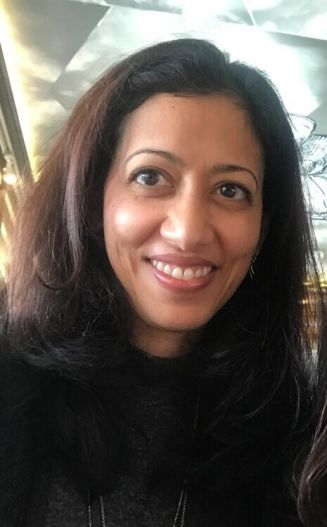
Rina Agarwala, Professor, Department of Sociology, Johns Hopkins University
Perspectives in Global Development
The Perspectives in Global Development seminars are held Wednesdays from 12:20-1:20 p.m. eastern time during the semester. The series is presented in a hybrid format. All seminars are shown in 175 Warren Hall. Students, faculty and the general public are welcome to attend. The series is co-sponsored by the Department of Global Development, the Department of Natural Resources and the Environment, the Charles H. Dyson School of Applied Economics and Management, and the School of Integrative Plant Science as part of courses GDEV 4961, AEM 4961, NTRES 4961, GDEV 6960, AEM 6960, and NTRES 6960.
Additional Information
Program
Einaudi Center for International Studies
South Asia Program
Announcing: Art and Architecture of Migration and Discrimination

Edited by Esra Akcan and Iftikhar Dadi
Esra Akcan (IES) and Iftikhar Dadi (SAP) announce the release of their new edited volume on the art and architecture of 20th-century partitions and Muslim diasporas in Europe.
Additional Information
Transforming Asia with Food: Women and Everyday Life
April 20, 2024
9:30 am
Kahin Center, 640 Stewart Ave
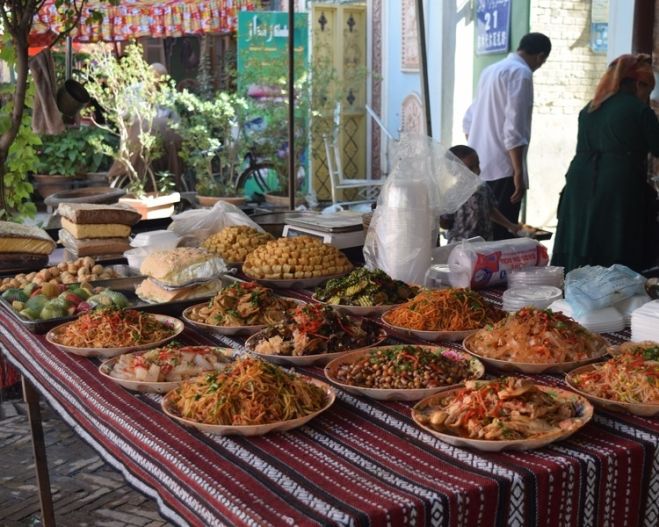
The panels will delve into women’s roles in effecting change across Asia through everyday practices of food production, handling, preparation, and consumption. This interdisciplinary and transregional approach will open new windows on the ways in which women—which we see as a heterogenous category, intersecting with class, education, locality, etc.—and their domestic practices have restructured familial, social, cultural, and at times political dynamics during the transition to “modernity."
DAY 1 (Friday, April 19) Program
Saturday, April 20
9:30-12:00 Cooking as Gendered Agency
Chair: Shaoling Ma (Cornell University)Tom Hoogervorst (KITLV, Leiden)Michelle King (The University of North Carolina)Joshua Kam (Cornell University)Mohini Mehta (Uppsala University)Arunima Datta (University of North Texas)
Additional Information
Program
Einaudi Center for International Studies
East Asia Program
Southeast Asia Program
South Asia Program
Transforming Asia with Food: Women and Everyday Life
April 19, 2024
10:30 am
Kahin Center, 640 Stewart Ave
The panels will delve into women’s roles in effecting change across Asia through everyday practices of food production, handling, preparation, and consumption. This interdisciplinary and transregional approach will open new windows on the ways in which women—which we see as a heterogenous category, intersecting with class, education, locality, etc.—and their domestic practices have restructured familial, social, cultural, and at times political dynamics during the transition to “modernity."
Friday, April 19
10:30-12:30 Nourishing Life, Family, and the Nation
Chair: Nick Admussen (Cornell University) Joshua Schlachet (University of Arizona) Christina Firpo (California Polytechnic State University)Violetta Ravagnoli (Emmanuel College) Wang Fei-Hsien (Indiana University)1:45-3:00 Keynote Address
Hyaeweol Choi (The University of Iowa)3:30-5:30 The Kitchen and Aspirational Domesticity
Chair: Jaime Sunwoo (Multidisciplinary artist)Suyoung Son (Cornell University)Rituparna Chowdhury (West Bengal State University)Chiara Formichi (Cornell University)DAY 2 (Saturday, April 20) Program
Additional Information
Program
Einaudi Center for International Studies
East Asia Program
Southeast Asia Program
South Asia Program