
South Asia Program
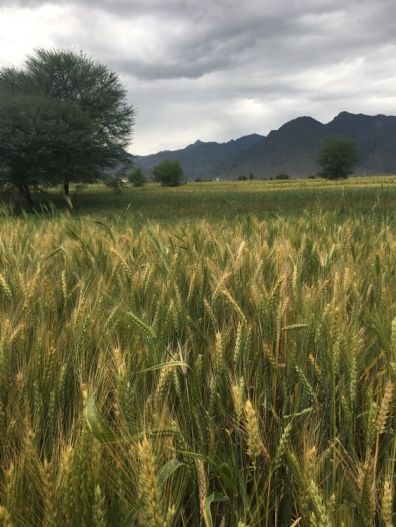
Graduate Conference: Agrarian Studies, Climate Change and the Future of Work
April 19, 2024
10:30 am
Warren Hall, B73
The future of work is hot. Literally. Unpredictable seasons, droughts, floods, warming temperatures, rising seas, and a host of other climatic factors are changing what work is, what it means, and what it does to the body. These effects are unevenly felt across geographies, forms of difference, and inequalities.
The impacts of climate change – extreme temperatures and changing agricultural cycles - on agrarian environments demand new frameworks to analyze work in the agrarian present and future. We invite abstracts that conceptualize climate change as a problem of work. Rather than restricting a changing climate to new weather patterns, shifting topographies, and techno-fixes, this conference opens a conversation to think about climate change through other anthropogenic changes, such as sociopolitical and economic transformations.
This graduate conference will bring graduate students across disciplines to speak on a variety of topics including agrarian change, urban and rural relations, infrastructural transitions, uneven geographies of risk, and the politics of scale and temporality.
We invite graduate students to send abstracts of up to 250 words to hak78@cornell.edu by March 1st, 2024.
Additional Information
Program
Einaudi Center for International Studies
South Asia Program
Getting to Climate Justice: A Global Approach
April 11, 2024
5:00 pm
Rockefeller Hall, Schwartz Auditorium, Room 201
Lund Critical Debate
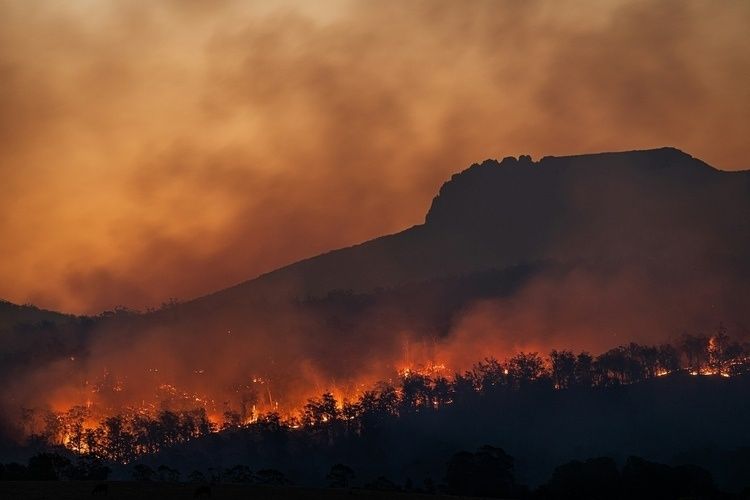
Climate change has a disproportionate impact on the world’s most vulnerable populations, yet climate crises also impact people across the full spectrum of wealth and power. How do we understand these varied impacts and design climate policy to maximize human well-being and justice on a global level?
As climate change accelerates, we see the rise of violent conflict and humanitarian emergencies in some places but not others. In some places but not others, we see disruptions in food security and forced migration. And around the world, debates rage about access to energy, the need to profit from valuable natural resources, and pressures to reduce extraction and consumption.
This year’s Lund debate from the Mario Einaudi Center for International Studies explores how citizens and policymakers worldwide can act to increase justice in our shared climate crisis. The panel will discuss key issues surrounding societies, governments, business, and labor and ways to share responsibilities globally to reduce emissions and mitigate climate change.
How can we imagine new strategies for reshaping global trade and finance, national and transnational security policies, and environmental protections that go beyond political borders? Join climate journalist Kate Aronoff and climate security expert Joshua Busby (LBJ School of Public Affairs, University of Texas) for a conversation on our climate’s state of emergency and how governments can help.
***
Livestream for National and International Viewers
Can't join in person? Register to attend virtually at eCornell.
***
Panelists
Kate Aronoff is a Brooklyn-based staff writer at The New Republic, covering climate and energy politics, and a fellow at the Roosevelt Institute. She is the author of Overheated: How Capitalism Broke the Planet and How We Fight Back (2021) and the coauthor of A Planet to Win: Why We Need a Green New Deal (2019). Aronoff serves on Dissent magazine's editorial board and the advisory board of Jewish Currents.
Joshua Busby is professor of public affairs in the University of Texas at Austin’s Lyndon B. Johnson School of Public Affairs. His research focuses on climate change, global health, transnational advocacy movements, and U.S. foreign policy. Busby was principal investigator on two multimillion-dollar climate and security grants from the U.S. Department of Defense. He served as senior advisor for climate at the U.S. Department of Defense from 2021 to 2023. His newest book is States and Nature: The Effects of Climate Change on Security (2022).
Moderator
Rachel Bezner Kerr is director of Einaudi’s Institute for African Development and professor of global development in the College of Agriculture and Life Sciences. She served as coordinating lead author for the United Nations’ Intergovernmental Panel on Climate Change sixth assessment report chapter on climate change impacts and adaptation of food systems.
***
About the Debate
The Lund Critical Debate is a signature event of the Mario Einaudi Center for International Studies. Established in 2008, Einaudi's Lund debate series is made possible by the generosity of Judith Lund Biggs '57.
Additional Information
Program
Einaudi Center for International Studies
Reppy Institute for Peace and Conflict Studies
East Asia Program
Latin American and Caribbean Studies
Institute for African Development
Institute for European Studies
South Asia Program
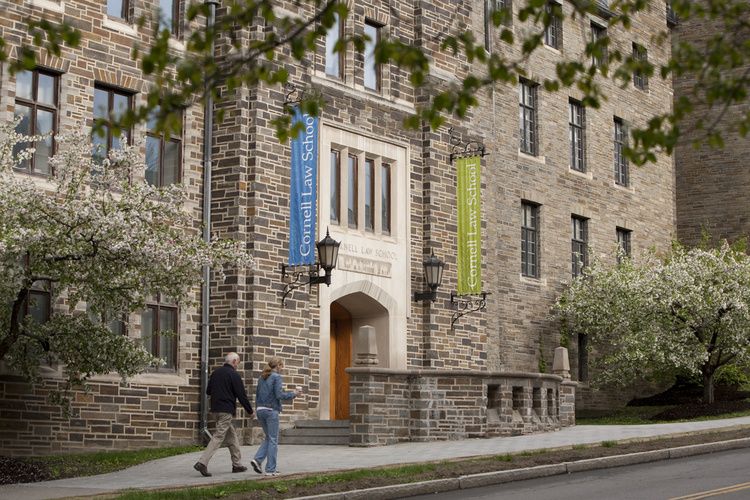
Berger International Speaker Series with William Hubbard – Court on Trial: Lesson for Court Reform from Empirical Studies of the Supreme Court of India
March 12, 2024
12:15 pm
Myron Taylor Hall, MTH 182
The Supreme Court of India has been called “the most powerful court in the world” for its wide jurisdiction, its expansive understanding of its own powers, and the billion plus people under its authority. It has also attracted its share of controversy. Critics have disputed its claim to being a “people’s court” serving the interests of the common person. Scholars and even judges have leveled claims of corruption and overreaching against the Court. And observers lament the backlog of cases and the disproportionate influence of the most elite (and expensive) members of the Supreme Court bar. In this talk, William Hubbard shows how an empirical approach to studying the Court offers new insights into the controversies, generating lessons for reformers in India and even the US.
Additional Information
Program
Einaudi Center for International Studies
South Asia Program
Agrarian Studio Expands
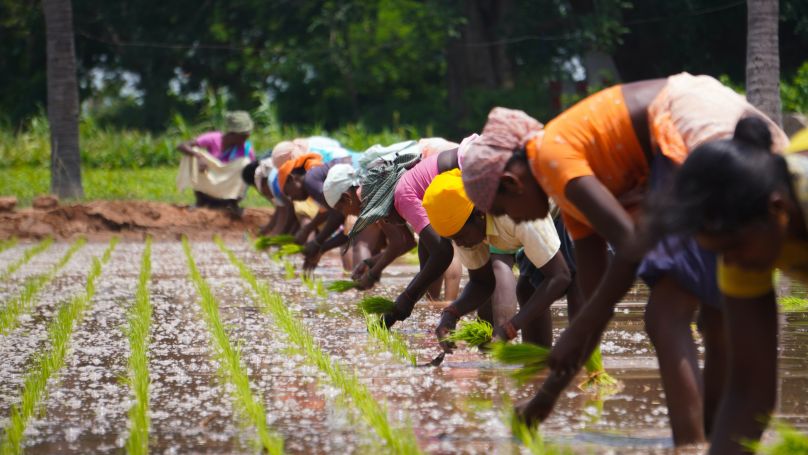
Sarah Besky Builds Grad Community
South Asia Program director Sarah Besky is training a crop of agrarian studies graduate students with support from a Future of Work grant.
Additional Information
Nepali Conversation Hour

May 3, 2024
1:00 pm
Stimson Hall, G25
Come to the LRC to practice your language skills and meet new people. Conversation Hours provide an opportunity to use the target language in an informal, low-pressure atmosphere. Have fun practicing a language you are learning! Gain confidence through experience! Just using your new language skills helps you learn more than you might think. Conversation Hours are are open to any learner, including the public. Campus visitors and members of the public must adhere to Cornell's public health requirements for events.
Additional Information
Program
South Asia Program
Satish Kumar

Graduate Student
Satish Kumar, a Fulbright-Nehru Visiting Doctoral Fellow at TCI, is a PhD student in public policy at IIT Bombay. His research focuses on agriculture-nutrition linkages and diversification in semi-arid regions. Previously, he pursued a Commonwealth split-site doctoral scholarship at the University of Cambridge. He earned his master’s degree from JNU and completed his undergraduate studies at Delhi University's Kirori Mal College, India.
Additional Information
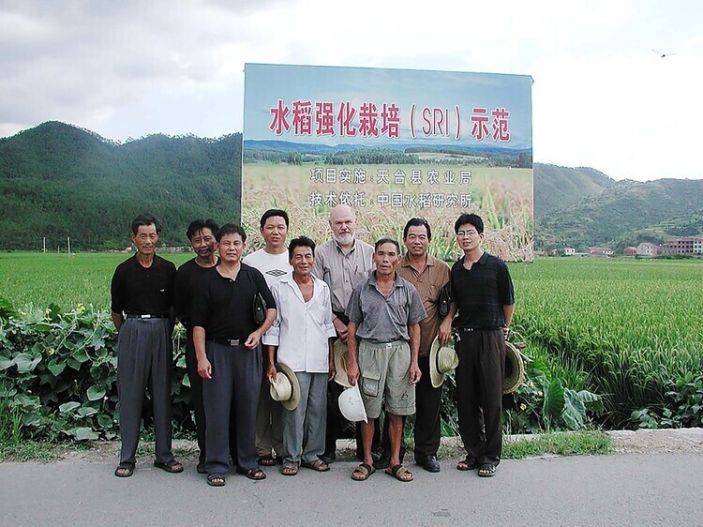
Reflections on Opportunities with, and Resistance to, the System of Rice Intensification
February 21, 2024
12:20 pm
Warren Hall, 175
Perspectives in Global Development: Spring 2024 Seminar Series
Abstract
The System of Rice Intensification (SRI) is an agroecological methodology (not considered as a technology) that was developed in Madagascar some 40 years ago by a French Jesuit, Henri de Laulanié. Its evaluation and spread in other countries over the past 25 years was supported first by the former Cornell International Institute for Food, Agriculture and Development (CIIFAD) and then by the SRI-Rice Center now based in the Department of Global Development.
SRI was initially controversial within the scientific community, but disputation has waned as more and more research has been done and published, and as SRI practices have been validated in over 60 countries around the world. Tens of millions of farmers are now deriving multiple benefits from SRI methods.
Some of these methods are quite counter-intuitive, such as getting higher yield with fewer inputs and less cost, with less water and with much less seed and lower plant density, with less or no reliance upon inorganic fertilization, and even often with less labor.
SRI crops have proven to be less vulnerable to the stresses of climate change (drought, storm damage, flooding), and there is a net reduction in greenhouse gas emissions per hectare and per kg of produce, plus more gender equity and greater nutritional quality of grain.
Farmers have begun extrapolating SRI methods to improve their production of a number of other crops, such as wheat, finger millet, maize, sugarcane, mustard, teff, and some pulses and vegetables.
The presentation will highlight some of the significant research questions that are raised by SRI experience and performance, particularly understanding how more productive and robust phenotypes can be elicited from given phenotypes.
Speaker
Norman Uphoff, emeritus professor of Government and International Agriculture, joined the Cornell faculty in 1970 in Arts & Sciences, in the Dept. of Government and the Center for International Studies (now Einaudi Center). His appointment included forming and leading a multi-disciplinary Rural Development Committee in the Center that involved faculty and students from across the whole campus. He was director of the Committee’s large USAID-supported Rural Development Participation Project, 1978-82, and spent a sabbatical year in Sri Lanka at the Agrarian Research and Training Institute. This activity got him involved in the participatory management of irrigation systems in Sri Lanka and then Nepal. During the 1980s, he served on USAID’S Research Advisory Committee and on the South Asia Committee of the U.S. Social Science Research Council.
In 1990, Uphoff was appointed as first director of the Cornell International Institute for Food, and Development, and his faculty line was moved to CALS, where he served as CIIFAD director for the next 15 years, as well as director of the college’s International Agriculture Program. During this time, he became increasingly engaged with agroecology and with the System of Rice Intensification (SRI), which he learned about through CIIFAD’s program in Madagascar.
In 2005, after formally retiring from the faculty, he joined the core faculty of the Cornell Institute for Public Affairs (CIPA), now part of the Brooks School, and continued to teach courses on development administration until 2020, while expanding his work on SRI with colleagues in Asia, Africa and Latin America.
He has recently published a book co-edited with Janice Thies on BIOLOGICAL APPROACHES TO REGENERATIVE SOIL SYSTEMS (CRC Press, 2024). This is the 2nd edition of a book that he put together and published in 2006. He has just finished guest-editing a special issue of the journal AGRONOMY (13, 2024) which contains research and review articles on SRI.
Perspectives in Global Development
The Perspectives in Global Development seminars are held Wednesdays from 12:20-1:20 p.m. eastern time during the semester. The series is presented in a hybrid format. All seminars are shown in 175 Warren Hall. Students, faculty and the general public are welcome to attend. The series is co-sponsored by the Department of Global Development, the Department of Natural Resources and the Environment, the Charles H. Dyson School of Applied Economics and Management, and the School of Integrative Plant Science as part of courses GDEV 4961, AEM 4961, NTRES 4961, GDEV 6960, AEM 6960, and NTRES 6960.
Additional Information
Program
Einaudi Center for International Studies
South Asia Program
One Health: Understanding Threats to Wildlife and Human Health in Asia

March 7, 2024
1:00 pm
eCornell Keynote
From the river valleys and grasslands of Nepal to the high mountains of Central Asia, from tigers to leopards to vultures to Asiatic wild dogs (or dholes) — and from canine distemper to wildlife poisonings to the infectious diseases impacting wild sheep and goats as well as their domestic cousins — there is no shortage of threats to the health of these magnificent species and ecosystems, with some of these very same threats being of importance to agriculture and public health.
Join us as Dr. Martin Gilbert from the Cornell K. Lisa Yang Center for Wildlife Health and some of its students and team members share their fieldwork experiences and help illustrate how the health of wildlife and our own health and well-being are inextricably linked.
The Cornell K. Lisa Yang Center for Wildlife Health, with programs around the globe, strives to sustain a healthier world by developing and implementing proactive, science-based solutions to challenges at the interface of wildlife health, domestic animal health, human health and livelihoods, and the environment that supports us all. With its focus on Asia, the Cornell Wild Carnivore Health Program promotes the health and long-term sustainability of wildlife populations by advancing scientific tools and sharing knowledge to protect and improve the health of wild carnivores and their prey, all while seeking to mitigate human-wildlife conflict.
Register for the event here.
WHAT YOU'LL LEARN
How securing the health of our wildlife is key to conservationThe ways in which our health and the health of wildlife are inextricably linkedHow the field of wildlife health often yields surprisesHow wildlife resources are incredibly important to rural livelihoods and national economies
Additional Information
Program
Southeast Asia Program
South Asia Program
Einaudi Center for International Studies
Wiping Out Bad Data Will Not Solve China’s Economic Woes

Eswar Prasad, SAP
Eswar Prasad, professor of international trade policy and economics, writes about China's economy in this opinion essay.
Additional Information
New Book Charts a Novel Course for India’s Social Safety Nets

Andaleeb Rahman, SAP
Research Associate Andaleeb Rahman and Director Prabhu Pingali explore India’s array of social welfare programs.