
South Asia Program
Cornell Concert Series presents: DoosTrio

February 18, 2024
7:30 pm
Bailey Hall
Three masters and old friends join together in a new collaboration. Kayhan Kalhor, Wu Man, and Sandeep Das are established soloists in their individual traditions. Their new trio highlights the ancient traditions of Iran, China, and India in a 21stcentury program. Three-time GRAMMY-nominee Kayhan Kalhor is an internationally acclaimed virtuoso on the kamancheh, who through his many musical collaborations has been instrumental in popularizing Persian music in the West. Recognized as the world’s premier pipa virtuoso and leading ambassador of Chinese music, Wu Man has carved out a career as a soloist, educator, and composer giving her lute-like instrument a new role in both traditional and contemporary music. A Guggenheim Fellow and GRAMMY-winning musician, Sandeep Das is one of the leading tabla virtuosos in the world today.
Please visit cornellconcertseries.com for details about the masterclasses, lectures, meet-and-greets, and other events of this residency.
“You can get lost in [Kayhan Kalhor’s] music in a wonderful way. It roams through far-flung provenances and ages…mystically tinted, mysterious sounds, which echo in the inclined listener for a long time.” – JazzThing
“Vibrant pipa master Wu Man. A one-woman force of nature.” – Gramophone Magazine
“When [Sandeep] plays the tabla, he is a creator of myths, a master communicator, and an orchestra, all in one.” – Yo-Yo Ma
This event is presented as part of Cornell’s Freedom of Expression Theme Year.
The rich musical traditions these musicans perform continue to exist under various political situations in their home countries. Both the musical content and musicians’ ability to travel freely to perform impacts their freedom of expression. As such, this concert serves to increase appreciation across the Cornell community for the history, importance, and challenges of free expression and academic freedom.
Additional Information
Program
Einaudi Center for International Studies
East Asia Program
South Asia Program
How Kabariwalas Persist: The Changing Nature of Labor in High-value Recycling Markets in Urban India

April 22, 2024
12:15 pm
Uris Hall, G08
Talk by Aman Luthra (Geography, George Washington University)
Similar to many countries around the world, recycling in Indian cities is sustained by a large population of informal workers who collect, transport, and trade in recyclable materials to eke out a meager living. One group of workers in this sector—waste-pickers who extract low-value recyclables from waste along its journey from source to sink—has garnered policy and scholarly attention. Another group--variously referred to as kabariwalas and raddiwalas who buy high-value recyclables from waste generators—has largely eluded the attention of scholars and policymakers alike. As a result, while there are policy safeguards in place for certain categories of waste-pickers, kabariwalas have been left vulnerable to market forces and have largely been ignored by policymakers. For instance, over the past decade, a number of new startup firms using online, mobile platforms are providing the same kinds of recycling collection services that kabariwalas have traditionally delivered. This talk will present the findings of five months of field research conducted as a Fulbright-Nehru Senior Scholar in Delhi in 2023, which describes and analyzes how kabariwalas are navigating the fast-changing and complex landscape of the urban recycling sector. Unlike waste-pickers who have been able to organize and carve a space for their inclusion in official waste management policies, kabariwalas remain largely unorganized. Without collective organizations asking for state intervention aimed at protecting their livelihoods, kabadiwalas might be forced to compete against new corporate actors with vastly different amounts of resources and capacities at their disposal.
Aman Luthra is Assistant Professor of Geography at the George Washington University. He teaches courses in political ecology, development geography, and the geography of South Asia. Dr. Luthra received his Ph.D. from the Department of Geography and Environmental Engineering at Johns Hopkins University in Baltimore, MD in 2015. He also holds an M.A. in Geography and an M.P.A. from Syracuse University. His research focuses on the changing landscape of labor and capital in the waste management sector in urban India, with a particular emphasis on informal workers in this industry. In addition to research on urban waste management, Dr. Luthra is also involved in an interdisciplinary collaborative project using citizen science to understand changing patterns of pollinator diversity and abundance in and around apple orchards in Uttarakhand, India. His research has been funded by Fulbright, the National Science Foundation, the Social Science Research Council, and the Wenner-Gren Foundation. Dr. Luthra has published articles in several journals in geography including Antipode, Geographical Review, Geoforum, Progress in Environmental Geography, and Environment and Planning A: Economy and Space and E: Nature and Space.
Additional Information
Program
Einaudi Center for International Studies
South Asia Program
Rebel Taxation
March 21, 2024
12:00 pm
Uris Hall, G08
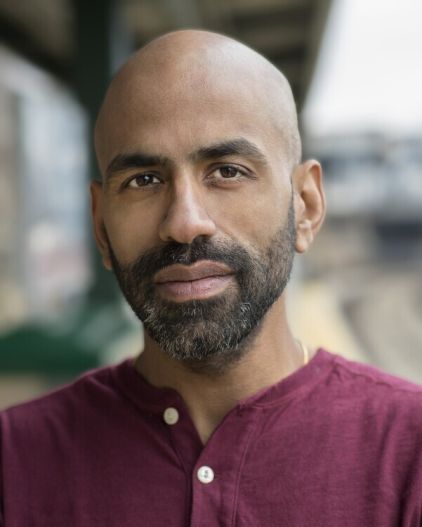
Payments made to non-state armed groups are often treated as predation. But rebels deploy multiple logics when constructing their taxation systems, many of which cannot be reduced to extortion. Rebels also use taxation as a “technology of governance” to resolve a number of social and political challenges related to constructing a wartime order. Drawing on field work in three different countries (Colombia, India, South Sudan), Zachariah Mampilly, Marxe School of Public and International Affairs, CUNY, looks at the distinct taxation systems established by armed groups in each.
In Colombia, the author focuses on the FARC-EP’s taxation of coca to reveal the ideological and political factors that shaped their taxation system. In India, he examines how the NSCN-IM implemented distinct taxation regimes across four distinct subnational areas of control. And finally, in South Sudan, he explores the role of external actors in shaping the nature of the rebel taxation system.
About the Speaker
Zachariah Mampilly is the Marxe Endowed Chair of International Affairs at the Marxe School of Public and International Affairs, CUNY and a member of the doctoral faculty in the Department of Political Science at the Graduate Center, CUNY. He is the Co-Founder of the Program on African Social Research. He is the author of Rebel Rulers: Insurgent Governance and Civilian Life during War and with Adam Branch, Africa Uprising: Popular Protest and Political Change. His writing has also appeared in Foreign Affairs, Jacobin, The Hindu, Africa's a Country, N+1, Dissent, Al Jazeera, The New York Times, The Washington Post and elsewhere.
HostJudith Reppy Institute for Peace and Conflict Studies
Additional Information
Program
Einaudi Center for International Studies
Reppy Institute for Peace and Conflict Studies
Latin American and Caribbean Studies
Institute for African Development
South Asia Program
Art and Architecture of Migration and Discrimination

New book edited by Iftikhar Dadi and Esra Akcan
A new book edited by Iftikhar Dadi (SAP) and Esra Akcan (IES) features essays by established and emerging scholars on Pakistan, Turkey, and their Muslim diasporas in Europe.
Additional Information
Art and Architecture of Migration and Discrimination: Turkey, Pakistan, and their European Diasporas

By Our Faculty
This book brings together essays by established and emerging scholars that discuss Pakistan, Turkey, and their diasporas in Europe. Together, the contributions show the scope of diverse artistic media, including architecture, painting, postcards, film, music, and literature, responding to the partitions of the twentieth century and the Muslim diasporas in Europe.
Book
52.95
Additional Information
Program
Type
- Book
Publication Details
Publication Year: 2023
ISBN: 9781003410010
Eswar Prasad on Argentina's Milei Dollarization Ambition

Eswar Prasad, SAP
Eswar Prasad, professor of international trade policy and economics, joins Wall Street Week Daily to discuss Javier Milei's dollarization ambition.
Additional Information
People Like Me: A Student Panel about Navigating Identity Abroad

March 13, 2024
5:00 pm
Statler Hall, 165
Planning for study abroad? No matter how you identify or where you're studying, early planning is the key to a successful study abroad experience.
Join us for a facilitated discussion with fellow students about navigating your intersectional identities while studying abroad. A panel of returned study abroad students will share their experiences, knowledge, and advice for expressing your whole self in a different culture. This is a great opportunity to ask questions and think about your identity in a new context—outside the norms of Cornell, your hometown, or your home country.
This global freedom of expression event is an opportunity to explore critical issues related to free expression of your identity and how you encounter the world. As a student abroad, you have a deeply personal chance to experience cultural exchange, collaborate productively in a global context, and have challenging conversations while staying true to yourself—all vital skills for successful participation in democracy.
The Office of Global Learning is here to help as you think about your identity in a global context, learn about new norms and ways of life, and find the support you need.
In-Person Event
Attend the panel in Statler Hall 165
Additional Information
Program
Einaudi Center for International Studies
Reppy Institute for Peace and Conflict Studies
East Asia Program
Southeast Asia Program
Latin American and Caribbean Studies
Institute for African Development
Institute for European Studies
South Asia Program
Global Impact Graduate Fellowships

Details
We're looking for graduate students to join the Einaudi Center's inequalities, identities, and justice team as they map out a new global studies curriculum. Apply now to be a fellow in the spring 2024 semester!
Graduate fellows receive a stipend of $1,000 for the semester.
New in 2024: Global Impact Fellows
Launching in spring 2024, this opportunity is open to grad students from all research disciplines with a demonstrated interest in interdisciplinary and/or international work. Selected fellows will form a focus group to develop a global studies curriculum for a future Einaudi Center graduate certificate.
Global Impact Fellows will meet regularly through the spring 2024 semester with faculty fellows Edward E. Baptist and Jennifer Newsom. You'll play a crucial role in designing syllabi and presenting a showcase of graduate research with global impact.
Inequalities, Identities, and Justice
The Einaudi Center supports public scholarship and thought leadership to address inequalities experienced across the globe, including cleavages in society like race, religion, gender and sexuality, class, caste, language, and ethnicity. We seek to identify opportunities for transformative change and increased justice in migration and citizenship regimes, climate and land policy, economic opportunities, food systems, health, politics, and policing.
Deadline
January 24, 2024
Amount
Stipend of $1,000 for the spring semester.
How to Apply
Email a letter of interest to Sarah Pattison, associate director of academic programs. Selected students will be notified by February 2, 2024. Your letter should outline the following:
- Your background in interdisciplinary and/or international work (through research projects, coursework, or other experiences);
- How the fellowship will advance your research, graduate studies, or career goals;
- What interests you about global studies and Einaudi's planned curriculum development (see blue box above).
Questions?
If you have questions about the fellowship or your application, email Einaudi Center academic programs.
Additional Information
Information Session: Global Internships

November 29, 2023
5:00 pm
Uris Hall, G88
Go global in summer 2024! Global Internships give you valuable international work experience in fields spanning global development, climate and sustainability, international relations, communication, business, governance, and more.
All Global Interns receive an award totaling at least $3,000. Apply by February 1.
Additional Information
Program
Einaudi Center for International Studies
Reppy Institute for Peace and Conflict Studies
East Asia Program
Southeast Asia Program
Latin American and Caribbean Studies
Institute for African Development
Institute for European Studies
South Asia Program
Information Session: Global Internships

January 10, 2024
1:00 pm
Go global in summer 2024!
Global Internships give you valuable international work experience in fields spanning global development, climate and sustainability, international relations, communication, business, governance, and more.
All Global Interns receive an award totaling at least $3,000. Apply by February 1.
Register in advance
Additional Information
Program
Einaudi Center for International Studies
Reppy Institute for Peace and Conflict Studies
East Asia Program
Southeast Asia Program
Latin American and Caribbean Studies
Institute for African Development
Institute for European Studies
South Asia Program