
South Asia Program
Speaking across the Ocean: Vakkom Mohammed Maulavi and the Idea of a Public Sphere
March 11, 2024
12:15 pm
Uris Hall, G08
Talk by Dilip Menon (Department of International Relations, Director, Centre for Indian Studies in Africa, University of Witwatersrand)
This is a preliminary paper on the remarkable figure of Vakkom Mohd. Maulavi (1873-1932) of Travancore, on the south-western coast of India, through his writings in the journal Deepika, that he edited. The articles spoke to the reforms of Islamic modernism that were ongoing in Egypt (reported in the widely circulated Al Manar), and imagined a space of Indian Ocean Islam. Vakkom Maulavi was also concerned with the question of people’s rights under the rule of the autocratic Maharaja of Travancore. As publisher of the newspaper Svadeshabhimani edited by the redoubtable and intemperate journalist Ramakrishna Pillai, the duo waged a war of words on the questions of ethical governance and popular representation. There has been a tendency in South Asia to study the history of Muslims separately from their conjoined lives with Hindus and those of other religions. This paper thus speaks to the emerging literature on Indian Ocean Islam (Nile Green, Wilson Chacko Jacob, Seema Alavi, Mahmood Kooria et al) while at the same time arguing for the role of Muslim intellectuals in defining a democratic and secular public sphere.
Dilip M. Menon is the Mellon Chair of Indian Studies and the Director of the Centre for Indian Studies in Africa at the University of Witwatersrand, South Africa. He was educated at the Universities of Delhi, Oxford and Cambridge and earned his PhD from Cambridge. His research for the past decade has engaged with issues of caste, socialism and equality in modern India. He is the author of Caste, nationalism and communism in south India: Malabar, 1900-1948 (Cambridge 1994), The blindness of insight: Essays on caste in modern India (Navayana 2006), The cultural history of Modern India (editor, Social Sciences Press and Berghahn 2006), Capitalisms: Towards a Global History (co-editor, Oxford, 2020), and the translator of Potheri Kunhambu's 1893 Malayalam novel Saraswativijayam (Book Review Literary Trust 2002)
Cosponsored with the South Asia Program
Additional Information
Program
Einaudi Center for International Studies
South Asia Program
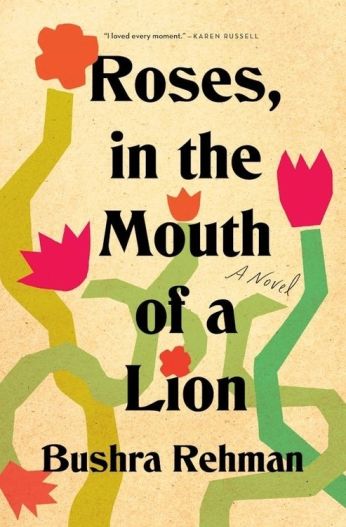
Roses, in the Mouth of a Lion
February 28, 2024
4:30 pm
A. D. White House
Reading by Bushra Rehman, followed by Q&A, moderated by Prachi Patankar
Razia Mirza grows up amid the wild grape vines and backyard sunflowers of Corona, Queens, with her best friend, Saima, by her side. When a family rift drives the girls apart, Razia’s heart is broken. She finds solace in Taslima, a new girl in her close-knit Pakistani-American community. They embark on a series of small rebellions: listening to scandalous music, wearing miniskirts, and cutting school to explore the city. When Razia is accepted to Stuyvesant, a prestigious high school in Manhattan, the gulf between the person she is and the daughter her parents want her to be, widens. At Stuyvesant, Razia meets Angela and is attracted to her in a way that blossoms into a new understanding. When their relationship is discovered by an Aunty in the community, Razia must choose between her family and her own future.
Punctuated by both joy and loss, full of ’80s music and beloved novels, Roses, in the Mouth of a Lion is a new classic: a fiercely compassionate coming-of-age story of a girl struggling to reconcile her heritage and faith with her desire to be true to herself. Roses, In The Mouth of a Lion was long listed for a Lambda Literary Ward and chosen as a Best Book and Editor’s Choice by The New York Times, The New Yorker, The Washington Post, Los Angeles Times, People Magazine, Good Morning America, Goodreads, The Chicago Review, BuzzFeed, Lit Hub, Lambda Literary, BookRiot, PopSugar, The AV Club, E! News, Ms. Magazine and more.
Bushra Rehman grew up in Corona, Queens. She is co-editor of Colonize This! Young Women of Color on Today’s Feminism, and author of the poetry collection Marianna’s Beauty Salon and the dark comedy Corona, one of the New York Public Library’s favorite books about NYC.
Prachi Patankar is an anti-caste and feminist writer and activist who was born in rural Maharashtra, India. Over two decades in New York, she has been involved in social movements that link the local and the global, police brutality and war, migration and militarization, race and caste, women of color feminism, and global gender justice. Her work has been published by Al Jazeera, the Guardian, Jadaliyya, The Jacobin, and several other publications.
Books will be available for sale and signing from Buffalo Street Books after the reading.
Cosponsored by the Department of Literatures in English, Asian American Studies Program, Feminist, Gender & Sexuality Studies Program, and Society for the Humanities.
Additional Information
Program
Einaudi Center for International Studies
South Asia Program
Local Women, Global Histories? Gendering Economic Life, Law, and Islam in Transregional India
January 29, 2024
12:15 pm
Uris Hall, G08
Talk by Du Fei (History, Cornell University)
How would India’s connected histories look like if viewed from a gendered perspective? This presentation examines Muslim women’s participation in the local and transregional economic exchanges of the Persianate and Indian Ocean worlds that converged in India from the height of Mughal rule in the seventeenth century to the consolidation of the British colonial state in the nineteenth century. Based on a wide array of archives in Persian, Arabic, Urdu, English, and Dutch, this presentation will show that Muslim women from merchant and landholding families played constitutive roles in sustaining an economy of mobility and a culture of circulation often seen as dominated by men. Muslim women’s negotiation with male kins, jurists, judges, and officials in seemingly mundane areas of Islamic law, especially inheritance and agency, thus defies any easy conceptions of the idea of patriarchy in Islam. Situated at the intersection of history, gender and sexuality studies, and Islamic studies, this project challenges existing gender-blind narratives of how trade and travel contributed to the making of global Islam in and beyond South Asia.
Du Fei is a Ph.D. candidate in the Department of History at Cornell University—his research centers on gender in South Asia’s global connections across the colonial divide. More broadly, his research interests include post-classical Islamic law, the history of capitalism, transnational feminism, digitization, and community archives. For 2023-25, Fei is a Junior Fellow in the Mellon Society of Fellows in Critical Bibliography at the Rare Book School. His published and forthcoming works can be found in Modern Asian Studies and Past & Present.
Additional Information
Program
Einaudi Center for International Studies
South Asia Program
The Good Seed and Why It Matters

February 12, 2024
12:15 pm
Uris Hall, G08
Talk by Ashawari Chaudhuri (Science & Technology Studies, Cornell University)
The introduction of genetically modified (GM) Bt cotton in India in 2002 invoked fierce debates and discussions about the future of agriculture in the country. Towards the beginning of its cultivation, some farmers received higher yields. However, over the years, concerns over the cost of cultivating GM cotton, pests developing resistance to the technology, environmental impacts, and corporate control over agriculture have taken center stage in discussions around agricultural biotechnology. Although most of these discussions have been centered on GM seeds, the seed itself remains unexplored. Based on ethnographic and archival research among communities on opposite ends of the agrarian political economy, like farmers and breeders/biotechnologists, I explore the meaning of Bt cotton for these communities. In opening the GM seed through practice, time emerges as a powerful yet understudied phenomenon. Different registers of time, like breeding time, generational time, seasonal time, and market time, are braided in ways that determine the meaning of the seed for these communities. I use braided time to critique GM seed as a commodity. I also suggest that recognizing the significance of time further enables responsibility towards human and agrarian lives and non-human ecological formations.
Ashawari Chaudhuri is an anthropologist of the environment, science, and medicine. Chaudhuri’s current book manuscript is a historically grounded ethnography of agricultural biotechnology in India. Along with asking what a good seed is for farmers and biotechnologists, Chaudhuri traces how knowledge about objects like genetically modified seeds is formed at intersections of practice, people, and time. Chaudhuri’s next project is an inquiry into the long relation between environmental heat and the body in South Asia. Chaudhuri finds historically emerging meanings of words and concepts powerful. Her teaching is often grounded in questions of ethics and creative negotiations with power around practices, technologies, and ideas that acquire palimpsests of meanings over time and across places. Chaudhuri has lived in India, Singapore, and the U.S. and knows Bengali, Hindi, and English. She has also been learning Mughal Persian for the past few years. Chaudhuri’s research and teaching are infused with my senses of self, belonging, and identity. When Chaudhuri is not teaching or researching, she is interested in healing plants, stars, and cultural interpretations of dreams.
Additional Information
Program
Einaudi Center for International Studies
South Asia Program
CANCELED - Why Don’t Indian Voters Hold Politicians Accountable For Air Pollution?

May 6, 2024
12:15 pm
Uris Hall, G08
Talk by Tariq Thachil (Political Science, University of Pennsylvania)
Urban citizens in low-income democracies rarely hold elected officials accountable for toxic air. To understand why, we fielded a large citizen survey in Delhi, India, a highly polluted megacity where voters rarely prioritize air pollution at the polls. We find no evidence of conventional explanations for accountability failures: residents are aware of pollution’s adverse impacts, do not privilege development over curbing emissions, and are not fractured along class or ethnic lines on this issue. Instead, we find partisanship and sensitivity to the potential private costs of mitigation policies reduce accountability pressures. On the other hand, a simple randomized intervention (sharing indoor air quality information) that personalizes the costs of air pollution increases its electoral salience. We reveal key opportunities and constraints for mobilizing public opinion to reduce air pollution in developing democracies.
Tariq Thachil is Professor of Political Science, Director of the Center for Advanced Study of India (CASI), and Madan Lal Sobti Professor for the Study of Contemporary India at the University of Pennsylvania. His recent book (coauthored with Adam Auerbach), Migrants and Machine Politics, focuses on the political lives of poor migrants in Indian cities. His first book, Elite Parties, Poor Voters examines how elite parties can use social services to win mass support, through a study of Hindu nationalism in India. He received his PhD in Government from Cornell University in 2009.
Additional Information
Program
Einaudi Center for International Studies
South Asia Program
Retrieving an Asian Imaginary: Through the Prism of a Southasian Borderland
April 8, 2024
12:15 pm
Uris Hall, G08
Talk by Kavita Panjabi (Former Professor of Comparative Literature, Jadavpur University, Kolkata)
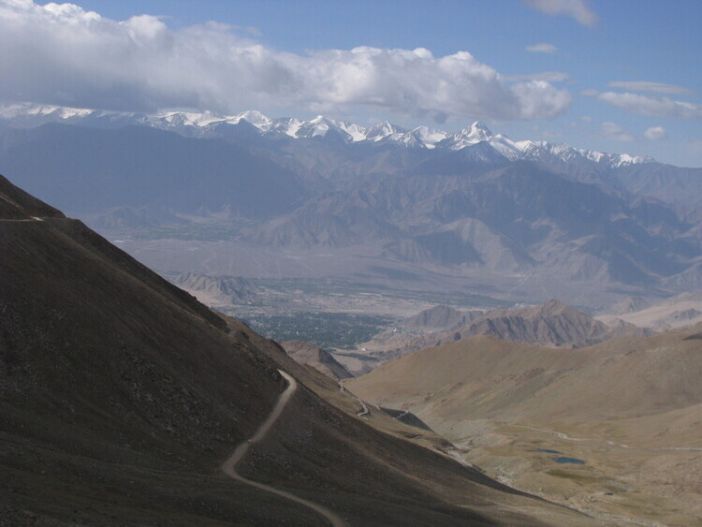
Turtuk is now an Indian village on the India-Pakistan border in the Karakoram mountains, in the contested zone of Baltistan. People in Turtuk who went to sleep in their homes in Pakistan on the 13th of December 1971, woke up on the 14th morning to find themselves in India. Unlike the people of the neighbouring village of Chalungka, who had fled en-masse further into Pakistan when the Indian army had arrived there a few days ago, the people of Turtuk had decided to stay with India. The Balti people of Turtuk, and its neighbouring villages Thang, Pachathang, and Tyakshi, were not compelled into any forced removal; they were subject to “in-situ displacements” (Feldman) in the conflict between Pakistan and India - staying within their homes, they had been displaced from one nation to another. Transitional spaces such as these that form the borderlands between nation-states are spaces of liminality, and the conditions inducing liminality in this region were severe. For the people of these villages, space had shrunk, and time stood still. Once situated at the crossroads of international trade and ideas on the silk route, they had become effectively sealed off from the rest of the world when the borders came up in 1948. Captive in the borderlands of Pakistan till 1971 and then in India, Turtuk finally opened to the rest of this country in 2010. For more than 60 years, the people here had found themselves in a literal “time capsule”, practically isolated within the borderlands of Pakistan and India. In this talk, Panjabi maps, through oral narratives of the Balti people of Turtuk, and the prism of their liminality, the cartographies of affective life pulsating beneath the officialese of borders. She tries to understand how the long duree of their liminality inflected their efforts both to preserve Balti culture across the borders of two nation-states and to safeguard their historical memory of an Asian internationalism. Thus, Panjabi hopes also to retrieve some of the strands of the politically shrouded webs of significance that once characterized the connectivities between Asian cultures.
Kavita Panjabi (Comparative Literature PhD '92) is a former Professor of Comparative Literature at Jadavpur University, Kolkata, where she taught for 33 years. Over three decades of activism in the Southasian women’s movement, a passion for oral history, and a lively interest in cross-border people’s perspectives inform her book Unclaimed Harvest: An Oral History of the Tebhaga Women’s Movement and her Pakistan diary, Old Maps and New: Legacies of the Partition. She has also edited anthologies on Sufism and Bhakti in South Asia, and on Feminist Culture and politics, as well as two volumes on borders with Debra Castillo namely, Cartographies of Affect: Across Borders in South Asia and the Americas, and Centering Borders in Latin American and South Asian Contexts: Aesthetics and Politics of Cultural Production.
Additional Information
Program
Einaudi Center for International Studies
South Asia Program
Latin American and Caribbean Studies
Terrorist or Hero? What the News Said About a Pakistani Man at the World Trade Center

March 18, 2024
12:15 pm
Uris Hall, G08
Talk by Nausheen Husain (Magazine, News and Digital Journalism, Syracuse University), and Mohammad Ebad Athar (History at Syracuse University)
In the aftermath of September 11, 2001, the FBI investigated a 23-year-old Pakistani man, Mohammad Salman Hamdani, who was declared missing at the site of the attack. As part of their investigation, FBI and CIA officials visited Hamdani’s home in Queens where they questioned his parents about his whereabouts and his background. The New York Daily News said his disappearance “quickly took on sinister implications.” Hamdani was a police cadet in training and was working as a research technician at Rockefeller University. On September 11, Hamdani was headed to work when the attacks happened and, having prior experience as an EMT, went to offer assistance. At the conclusion of the law enforcement investigation, Hamdani was found to be innocent, given full police honors at his funeral, and was declared a hero by then-mayor Mike Bloomberg. The Patriot Act passed on October 26, 2001, states that Hamdani “acted heroically.” The New York Times called him “an all-American Jedi.” In analyzing the news coverage of Hamdani, we argue that Hamdani’s case is representative of the impact the news media can have in the normalization of South Asian and Muslim-identifying people being a securitized population throughout the ongoing War on Terror, as well as the perpetuation of the ‘good Muslim, bad Muslim’ trope in media and pop culture. Connecting to our larger work supported by the Lender Center for Social Justice at Syracuse University, we connect Hamdani’s story to coverage of cases of entrapment of Muslim men by the FBI in sting operations, using data-driven news audits as our methodology.
∙ Mohammad Ebad Athar is a Ph.D. Candidate in History at Syracuse University and is a graduate fellow at the Lender Center for Social Justice working on the impact of media coverage of Muslims during the War on Terror. His dissertation research examines the securitization of South Asian identity in the United States and the Persian Gulf during the ongoing Global War on Terror.
∙ Nausheen Husain is a journalist, assistant professor of journalism at Syracuse University, and current faculty fellow at the Lender Center for Social Justice. Her research focuses on the news coverage of the War on Terror defendants and infrastructures after 9/11.
Additional Information
Program
Einaudi Center for International Studies
South Asia Program
Hazaras and Shias: Violence, Discrimination, and Exclusion Under Taliban Rule

March 25, 2024
12:15 pm
Uris Hall, G08
Talk by Tawab Danish (Cornell Law School)
The Hazara and Shia populations, comprising approximately 10-15% of Afghanistan's demographic, have historically endured systemic violence, discrimination, and exclusion due to their distinct physical features and religious beliefs. With the reestablishment of Taliban rule, these issues have intensified. There has been an escalation of targeted attacks on Shia’s mosques, educational institutions, and areas predominantly inhabited by Hazaras and Shias. Concurrently, the Taliban have repealed the Shia Personal Status Law, removed Shia jurists from their posts, and excluded Shias and Hazaras from all decision-making positions within their governing structures. The prohibition of Jafari Jurisprudence in education and the Taliban's declaration of the Hanafi school as the sole religious authority in Afghanistan further illustrate a deliberate, systematic discrimination against these communities. These actions are in direct opposition to the foundational principles of human rights and the core values of Islam, which include justice and equality. The strategic and progressive nature of these policies reveals a concerted effort to marginalize Hazara and Shia communities systematically, undermining their potential for integration within the nation's political, administrative, and judicial frameworks. Such sustained exclusionary strategies portend the emergence of intensified ethno-religious conflicts and the potential descent of Afghanistan into a state of anarchy characterized by the absence of a coherent and inclusive legal system.
Tawab Danish is a remarkable individual with roots in the scenic Bagram District of Parwan, Afghanistan, where he was born in the warm month of August 1985. Tawab's academic journey is quite the inspiration—he embarked on his higher education at Albironi University in Kapisa, obtaining his law degree with flying colors in 2007. With a thirst for knowledge, he then ventured to Pune University in vibrant Maharashtra, India, where he expanded his horizons with a master's in public administration and political science between 2009 and 2011. His passion for law and public service didn't stop there; he further honed his expertise with an LLM from the prestigious University of Washington School of Law in 2018-19. Tawab's dedication and hard work paid off handsomely when he was chosen for the esteemed role of assistant professor at Parwan University's Faculty of Law and Political Science in 2013. He didn't just teach; he led with distinction as vice-dean and then dean of the law faculty up until 2019. His specialties? None other than the pillars of justice—Constitutional Law, Public International Law, and Human Rights Law. 2019 marked a significant milestone for Tawab as he received the honor of being appointed by the President of the Islamic Republic of Afghanistan as a Senior Advisor to the Speaker of the House of Representatives for International Affairs—a testament to his profound expertise and integrity. But Tawab's contributions extend beyond the halls of government; he's a trailblazer in education too! In 2014, he founded Bagram Bastan Private High School, lighting the path to learning for over a thousand eager Afghan boys and girls. Following the dramatic changes in Afghanistan, Tawab and his beloved family—his wife and three wonderful children—relocated to the United States. Here, he continues to share his wealth of knowledge as a Visiting Scholar at the distinguished Cornell School of Law, now in his second year. His journey reflects a relentless commitment to education, law, and the rights of people everywhere.
Additional Information
Program
Einaudi Center for International Studies
South Asia Program
In India, Computer Typists Embody "Fuzzy" Nature of State Borders

Natasha Raheja, SAP
Cornell anthropologist Natasha Raheja publishes a new ethnographic study she conducted at the border of Jodhpur, India, about Pakistani Hindus and their interactions with computer typists who provide essential services to prospective migrants into India.
Additional Information
Fifty Years of Bangladesh: Economy, Politics, Society and Culture

New book from 2021 SAP conference
Emerging from a December 2021 conference that SAP cosponsored with Centre for Policy Dialogue (CPD), the newly published "Fifty Years of Bangladesh" portrays the multi-faceted dimensions of Bangladesh’s development journey, its economic and social transformation and political and cultural contestations.