South Asia Program

Atreyee Gupta, Non-Aligned: Art, Decolonization, and the Third World Project in India + Postwar Revisited: A Global Art History

October 8, 2025

4:45 pm

Goldwin Smith Hall, G22

ICM NEW BOOKS SERIES

Fall 2025

ATREYEE GUPTA (University of California, Berkeley)

Non-Aligned: Art, Decolonization, and the Third World Project in India + Postwar Revisited: A Global Art History

This talk brings into dialogue two recent book projects by Atreyee Gupta: Postwar – Towards a Global Art History (coedited with Okwui Enwezor, Duke 2025) and Non-Aligned: Decolonization, Modernism, and the Third World Project in India (Yale, forthcoming Nov 2025). Casting the years between 1945 and 1965 onto a broad intellectual canvas, Postwar assembles a global constellation of scholarly perspectives to interrogate the entanglements of art and politics in a period when the aftermath of the Second World War and the eclipse of colonial empires spurred efforts to reimagine the world in a future tense. Traversing an expansive terrain, Postwar challenges Westernist art historical paradigms to situate modernism within broader processes of decolonization and global realignment. Non-Aligned turns to India to reconcile globally expansive postwar histories with the specificities of South Asian modernism. Beginning with the anti-fascist movements of the 1930s, it traces the emergence of an anti-imperialist aesthetic imagination that was elaborated in India during the Cold War era and within the decolonizing Afro-Asian context of the Non-Aligned Movement. Together, these books ask how the cultural politics of decolonization might reshape our understanding of twentieth-century modernism and its afterlives. Collectively, they advance a methodology for global art history that is attentive to the entangled genealogies of aesthetics and politics, one that does not simply add new geographies to existing narratives but reimagines the very terms of modernism and world-making.

BIO

Atreyee Gupta is Associate Professor of Art History at UC Berkeley. Gupta’s area of expertise is Global Modernism, with a special emphasis on the aesthetic and intellectual flows that have cut across Asia, Africa, the Middle East, and Latin America from the twentieth century onwards. She is the author of Non-Aligned: Art, Decolonization, and the Third World Project in India, ca. 1930–1960 (Yale University Press, forthcoming in 2025), which focuses on the artistic and intellectual resonances of the Non-Aligned Movement during the Cold War era and the interwar anti-colonial Afro-Asian networks that preceded it. With the late Okwui Enwezor, she has also edited Postwar—Towards a Global Art History, 1945–1965 (Duke University Press, forthcoming in 2025). Her current book, tentatively titled One Hundred Years in Present Tense: Art in South Asian America, ca. 1893–1993, links Third World political, artistic, and cultural currents to the long diasporic arc of South Asian art in the United States.

Additional Information

Program

South Asia Program

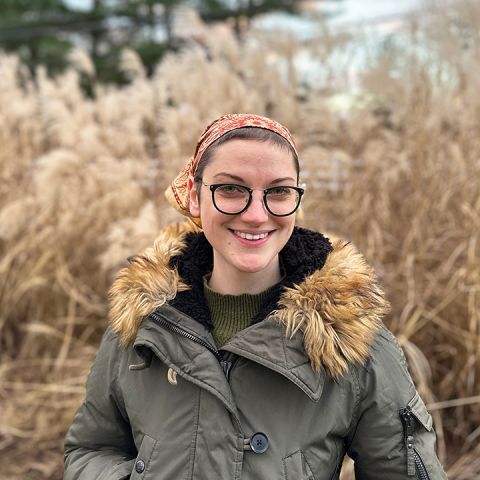
Kelsey Utne

Woman's headshot in professional clothing

South Asia Studies Librarian

Geographical Research Area: India and Pakistan

Teaching/Research Interests: digital humanities, commemoration, religion & identity

Additional Information

Program

Role

  • Faculty
  • SAP Core Faculty

Contact

Why Voice Matters: Lessons from India for America’s Future

September 29, 2025

5:00 pm

A.D. White House, Guerlac Room

Lecture by Jessica Mayberry, Founding Director, Video Volunteers

Across the world, people feel their voices no longer matter in public life. In the United States as in India, institutions are losing legitimacy, debates feel hollow, and digital platforms reward outrage more than understanding. But there are proven ways to change this. For two decades, Video Volunteers has worked with marginalized communities in India to tell their own stories and demand accountability, showing that when people speak on their own terms, democracy responds. These community-made videos have helped reopen schools, fix water systems, stop illegal factories, and shift local officials’ priorities—improving the lives of more than 40 million people. The lesson is clear: empowerment begins when those most excluded from the system are given real channels to be heard. This talk argues that the United States, too, must look beyond partisan divides and start investing in models that elevate grassroots voices as a force for democratic renewal. It will share stories of ordinary citizens who became leaders through storytelling, and highlight how new tools like AI can surface patterns from thousands of such stories—making the knowledge of everyday people visible to policymakers, activists, and communities themselves. For students, the invitation is to reflect on whose stories shape society today—and how we might build democracies that truly listen.

Jessica Mayberry is the Founding Director of Video Volunteers (VV), an NGO advancing the “right to voice” for marginalized communities as a foundation of inclusive democracy. Under her leadership, VV has become one of the world’s largest grassroots media organizations, training more than 2,000 community creators and improving the lives of over 40 million people through citizen storytelling. Based in India for 20 years, Jessica has worked alongside local leaders to pioneer models that transform grassroots stories into systemic change.

Her work has been featured by the BBC, Al Jazeera, PBS MediaShift, and The Economist. She is a Fellow of Ashoka, TED, and Echoing Green, and has received global recognition including the Waldzell Institute’s Architect of the Future award, the Knight News Challenge, the Edelgive Social Innovation Award, and finalist honors for the Indian Social Entrepreneur of the Year. Jessica studied Modern History and Languages at Oxford University.

Mayberry will be in conversation with Professor Durba Ghosh (A&S, History) and Associate Professor Christopher Csikszentmihalyi (Bowers, Info Sci). This talk is organized by the Humanities Scholars Program and co-sponsored by the Milstein Program.

Additional Information

Program

South Asia Program

Research at Risk: Cultural and Language Fluency

Phoebe Wagner FLAS India
September 15, 2025

SEAP and SAP lose funding, seek solutions

The federal government has announced the end of National Resource Center and FLAS funding, which has supported area studies training for decades.

Additional Information

Faculty Research Seed Grants: Global Hubs Info Session

October 1, 2025

12:00 pm

Join this info session to learn about 2026 Global Hubs Faculty Research Seed Grants offered by Global Cornell as part of our Global Hubs initiative. Info session attendees will learn about the grant opportunity and application tips through a short presentation and Q&A.

Through these seed grants, Cornell faculty from across the university are invited to apply for research funds to work with collaborators at Hubs partner institutions. Funded projects should lead to tangible outcomes, including the submission of at least one co-authored peer-reviewed publication and at least one application for external grant funding.

Up to 20 applications for research with a Global Hubs collaborator will be funded.

Successful proposals will receive up to $5,000 from Cornell, with the potential for matching funds from some Global Hubs partner universities.

Application deadline: October 15, 2025, 4:00 p.m. ET

Project duration: January 1–December 31, 2026

Virtual information sessions:

September 18, 2025, 12:00–1:00 p.m. ET (register)

October 1, 2025, 12:00–1:00 p.m. ET (register)

Learn more and apply for a Global Hubs joint seed grant.

Additional Information

Program

Einaudi Center for International Studies

Latin American and Caribbean Studies

Reppy Institute for Peace and Conflict Studies

East Asia Program

Southeast Asia Program

Institute for African Development

Institute for European Studies

South Asia Program

Migrations Program

Southwest Asia and North Africa Program

Faculty Research Seed Grants: Global Hubs Info Session

September 18, 2025

12:00 pm

Join this info session to learn about 2026 Global Hubs Faculty Research Seed Grants offered by Global Cornell as part of our Global Hubs initiative. Info session attendees will learn about the grant opportunity and application tips through a short presentation and Q&A.

Through these seed grants, Cornell faculty from across the university are invited to apply for research funds to work with collaborators at Hubs partner institutions. Funded projects should lead to tangible outcomes, including the submission of at least one co-authored peer-reviewed publication and at least one application for external grant funding.

Up to 20 applications for research with a Global Hubs collaborator will be funded.

Successful proposals will receive up to $5,000 from Cornell, with the potential for matching funds from some Global Hubs partner universities.

Application deadline: October 15, 2025, 4:00 p.m. ET

Project duration: January 1–December 31, 2026

Virtual information sessions:

September 18, 2025, 12:00–1:00 p.m. ET (register)

October 1, 2025, 12:00–1:00 p.m. ET (register)

Learn more and apply for a Global Hubs joint seed grant.

Additional Information

Program

Einaudi Center for International Studies

Latin American and Caribbean Studies

Reppy Institute for Peace and Conflict Studies

East Asia Program

Southeast Asia Program

Institute for African Development

Institute for European Studies

South Asia Program

Migrations Program

Southwest Asia and North Africa Program

Einaudi Welcomes SWANA Program

Bright orange and red rugs hang over buildings in Marrakesh.
September 11, 2025

Four New Program Directors

We welcome the Einaudi Center's new Southwest Asia and North Africa Program and four new program directors this fall.

We're excited to introduce the Southwest Asia and North Africa Program! SWANA is Einaudi's new hub for research, learning, and engagement with the cultures and peoples of the vast geographical region stretching from Morocco in the west to Iran in the east.

Seema Golestaneh headshot
SWANA director Seema Golestaneh

SWANA gathers expertise and perspectives from across Cornell's colleges and schools under the leadership of the program's inaugural director, Seema Golestaneh. Golestaneh is an associate professor of Near Eastern studies in the College of Arts and Sciences (A&S). Her research focuses on contemporary Islamic thought in the Persian-speaking world.

“We approach the Middle East as a region of complex engagements, shifting boundaries, and shared histories.”

Golestaneh looks forward to partnering with communities in the SWANA region and scholars around the world, she said, noting plans this year to “further develop our burgeoning relationship with the American University in Cairo.” 

Extending beyond the Middle East, Southwest Asia and North Africa is a place-based description that highlights geographical and cultural inclusion. Golestaneh hopes SWANA will embody that spirit on campus by serving as a social and intellectual home for Cornell's diverse community of researchers and students. 

“This year we'll host interdisciplinary scholars whose work represents the cutting edge of the field,” she said. “We are particularly excited about the graduate student conference we have scheduled for spring 2026.” 

SWANA premiered as an initiative through a cosponsored speaker series last spring. Don't miss its first event as an Einaudi program: a lecture by Islamic art historian Margaret Graves on September 25.


New Program Directors

Joining SWANA's Seema Golestaneh are new program directors in the East Asia Program, Latin American and Caribbean Studies Program, and Southeast Asia Program.

program director and staffer at international fair
New SEAP director Eric Tagliacozzo (left) joined grad student Xintong Chen at this year's international fair on August 27.

EAP: Nick Admussen

Nick Admussen is an associate professor in the Department of Asian Studies (A&S). His research on contemporary Chinese poetry focuses on inventing and refining methods of interpretation through which people separated by linguistic or political distance can come to understand one another.

LACS: Alex Nading

Alex Nading is a medical and environmental anthropologist (A&S). His research—mostly focused on Nicaragua—has examined transnational campaigns against dengue fever, bacterial disease, and chronic kidney disease, as well as grassroots movements to address these issues.

SEAP: Eric Tagliacozzo

Eric Tagliacozzo is the John Stambaugh Professor of History in A&S. His research centers on the history of people, ideas, and material in motion in and around Southeast Asia, especially in the colonial age.

Additional Information

Bangla Conversation Hour

December 5, 2025

2:00 pm

Stimson Hall, G25

Come to the LRC to practice your language skills and meet new people. Conversation Hours provide an opportunity to use the target language in an informal, low-pressure atmosphere. Have fun practicing a language you are learning! Gain confidence through experience! Just using your new language skills helps you learn more than you might think. Conversation Hours are open to any learner, including the public.

Additional Information

Program

South Asia Program

Persian/Farsi Conversation Hour

December 2, 2025

5:00 pm

Stimson Hall, G25

Come to the LRC to practice your language skills and meet new people. Conversation Hours provide an opportunity to use the target language in an informal, low-pressure atmosphere. Have fun practicing a language you are learning! Gain confidence through experience! Just using your new language skills helps you learn more than you might think. Conversation Hours are open to any learner, including the public.

Join on Zoom on September 16.

Additional Information

Program

South Asia Program

Southwest Asia and North Africa Program

Subscribe to South Asia Program