
South Asia Program
Info Session: Fulbright Opportunities for Graduate Students

February 23, 2022
4:45 pm
The Fulbright U.S. Student Program provides full funding for graduate and professional students conducting research or teaching in any field in more than 150 countries. Open to U.S. citizens only.
The Fulbright-Hays Doctoral Dissertation Research Abroad Program supports doctoral students conducting research in modern languages or area studies for six to 12 months. Open to U.S. citizens and permanent residents of the United States. Travel to Western European countries is not eligible.
Contact: fulbright@einaudi.cornell.edu, https://einaudi.cornell.edu/fulbright-us-student-program
Additional Information
Program
Einaudi Center for International Studies
Reppy Institute for Peace and Conflict Studies
East Asia Program
Southeast Asia Program
Latin American and Caribbean Studies
Institute for African Development
Institute for European Studies
South Asia Program
Info Session: Fulbright U.S. Student Program for Undergraduates

February 21, 2022
4:45 pm
The Fulbright U.S. Student Program supports college graduates conducting research or teaching in any field in more than 150 countries. Applications are due in the fall; students who wish to begin the program immediately after graduation are encouraged to start the process in their junior year.
United States citizens in any field of study are eligible.
Contact: fulbright@einaudi.cornell.edu, https://einaudi.cornell.edu/fulbright-us-student-program
Additional Information
Program
Einaudi Center for International Studies
Reppy Institute for Peace and Conflict Studies
East Asia Program
Southeast Asia Program
Latin American and Caribbean Studies
Institute for African Development
Institute for European Studies
South Asia Program
Info Session: Summer Language Programs and Funding Opportunities

February 9, 2022
4:45 pm
Want to learn a language this summer? Learn about Foreign Language and Area Studies fellowships and Critical Language Scholarships, which provide fully funded opportunities for Cornell undergraduate and graduate students to study South and Southeast Asian languages in the summer, and even in the academic year.
Additional Information
Program
Einaudi Center for International Studies
Southeast Asia Program
South Asia Program
"Thich Nhat Hanh and the Invention of Zen in Vietnamese Buddhism"

February 4, 2022
2:00 pm
Please join us for a talk by Alexander Soucy (St. Mary's University).
In 2006, a monk and member of the Order of Interbeing wrote an open letter to the disciples of Thích Nhất Hạnh, in which he described his (and hence their) Zen lineage. One of the claims the letter made was that Thích Nhất Hạnh "received the lamp-transmission in Từ Hiếu root temple" ten days before he left for the US in 1966. This portrayal of Thích Nhất Hạnh as Zen master has been uncritically assumed and repeated in the media as well as in the scholarship of Buddhism in the West, mostly by uncritically affixing to him the title of "Zen Master." As Nguyen and Barber noted, however, this assertion of him being part of a Zen lineage is not based in the forms of Buddhist practice and temple organization that actually exist in Vietnam. This presentation will discuss the seeming incongruence between the claims by Thích Nhất Hạnh and his followers and the Buddhist practices and institutions in Vietnam. The purpose is not to disprove their claims, but contextualize the globally important figure of Thích Nhất Hạnh within the developments of Buddhism in Vietnam and with the globalization of Buddhism.
The Cornell Buddhist Studies Seminar Series is co-sponsored by the GPSA-FC, the Departments of Anthropology, Asian Studies and Philosophy, by the South Asia Program, and by the Society for the Humanities. The talk is open to all interested; for accessibility queries please contact buddhiststudies@cornell.edu
Additional Information
Program
East Asia Program
Southeast Asia Program
South Asia Program
Sectarianism or Separatism: The Shia Dilemma and the Discourse of Azadi in Kashmir

April 25, 2022
12:15 pm
Uris Hall, G08
Talk by Syed Jaleel Hussain
The ethnic, linguistic and religious diversity has been an essential feature of life in Kashmir for centuries. The majority of the muslim population is Sunni along with sizeable pockets of Shia minority. Shias have played a critical role in the socio-political and cultural life of Kashmir. They were part of the valiant defiance of the Mughal designs in the Chak and post-Chak Kashmir, were involved with the resistance against Dogra oppression, and actively participated in the political struggle against Indian rule after 1947. The overall political posture of Shias regarding the essential elements of the resolution of Kashmir conflict is not starkly different from the majority Sunnis. For most part of the modern history Shias have supported the azadi movement towards a sovereign and independent Kashmir. However, after the 1980s, the Shia discourse about azadi and insurgency gradually turned ambivalent with the growing internal group contestation amongst Shias due to internal and external factors. The internal factors include the growing electoral competition and a rise in the incidents of sectarian violence in Kashmir. The political developments in Pakistan, Iran and the Arab world have become the external determinants of Shia thinking about the Kashmir issue.
Syed Jaleel Hussain is a Fulbright post-doctoral fellow at the South Asia Program, Mario Einaudi Center for International Studies at Cornell University. He is an Assistant Professor at Nelson Mandela Centre for Peace and Conflict Resolution, Jamia Millia Islamia, New Delhi. He is a University Gold Medalist, an ICSSR doctoral fellow, a recipient of UGC’s Senior Research Fellowship and Gandhi Smriti Fellowship for Masters Programme. His research articles have been published in national and international peer reviewed journals like the Journal of Asian Security and International Affairs, Journal of Defence Studies, Economic & Political Weekly and South Asian Journal of Diplomacy. His op-ed articles have appeared in Indian English dailies like the Indian Express, the Sunday Guardian, Afghan Zariza, Greater Kashmir and others. He has previously been associated with Delhi Policy Group, a think tank based in Delhi. His primary research interests are in the areas of culture and strategy, global nuclear issues, ethnic conflicts and issues of conflict & security in South Asia and West Asia.
Additional Information
Program
Einaudi Center for International Studies
South Asia Program
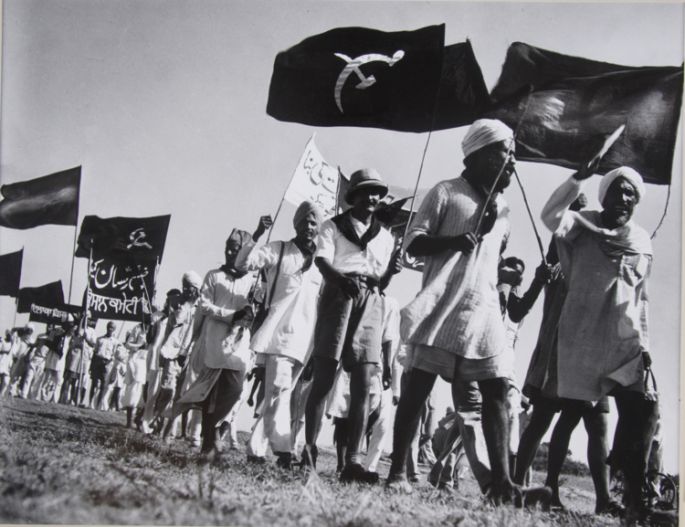
Futures Past: Revolution, Communism, and Decolonization in Colonial India
April 11, 2022
11:00 am
Talk by Ali Raza
This work reveals the lives, geographies, and anti-colonial struggles of Indian revolutionaries and how they sought to remake the world. Driven by the utopian dreams of Communist Internationalism, Indian communists yearned for a revolutionary upheaval that would overthrow European imperialisms and radically transform their societies and the world. In doing so, they joined millions around the world equally invested in the transformative project of Communist Internationalism, by far one of the largest, and most radical, anti-colonial projects of the twentieth century. I present this global story from the vantage point of South Asia from the 1910s to the 1950s.
Ali Raza, Associate Professor, is a historian of South Asia at the Lahore University of Management Sciences (LUMS). His research and teaching interests include the social and intellectual history of South Asia, comparative colonialisms, 20th century internationalisms, and decolonization. Raza’s work has appeared in Comparative Studies of South Asia, Africa, and the Middle East; South Asia: Journal of South Asian Studies; Itinerario; South Asian History and Culture; and Contemporary South Asia. He is the co-editor of The Internationalist Moment: South Asia, Worlds, and World Views, 1917-39 (Sage, 2014) and the author of Revolutionary Pasts: Communist Internationalism in Colonial India. (Cambridge, 2020; Folio Books 2021; Tulika Books 2022)
Additional Information
Program
Einaudi Center for International Studies
South Asia Program
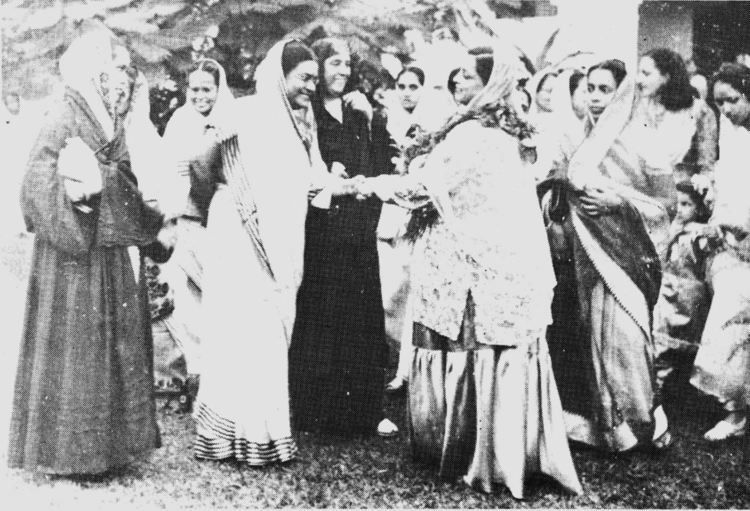
Collision Amid Collusion: Women’s Activism Across the Wings of Pakistan
April 18, 2022
11:00 am
Talk by Elora Shehabuddin
This paper analyzes the relationship between women’s rights advocates in East and West Pakistan in 1947–71, in an effort to contribute to the small but growing body of scholarship complicating Bangladesh’s linear nationalist narrative as well as recent scholarship on the history of united Pakistan in this period that pays serious attention to the country’s eastern wing. I show how, during the Pakistan amal, not only did many Bengali women engage with the central state as Pakistani citizens alongside West Pakistani women activists in order to elicit resources and favorable policies, but they also took pride in being citizens of a new nation that had overthrown its colonial rulers. I show this engagement with the state through their involvement in electoral politics, their activism for the reform of personal laws, and their pride in the nation in their willingness to serve as representatives of Pakistan in delegations overseas, even as they organized and published in opposition to state policies such as the imposition of Urdu as the state language and growing economic and political disparities between the two wings.
Elora Shehabuddin is Professor of Transnational Asian Studies and Core Faculty in the Center for the Study of Women, Gender, and Sexuality at Rice University. She received her A.B. in social studies from Harvard University and Ph.D. in politics from Princeton University. She is the author of Sisters in the Mirror: A History of Muslim Women and the Global Politics of Feminism (California, 2021), Reshaping the Holy: Democracy, Development, and Muslim Women in Bangladesh (Columbia, 2008), and Empowering Rural Women: The Impact of Grameen Bank in Bangladesh (Grameen Bank, 1992). She has published in numerous journals and edited books and co-edited a special issue of Feminist Economics on “Gender and Economics in Muslim Communities.” Her research has been supported by the National Endowment for the Humanities, the Carnegie Corporation, the Woodrow Wilson Foundation, the American Association of University Women, the Social Science Research Council, the Andrew W. Mellon Foundation, and the US Institute of Peace. Professor Shehabuddin currently serves on the editorial board of the Journal of Bangladesh Studies, as an Associate Editor of the Encyclopedia of Women and Islamic Cultures (Brill), and as an elected member (and current chair) of the South Asia Council of the Association for Asian Studies.
Additional Information
Program
Einaudi Center for International Studies
South Asia Program
Anthropology Colloquium: Austin Lord
April 15, 2022
3:00 pm
Herding in the Wake: Afterlives and Material Ethics Within Unsettled Moral Ecologies
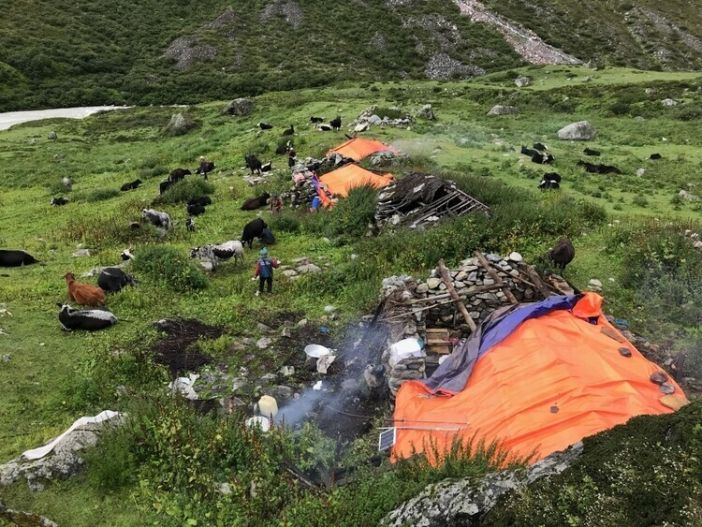
Herding was still a vibrant aspect of life in the Langtang Valley at the moment the Gorkha Earthquake struck Nepal on April 25, 2015, triggering a series of co-seismic avalanches and landslides that killed nearly half of the herding community and over four hundred yak and yak hybrids. As the aftermath continued to unfold, more and more herders sold their animals and left herding, and five years later as the COVID-19 pandemic began to unfold, only twelve herders remained. Many Langtangpas speak of herding as a lifeway at risk, since most of those who remain in the gorey (herding hut) are elders and the younger generations have no interest in carrying on this work - they fear that the potential ‘end’ of herding is just a few years away.
In this talk, based on a chapter of my forthcoming dissertation, I offer an ethnographic portrait of “living in the gorey” (herding hut) which examines the seven year period in the the disaster - a critical moment in the history of Langtangpa herding suffused with the losses of 2015, historically constituted precarities, the struggles of post-disaster recovery, nostalgia for herding pasts, and even feelings of anticipatory grief. The current crisis in herding, as many Langtangpas see it, is an ethical one that reflects broader concerns about the erosion of traditional lifeways and deteriorating social relations. By contextualizing current concerns within the historical morphologies of herding in Langtang and ongoing debates about the social and material impacts of the tourism economy, I show how the remaining goreypa are herding in the wake of many different events still taking their toll within unsettled moral ecologies. How do people conceptualize and anticipate the uncertain futures of herding amid broader patterns of development, vulnerability, and intergenerational change?
Austin Lord is a PhD Candidate in the Department of Anthropology whose research focuses on lived experiences of disaster and aftermath, questions of time and temporality, political ecologies of the water-energy nexus, infrastructural politics, the impacts of climate change and climate science, and the construction of environmental knowledge in the Himalayan region. Austin's dissertation research focuses on the afterlives of disaster in the Langtang Valley of Nepal – where a massive co-seismic avalanche occurred during the 2015 Gorkha earthquake. Drawing from over five years of research and volunteer work, his work carefully examines the ways that the Langtangpas conceptualize recovery, resilience, and uncertainty as they seek to rebuild their lives in the wake of an unthinkable disaster.
This event is co-sponsored by the South Asia Program. Thank you.
Additional Information
Program
Einaudi Center for International Studies
South Asia Program
An ‘Unlawful Object of Gathering’: Stealing a Corpse in 1927 Delhi
February 7, 2022
11:00 am
Talk by Kelsey Jane Utne
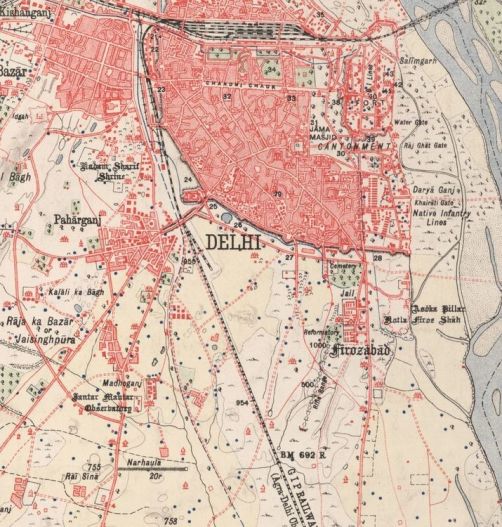
This talk explores the disrupted burial of convicted murderer Abdul Rashid in 1927 in order to understand how urban expansion altered and constrained commemorative praxis in late colonial India. Because of the subsequent criminal prosecutions for corpse theft and official inquiry, we have access to an incredibly detailed account of the movements of the police, the so-called “mob,” and Rashid’s body through space. In turn, the case study reveals an alternative necrogeography imagined by Delhi’s Muslim community – one closed off by the built infrastructure of the colonial city.
Kelsey J. Utne is a prison educator, digital humanities scholar, and 2021-22 ACLS Dissertation Completion Fellow in Modern South Asian History at Cornell University. She is finishing her dissertation, Corpse Politics: Disposal and Commemoration of the Indian Interwar Dead.
Additional Information
Program
Einaudi Center for International Studies
South Asia Program
Navigating Paradigms of Chastity and Sensuality in the Mughal Court, by Saleema Waraich
March 16, 2022
4:45 pm
This presentation explores how female representations encountered in Western prints, Persian painting, and South Asian sculpture were re-contextualized in Mughal environments of the late sixteenth and early seventeenth centuries and re-imagined in Mughal paintings. Mughal patrons and artists negotiated elements from these bodies of visual material as they explored possibilities for fashioning Mughal models of female chastity and sensuality in service of the court. In addition to adapting various stylistic techniques and symbols, this process involved locating synergies between Islamic, Timurid/Mughal, Hindu, South Asian, Christian, and European beliefs and practices. In this way, Mughal artists and their patrons cultivated links and located points of convergence between a variety of belief systems and cultures
Additional Information
Program
Einaudi Center for International Studies
South Asia Program