
South Asia Program
Islamic Libraries from Spain to India (ca. 900-ca. 1730), by Laurent Ferri

February 16, 2022
4:54 pm
While Muslim societies are very diverse, a common feature is the high status of the written word, and the centrality of libraries. During our entire period, the authority of the ulamas derived from their ability to derive the law from the foundational books. On the other hand, individuals were encouraged to read, memorize, and follow the Qur’an as well as the important commentaries and fatwas. The library culture had other roots. Wealthy bibliophiles were mostly concerned with prestige and with the esthetics of calligraphy and illumination. An administrative book culture also emerged in the thirteenth century, and flourished with the Ottoman State elite. Finally, Nelly Hanna speaks of the different perspectives of the middle-class of Cairo or Damascus, once it owned its own books. In any case, each new social-cultural dynamic reinforced the central role played by public and private libraries in Islam.
Additional Information
Program
Einaudi Center for International Studies
South Asia Program
Beyond the Camp and the Surgery: Cochlear Implants and Complex Dependencies in India
March 9, 2022
4:45 pm
Uris Hall, G08
Talk by Michele Friedner (Comparative Human Development, University of Chicago)
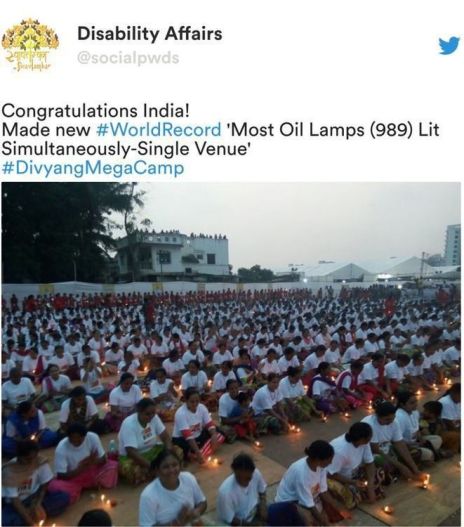
The Indian state relates to the category of disability through the distribution of aids and appliances such as hearing aids, canes, and wheelchairs that are ‘make in India,’ as examples. In 2014, the state modernized its distribution program and started providing cochlear implants to children living below the poverty line. While aspirations exist to create and manufacture an indigenous Indian cochlear implant, currently the state purchases implants from four multinational corporations. This cochlear implant program reveals new directions for the state in regards to engaging with disability and introduces novel assemblages of welfare, medicine, rehabilitation, and multinational capital. In these assemblages, new relationships form between the state, multinational corporations, and families with deaf children. These relationships stretch beyond the one-time disability camp or the one-off surgery and have resulted in opportunities for government administrators, surgeons, and rehabilitation professionals to reinvent themselves in relation to the seemingly miraculous power of cochlear implants while also producing complex dependencies for families with deaf children.
Michele Friedner is an associate professor in the Department of Comparative Human Development at the University of Chicago. A medical anthropologist, she conducts research on deafness and disability in India and is the author of Valuing Deaf Worlds in Urban India (Rutgers, 2015) and the forthcoming book Sensory Futures: Deafness and Cochlear Implant Infrastructures in India (2022, University of Minnesota Press).
Co-sponsored by the Departments of Anthropology, Linguistics, and Science and Technology Studies
Communication Access Real-time Translation (CART) will be available at this event.
Additional Information
Program
Einaudi Center for International Studies
South Asia Program
Art of Brand India: Aesthetics and Economy of Hope in the early Twenty-First-Century
January 31, 2022
11:00 am
Talk by Ravinder Kaur (South Asian Studies, University of Copenhagen)
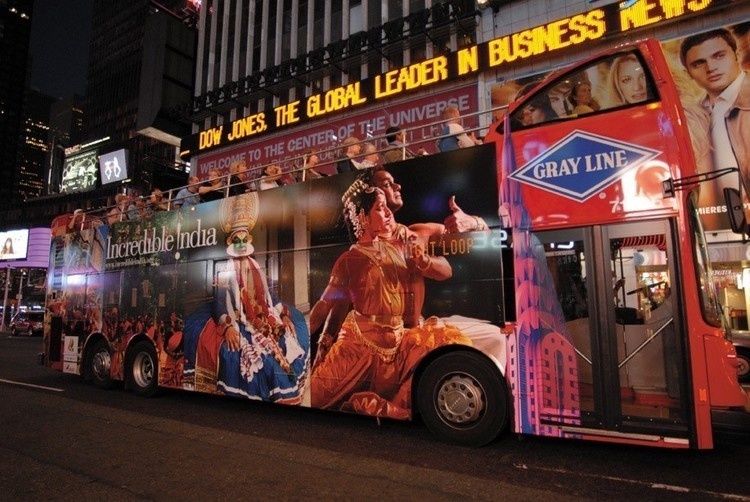
In this talk, I unpack the affective-material entanglements of the moment of “opening up” of the Indian economy. The great transformation of the nation-form into commodity-form – Brand India – entailed more than structural adjustments and free-trade formula prescribed by the global financial institutions. It took shape upon the tantalizing promise of the great spectacle of capitalist growth stories unfolding across the old third-world. Drawing upon my recent work Brand New Nation, I trace the affective and bureaucratic designs of the dreamworlds of New India, the hopes and anxieties, contradictions and speculations, and the production of an authentic Hindu civilizational identity in the circuits of twenty-first-century global economy.
Ravinder Kaur is a historian of contemporary India. She is Associate Professor of Modern South Asian Studies and the Director of the Centre of Global South Asian Studies at the University of Copenhagen. Her core research focuses on the processes of capitalist transformations in twenty-first-century India. This is the subject of her most recent book Brand New Nation: Capitalist Dreams and Nationalist Designs in Twenty-First-Century India (Stanford University Press, 2020). This work was selected as the “Financial Times Best Book of the Year” in 2020 and longlisted for the “Kamaladevi Chattopadhyay NIF Book Prize” in 2021. She is also the author of Since 1947: Partition Narratives among the Punjabi Migrants of Delhi (Oxford University Press, 2007; 2nd edition, 2018).
Co-sponsored by the History Department
Additional Information
Program
Einaudi Center for International Studies
South Asia Program
Crooked Cats: Beastly Tales from India

March 21, 2022
11:00 am
Talk by Nayanika Mathur (Anthropology, University of Oxford, UK)
This talk weaves together beastly tales of big cats that make prey of humans in India to ask what may they be telling us about a planet in crisis. There are many theories on why and how a big cat comes to prey on humans, with the ecological collapse emerging as a central explanatory factor. Yet, uncertainty over the precise cause of crookedness persists. Drawing upon over 15 years of anthropological research in India, conducted largely in the Himalaya, this talk explores the many lived complexities that arise from this absence of certain knowledge to offer new insights into both the governance of nonhuman animals and their intimate entanglements with humans. It deploys ethnographic storytelling to explain the Anthropocene in three critical ways: as method, as a way of reframing human-nonhuman relations on the planet, and as a political tool indicating the urgency of academic engagement.
Nayanika Mathur is Associate Professor in the Anthropology of South Asia, Fellow of Wolfson College, and Director of the South Asia center at the University of Oxford. She is the author of Paper Tiger: Law, Bureaucracy, and the Developmental State in Himalayan India (Cambridge University Press, 2016) and Crooked Cats: Beastly Encounters in the Anthropocene (University of Chicago Press, 2021).
Co-sponsored by the Anthropology Department
Additional Information
Program
Einaudi Center for International Studies
South Asia Program
Separating Sindh, Connecting Partitions: Territorializing Minority Representation before Partition

March 7, 2022
11:00 am
Talk by Uttara Shahani (Refugee Studies Centre, University of Oxford, UK)
The 1947 partition of India is inadequately understood within the context of earlier partitions in the British Indian empire. Sindh, an understudied province in the historiography on partition, provides a particularly important angle of vision through which to view the history of partitioning. The key committees that recommended the shape of constitutional reform in the lead up to the Government of India Act 1935 justified the creation of the new province of Sindh (separated from Bombay) on the basis of religious majority as well as ‘racial’ difference. The debates on the subject of ‘provincial autonomy’ that dominated discussions on the future of constitutional reform at this time threw into sharp focus the question of the territorialization of minority rights and representation. Constitutional deliberations on establishing Sindh as a ‘communally’ defined province were embedded in wider considerations not only of the ‘internal’ redistribution of boundaries on linguistic lines but also the geographical and political severance of certain territories from British India by reason of racial and ethnic difference. Eventually, The Government of India Act 1935 separated Sindh from the Bombay Presidency and established Odisha and Bihar as separate provinces, in addition to enabling a wider process of boundary formation that included the separation of Burma and Aden from British India. The separation of Sindh itself informed nascent ideas of Pakistan and what partitioning Palestine might mean.
Uttara Shahani is a historian and former lawyer who works on the history of Sindh, the partition of India, the Sindhi diaspora, and the history of global refugee regimes. She is currently Departmental Lecturer at the Refugee Studies Centre, University of Oxford. Previously she was postdoctoral researcher at the Refugee Studies Centre, University of Oxford where she worked on the British Academy funded project Borders, Global Governance, and the Refugee (1947-1951) which has a focus on India and Palestine. Prior to this, Uttara was Economic and Social Research Council (ESRC) Postdoctoral Fellow at the Faculty of History, University of Cambridge. She was postdoctoral affiliate Trinity College Cambridge, and affiliate scholar, Centre for South Asian Studies, Cambridge. Her doctoral dissertation, ‘Sind and the partition of India, 1927-1952' was awarded by the Faculty of History, University of Cambridge in 2019. Uttara is working on a book manuscript on Sindh and partition. Her latest publications are ‘Following Richard Burton: Religious Identity and Difference in Colonial Sindh,’ forthcoming in Philological Encounters and ‘Language without a land: Partition, Sindhi refugees, and the Eighth Schedule of the Indian Constitution,’ forthcoming in the Journal of Asian Affairs.
Co-sponsored by the History Department
Additional Information
Program
Einaudi Center for International Studies
South Asia Program
Revolution and Slums in Bombay
February 14, 2022
11:00 am
Talk by Juned Shaikh (History, University of California, Santa Cruz)
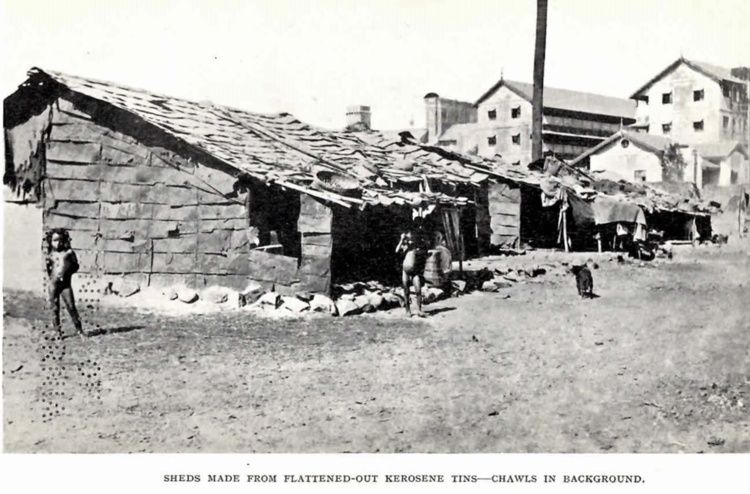
Revolution and Slums were keywords in twentieth century Bombay: they are interpretive categories to capture the relationships of power in the city and the visions for transforming the relationships as well as the city itself. Revolution was invoked by different social groups in the city – Marxists, workers, urban planners, and Dalit leaders and writers all wanted a revolution at different moments in the twentieth century. And often the subjects of these revolutions (and possible counterrevolutions) lived in slums. Revolution meant different things to these groups. The Marxist vision of a political and social revolution, that would end class inequality was not shared by the urban planners who wanted to alter the spatial arrangement of the city and make it more conducive for the circulation of capital. Marxists also faltered on the question of caste. They laid great store in the power of capital to desiccate caste and believed that social reformers would address the vestigial caste practices. In their view, the arrival of socialism would overcome it completely. Therefore, any assertions of caste identity by the anti-Brahmin and the Dalit movements invited Marxist opprobrium and allegations of being reactionary, fascists, and petit bourgeois. Dalit leaders and writers critiqued Marxist for their aversion to the caste question. The tensions between the Marxist and Dalit social movements shaped the politics of 20th century Bombay (and India). But in the 1950s, 60s, and 70s many Dalit writers borrowed Marxist conceptual categories, like the lumpen proletariat, to write about life in the city slums. For them, the lumpen proletariat was not an object of abhorrence, but a human being struggling to make ends meet and for whom life often ended tragically. This paper uses revolution and slums as a lever to revisit the social, political, and cultural history of twentieth century Bombay.
Juned Shaikh is Associate Professor of History at the University of California, Santa Cruz. His recent book, Outcaste Bombay: City Making and the Politics of the Poor, was published by the University of Washington Press in the US and by Orient BlackSwan in India. He is a visiting research fellow at the Shelby Davis Center at Princeton University this semester. His new work is on the life and times of Gangadhar Adhikari, a Bombay Marxist. He was the recipient of the Dean’s medal for the Social Sciences as a graduate student at the University of Washington. Before his reinvention as a historian, he was a journalist in India.
Co-sponsored by the History Department
Additional Information
Program
Einaudi Center for International Studies
South Asia Program
Beijing Reins in China's Central Bank

Eswar Prasad, SAP
“The PBOC has carved out a modest amount of operational autonomy to push forward financial liberalization and a more market-oriented monetary policy framework,” says Eswar Prasad, professor of economics and international trade policy. Prasad is also quoted in this Wall Street Journal piece.
Additional Information
Yousuf Mahid

Graduate student
Yousuf's research agenda focuses broadly on climate change adaptation, forest resource management, conservation, and institutional mechanisms for climate policy formulation. His work investigates the synergies between ecosystem-based adaptation and sustainable development solutions for climate-vulnerable communities, particularly in South Asia. Before joining the program, he worked as a Program Coordinator in the International Center for Climate Change and Development (ICCCAD) based in Bangladesh.
Additional Information
Shree Saha

Graduate student
Shree Saha is a PhD student in the field of applied economics and management. Her research interests include women’s empowerment, maternal and child nutrition, financial inclusion, and development. Prior to joining Cornell, she worked as a research associate at the Indira Gandhi Institute of Development Research (IGIDR) on topics such as rural financial literacy and young farmers’ aspirations. Shree holds a Master of Philosophy and a master’s degree in economics from IGIDR, as well as a bachelor’s degree from Jadavpur University.
Additional Information
‘Bitcoin Itself May Not Last that Much Longer,’ Cornell Professor Says

Eswar Prasad, SAP
Eswar Prasad, professor of economics and trade policy, discusses the pros and cons of Bitcoin as a currency.